Hire Verified & Experienced
Literature Tutors
4.8/5 40K+ session ratings collected on the MEB platform
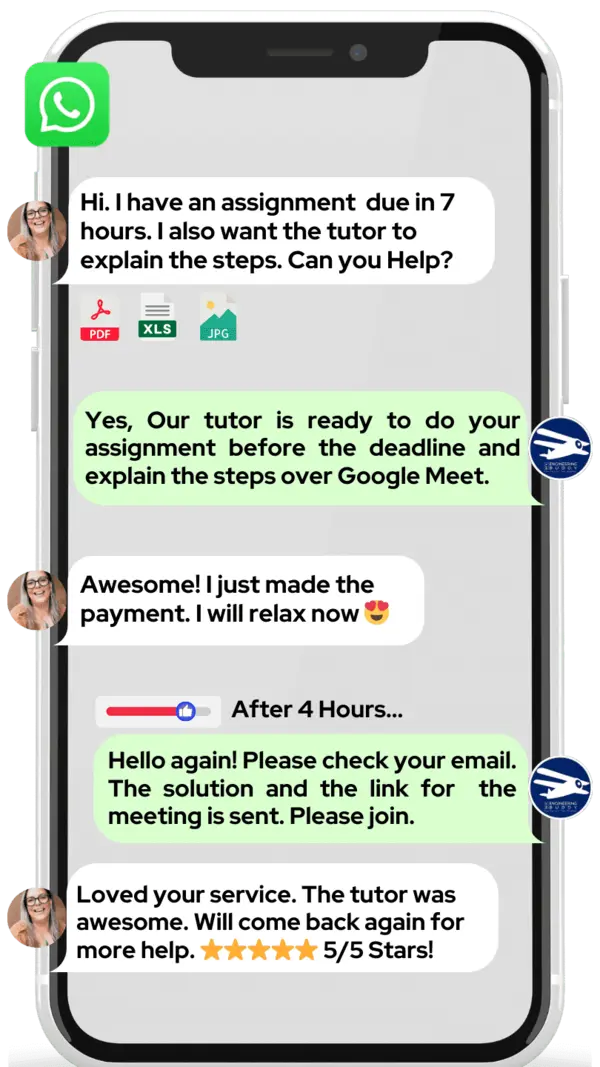



Hire The Best Literature Tutor
Top Tutors, Top Grades. Without The Stress!
52,000+ Happy Students From Various Universities






How Much For Private 1:1 Tutoring & Hw Help?
Private 1:1 Tutoring and HW help Cost $20 – 35 per hour* on average.
Three essays in. Still losing marks on analysis. A Literature tutor online fixes that — fast.
Literature Tutor Online
Literature is the academic study of written works across periods, genres, and cultures — including fiction, poetry, and drama. Students develop skills in close reading, textual analysis, and critical argument construction.
MEB offers 1:1 online tutoring and homework help in 2,800+ advanced subjects, including literary analysis tutoring, poetry, and world literature. Whether you’re searching for a Literature tutor near me or need expert remote support, MEB matches you with a verified tutor — usually within an hour. Students who start with a diagnostic session close gaps faster and write stronger arguments by the second or third session.
- 1:1 online sessions tailored to your course syllabus and exam board
- Expert-verified tutors with subject-specific literature knowledge
- Flexible time zones — US, UK, Canada, Australia, Gulf
- Structured learning plan built after a diagnostic session
- Ethical homework and assignment guidance — you understand before you submit
52,000+ students across the US, UK, Canada, Australia, and the Gulf have used MEB since 2008 — including students in Literature subjects like British Literature, Comparative Literature, and World Literature.
Source: My Engineering Buddy, 2008–2025.
How Much Does a Literature Tutor Cost?
Most Literature tutoring sessions run $20–$40/hr. Graduate-level and specialist literary theory support can reach $100/hr. New students can try a $1 trial — 30 minutes of live tutoring or a full explanation of one assignment question.
| Level / Need | Typical Rate | What’s Included |
|---|---|---|
| Standard (most levels) | $20–$35/hr | 1:1 sessions, essay and homework guidance |
| Advanced / Specialist | $35–$70/hr | Expert tutor, literary theory, dissertation support |
| $1 Trial | $1 flat | 30 min live session or 1 assignment question explained |
Tutor availability tightens significantly during end-of-semester submission windows and exam revision periods. Book early if you have a fixed deadline.
WhatsApp MEB for a quick quote — average response time under 1 minute.
Who This Literature Tutoring Is For
Literature is one of the most commonly under-prepared subjects at exam time — students often read the texts but struggle to write arguments that actually score. If any of the following sounds familiar, MEB can help.
- Students losing marks on close reading and essay structure despite doing the reading
- Students retaking after a failed first attempt who need a different approach, not just more study time
- Students with a university conditional offer depending on their Literature grade
- Students 4–6 weeks from an exam with significant gaps in their analytical writing still to close
- Parents watching a child’s confidence drop alongside their essay grades
- Undergraduates struggling with literary criticism, theory application, or dissertation chapters
MEB tutors have supported Literature students at universities including Oxford, Cambridge, NYU, University of Toronto, University of Melbourne, King’s College London, and McGill — as well as students preparing for A Level, IB, and AP Literature examinations.
At MEB, we’ve found that most Literature students don’t lack effort — they lack a clear model for what strong literary argument looks like. Once a tutor shows them how to move from observation to analysis to interpretation, their essays change within two or three sessions.
1:1 Tutoring vs Self-Study vs AI vs YouTube vs Online Courses
Self-study works if you’re disciplined — but literary analysis needs feedback, not just re-reading. AI tools give fast definitions and plot summaries but cannot diagnose why your argument structure keeps losing marks. YouTube covers themes and context well but stops short when you’re stuck on a specific passage or exam question. Online courses follow a fixed syllabus at a fixed pace — no room for your actual weak spots. With 1:1 tutoring at MEB, your tutor reads your essay, identifies the exact gap — whether it’s integrating quotations, building a thesis, or applying a critical lens — and corrects it live. That’s specific to Literature. Generic study methods aren’t.
Outcomes: What You’ll Be Able To Do in Literature
After consistent 1:1 sessions, students can analyze unseen passages using close reading techniques tied to language, structure, and form. They write thesis-led arguments that move beyond plot summary into genuine textual interpretation. They apply critical frameworks — feminist, Marxist, postcolonial — to primary texts without forcing a reading. They explain how context shapes meaning in specific periods from the Romantic era to contemporary fiction. They present a sustained comparative argument across two or more texts in a single response.
Based on feedback from 40,000+ sessions collected by MEB from 2022 to 2025, 58% of students improved by one full grade after approximately 20 hours of 1:1 tutoring in subjects like Literature. A further 23% achieved at least a half-grade improvement.
Source: MEB session feedback data, 2022–2025.
Supporting a student through Literature? MEB works directly with parents to set up sessions, track progress, and keep coursework on schedule. WhatsApp MEB — average response time is under a minute, 24/7.
What We Cover in Literature (Syllabus / Topics)
Close Reading, Essay Writing, and Textual Analysis
- Analyzing language, structure, and form in poetry and prose
- Building a thesis-driven argument from a prompt or unseen text
- Integrating and interpreting quotations — not just embedding them
- Paragraph structure: point, evidence, analysis, link (PEAL and variants)
- Writing comparative essays across two or more texts
- Identifying narrative voice, tone, and authorial intent
- Timed essay practice for exam conditions
Core texts vary by board. Tutors work with the specific edition and annotation approach required by your exam — AQA, Edexcel, IB, AP, or other.
Literary Periods and Movements
- Renaissance and Early Modern literature — Shakespeare, Marlowe, Donne
- Romantic and Victorian prose and poetry — Keats, Dickens, George Eliot
- Modernist fiction and poetry — Woolf, Eliot, Joyce, Faulkner
- Postcolonial and world literature — Achebe, Rushdie, Adichie
- Contemporary fiction and postmodern narrative technique
- American literature from the Civil War to the twentieth century
Recommended references include the Norton Anthology of English Literature, The Bedford Glossary of Critical and Literary Terms, and your course-specific set text edition.
Literary Theory and Criticism
- Introduction to critical lenses: feminist, Marxist, psychoanalytic, ecocritical
- Applying literary criticism methods to close reading and essay arguments
- Reader-response and New Criticism — when to use which approach
- Poststructuralism and deconstruction — Derrida, Barthes, Foucault at undergrad level
- Dissertation and extended essay: framing a critical argument with secondary sources
Core references include Terry Eagleton’s Literary Theory: An Introduction and Jonathan Culler’s Literary Theory: A Very Short Introduction.

Students consistently tell us that the hardest shift in Literature is moving from “this shows that…” to “this suggests, implies, or enacts…” — that single word swap signals the difference between description and analysis on almost every mark scheme we’ve seen.
What a Typical Literature Session Looks Like
The tutor opens by revisiting the previous session’s essay or passage work — checking whether the paragraph structure issue from last time has carried forward into the new draft. The student shares their screen or a photo of their essay. Together, they work through a specific paragraph: the tutor annotates live on a digital pen-pad, showing how the same quotation can be interpreted at three different levels — surface, structural, thematic. The student rewrites the analysis in real time, with the tutor present for immediate correction. The session closes with a clear task: one timed paragraph on a new passage, due before next session, with the specific mark-scheme criterion to target written at the top.
How MEB Tutors Help You with Literature (The Learning Loop)
Diagnose: In the first session, the tutor reads a recent essay or asks the student to analyze a short passage live. The goal is to identify the exact point where analysis breaks down — whether it’s the thesis construction, the quotation selection, or the inability to move beyond plot summary.
Explain: The tutor works through a model response using a digital pen-pad on Google Meet. They annotate the text, build a paragraph from scratch, and show what each mark-scheme criterion looks like in practice — not in theory.
Practice: The student attempts the same passage or question type with the tutor present. No waiting for marked homework to come back — the feedback loop is immediate.
Feedback: The tutor steps through the student’s attempt line by line. Every dropped mark has a specific reason. Students leave the session knowing what to do differently, not just that something was wrong.
Plan: The next topic is set, the next essay question is identified, and the student knows exactly what to practice before the next session. Progress is tracked across sessions.
All sessions run over Google Meet. Tutors use a digital pen-pad or iPad with Apple Pencil to annotate texts live. Before your first session, share your exam board or course syllabus, a recent essay attempt or passage you struggled with, and your exam or submission date. The tutor uses the first session as a diagnostic — every minute from that point is targeted. Start with the $1 trial — 30 minutes of live tutoring that also serves as your first diagnostic.
MEB tutors work across the full Literature subject family — from close reading and essay craft to literary theory, postcolonial literature tutoring, and dissertation support at graduate level.
Source: My Engineering Buddy, 2008–2025.
Tutor Match Criteria (How We Pick Your Tutor)
Not every Literature tutor is right for every student. MEB matches on four criteria.
Subject depth: The tutor must have specific knowledge of your level and exam board — IB English A, AP Literature and Composition, A Level English Literature (AQA, Edexcel, OCR), or undergraduate and graduate modules. A tutor who knows the mark scheme for your specific paper is different from one who just studied literature.
Tools: All MEB Literature tutors use Google Meet with a digital pen-pad or iPad and Apple Pencil for live text annotation — not just talking through ideas.
Time zone: Matched to your region — US, UK, Canada, Australia, Gulf — so sessions run at a time that works, not 2am.
Goals: Exam score improvement, essay structure, coursework deadlines, literary theory, or dissertation chapters — the match is made on what you actually need, not a generic profile.
Unlike platforms where you fill out a form and wait, MEB responds in under a minute, 24/7. Tutor match takes under an hour. The $1 trial means you test before you commit. Everything runs over WhatsApp — no logins, no intake forms.
Study Plans (Pick One That Matches Your Goal)
MEB tutors build the specific session sequence after the first diagnostic, but here’s how students typically structure their time. Catch-up (1–3 weeks): intensive focus on the highest-weight components — usually essay structure and close reading — for students with an imminent deadline. Exam prep (4–8 weeks): structured revision covering all assessed text types, timed practice, and mark-scheme alignment. Weekly support: ongoing sessions aligned to coursework deadlines and semester progression, building analytical depth over time. Cambridge Assessment International Education provides detailed syllabus guidance for students on international programmes — tutors align directly to the relevant specification.
Pricing Guide
Literature tutoring starts at $20/hr for school-level and standard undergraduate work. Advanced literary theory, dissertation support, and graduate-level seminar preparation run $40–$100/hr depending on tutor specialisation and timeline urgency. Rate factors include the level, how specific the exam board requirements are, and how quickly you need a match.
For students targeting top universities or graduate programmes with competitive admissions, tutors with research backgrounds in literary studies are available at higher rates — share your goal and MEB will match you to the right tier.
Availability shrinks during end-of-year exam windows. Book as early as your deadline allows. Start with the $1 trial — 30 minutes, no registration, no commitment. WhatsApp MEB for a quick quote.
Try your first session for $1 — 30 minutes of live 1:1 tutoring or one homework question explained in full. No registration. No commitment. WhatsApp MEB now and get matched within the hour.
FAQ
Is Literature hard?
Literary analysis is harder than it looks. Reading a text is one skill. Arguing about it under timed exam conditions — with a thesis, evidence, and a critical lens — is a different skill entirely. Most students need a model before they can replicate it.
How many sessions does it take to improve?
Students with a specific essay problem often see a difference in two to four sessions. Students building from scratch — thesis construction, paragraph structure, quotation integration — typically need eight to twelve sessions to reach consistent performance. The first diagnostic makes the timeline clearer.
Can you help with homework and assignments?
MEB tutoring is guided learning — you understand the work, then submit it yourself. See our Academic Integrity policy and Why MEB page for full details on what we help with and what we don’t. Tutors explain how to approach an essay question, work through passage analysis with you, and give feedback on drafts — the writing is yours.
Will the tutor match my exact syllabus or exam board?
Yes. When you contact MEB, share your exam board — AQA, Edexcel, OCR, IB, AP, Cambridge International — and the specific set texts or module. Tutors are matched to the syllabus, not just the subject. This matters because mark schemes differ significantly between boards.
What happens in the first session?
The tutor reads a recent essay or asks you to annotate a short passage live. From that, they identify exactly where your analysis breaks down. The rest of the session focuses on one specific area — usually the gap between description and interpretation. You leave with a concrete task.
Is online Literature tutoring as effective as in-person?
For essay-based subjects, online tutoring is often more effective. The tutor annotates your essay on screen in real time, builds model paragraphs with you, and shares resources instantly. There’s no travel time, and sessions can be recorded for review. Most students adapt within the first session.
What’s the difference between studying prose and poetry at A Level or IB?
Prose analysis focuses on narrative voice, characterisation, structural choice, and thematic development across a longer text. Poetry requires more attention to sound, rhythm, line breaks, and compression of meaning. Both require a thesis — but the analytical vocabulary shifts significantly. Tutors cover both within the same programme if your exam requires it.
Can you help with comparative essays and unseen texts?
Both are core MEB Literature focus areas. Comparative essays require a controlling argument that moves between texts — not alternating summaries. Unseen passages require a structured approach to annotation under time pressure. Tutors train both skills through repeated timed practice with live feedback.
Can I get Literature help at midnight or on weekends?
Yes. MEB operates across time zones 24/7. Students in the US, Gulf, and Australia regularly book late-night and weekend sessions around their schedules. WhatsApp MEB at any hour and the response time is typically under a minute.
What if I don’t like my assigned Literature tutor?
Request a change. MEB replaces tutors without friction. Share what wasn’t working — pacing, explanation style, exam board knowledge — and the next match is made with that in mind. No awkward conversations, no waiting period.
How do I get started with a Literature tutor?
Three steps. WhatsApp MEB with your exam board, current level, and hardest component. MEB matches you with a verified tutor — usually within an hour. Your first session is the $1 trial: 30 minutes live or one assignment question explained in full. No forms, no registration.
Do you cover literary theory for undergraduate and graduate students?
Yes. MEB tutors support undergraduate survey courses, theory-heavy seminar modules, and graduate-level close reading with secondary sources. Whether you need help applying Foucault to a novel or structuring a dissertation chapter around a critical argument, tutors work at the level your course demands. Share your module outline when you contact MEB.
Trust & Quality at My Engineering Buddy
Every MEB tutor passes a subject-specific screening that includes credential verification, a live demo session, and ongoing review based on student feedback. Literature tutors hold degrees in English Literature, Comparative Literature, or closely related disciplines, and many have teaching or examining experience at A Level, IB, AP, or undergraduate level. Rated 4.8/5 across 40,000+ verified reviews on Google. That rating is maintained through a tutor replacement policy — students who flag a mismatch get a new tutor, not an apology.
MEB tutoring is guided learning — you understand the work, then submit it yourself. For full details on what we help with and what we don’t, read our Academic Integrity policy and Why MEB.
MEB has served 52,000+ students across the US, UK, Canada, Australia, the Gulf, and Europe since 2008, covering 2,800+ subjects. The Literature subject family includes British Literature tutoring, Comparative Literature help, and World Literature tutoring — all matched to your specific course and exam board. The MEB tutoring methodology covers how the diagnostic and session structure works across all subject areas.
Cambridge Assessment International Education publishes detailed Literature syllabi for IGCSE and A Level programmes — MEB tutors align sessions directly to these specifications for international students.
Source: Cambridge Assessment International Education.
Explore Related Subjects
Students studying Literature often also need support in:
- Poetry
- Fiction
- Medieval Literature
- Postmodern Literature
- Folklore
- Classical Greek Literature
- Children’s Literature
Next Steps
Before your first session, have ready: your exam board and syllabus (or course outline), a recent essay attempt or passage you struggled with, and your exam or deadline date. The tutor handles the rest.
- Share your exam board, hardest component, and current timeline
- Share your availability and time zone
- MEB matches you with a verified Literature tutor — usually within 24 hours
First session starts with a diagnostic so every minute is used well. WhatsApp to get started or email meb@myengineeringbuddy.com.
Visit www.myengineeringbuddy.com for more on how MEB works.
Reviewed by Subject Expert
This page has been carefully reviewed and validated by our subject expert to ensure accuracy and relevance.