Hire Verified & Experienced
Masonry Structures Tutors
4.8/5 40K+ session ratings collected on the MEB platform



Hire The Best Masonry Structures Tutor
Top Tutors, Top Grades. Without The Stress!
52,000+ Happy Students From Various Universities



How Much For Private 1:1 Tutoring & Hw Help?
Private 1:1 Tutoring and HW help Cost $20 – 35 per hour* on average.
Masonry design problems don’t wait — and neither should your understanding of wall load paths, slenderness ratios, or unreinforced brick failure modes.
Masonry Structures Tutor Online
Masonry Structures is a civil and structural engineering subject covering the analysis and design of brick, block, stone, and composite masonry elements under vertical and lateral loads, governed by standards such as Eurocode 6, ACI 530, and BS 5628.
MEB connects you with a Masonry Structures tutor near me — and online, wherever you are. Whether you’re working through civil engineering coursework, sitting an undergraduate structural design module, or preparing for a post-graduate design project, a 1:1 online Masonry Structures tutor works through your exact syllabus, corrects your calculation errors on screen, and builds your confidence before assessments. No generic lessons. No recycled slides.
- 1:1 online sessions tailored to your course syllabus and exam board
- Expert-verified tutors with structural and civil engineering degrees
- Flexible time zones — US, UK, Canada, Australia, Gulf
- Structured learning plan built after a diagnostic session
- Ethical homework and assignment guidance — you understand before you submit
52,000+ students across the US, UK, Canada, Australia, and the Gulf have used MEB since 2008 — including students in Civil Engineering subjects like Masonry Structures, structural engineering, and reinforced cement concrete.
Source: My Engineering Buddy, 2008–2025.
How Much Does a Masonry Structures Tutor Cost?
Most Masonry Structures tutoring sessions run $20–$40/hr depending on your level and topic complexity. Graduate-level or specialist design topics can reach up to $100/hr. Start with the $1 trial — 30 minutes of live 1:1 tutoring or a full explanation of one assignment question.
| Level / Need | Typical Rate | What’s Included |
|---|---|---|
| Standard (most undergrad levels) | $20–$35/hr | 1:1 sessions, homework guidance |
| Advanced / Specialist | $35–$70/hr | Expert tutor, Eurocode 6 / ACI 530 depth |
| $1 Trial | $1 flat | 30 min live session or 1 homework question |
Tutor availability tightens during peak submission periods and end-of-semester assessments. Book early if you have a fixed deadline.
WhatsApp MEB for a quick quote — average response time under 1 minute.
Who This Masonry Structures Tutoring Is For
Masonry Structures catches students off guard. The design codes are dense, the failure mode logic is counter-intuitive, and most universities spend fewer lectures on it than on steel or concrete — yet coursework marks depend heavily on getting it right. This is built for students who need to close that gap fast.
- Undergraduate civil and structural engineering students mid-module or pre-exam
- Students retaking after a failed first attempt on a structural design unit
- Students with a university conditional offer depending on this grade
- Masters students applying masonry principles to heritage structures or seismic retrofit projects
- Students 4–6 weeks from an exam with significant gaps in load calculation or code compliance
- Students needing homework guidance on wall panel design, arch analysis, or slenderness checks
Students come to MEB from universities across the UK, US, Canada, and Australia — including those enrolled at institutions such as Imperial College London, University of Toronto, ETH Zurich, Georgia Tech, University of Melbourne, University of Edinburgh, and TU Delft. The tutor works with your module content directly, not a generic textbook.
At MEB, we’ve found that Masonry Structures is one of the subjects where students lose marks not because they don’t understand the material, but because they misread the code — Eurocode 6 clause references, partial factors, and load combination logic are where sessions make the biggest difference.
1:1 Tutoring vs Self-Study vs AI vs YouTube vs Online Courses
Self-study works if your textbook is clear and your time is generous — most Masonry Structures students find neither. AI tools explain concepts quickly but can’t check whether your slenderness ratio calculation is correct for your specific wall geometry. YouTube covers brick bond patterns and basic wall types, but stops when you hit a Eurocode 6 partial factor problem. Online courses follow a fixed pace that rarely matches your exam date. With MEB, a 1:1 Masonry Structures tutor sees your actual calculation, catches the error in the capacity reduction factor, and explains why — in the session, not the next day.
Outcomes: What You’ll Be Able To Do in Masonry Structures
After working with an MEB Masonry Structures tutor, you’ll be able to apply Eurocode 6 or ACI 530 to calculate load-bearing wall capacity with the correct partial safety factors. You’ll analyze slender wall behaviour under eccentric loading and model arch thrust lines in unreinforced masonry without guessing at the geometry. You’ll explain the difference between confined and unconfined masonry performance under lateral loads — clearly, in an exam answer. You’ll present design calculations for retaining walls and cavity wall ties that match what markers expect. Confident in the numbers, not just the theory.
Based on feedback from 40,000+ sessions collected by MEB from 2022 to 2025, 58% of students improved by one full grade after approximately 20 hours of 1:1 tutoring in subjects like Masonry Structures. A further 23% achieved at least a half-grade improvement.
Source: MEB session feedback data, 2022–2025.
Try your first session for $1 — 30 minutes of live 1:1 tutoring or one homework question explained in full. No registration. No commitment. WhatsApp MEB now and get matched within the hour.
What We Cover in Masonry Structures (Syllabus / Topics)

Track 1: Material Properties and Code Frameworks
- Brick, block, and stone unit classification — compressive and tensile strength
- Mortar types and mix designations (M2.5–M20); bond strength implications
- Characteristic compressive strength of masonry (fk) derivation
- Partial safety factors for materials and loads — Eurocode 6 and ACI 530
- Durability and exposure classification for external and internal masonry
- Quality control requirements and workmanship categories
Key texts: Structural Masonry Designers’ Manual by Curtin et al.; Masonry Structures: Behavior and Design by Drysdale, Hamid, and Baker.
Track 2: Analysis and Design of Load-Bearing Elements
- Vertical load distribution — effective thickness, eccentricity at top and bottom of wall
- Slenderness ratio checks and capacity reduction factor (φ) calculation
- Design of solid and cavity walls under combined vertical and lateral loading
- Concentrated load dispersion — pad stones and spreader plates
- Lintel design — steel, precast concrete, and reinforced masonry lintels
- Retaining wall design in masonry — overturning, sliding, and bearing checks
- Structural analysis methods applied to masonry frames and walls
Key texts: Eurocode 6: Design of Masonry Structures (BS EN 1996-1-1); Reinforced and Prestressed Masonry by Hendry, Sinha, and Davies.
Track 3: Arches, Vaults, and Failure Mechanisms
- Arch geometry — rise-to-span ratios, line of thrust, and stability
- Three-pin arch vs fixed arch behaviour in masonry
- Failure modes — crushing, splitting, sliding, and rocking
- Cracking patterns and their diagnostic significance in existing structures
- Assessment of heritage and existing masonry using limit analysis
- Seismic vulnerability of unreinforced masonry — out-of-plane failure
Key texts: The Mechanics of Masonry Structures by Como; Assessment of Existing Masonry guidance from the Institution of Structural Engineers.
What a Typical Masonry Structures Session Looks Like
The tutor opens by reviewing the previous topic — usually a slenderness ratio calculation or a partial factor application the student attempted between sessions. From there, the student shares their screen or uploads the assignment question, and the tutor works through the Eurocode 6 clause sequence step by step on a digital pen-pad: capacity reduction factor, eccentricity at mid-height, effective height derivation. The student replicates the calculation and explains each step out loud. When the logic breaks down — typically at the load combination stage or when applying the effective thickness rule to a cavity wall — the tutor pauses, isolates the error, and rebuilds the reasoning from first principles. The session closes with a specific practice problem set, a note on which code clauses to review, and the next topic confirmed: often reinforced masonry lintels or arch thrust line geometry.
How MEB Tutors Help You with Masonry Structures (The Learning Loop)
Diagnose: In the first session, the tutor works through a short diagnostic — a past exam question or assignment problem. This identifies exactly where the breakdown is: material properties, code clause misreading, calculation method, or exam technique. No time wasted on things already solid.
Explain: The tutor works live examples on a digital pen-pad — wall design calculations, arch thrust lines, failure mode sketches — while talking through the reasoning. You see the working built step by step, not just a finished answer.
Practice: You attempt the next problem with the tutor present. Not watching — present. Ready to catch the moment your logic goes wrong before you repeat the error in an exam.
Feedback: Every error gets a clear explanation: why the mark was lost, which code clause applies, what the examiner’s mark scheme expects. Not just “wrong” — exactly where and why.
Plan: At the end of each session, the tutor sets a specific task for the next week and maps the next topic in sequence. If your exam is six weeks away, you’ll know exactly which topics are covered in which week.
Sessions run on Google Meet. The tutor uses a digital pen-pad or iPad with Apple Pencil to work through calculations in real time. Before your first session, share your module guide or assignment question and your exam date. The first session starts with a diagnostic — every minute is used on your actual gaps. Start with the $1 trial — 30 minutes of live tutoring that also serves as your first diagnostic.
Students consistently tell us that Masonry Structures clicks once they see the Eurocode 6 partial factor logic applied to a real wall — not explained in the abstract, but walked through on a live calculation with the code open in front of them.
Tutor Match Criteria (How We Pick Your Tutor)
Every Masonry Structures tutor on MEB is matched on four criteria — not assigned randomly.
Subject depth: degree-level structural or civil engineering background, direct experience with Eurocode 6, ACI 530, or BS 5628, and familiarity with the specific module level and university assessment style.
Tools: Google Meet, digital pen-pad or iPad with Apple Pencil — the tutor works calculations on screen, not from a slide deck.
Time zone: matched to your region — US, UK, Gulf, Canada, or Australia — so sessions run at a time that works, not at 2am.
Goals: exam score improvement, specific assignment deadline, conceptual understanding, or research support for a thesis chapter on structural masonry.
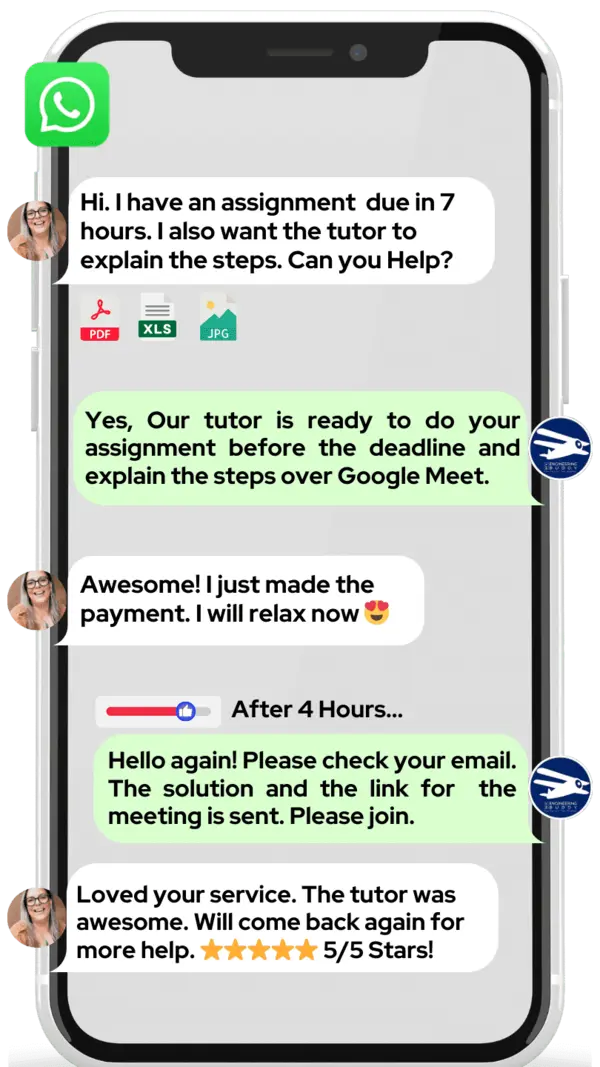
Unlike platforms where you fill out a form and wait, MEB responds in under a minute, 24/7. Tutor match takes under an hour. The $1 trial means you test before you commit. Everything runs over WhatsApp — no logins, no intake forms.
Study Plans (Pick One That Matches Your Goal)
The tutor builds your session plan after the first diagnostic, but most Masonry Structures students fall into one of three patterns: a catch-up plan (1–3 weeks, 3–4 sessions, focused on closing the biggest calculation gaps before a deadline), an exam prep plan (4–8 weeks, one or two sessions per week, covering the full syllabus with past paper practice), or weekly ongoing support aligned to your semester schedule and coursework submission dates. Whichever applies, the tutor maps the sequence — you don’t have to figure out the order.
Pricing Guide
Masonry Structures tutoring starts at $20/hr for most undergraduate levels. Advanced topics — post-graduate design projects, heritage structure assessment, seismic masonry analysis — run $35–$100/hr depending on tutor specialisation and timeline urgency.
Rate factors include your level, the complexity of the design code involved, your deadline, and tutor availability. Availability tightens at end-of-semester and during peak submission periods — secure your tutor slot before the rush.
For students targeting top structural engineering programmes or professional chartership pathways, tutors with industry design or research backgrounds are available at higher rates. Share your specific goal and MEB will match the tier to your ambition.
Start with the $1 trial — 30 minutes, no registration, no commitment. WhatsApp MEB for a quick quote.
MEB covers 2,800+ advanced engineering and technical subjects — from Masonry Structures to structural dynamics and earthquake engineering — with tutors available across every major time zone, 24/7.
Source: My Engineering Buddy, 2008–2025.
FAQ
Is Masonry Structures hard?
It’s demanding because it combines material science, structural mechanics, and dense design codes. Most students find Eurocode 6 clause navigation and eccentricity calculations the hardest part. Those two areas alone account for the majority of marks lost in assessments.
How many sessions are needed?
Most students close their main gaps in 6–10 sessions. A focused exam prep plan over 4–6 weeks typically covers the full syllabus with past paper practice. The tutor maps the sequence after the first diagnostic session so nothing is guessed.
Can you help with homework and assignments?
MEB tutoring is guided learning — you understand the work, then submit it yourself. The tutor explains the method, works through a comparable example, and checks your reasoning. See our Academic Integrity policy and Why MEB page for full details on what we help with and what we don’t.
Will the tutor match my exact syllabus or exam board?
Yes. Share your module guide, course outline, or assignment brief before the first session. The tutor aligns to your specific design standard — Eurocode 6, ACI 530, or BS 5628 — and your university’s assessment requirements, not a generic curriculum.
What happens in the first session?
The tutor runs a short diagnostic using a past exam question or an assignment problem you’ve already attempted. This identifies the specific gaps — whether that’s material classification, load calculation, or code clause application — and sets the session plan from there.
Is online tutoring as effective as in-person?
For calculation-based subjects like Masonry Structures, yes. The tutor works on a digital pen-pad in real time — you see every calculation step as it’s built. Most students report no difference in effectiveness once they’ve done their first session online.
What’s the difference between Eurocode 6 and ACI 530 — and which one will my tutor use?
Eurocode 6 governs masonry design in the UK and most of Europe; ACI 530 is the US standard. The two use different partial factor philosophies and wall classification approaches. Your tutor works with whichever applies to your course — share your module guide before the first session.
Can MEB help with unreinforced masonry design specifically?
Yes. Unreinforced masonry — including load-bearing wall design, arch analysis, and out-of-plane stability — is one of the most frequently requested topics. Tutors cover both hand-calculation methods and code-compliant design approaches for URM elements.
Can I get Masonry Structures help at midnight?
Yes. MEB operates 24/7 across all time zones. WhatsApp MEB at any hour — average response time is under one minute. Tutors are available in US, UK, Gulf, Australian, and Canadian time zones, so late-night help is genuinely available, not a marketing claim.
What if I don’t like my assigned tutor?
Request a replacement. It’s straightforward — WhatsApp MEB, explain what wasn’t working, and a different tutor is matched. There’s no lock-in, no process to navigate. The $1 trial exists precisely so you can test the match before committing to longer sessions.
How do I get started?
Three steps: WhatsApp MEB, share your module or assignment, and start the $1 trial — 30 minutes of live tutoring or one homework question explained in full. You’re matched with a verified tutor within the hour. No registration required.
Trust & Quality at My Engineering Buddy
Every Masonry Structures tutor on MEB goes through subject-specific screening — a review of their structural engineering qualification, their working knowledge of Eurocode 6 or ACI 530, and a live demo evaluation before they take any student session. Ongoing feedback from every session is reviewed, and tutors with consistent ratings below the platform standard are removed. Rated 4.8/5 across 40,000+ verified reviews on Google. That rating is held by real students in real courses — not inflated by incentive schemes.
MEB tutoring is guided learning — you understand the work, then submit it yourself. For full details on what we help with and what we don’t, read our Academic Integrity policy and Why MEB.
MEB has been serving students in Civil Engineering and related structural subjects — including structural mechanics tutoring, foundation design engineering help, and steel structures tutoring — since 2008. The platform covers 2,800+ advanced subjects and has served 52,000+ students across the US, UK, Canada, Australia, Gulf, and Europe. Learn more about how sessions are structured at MEB’s tutoring methodology.
A common pattern our tutors observe is that Masonry Structures students arrive knowing the conceptual story — arch thrust, wall slenderness, mortar bond — but struggle the moment they open the design code. That gap between understanding and application is exactly what 1:1 sessions close.
Explore Related Subjects
Students studying Masonry Structures often also need support in:
- Advanced Concrete Technology
- Building Materials
- Composite Materials and Structures
- Fracture Mechanics
- Geotechnical Engineering
- Timber Structures
- Blast Resistant Design
- Rock Mechanics
Next Steps
Getting started takes about two minutes.
- Share your exam board or design standard (Eurocode 6, ACI 530, BS 5628), your hardest topic, and your deadline or exam date
- Share your time zone and weekly availability
- MEB matches you with a verified Masonry Structures tutor — usually within 24 hours, often within the hour
Before your first session, have ready: your module guide or syllabus, a past paper attempt or assignment question you struggled with, and your exam or submission date. The tutor handles everything else.
Visit www.myengineeringbuddy.com for more on how MEB works.
WhatsApp to get started or email meb@myengineeringbuddy.com.
Reviewed by Subject Expert
This page has been carefully reviewed and validated by our subject expert to ensure accuracy and relevance.