Hire Verified & Experienced
MRI (Magnetic Resonance Imaging) Tutors
Email: [email protected]
4.8/5 40K+ session ratings collected on the MEB platform



Hire The Best MRI (Magnetic Resonance Imaging) Tutor
Top Tutors, Top Grades. Without The Stress!
MRI physics is failing students who can handle anatomy and physiology just fine — the math and signal theory hit differently.
MRI (Magnetic Resonance Imaging) Tutor Online
MRI (Magnetic Resonance Imaging) is a medical imaging technique that uses strong magnetic fields and radiofrequency pulses to generate detailed anatomical images. It equips students to interpret image contrast, pulse sequences, and clinical scan protocols across radiography and medical programmes.
If you’re searching for an MRI tutor near me, MEB connects you with verified online tutors who know the subject at the level your course demands — from undergraduate radiography programmes to graduate-level biomedical imaging modules. Our Medicine tutoring network covers the full clinical sciences spectrum, and MRI sits at its technical core. One session can shift your understanding of T1 versus T2 weighting from confusion to clarity.
- 1:1 online sessions tailored to your exact course syllabus and exam board
- Expert-verified tutors with subject-specific knowledge in MRI physics and clinical applications
- Flexible time zones — US, UK, Canada, Australia, Gulf
- Structured learning plan built after a diagnostic session
- Ethical homework and assignment guidance — you understand the work, then submit it yourself
52,000+ students across the US, UK, Canada, Australia, and the Gulf have used MEB since 2008 — including students in Medicine subjects like MRI, radiology tutoring, and Computed Tomography (CT).
Source: My Engineering Buddy, 2008–2025.
How Much Does an MRI Tutor Cost?
Most MRI tutoring sessions run $20–$40/hr depending on the level and topic complexity. Graduate-level or highly specialised imaging physics can reach $100/hr. First, try the $1 trial — 30 minutes of live 1:1 tutoring or one full homework question explained, no registration required.
| Level / Need | Typical Rate | What’s Included |
|---|---|---|
| Undergraduate / BSc Radiography | $20–$35/hr | 1:1 sessions, homework guidance |
| Graduate / Biomedical Imaging MSc | $35–$70/hr | Advanced MRI physics, sequence design |
| $1 Trial | $1 flat | 30 min live session or 1 homework question |
Tutor availability tightens during end-of-semester exam periods. Book early if your clinical rotation assessment or module exam is within six weeks.
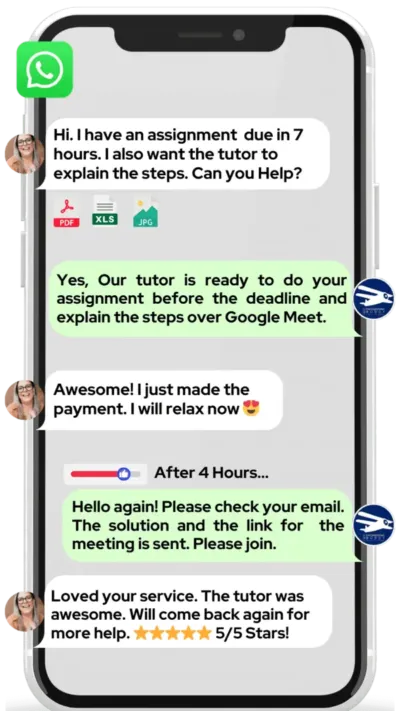
WhatsApp MEB for a quick quote — average response time under 1 minute.
Who This MRI Tutoring Is For
MRI courses combine physics, anatomy, and clinical judgment in a way that trips up even strong students. If your marks don’t reflect how much time you’re putting in, one-to-one sessions usually diagnose the gap within the first 30 minutes.
- Undergraduate radiography students struggling with MRI physics and signal theory
- Graduate students in biomedical imaging, medical physics, or diagnostic imaging programmes
- Students retaking after a failed first attempt at an MRI or medical imaging module
- Students with a university conditional offer depending on this grade
- Clinicians in postgraduate study needing to close gaps in MRI sequence optimisation or artefact recognition
- Parents watching a student’s confidence drop alongside their imaging physics grades
MEB tutors have worked with students at institutions across the US, UK, Canada, Australia, and the Gulf — including those progressing into radiology residencies, medical physics programmes, and clinical MRI practice at hospitals affiliated with institutions like Johns Hopkins, the University of Toronto, King’s College London, the University of Melbourne, and Hamad Medical Corporation in Qatar.
1:1 Tutoring vs Self-Study vs AI vs YouTube vs Online Courses
Self-study works if you’re disciplined, but MRI physics has no feedback loop to tell you when your mental model is wrong. AI tools give fast explanations but can’t adapt live to the specific sequence parameters your exam board tests. YouTube is solid for broad overviews of BOLD imaging or spin-echo sequences — it stops when you’re stuck on a specific k-space problem. Online courses move at a fixed pace with no personalisation. With a 1:1 MRI tutor from MEB, every session is calibrated to your exact course, your specific gaps in gradient echo vs spin echo, and the assessment format your programme uses — errors get corrected in the moment, not three days later when you check the answer key.
Outcomes: What You’ll Be Able To Do in MRI
After structured 1:1 MRI tutoring, you’ll be able to explain the Larmor frequency equation and apply it to field-strength calculations. You’ll analyse T1 and T2 relaxation curves and predict image contrast for different tissue types. You’ll solve k-space acquisition problems without confusing phase and frequency encoding directions. You’ll apply knowledge of MRI artefacts — motion, chemical shift, susceptibility — to identify their source in a clinical scan. You’ll present scan protocol choices for specific clinical indications, from brain tumour assessment to cardiac MRI, with clear technical justification.
A common pattern our tutors observe is that students can memorise what T1-weighted and T2-weighted mean without understanding why the contrast difference arises. That gap — between label and mechanism — is exactly where exam questions expose you. One session on relaxation physics usually closes it permanently.
Based on feedback from 40,000+ sessions collected by MEB from 2022 to 2025, 58% of students improved by one full grade after approximately 20 hours of 1:1 tutoring in subjects like MRI. A further 23% achieved at least a half-grade improvement.
Source: MEB session feedback data, 2022–2025.
What We Cover in MRI (Syllabus / Topics)

Track 1: MRI Physics and Signal Theory
- Nuclear magnetic resonance: spin, precession, and the Larmor frequency
- RF excitation, free induction decay, and signal detection
- T1 and T2 relaxation: mechanisms, tissue values, and clinical relevance
- Pulse sequences: spin echo, gradient echo, inversion recovery, EPI
- k-space: trajectory, sampling, and relationship to image formation
- Signal-to-noise ratio: factors affecting SNR and trade-offs in scan design
- Magnetic field gradients: slice selection, frequency encoding, phase encoding
Recommended texts: Westbrook, Roth & Talbot — MRI in Practice (5th ed.); Hashemi, Bradley & Lisanti — MRIs Made Easy; Brown, Cheng & Haacke — Magnetic Resonance Imaging: Physical Principles and Sequence Design.
Track 2: Clinical MRI Applications and Protocols
- Brain and spine MRI: protocol selection, plane orientation, clinical indications
- Musculoskeletal MRI: joint imaging, cartilage assessment, tendon pathology
- Cardiac MRI: gating strategies, functional assessment, perfusion imaging
- Abdominal and pelvic MRI: organ-specific sequences, breath-hold techniques
- MRI contrast agents: gadolinium-based agents, mechanism, safety considerations
- Functional MRI (fMRI) and diffusion-weighted imaging (DWI): principles and uses
- MRI safety: zones, implant screening, RF heating, and projectile risk
Recommended texts: Westbrook — Handbook of MRI Technique (4th ed.); Pooley & McKinney — Clinical Imaging Physics; American College of Radiology — ACR Manual on MR Safety.
Track 3: MRI Artefacts, Quality Assurance, and Advanced Topics
- Artefact identification: motion, chemical shift, wrap-around, susceptibility, truncation
- Artefact correction strategies: saturation bands, parallel imaging, fat suppression
- Parallel imaging techniques: SENSE, GRAPPA — principles and SNR implications
- MR spectroscopy: basics, metabolite identification, clinical applications
- Quality assurance protocols: phantom testing, field uniformity, geometric distortion
- Emerging sequences: compressed sensing, synthetic MRI, ultra-high field considerations
Recommended texts: Nitz & Reimer — Primer on Medical Device Interactions with Magnetic Resonance Imaging Systems; Bushberg et al. — The Essential Physics of Medical Imaging (3rd ed.).
Students consistently tell us that artefact questions feel unfair until they understand the underlying physics. Once a tutor walks through why chemical shift artefact appears at fat-water interfaces — using your own scanner images — the pattern recognition clicks for the whole artefact category, not just that one example.
What a Typical MRI Session Looks Like
The tutor opens by checking where you landed on the previous session’s topic — for example, whether spin-echo vs gradient-echo contrast differences are now clear. From there, you move into the scheduled topic together: if it’s k-space, the tutor draws the trajectory on the digital pen-pad in real time, labels the axes, and works through how changing the phase-encoding step affects spatial resolution. You attempt a problem — calculating the effect of reducing bandwidth on SNR — and the tutor watches your reasoning, not just your answer. If you go wrong at step two, they catch it there, not at the end. The session closes with two or three targeted practice problems set for before next time, and the next topic is noted so you can glance at it briefly beforehand.
How MEB Tutors Help You with MRI (The Learning Loop)
Diagnose: In the first session, the tutor asks you to work through a signal-theory or contrast question unprompted. They listen for where your explanation breaks down — whether it’s the relaxation mechanism, the sequence timing, or the clinical interpretation — and map the gap precisely before anything is taught.
Explain: The tutor works through the concept live using a digital pen-pad — drawing Bloch vectors, labelling TR and TE on a pulse sequence diagram, or sketching a k-space matrix. You see the reasoning built from scratch, not a finished slide.
Practice: You attempt a similar problem with the tutor present. This matters more than watching. MRI physics questions require active calculation and image interpretation, not passive recognition — the tutor holds you to that standard.
Feedback: Every error gets unpacked step by step. The tutor identifies not just what went wrong but why — incorrect assumption about field strength, confusion between T1 and T2 weighting, or a gap in artefact mechanism knowledge. That distinction prevents the same error recurring.
Plan: At the end of each session, the tutor sets the next topic, assigns specific practice problems, and notes which areas need a second pass. You don’t leave without knowing exactly what to do before you meet again.
Sessions run on Google Meet with a digital pen-pad or iPad and Apple Pencil. Before your first session, have your module outline, a recent homework or past paper question you struggled with, and your exam or assessment date ready. The first session doubles as your diagnostic — start with the $1 trial and 30 minutes of live tutoring covers both goals.
Tutor Match Criteria (How We Pick Your Tutor)
Not every MRI tutor understands your specific course structure. MEB matches on four criteria.
Subject depth: The tutor must have demonstrable knowledge at your level — undergraduate radiography physics, graduate biomedical imaging, or postgraduate clinical MRI. General physics tutors are not used for MRI sequence design questions.
Tools: Every tutor uses Google Meet with a digital pen-pad or iPad and Apple Pencil. Drawing pulse sequence diagrams and k-space trajectories live is not optional for this subject.
Time zone: Matched to your region — US, UK, Gulf, Canada, or Australia — so scheduling doesn’t become a friction point.
Goals: Whether you need exam-ready mastery of artefact identification, conceptual depth in relaxation physics, or support on a clinical imaging assignment, the tutor is briefed on your specific objective before the first session.
Unlike platforms where you fill out a form and wait, MEB responds in under a minute, 24/7. Tutor match takes under an hour. The $1 trial means you test before you commit. Everything runs over WhatsApp — no logins, no intake forms.
Study Plans (Pick One That Matches Your Goal)
The tutor builds your session sequence after the diagnostic, but three starting structures work for most MRI students. Catch-up (1–3 weeks): for students behind on MRI physics or clinical applications with an assessment approaching. Exam prep (4–8 weeks): structured revision covering pulse sequences, artefacts, clinical protocols, and past paper practice before a module exam. Weekly support: ongoing sessions aligned to your semester timetable, covering each new topic as your course introduces it. The tutor adjusts the plan as your understanding develops.
Pricing Guide
Standard MRI tutoring runs $20–$40/hr. Graduate-level imaging physics, MR spectroscopy, or advanced sequence optimisation reaches up to $100/hr depending on tutor specialisation and session depth. Rate factors include your study level, topic complexity, timeline, and tutor availability.
For students targeting radiology residency programmes, medical physics certifications, or research positions in MRI methodology, tutors with clinical or research backgrounds in MRI are available at higher rates — share your specific goal and MEB matches the tier to your ambition.
Availability is tightest in the weeks before end-of-semester exams and OSCE assessments. Start with the $1 trial — 30 minutes, no registration, no commitment. WhatsApp MEB for a quick quote.
FAQ
Is MRI hard?
MRI combines electromagnetism, quantum mechanics, Fourier mathematics, and clinical anatomy in a single subject. Most students find signal theory and k-space the hardest sections. With a tutor who can draw the physics live and link it to clinical images, the difficulty drops sharply.
How many sessions are needed?
Students with specific exam gaps typically need 8–15 sessions over four to six weeks. Students seeking weekly support through a full semester average one to two sessions per week. The tutor maps the exact sequence after the first diagnostic session.
Can you help with homework and assignments?
MEB tutoring is guided learning — you understand the work, then submit it yourself. The tutor walks through the method, works a similar problem, and checks your reasoning. See our Academic Integrity policy and Why MEB page for full details on what we help with and what we don’t.
Will the tutor match my exact syllabus or exam board?
Yes. Before matching, MEB asks for your programme, institution, and module outline. Tutors are matched to your specific course — whether that’s a BSc Radiography module in the UK, a US graduate biomedical imaging programme, or a postgraduate clinical MRI certificate.
What happens in the first session?
The tutor asks you to work through a question unprompted to identify where your understanding breaks down. From there, they set the session order for the remainder of your time together. The first session always ends with a clear topic plan and next practice task.
Is online tutoring as effective as in-person?
For MRI specifically, online tutoring with a digital pen-pad is often more effective than in-person — the tutor can draw pulse diagrams, annotate clinical images, and share worked calculations in real time, without needing a physical whiteboard. Screen-sharing a scan and annotating it live is something in-person sessions rarely replicate as cleanly.
What is the difference between T1-weighted and T2-weighted MRI, and why do students keep confusing them?
T1 weighting uses short TR and short TE to highlight fat as bright; T2 weighting uses long TR and long TE to highlight fluid as bright. The confusion arises because both use the same scanner — only the timing parameters change. Most students learn the labels before they understand the relaxation mechanism, so the distinction never sticks without a physics walkthrough.
Do I need to understand k-space to pass my MRI module?
In most undergraduate and graduate MRI programmes, yes. Examiners test k-space sampling, the effect of altering phase-encoding steps on resolution, and what happens when k-space data is incomplete or corrupted. Students who skip this section typically lose marks on image reconstruction and artefact questions across the entire paper.
Can I get MRI tutoring help late at night or at weekends?
MEB operates 24/7. Tutors are available across multiple time zones, so late-evening sessions for US students and early-morning slots for Gulf or Australian students are both regularly booked. WhatsApp MEB at any hour and the average response is under a minute.
What if I don’t get along with my assigned tutor?
Request a change over WhatsApp. MEB re-matches you, usually within the same day. You are never locked into a tutor, and the $1 trial exists precisely so you can assess the match before committing to a full block of sessions.
How do I get started?
WhatsApp MEB, share your subject and exam date, get matched with a verified MRI tutor — usually within the hour. Your first session is the $1 trial: 30 minutes live or one full homework question explained. Three steps: message, match, start.
Trust & Quality at My Engineering Buddy
Every MEB tutor goes through subject-specific screening before taking a session. For MRI, that means demonstrating knowledge of pulse sequence design, relaxation physics, and clinical protocol selection — not just general physics competency. Tutors complete a live demo evaluation and are reviewed after every session. Rated 4.8/5 across 40,000+ verified reviews on Google.
MEB tutoring is guided learning — you understand the work, then submit it yourself. For full details on what we help with and what we don’t, read our Academic Integrity policy and Why MEB.
MEB has been serving students across the US, UK, Canada, Australia, the Gulf, and Europe since 2008 — across 2,800+ subjects. In Medicine and clinical imaging specifically, that includes students needing radiology tutoring, nuclear medicine help, and radiation therapy tutoring. The tutoring methodology behind every session is detailed in our tutoring methodology page.
At MEB, we’ve found that students who arrive thinking they have a memory problem actually have a physics model problem. Once the model is right, the clinical applications follow without further effort. That distinction is what 1:1 MRI tutoring addresses that flashcard revision never can.
MEB has matched students in MRI, ultrasound physics, and fluoroscopy with tutors who know the difference between what your exam board tests and what a general imaging textbook covers.
Source: My Engineering Buddy, 2008–2025.
Try your first session for $1 — 30 minutes of live 1:1 tutoring or one homework question explained in full. No registration. No commitment. WhatsApp MEB now and get matched within the hour.
Explore Related Subjects
Students studying MRI often also need support in:
Next Steps
Before your first session, have ready: your exam board and syllabus or course outline, a recent past paper attempt or homework question you struggled with, and your exam or assessment date. The tutor handles the rest.
- Share your programme, hardest MRI topic, and current timeline
- Share your availability and time zone
- MEB matches you with a verified tutor — usually within 24 hours
Visit www.myengineeringbuddy.com for more on how MEB works.
WhatsApp to get started or email [email protected].
52,000+ Happy Students From Various Universities



How Much For Private 1:1 Tutoring & Hw Help?
Private 1:1 Tutoring and HW help Cost $20 – 35 per hour* on average.
Reviewed by Subject Expert
This page has been carefully reviewed and validated by our subject expert to ensure accuracy and relevance.