




~1 min
Average Reply Time
~1 hour
To Be Matched With A Tutor
1 Trial
75% Find Their Tutor On The 1st Trial
$1
Your First 30 Minutes
Hire The Best O-Level Accounting (7707) Tutor
Top Tutors, Top Grades. Without The Stress!
Related Subjects
Most students who fail O-Level Accounting (7707) don’t lack ability — they misread double-entry questions under exam conditions and lose marks on topics they half-understood.
O-Level Accounting (7707) Tutor Online
O-Level Accounting (7707) is a Cambridge International qualification covering double-entry bookkeeping, financial statements, and management accounting, equipping students to record, analyse, and interpret business financial data at secondary level.
Looking for an O-Level Accounting (7707) tutor near me? MEB connects you with a verified 1:1 online tutor who knows the Cambridge 7707 syllabus — every paper, every mark scheme quirk, every component weighting. Our O-Level tutoring programme pairs you with a specialist who has worked through past papers, identified where marks are lost, and built sessions around fixing exactly that. One focused tutor. No generic revision decks.
- 1:1 online sessions matched to the Cambridge 7707 syllabus
- Expert-verified tutors with subject-specific accounting knowledge
- Flexible time zones — US, UK, Canada, Australia, Gulf
- Structured learning plan built after a diagnostic session
- Ethical homework and assignment guidance — you understand before you submit
52,000+ students across the US, UK, Canada, Australia, and the Gulf have used MEB since 2008 — including students in O-Level subjects like Accounting (7707), O-Level Economics, and O-Level Business Studies.
Source: My Engineering Buddy, 2008–2025.
How Much Does an O-Level Accounting (7707) Tutor Cost?
Most O-Level Accounting (7707) sessions run $20–$40/hr. You can test the service first with the $1 trial — 30 minutes of live tutoring or one full homework question explained in detail.
| Level / Need | Typical Rate | What’s Included |
|---|---|---|
| Standard (most O-Level students) | $20–$35/hr | 1:1 sessions, homework guidance |
| Advanced / Specialist | $35–$70/hr | Expert tutor, niche depth, past paper analysis |
| $1 Trial | $1 flat | 30 min live session or one full homework question |
Tutor availability tightens sharply in the weeks before the May/June and October/November Cambridge exam windows. Book early if your exam date is set.
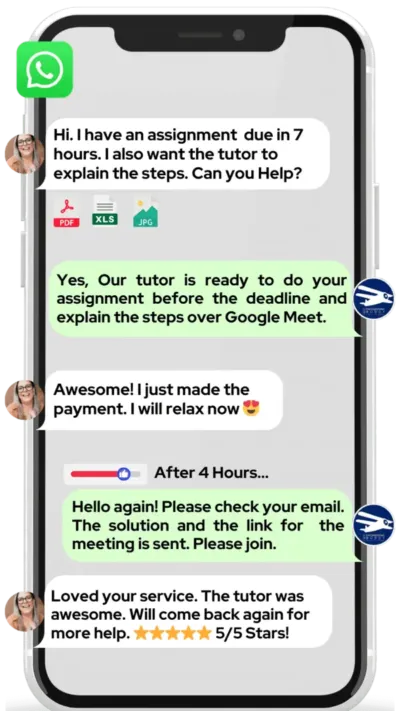
WhatsApp MEB for a quick quote — average response time under 1 minute.
Who This O-Level Accounting (7707) Tutoring Is For
This isn’t a generic accounting course. It’s 1:1 help built around the Cambridge 7707 syllabus — for students who need to close specific gaps fast, not sit through pre-recorded content they’ve already half-watched.
- Students who keep losing marks on double-entry and can’t see why
- Students retaking after a failed first attempt who need a different approach
- Students with a university conditional offer depending on this grade
- Students 4–6 weeks from an exam with the income statement and balance sheet still unclear
- Parents watching a child’s confidence drop alongside their accounting grades
- Students needing structured homework guidance on ledger accounts and financial statements
Students who go on to study at universities such as the University of Edinburgh, University of Toronto, Australian National University, or NYU often list O-Level Accounting as a subject where early clarity paid off for years. You can trial a session for the $1 flat fee before committing to anything.
At MEB, we’ve found that the students who struggle most in O-Level Accounting aren’t confused about all of it — they’ve got one or two structural misunderstandings (usually in double-entry or depreciation) that cascade into every subsequent topic. One focused session on the root issue changes more than five general revision sessions.
1:1 Tutoring vs Self-Study vs AI vs YouTube vs Online Courses
Self-study works if you’re disciplined, but there’s no one to tell you your T-account logic is slightly wrong until you’ve practiced it wrong for three weeks. AI tools explain fast but can’t watch you attempt a trial balance and catch the error mid-step. YouTube covers double-entry well in theory — it stops when your specific prepayment question doesn’t match the video. Online courses move at a fixed pace whether or not you’ve understood accruals. 1:1 tutoring with MEB is live, calibrated to Cambridge paper 1 and paper 2, and corrects errors the moment they happen — which in O-Level Accounting (7707) is exactly when it matters.
Outcomes: What You’ll Be Able To Do in O-Level Accounting (7707)
After consistent sessions, you’ll be able to apply double-entry rules confidently across a full set of ledger accounts, prepare and interpret an income statement and statement of financial position from source documents, analyse business performance using ratios like return on capital employed and current ratio, explain the purpose of depreciation using both straight-line and reducing balance methods, and write structured responses to Cambridge Paper 2 question types without losing marks on presentation or layout.
Supporting a student through O-Level Accounting (7707)? MEB works directly with parents to set up sessions, track progress, and keep coursework on schedule. WhatsApp MEB — average response time is under a minute, 24/7.
“Based on feedback from 40,000+ sessions collected by MEB from 2022 to 2025, 58% of students improved by one full grade after approximately 20 hours of 1:1 tutoring in subjects like O-Level Accounting (7707). A further 23% achieved at least a half-grade improvement.”
Source: MEB session feedback data, 2022–2025.
What We Cover in O-Level Accounting (7707) (Syllabus / Topics)
The Cambridge 7707 syllabus is assessed across two papers. Paper 1 is multiple choice (1 hour, 40 marks). Paper 2 is structured written questions (1 hour 45 minutes, 100 marks). Together they cover the following core areas.
Track 1: The Accounting System and Double Entry
- The purpose and role of accounting in business decision-making
- Double-entry bookkeeping: debit and credit rules for all account types
- The ledger system: sales, purchases, nominal, and personal accounts
- The trial balance: preparation, limitations, and error correction
- Day books: sales day book, purchases day book, returns books
- Cash books and petty cash books including the imprest system
- Journal entries for opening entries, corrections, and non-routine transactions
Key resources: Cambridge O Level Accounting by Coucom (Hodder), O Level Accounting by Randall (Cambridge University Press). Past papers from OECD Finance offer useful comparative framing for understanding financial reporting principles at this level.

Track 2: Financial Statements
- Income statements for sole traders: gross profit, net profit calculations
- Statements of financial position: assets, liabilities, and capital structure
- Adjustments: accruals, prepayments, bad debts, and provisions
- Depreciation: straight-line method vs reducing balance method
- Disposal of non-current assets and profit or loss on disposal
- Partnership accounts: appropriation accounts, current accounts, capital accounts
- Manufacturing accounts: prime cost, factory overhead, cost of production
Key resources: Cambridge IGCSE and O Level Accounting by Coucom (2nd ed.), endorsed Cambridge past paper mark schemes 2019–2024.
Track 3: Analysis, Interpretation, and Management Accounting
- Ratio analysis: profitability, liquidity, and efficiency ratios
- Interpretation of financial statements for business owners and investors
- Club accounts: receipts and payments accounts, income and expenditure accounts
- Incomplete records: single-entry and reconstructing missing figures
- Inventory valuation methods: FIFO and AVCO — effect on profit
- Budgeting and cash flow forecasting basics
Key resources: O Level Accounting by Frankland (Pearson), Cambridge 7707 specimen papers and examiner reports.
A common pattern our tutors observe is that students can recite the rules of double entry but freeze when the question mixes accruals with a disposal entry in the same task. That’s a sequencing problem, not a knowledge gap — and it’s exactly the kind of thing a tutor spots in 20 minutes that self-study never will.
What a Typical O-Level Accounting (7707) Session Looks Like
The tutor opens by checking what happened with the previous session’s task — usually a past paper question on ledger accounts or a set of adjustments the student attempted alone. Then the pair work through a live problem on screen: today it might be preparing a full income statement with accruals and prepayments from a set of source documents. The tutor uses a digital pen-pad to annotate the working in real time. The student attempts the next step, explains their reasoning out loud, and the tutor catches errors before they become habits. The session closes with one specific Cambridge-style question to attempt before next time, and the tutor notes the next topic in the sequence — often disposal of assets or incomplete records — so no session starts cold.
How MEB Tutors Help You with O-Level Accounting (7707) (The Learning Loop)
Diagnose: In the first session, the tutor works through a short set of bookkeeping and financial statement questions with the student. This identifies exactly which accounts are misunderstood, where double-entry logic breaks down, and whether the student can apply adjustments correctly under timed conditions.
Explain: Live worked examples on a digital pen-pad. The tutor doesn’t just show the answer — they narrate each debit and credit decision, slow down on the steps that lose marks on Paper 2, and use the Cambridge mark scheme language so answers score correctly.
Practice: The student attempts the next question with the tutor present. No looking away, no moving on. If the trial balance doesn’t agree, they find out why together, right now.
Feedback: Step-by-step error correction after every attempt. The tutor identifies whether the error is conceptual (wrong rule) or procedural (right rule, applied in the wrong order) — the fix is different for each.
Plan: At the end of each session, the tutor maps the next two topics in sequence, sets one specific task, and notes what the student needs to bring to the next session. No drift.
Sessions run over Google Meet with a digital pen-pad or iPad and Apple Pencil. Before your first session, have a recent past paper attempt or homework question ready, along with your exam date and the topics you feel least confident about. The first session covers the diagnostic and starts working immediately. Start with the $1 trial — 30 minutes of live tutoring that also serves as your first diagnostic.
“Students consistently tell us that the moment double-entry finally ‘clicked’ came during a live session — not while reading a textbook. The tutor’s ability to ask the right question at the right moment is what creates that shift.”
Source: My Engineering Buddy, compiled from student session feedback, 2022–2025.
Tutor Match Criteria (How We Pick Your Tutor)
Not every accounting tutor knows the Cambridge 7707 mark scheme. Here’s what MEB checks before matching.
Subject depth: Tutor must have direct experience with the Cambridge O-Level 7707 syllabus — not just general accounting knowledge. Tools: All tutors use Google Meet with a digital pen-pad or iPad and Apple Pencil — essential for showing working in accounting. Time zone: Matched to your region — US, UK, Gulf, Canada, or Australia — so sessions run at usable hours. Goals: Whether you need to close gaps before the May/June window, work through homework weekly, or rebuild from a failed attempt, the tutor is matched to that specific brief.
Unlike platforms where you fill out a form and wait, MEB responds in under a minute, 24/7. Tutor match takes under an hour. The $1 trial means you test before you commit. Everything runs over WhatsApp — no logins, no intake forms.
Study Plans (Pick One That Matches Your Goal)
After the diagnostic, your tutor maps the session plan. Three common structures: Catch-up (1–3 weeks) for students with a specific gap to close before an exam — double entry, adjustments, or ratio analysis worked through fast. Exam prep (4–8 weeks) for structured Paper 1 and Paper 2 revision with timed practice and mark scheme review. Weekly support for ongoing help aligned to your school’s coursework schedule, with homework guidance built in each week. The tutor decides the sequence after session one.
Pricing Guide
O-Level Accounting (7707) tutoring starts at $20/hr for standard syllabus support. More advanced requests — incomplete records, manufacturing accounts, or intensive exam prep close to the Cambridge window — typically run $30–$50/hr depending on tutor experience and timeline urgency.
Rate factors include: topic complexity, how far out the exam date is, and tutor availability. Rates at the top of the range reflect tutors with professional accounting backgrounds (CPA, ACCA, CIMA) who bring real-world application to the theory.
For students targeting places at institutions like the London School of Economics, University of Melbourne, or McGill where O-Level grades feed directly into conditional offers, tutors with professional finance backgrounds are available at higher rates — share your specific goal and MEB will match the tier to your situation.
Start with the $1 trial — 30 minutes, no registration, no commitment. WhatsApp MEB for a quick quote.
FAQ
Is O-Level Accounting (7707) hard?
It’s manageable once the logic of double entry is clear — but that logic trips up a lot of students early, and the errors compound. Students who struggle usually have one or two foundational misunderstandings, not a broad knowledge gap. A targeted session fixes this faster than weeks of solo revision.
How many sessions are needed?
Students with 4–6 weeks to an exam and a moderate gap typically need 8–12 sessions. Students doing weekly homework support need fewer at once. The tutor gives a realistic estimate after the first diagnostic session, not before — there’s no point guessing before seeing where you actually are.
Can you help with homework and assignments?
MEB tutoring is guided learning — you understand the work, then submit it yourself. The tutor explains the method, walks through the logic, and checks your reasoning. See our Academic Integrity policy and Why MEB page for full details on what we help with and what we don’t.
Will the tutor match my exact syllabus or exam board?
Yes. MEB tutors are matched specifically to Cambridge 7707 — including paper structure, mark scheme conventions, and the specific question formats used in Paper 1 and Paper 2. If you’re on a different accounting syllabus, let MEB know via WhatsApp and a different match is arranged.
What happens in the first session?
The tutor runs a short diagnostic — usually a mix of bookkeeping entries, a financial statement question, and one adjustment task. This takes 15–20 minutes and immediately shows where understanding breaks down. The rest of the session starts working on whatever is most urgent.
Is online tutoring as effective as in-person?
For accounting, yes — often more so. The digital pen-pad allows the tutor to annotate T-accounts and financial statements in real time on screen. Students find it easier to follow step-by-step working when it’s drawn live in front of them than when watching someone write on a physical whiteboard.
Can I get O-Level Accounting (7707) help at midnight?
Yes. MEB tutors are available across multiple time zones, and the WhatsApp line runs 24/7. If you’re in the Gulf, Australia, or the US and need a session at an unusual hour, just message — MEB will find a match that fits your schedule, not the other way around.
What if I don’t understand my assigned tutor’s teaching style?
Say so on WhatsApp. MEB reassigns without questions or fees. The $1 trial exists precisely so you test the fit before committing to a regular schedule. If the first tutor doesn’t click, a different one is matched — usually within the same day.
What’s the difference between Paper 1 and Paper 2 in Cambridge 7707?
Paper 1 is 40 multiple choice questions in one hour — testing recognition and application of accounting concepts. Paper 2 is structured written questions over 1 hour 45 minutes — requiring full working, financial statement preparation, and analysis. Most marks are lost on Paper 2 presentation errors, which tutors specifically drill.
How do I prepare for the Cambridge 7707 ratio analysis questions?
Ratio questions on Paper 2 require both correct calculation and written interpretation — students who only calculate lose half the marks. Tutors at MEB work through each ratio with context: what it means for the business, what a change in the ratio implies, and how to phrase answers to match the mark scheme.
How do I get started?
Use the $1 trial — 30 minutes of live tutoring or one full question explained from start to finish. Three steps: WhatsApp MEB, get matched with a Cambridge 7707 tutor, then start the trial session. No registration form, no upfront commitment. Most students are matched within the hour.
Trust & Quality at My Engineering Buddy
Every MEB tutor goes through subject-specific vetting — not just a CV check. For O-Level Accounting (7707), that means demonstrating working knowledge of the Cambridge 7707 syllabus, completing a live demo session evaluated by MEB, and holding a relevant degree or professional accounting qualification (such as ACCA, CPA, or CIMA). Ongoing session feedback is reviewed to catch any drop in quality early. Rated 4.8/5 across 40,000+ verified reviews on Google.
MEB tutoring is guided learning — you understand the work, then submit it yourself. For full details on what we help with and what we don’t, read our Academic Integrity policy and Why MEB.
MEB has served 52,000+ students across the US, UK, Canada, Australia, the Gulf, and Europe since 2008, covering 2,800+ subjects. Within O-Level, the platform covers O-Level Business tutoring, O-Level Commerce help, and O-Level Statistics tutoring alongside Accounting — all with the same syllabus-matched tutor process. Read more about the MEB tutoring methodology.
Explore Related Subjects
Students studying O-Level Accounting (7707) often also need support in:
- O-Level Mathematics Syllabus D
- O-Level Additional Mathematics
- O-Level Sociology
- O-Level Geography
- O-Level Global Perspectives
- O-Level Computer Science
Next Steps
Before your first session, have ready: your exam board and syllabus (Cambridge 7707), a recent past paper attempt or homework question you struggled with, and your exam or deadline date. The tutor handles the rest.
- Share your hardest component (double entry, financial statements, ratio analysis) and your current exam timeline
- Share your availability and time zone
- MEB matches you with a verified Cambridge 7707 tutor — usually within the hour
First session starts with a diagnostic so every minute is used well. Visit www.myengineeringbuddy.com for more on how MEB works.
WhatsApp to get started or email [email protected].
52,000+ Happy Students From Various Universities



Reviewed by Subject Expert
This page has been carefully reviewed and validated by our subject expert to ensure accuracy and relevance.

