Hire Verified & Experienced
Simulation and Modeling Tutors
4.8/5 40K+ session ratings collected on the MEB platform
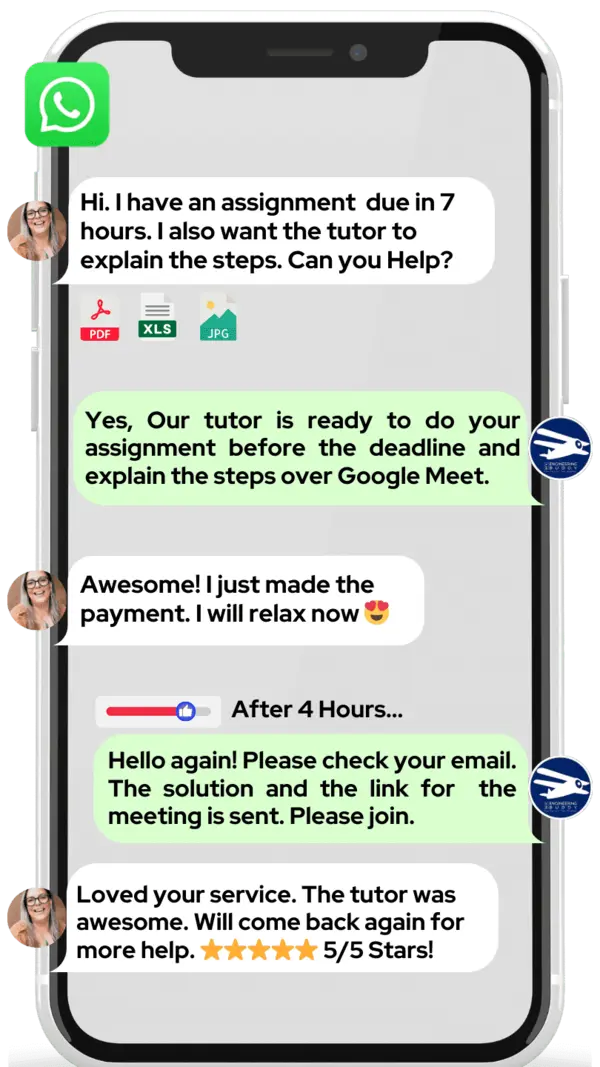



Hire The Best Simulation and Modeling Tutor
Top Tutors, Top Grades. Without The Stress!
52,000+ Happy Students From Various Universities






How Much For Private 1:1 Tutoring & Hw Help?
Private 1:1 Tutoring and HW help Cost $20 – 35 per hour* on average.
Simulation models break in the third decimal place, and most professors won’t slow down long enough to show you why.
Simulation and Modeling Tutor Online
Simulation and modeling is the process of constructing computational or mathematical representations of real-world systems to study behavior, test hypotheses, and support decision-making across engineering, operations, and applied science domains.
If you’re searching for a Simulation and Modeling tutor near me, MEB connects you with expert tutors for 1:1 online tutoring and homework help across 2,800+ advanced subjects. Our tutors cover discrete-event simulation, system dynamics, Monte Carlo methods, and stochastic modeling — matched to your exact course and institution. Part of MEB’s broader industrial engineering tutoring coverage, this service runs over Google Meet with a digital pen-pad so working through Arena, MATLAB, or AnyLogic models feels exactly like sitting with someone at the same screen.
- 1:1 online sessions tailored to your course syllabus and software environment
- Expert-verified tutors with subject-specific simulation and modeling knowledge
- Flexible time zones — US, UK, Canada, Australia, Gulf
- Structured learning plan built after a diagnostic session
- Ethical homework and assignment guidance — you understand the work before you submit it
52,000+ students across the US, UK, Canada, Australia, and the Gulf have used MEB since 2008 — including students in Industrial Engineering subjects like Simulation and Modeling, Statistical Process Control, and Production Planning.
Source: My Engineering Buddy, 2008–2025.
How Much Does a Simulation and Modeling Tutor Cost?
Most Simulation and Modeling tutoring sessions run $20–$40/hr. Graduate-level stochastic modeling or niche simulation software support can reach up to $100/hr. The $1 trial gets you 30 minutes of live 1:1 tutoring or a full worked solution to one homework question.
| Level / Need | Typical Rate | What’s Included |
|---|---|---|
| Standard (undergraduate) | $20–$35/hr | 1:1 sessions, homework guidance |
| Advanced / Graduate-level | $35–$100/hr | Expert tutor, niche simulation depth |
| $1 Trial | $1 flat | 30 min live session or 1 homework question |
Tutor availability tightens significantly around end-of-semester project deadlines and finals — book early if your submission is within three weeks.
WhatsApp MEB for a quick quote — average response time under 1 minute.
Who This Simulation and Modeling Tutoring Is For
Simulation and Modeling sits at the intersection of mathematics, software, and systems thinking. It trips up students who are strong in one of those three but shaky in another.
- Undergraduate Industrial Engineering, Operations Research, or Systems Engineering students hitting their first discrete-event simulation course
- Graduate students building stochastic or agent-based models for thesis research
- Students who failed or barely passed the midterm and have a final project due in three weeks
- Students whose university conditional offer depends on passing this module
- Students at MIT, Georgia Tech, Purdue, Imperial College, TU Delft, University of Michigan, or similar programs where simulation is a core required course
- Engineers in industry needing to get up to speed on Arena, AnyLogic, or MATLAB Simulink for a professional project
- Students needing ethical homework and assignment guidance — explained fully so they submit work they genuinely understand
Not sure where you stand? Start with the $1 trial — it functions as a 30-minute diagnostic.
1:1 Tutoring vs Self-Study vs AI vs YouTube vs Online Courses
Self-study works if you’re disciplined, but simulation errors compound — you won’t know your model logic is wrong until the output looks nothing like the system. AI tools give fast explanations but can’t watch you build a model live and catch where your queue discipline breaks down. YouTube covers Arena basics and Monte Carlo walkthroughs well enough, but stops the moment your specific model won’t converge. Online courses are paced for averages, not your deadline. With MEB, a tutor watches your simulation run in real time, spots the logic error in your entity routing, and corrects it before you’ve lost another two hours — specific to your exact course, your software, your assignment.
Outcomes: What You’ll Be Able To Do in Simulation and Modeling
After working with an MEB tutor, students report real, specific gains — not vague “improved confidence.” You’ll be able to build and validate discrete-event simulation models in Arena or AnyLogic from a problem statement, apply Monte Carlo methods to quantify uncertainty in manufacturing and logistics systems, analyze output data using confidence intervals and variance reduction techniques, explain warm-up period bias and why it matters for steady-state results, and present model assumptions and limitations in the way an examiner or thesis committee actually wants to see them.
Based on feedback from 40,000+ sessions collected by MEB from 2022 to 2025, 58% of students improved by one full grade after approximately 20 hours of 1:1 tutoring in subjects like Simulation and Modeling. A further 23% achieved at least a half-grade improvement.
Source: MEB session feedback data, 2022–2025.
At MEB, we’ve found that Simulation and Modeling students almost always struggle with the same two things: deciding when a model is “valid enough” to trust, and interpreting output statistics correctly. Most course materials skip past both. That’s where a tutor earns their session fee.
What We Cover in Simulation and Modeling (Syllabus / Topics)

Discrete-Event Simulation
- System conceptualization: entities, attributes, resources, queues, events
- Building and running models in Arena, AnyLogic, or SimPy
- Input data analysis: distribution fitting using Arena Input Analyzer or ExpertFit
- Verification and validation techniques for simulation models
- Warm-up period identification and steady-state analysis
- Output analysis: confidence intervals, replication method, batch means
- Comparing system alternatives using statistical tests
Core texts: Simulation Modeling and Analysis by Law (5th ed.), Discrete-Event System Simulation by Banks et al. (5th ed.).
Monte Carlo Simulation and Stochastic Modeling
- Random number generation: linear congruential generators, tests for randomness
- Random variate generation: inverse transform, acceptance-rejection, composition
- Monte Carlo integration and risk analysis
- Markov chains: transition matrices, steady-state probabilities, absorbing states
- Queuing theory: M/M/1, M/M/c, M/G/1 models and their simulation counterparts
- Variance reduction techniques: antithetic variates, control variates, stratified sampling
Core texts: Introduction to Probability Models by Ross (12th ed.), Stochastic Modeling and the Theory of Queues by Wolff.
System Dynamics and Agent-Based Modeling
- Causal loop diagrams and stock-and-flow structures in Vensim or AnyLogic
- Feedback loops: reinforcing and balancing structures
- Building agent-based models for complex adaptive systems
- Calibration and sensitivity analysis for dynamic models
- Applications: supply chain dynamics, epidemic spread modeling, traffic flow
- Model documentation and peer-review reporting standards
Core texts: Business Dynamics by Sterman, Introduction to Agent-Based Modeling by Wilensky and Rand.
Platforms, Tools & Textbooks We Support
Simulation and Modeling is one of the most software-dependent courses in engineering. MEB tutors work directly inside the tools your course uses — not around them.
- Arena (Rockwell Automation) — the most common undergraduate discrete-event platform
- AnyLogic — used heavily in graduate and research-level simulation
- MATLAB Simulink — continuous and hybrid system simulation
- SimPy (Python) — event-driven simulation for programming-oriented courses
- Vensim — system dynamics modeling
- @Risk / Crystal Ball — Monte Carlo in Excel environments
- R and Python (NumPy, SciPy) — statistical output analysis
What a Typical Simulation and Modeling Session Looks Like
The tutor opens by checking the previous session’s topic — say, distribution fitting for inter-arrival times — and asks you to explain your approach before moving on. From there, you pull up your current Arena or AnyLogic model on screen. The tutor watches your logic unfold in real time: how you’ve defined resources, where queue discipline is set, how entities are routed. When something’s off — a service time distribution that ignores truncation, or a replication count that’s nowhere near enough for stable output — the tutor flags it immediately using a digital pen-pad, marks the exact line of logic, and walks through the correction. You replicate the fix yourself while the tutor watches. The session closes with one specific task: build the next sub-model component or run the output analysis on your existing results and bring the confidence interval data next time.
How MEB Tutors Help You with Simulation and Modeling (The Learning Loop)
Diagnose: In the first session, the tutor identifies exactly where your understanding breaks down — is it input modeling, model logic, output interpretation, or the mathematics underneath? Most students think they have a software problem when they actually have a conceptual one.
Explain: The tutor works through a live problem using a digital pen-pad — annotating your model, deriving queue equations by hand if needed, showing why a particular variance reduction technique applies to your specific system.
Practice: You build or modify the model yourself while the tutor is present. No watching — doing. This is where simulation errors surface and get caught before submission.
Feedback: After each student attempt, the tutor gives step-by-step correction. Not just “that’s wrong” — specifically which assumption failed, why the output statistic is misleading, and what an examiner would mark down.
Plan: Each session ends with a clear next topic and a defined task. The tutor tracks your progress across sessions so nothing is revisited unnecessarily and nothing critical is skipped.
Sessions run on Google Meet with a digital pen-pad or iPad and Apple Pencil. Share your course syllabus, your current model file, and any output data before the first session. The tutor uses the first session as a diagnostic — every minute is directed at your actual gaps, not a generic walkthrough. Start with the $1 trial — 30 minutes of live tutoring that also serves as your first diagnostic.
Students consistently tell us that the hardest part of Simulation and Modeling isn’t the math or the software — it’s knowing whether your model is actually reflecting the real system or just producing numbers that look plausible. That distinction is exactly what a live tutor catches.
Tutor Match Criteria (How We Pick Your Tutor)
Not every simulation expert is the right tutor for every student. Here’s how MEB matches.
Subject depth: Tutors are matched on the specific simulation paradigm your course uses — discrete-event, Monte Carlo, system dynamics, or agent-based — and on the software platform (Arena, AnyLogic, SimPy, Vensim, MATLAB).
Tools: Every tutor works on Google Meet with a digital pen-pad or iPad and Apple Pencil — so model walkthroughs are visual, not verbal.
Time zone: Matched to your region. US, UK, Gulf, Canada, Australia — sessions are available when you actually study.
Goals: Whether you need to pass a final exam, complete a graduate thesis chapter, or fix a specific model that won’t validate — the tutor is briefed on your goal before the first session.
Unlike platforms where you fill out a form and wait days, MEB responds in under a minute, 24/7. Tutor match takes under an hour. The $1 trial means you test before you commit. Everything runs over WhatsApp — no logins, no intake forms.
Study Plans (Pick One That Matches Your Goal)
After a diagnostic session, the tutor builds a sequence specific to your gaps and deadline. Three common structures: Catch-up (1–3 weeks) — for students behind on key topics like output analysis or model validation with an exam or submission close; Exam prep (4–8 weeks) — structured revision covering all simulation paradigms, past paper questions, and software practice; Weekly support — ongoing sessions aligned to your semester schedule, covering new topics as your course progresses. The tutor adjusts the plan after each session based on what you’ve retained and what needs more time.
Pricing Guide
Simulation and Modeling tutoring starts at $20/hr for standard undergraduate courses. Graduate-level stochastic modeling, thesis support, or niche platform work (AnyLogic agent-based, MATLAB Simulink) runs $35–$100/hr. Rate factors: course level, topic complexity, how close your deadline is, and tutor availability at your time zone.
For students targeting top graduate programs or professional simulation roles at firms like McKinsey, Boeing, or automotive OEMs, tutors with direct industry or research simulation backgrounds are available at higher rates — share your specific goal and MEB will match the tier to your ambition.
Tutor availability drops fast in the two weeks before finals and project deadlines. Book before you’re in crisis mode.
Start with the $1 trial — 30 minutes, no registration, no commitment. WhatsApp MEB for a quick quote.
A common pattern our tutors observe is that students wait until the project is due in four days before asking for help. At that point, we can still fix the output analysis section and patch the validation write-up — but if you’d come two weeks earlier, you’d have a model worth submitting from the start.
FAQ
Is Simulation and Modeling hard?
It’s hard in a specific way. The concepts — queues, probability distributions, feedback loops — aren’t abstract. The difficulty is integrating them: building a model that’s both logically correct and statistically valid at the same time. Most students find output analysis the steepest part.
How many sessions are needed?
For a specific homework problem or model fix, one or two sessions usually suffice. For full course support — covering discrete-event, Monte Carlo, and output analysis — most students need 8–15 sessions spread across a semester. The diagnostic shapes the exact count.
Can you help with homework and assignments?
MEB tutoring is guided learning — you understand the work, then submit it yourself. The tutor explains the method, works through the logic with you, and checks that you can replicate it independently. See our Academic Integrity policy and Why MEB page for full details on what we help with and what we don’t.
Will the tutor match my exact syllabus or exam board?
Yes. MEB matches on simulation paradigm, software platform, and course level. Share your syllabus or course outline before the first session and the tutor will be briefed on your specific coverage — not a generic simulation curriculum.
What happens in the first session?
The tutor runs a diagnostic — reviewing your current model or recent assignment, identifying where your understanding breaks down, and mapping a session plan. No time is spent on topics you already have. Every minute is directed at your actual gaps.
Is online tutoring as effective as in-person?
For simulation, often more so. The tutor sees your actual model file on screen, not a whiteboard approximation of it. Google Meet with a digital pen-pad gives the tutor direct annotation on your work — closer to looking over your shoulder than a classroom ever is.
Can I get Simulation and Modeling help at midnight or over a weekend?
Yes. MEB operates 24/7. The WhatsApp response time averages under a minute regardless of when you message. Tutors across multiple time zones mean late-night and weekend sessions are regularly available — not rare exceptions.
What’s the difference between discrete-event simulation and system dynamics — and which one will my course cover?
Discrete-event simulation models individual entities moving through a system — customers, parts, jobs — with events at specific points in time. System dynamics models aggregate flows and feedback over continuous time. Most Industrial Engineering and Operations Research courses focus on discrete-event; MBA and policy programs often use system dynamics. Check your syllabus or ask MEB before booking.
Do you support Arena specifically — or only general simulation concepts?
MEB tutors work directly inside Arena, not just around it. They can review your model file, walk through module logic, fix routing errors, and guide output analysis using Arena’s built-in statistics tools. Software-specific help is available for Arena, AnyLogic, SimPy, Vensim, and MATLAB Simulink.
What if I don’t understand the math behind the simulation — probability distributions, Markov chains, or queuing theory?
That’s one of the most common gaps. Simulation courses assume probability fluency that many students don’t have. MEB tutors rebuild the underlying math — distribution fitting, transition probabilities, Little’s Law — as part of the tutoring, not as a prerequisite you’re expected to already own.
How do I get started?
Three steps: WhatsApp MEB, get matched with a verified Simulation and Modeling tutor within the hour, then start the $1 trial — 30 minutes of live tutoring or one homework question explained in full. No forms, no waiting, no commitment beyond the first dollar.
Trust & Quality at My Engineering Buddy
Every MEB tutor goes through subject-specific screening before taking sessions. That means a live demo evaluation, not just a CV review. Tutors covering Simulation and Modeling are assessed on their ability to work through model-building problems in real time — Arena logic, output interpretation, queuing math — before they’re matched with any student. Rated 4.8/5 across 40,000+ verified reviews on Google. Degrees and direct industry or research experience in simulation are required for advanced-level matching. Ongoing session feedback keeps tutor quality monitored after onboarding, not just at hiring.
MEB tutoring is guided learning — you understand the work, then submit it yourself. For full details on what we help with and what we don’t, read our Academic Integrity policy and Why MEB.
MEB has served 52,000+ students across the US, UK, Canada, Australia, Gulf, and Europe since 2008, covering 2,800+ advanced subjects. Within Industrial Engineering, MEB covers Simulation and Modeling alongside reliability engineering tutoring, risk and safety analysis help, and quality management tutoring — among many others. See our tutoring methodology for how the learning structure works across all subjects.
MEB has operated since 2008. 18 years of subject-specific tutor matching means the process works — the $1 trial exists because we’re confident you’ll stay after the first session.
Source: My Engineering Buddy, 2008–2025.
Try your first session for $1 — 30 minutes of live 1:1 tutoring or one homework question explained in full. No registration. No commitment. WhatsApp MEB now and get matched within the hour.
Explore Related Subjects
Students studying Simulation and Modeling often also need support in:
- Control Charts
- Failure Modes and Effects Analysis (FMEA)
- Lean Six Sigma
- Manufacturing Science and Engineering
- Six Sigma
- Statistical Quality Control
- Total Quality Management (TQM)
Next Steps
Getting started takes under two minutes. Before your first session, have ready:
- Your course syllabus or module outline, and the simulation software your course uses
- A recent assignment, model file, or homework problem you’ve struggled with
- Your submission or exam date, and your available time zones for sessions
MEB matches you with a verified Simulation and Modeling tutor — usually within 24 hours, often within the hour. The first session starts with a diagnostic so every minute is directed at your actual gaps. Visit www.myengineeringbuddy.com for more on how MEB works.
WhatsApp to get started or email meb@myengineeringbuddy.com.
Reviewed by Subject Expert
This page has been carefully reviewed and validated by our subject expert to ensure accuracy and relevance.