


Hire The Best STAAD Pro Tutor
Top Tutors, Top Grades. Without The Stress!





52,000+ Happy Students From Various Universities






How Much For Private 1:1 Tutoring & Hw Help?
Private 1:1 Tutoring and HW help Cost $20 – 35 per hour* on average.
Your STAAD Pro model runs. The beam deflection is wrong. You’ve checked the supports three times. Nobody in the tutorial can explain why.
STAAD Pro Tutor Online
STAAD Pro is a structural analysis and design software by Bentley Systems, used by civil and structural engineers to model beams, frames, trusses, and entire building structures under static and dynamic loading conditions.
If you’re searching for a STAAD Pro tutor near me, MEB connects you with verified structural engineering specialists for 1:1 online sessions — covering everything from basic beam modelling to advanced dynamic analysis. Our tutors work through your exact project or coursework, not a generic walkthrough. You leave each session able to build and interpret the model yourself, not just copy a result. MEB offers civil engineering tutoring across 2,800+ subjects since 2008.
- 1:1 online sessions tailored to your university course or project brief
- Expert-verified tutors with hands-on STAAD Pro and structural engineering experience
- Flexible time zones — US, UK, Canada, Australia, Gulf
- Structured learning plan built after a diagnostic session
- Guided project support — we explain the method, you build and submit the model
52,000+ students across the US, UK, Canada, Australia, and the Gulf have used MEB since 2008 — including students in Civil Engineering subjects like STAAD Pro, ETABS, and structural analysis.
Source: My Engineering Buddy, 2008–2025.
How Much Does a STAAD Pro Tutor Cost?
Most STAAD Pro sessions run $20–$40/hr. Graduate-level work or project-specific structural modelling can reach up to $100/hr depending on complexity. The $1 trial gets you 30 minutes of live tutoring or one full project question explained — no registration required.
| Level / Need | Typical Rate | What’s Included |
|---|---|---|
| Undergraduate / Standard | $20–$35/hr | 1:1 sessions, project guidance, model review |
| Postgraduate / Advanced | $35–$70/hr | Expert tutor, dynamic analysis, niche depth |
| $1 Trial | $1 flat | 30 min live session or 1 full project question |
Tutor availability tightens significantly around end-of-semester submission deadlines. Book early if your project deadline is within four weeks.
WhatsApp MEB for a quick quote — average response time under 1 minute.
Who This STAAD Pro Tutoring Is For
This isn’t a course for beginners who’ve never opened the software. MEB works best with students who are already in a structural engineering programme and hitting specific walls — a loading combination that won’t converge, a deflection result that makes no physical sense, or a report deadline approaching with gaps still to close.
- Undergraduate civil and structural engineering students working on STAAD Pro assignments or capstone projects
- Masters students running frame or truss models for thesis work
- Students who passed the theory but struggle to translate it into correct software inputs
- Students with a university project submission deadline approaching and unresolved modelling errors
- Parents supporting an engineering student whose grades dropped after the structural analysis module started
- Professionals upskilling from hand calculations to software-based structural design
Students come to MEB from universities including MIT, Imperial College London, ETH Zurich, University of Toronto, University of Melbourne, Georgia Tech, Delft University of Technology, and King Abdullah University of Science and Technology.
1:1 Tutoring vs Self-Study vs AI vs YouTube vs Online Courses
Self-study works if you can diagnose your own errors — most STAAD Pro users can’t, because the software accepts wrong inputs without warning. AI tools explain concepts quickly but can’t look at your specific model file and tell you why the reactions are off. YouTube covers the interface basics; it stops when your real problem is a load case definition or a support fixity error. Online courses walk you through worked examples at a fixed pace with no feedback on your actual output. 1:1 tutoring with MEB means a structural engineer looks at your STAAD Pro file, finds the error, explains the principle behind it, and makes sure you can fix it yourself next time.
Outcomes: What You’ll Be Able To Do in STAAD Pro
After working with an MEB STAAD Pro tutor online, students consistently solve beam and frame problems without reverting to trial-and-error input. You’ll model multi-storey structures correctly, applying dead loads, live loads, and wind load combinations to IS, AISC, Eurocode, or BS standards depending on your course. You’ll analyze deflection, shear force, and bending moment diagrams and explain what the output means — not just screenshot it for a report. Students learn to apply dynamic analysis for seismic loading cases, interpret mode shapes, and present results in a structured engineering report format.
Based on feedback from 40,000+ sessions collected by MEB from 2022 to 2025, 58% of students improved by one full grade after approximately 20 hours of 1:1 tutoring in subjects like STAAD Pro. A further 23% achieved at least a half-grade improvement.
Source: MEB session feedback data, 2022–2025.
At MEB, we’ve found that most STAAD Pro errors aren’t software errors — they’re modelling assumption errors. Students assign the right load magnitude but the wrong direction, or forget to release a moment at a pinned connection. Catching that in the first session saves weeks of confusion.
What We Cover in STAAD Pro (Syllabus / Topics)

Track 1: Structural Modelling Fundamentals
- Setting up the geometry: nodes, members, plates, and solids
- Defining material properties — steel, concrete, timber
- Assigning section profiles from the built-in steel table or custom sections
- Support conditions: fixed, pinned, roller, spring — and when each applies
- Member releases: moment releases at beam ends for pinned connections
- Self-weight and density assignments
- Model verification checks before running analysis
Core reference: STAAD Pro V8i / CONNECT Edition Technical Reference Manual (Bentley Systems); Structural Analysis by R.C. Hibbeler (10th ed.).
Track 2: Loading, Load Combinations, and Code-Based Design
- Dead loads, live loads, wind loads, seismic loads — input and direction
- Load combinations per IS 456, AISC 360, Eurocode 1, BS 6399
- Automatic load generation — wind pressure, seismic base shear
- Response spectrum analysis: defining the spectrum, mass participation
- Time-history analysis inputs and result interpretation
- Post-processing: reading shear force, bending moment, deflection diagrams
- Exporting results and preparing code-compliant design reports
Core reference: Steel Design by Segui; Reinforced Concrete: Mechanics and Design by Wight & MacGregor; relevant code documents (Eurocode 3, AISC, IS 800).
Track 3: Advanced Analysis and Design Checks
- Dynamic analysis: natural frequencies, mode shapes, mass matrix setup
- Buckling analysis and interpretation of critical load factors
- Steel member design checks: unity ratios, slenderness, lateraltorsional buckling
- Concrete design: reinforcement output, bar scheduling basics
- Parametric modelling using STAAD Editor scripting
- Troubleshooting convergence failures and instability warnings
- Comparing STAAD Pro output with hand-calculated benchmarks
Core reference: Matrix Structural Analysis by McGuire, Gallagher & Ziemian; Structural Safety (Elsevier) for reliability and code calibration context.
Platforms, Tools & Textbooks We Support
STAAD Pro sessions run on Bentley’s STAAD Pro V8i and CONNECT Edition. Tutors are familiar with both licence types and the differences in the interface between versions. Sessions use Google Meet for screen sharing — students share their model file or screen directly so the tutor can see the exact input and output. The tutor uses a digital pen-pad to annotate diagrams and walk through calculations alongside the software. MEB also supports SAP2000 tutoring and ETABS help for students working across multiple structural platforms.
What a Typical STAAD Pro Session Looks Like
The tutor opens by reviewing what was covered last time — usually a specific loading case or a deflection result the student was struggling to interpret. The student shares their STAAD Pro screen so the tutor can see the actual model: geometry, section assignments, load definitions, and analysis output. If there’s an error, they trace it back to source — wrong fixity condition, missing load combination, incorrect unit system — rather than patching the output. The student makes the correction themselves, with the tutor explaining the engineering principle behind it using a digital pen-pad. The session closes with one concrete task: rebuild a specific part of the model independently, or run a hand check on the critical member, before next time.
How MEB Tutors Help You with STAAD Pro (The Learning Loop)
Diagnose: In the first session, the tutor asks you to walk through your current model — what you built, what result you expected, what the software returned. Most problems reveal themselves immediately: a missing support, a load applied to the wrong node, or a combination factor applied twice.
Explain: The tutor works through the correct approach on a digital pen-pad, drawing the free-body diagram alongside the STAAD Pro input so the theory and the software stay connected. No isolated software clicks — every action links back to the structural engineering principle.
Practice: You rebuild the corrected model with the tutor present. This is not watching — this is doing. The tutor watches your input sequence and catches errors before you run the analysis, not after.
Feedback: When results come in, the tutor asks you to interpret them first. Deflection at the critical node — is it within code limits? Is the bending moment diagram the shape you’d expect? This is where conceptual understanding gets built, not just software fluency.
Plan: Before the session ends, the tutor sets the next task — a specific model type, a load combination to run independently, or a hand-calculation check to benchmark against the software output. Progress is tracked session to session.
Sessions run over Google Meet. The tutor uses a digital pen-pad or iPad with Apple Pencil for annotating structural diagrams. Before your first session, share your project brief or assignment sheet, any model file you’ve already started, and your submission deadline. The first session is always diagnostic — the tutor maps exactly where you are before building the plan. Start with the $1 trial — 30 minutes of live tutoring that also serves as your first diagnostic.
Students consistently tell us that STAAD Pro suddenly makes sense once the connection between the stiffness matrix theory from their structural analysis lectures and the software input is made explicit. That link is what the first session establishes.
Tutor Match Criteria (How We Pick Your Tutor)
Every STAAD Pro tutor at MEB is matched on four criteria.
Subject depth: The tutor holds a degree in civil or structural engineering and has worked with STAAD Pro in a professional or academic capacity — not just completed a tutorial course. We verify this before the tutor joins the platform.
Tools: All tutors use Google Meet and a digital pen-pad or iPad with Apple Pencil. No text-based tutoring for a software subject — everything is shown on screen.
Time zone: Your tutor is matched to your region — US, UK, Gulf, Canada, or Australia — so sessions run at practical hours without either party struggling through a 2am call.
Goals: Some students need to fix one model before a submission deadline. Others want to understand the full design workflow from modelling to code check. The tutor is briefed on your specific goal before the first session, not after.
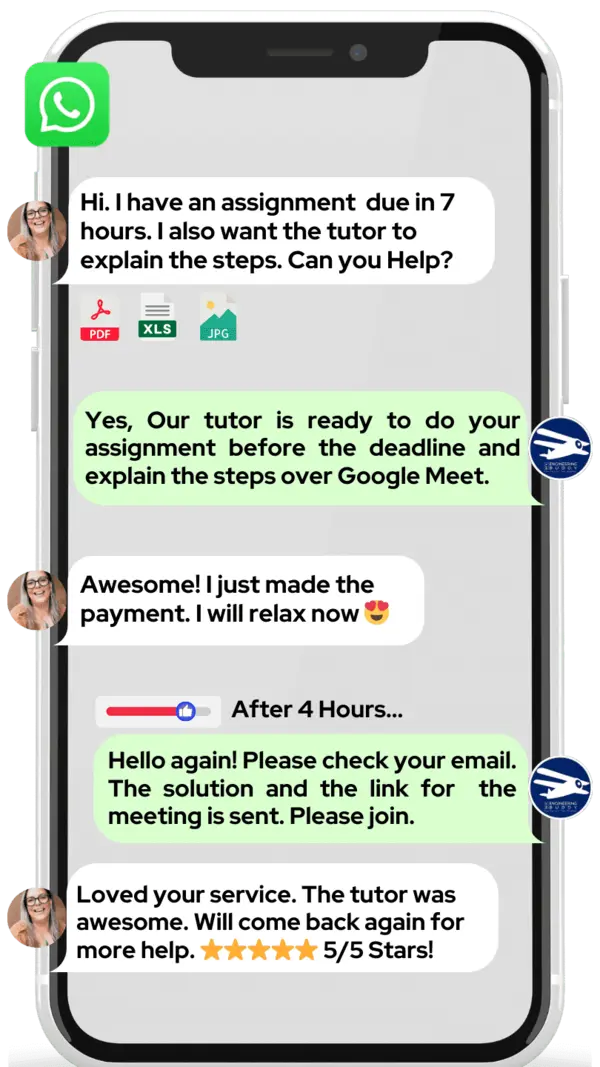
Unlike platforms where you fill out a form and wait, MEB responds in under a minute, 24/7. Tutor match takes under an hour. The $1 trial means you test before you commit. Everything runs over WhatsApp — no logins, no intake forms.
Pricing Guide
STAAD Pro tutoring starts at $20/hr for undergraduate-level work. Postgraduate projects, thesis modelling, or sessions requiring professional code-compliance expertise typically run $35–$70/hr. Highly specialised structural consultants with industry project backgrounds are available up to $100/hr.
Rate factors: level of study, complexity of the structural model, code standard required (Eurocode, AISC, IS, BS), and how quickly you need to start.
Peak submission periods — typically end of semester in May/June and November/December — fill fast. For students targeting positions at firms such as Arup, WSP, or Jacobs where STAAD Pro fluency is assessed during graduate recruitment, tutors with professional industry backgrounds are available at higher rates — share your specific goal and MEB will match the tier.
Start with the $1 trial — 30 minutes, no registration, no commitment. WhatsApp MEB for a quick quote.
STAAD Pro project help from MEB covers modelling, load combinations, dynamic analysis, and code-based design checks — all in live 1:1 sessions from $20/hr, with tutors matched to your exact project type and deadline.
Source: My Engineering Buddy, 2008–2025.
FAQ
Is STAAD Pro hard to learn?
The interface is manageable, but the difficulty is in the engineering behind the inputs. Students who understand structural theory pick up the software quickly. Students who don’t will get wrong results they can’t identify as wrong. That’s where a tutor makes the difference.
How many sessions will I need?
One or two sessions often fix a specific project error. Building full fluency — modelling, loading, analysis, design checks, and reporting — typically takes 8–15 sessions depending on your starting level. Your tutor maps this out after the first diagnostic.
Can you help with my STAAD Pro project and assignments?
Yes. MEB tutoring is guided learning — you understand the method, then build and submit the model yourself. The tutor explains the inputs, the engineering logic, and the expected output. See our Academic Integrity policy and Why MEB page for full details on what we help with and what we don’t.
Will the tutor match my exact syllabus or project code standard?
Yes. Before the first session, you share your brief and the design code required — Eurocode, AISC, IS 456/800, BS — and the tutor is matched accordingly. MEB covers all major structural design standards used in university programmes globally.
What happens in the first session?
The tutor reviews your current model or project brief, identifies the specific gap or error, and builds a session plan from there. Nothing is assumed — the diagnostic takes the first 10–15 minutes and determines everything that follows.
Is online STAAD Pro tutoring as effective as in-person?
For software-based subjects, online is often better. Screen sharing means the tutor sees exactly what you see. The digital pen-pad annotation works as well as a whiteboard. Most students cover more ground online because there’s no travel time and sessions start immediately.
What is the difference between STAAD Pro and ETABS, and can MEB help with both?
STAAD Pro handles a broader range of structure types — trusses, space frames, industrial structures. ETABS is optimised for multi-storey building design. Many engineering programmes require both. MEB offers separate ETABS tutoring alongside STAAD Pro — your tutor can clarify which tool suits your specific project.
Can I get STAAD Pro help at midnight or on weekends?
Yes. MEB operates 24/7 across all time zones. WhatsApp response typically comes within a minute. If your submission is in 12 hours and your model has a convergence error, message MEB now — tutors are available through the night in most major regions.
What if I don’t like my assigned STAAD Pro tutor?
Request a change over WhatsApp. MEB will match you with a different tutor, usually within the hour. The $1 trial exists specifically so you can test the match before committing to paid sessions. No explanation required.
Do you help with STAAD Pro for IS code-based design specifically?
Yes. IS 456 for reinforced concrete, IS 800 for steel structures, and IS 1893 for seismic loading are all covered. Tutors familiar with Bureau of Indian Standards code requirements are available, which is particularly relevant for students in Gulf universities running IS-based structural curricula.
How do I get started?
WhatsApp MEB, share your project brief or the specific problem you’re stuck on, and MEB matches you with a verified STAAD Pro tutor — usually within 24 hours. The first session starts with a diagnostic. The $1 trial covers 30 minutes of live tutoring or one full project question explained in detail.
Can you help with STAAD Pro Editor scripting and parametric modelling?
Yes. The STAAD Pro Editor allows direct scripting of geometry, loads, and analysis commands — useful for complex or repetitive models. MEB tutors cover the Editor workflow alongside the graphical interface, which is where most advanced students gain significant time savings.
Trust & Quality at My Engineering Buddy
Every MEB tutor goes through subject-specific screening before being assigned to a student. For STAAD Pro, that means verifying a structural engineering degree, hands-on software experience, and — for tutors handling advanced dynamic or seismic analysis — professional project history. New tutors complete a live demo evaluation. Ongoing feedback from every session feeds into a review system that flags underperformance before it becomes a student’s problem. Rated 4.8/5 across 40,000+ verified reviews on Google.
MEB provides guided learning support. All project work is produced and submitted by the student. For full details on what we help with and what we don’t, read our Academic Integrity policy and Why MEB.
MEB has served 52,000+ students across the US, UK, Canada, Australia, Gulf, and Europe in 2,800+ subjects since 2008. Within Civil Engineering, that includes students working on structural engineering tutoring, foundation design engineering help, and geotechnical engineering tutoring. Find out more about how MEB tutors are selected and sessions are structured at our tutoring methodology page.
MEB tutors are structural engineers first, tutors second. They know why a STAAD Pro model gives a wrong result before the student finishes describing it — because they’ve made the same mistake themselves on a real project.
Source: My Engineering Buddy, 2008–2025.
Try your first session for $1 — 30 minutes of live 1:1 tutoring or one homework question explained in full. No registration. No commitment.
WhatsApp MEB now
and get matched within the hour.
Explore Related Subjects
Students studying STAAD Pro often also need support in:
- Structural Dynamics
- Structural Mechanics
- Steel Structures
- Reinforced Cement Concrete (RCC)
- Earthquake Engineering
- Tekla Structures
- PLAXIS 2D/3D
- Composite Materials & Structures
Next Steps
Ready to fix your STAAD Pro model or close the gaps before your next submission?
- Share your exam board, project brief, and the specific error or topic you’re stuck on
- Share your availability and time zone
- MEB matches you with a verified STAAD Pro tutor — usually within 24 hours
- First session starts with a diagnostic so every minute is used well
Before your first session, have ready: your course outline or project brief, any STAAD Pro model file you’ve already started, and your submission or exam deadline date. The tutor handles the rest.
Visit www.myengineeringbuddy.com for more on how MEB works.
WhatsApp to get started or email meb@myengineeringbuddy.com.
Reviewed by Subject Expert
This page has been carefully reviewed and validated by our subject expert to ensure accuracy and relevance.