




~1 min
Average Reply Time
~1 hour
To Be Matched With A Tutor
30 Min Trial
75% Find Their Tutor On The 1st Trial
$20-35+/hr
Premium Yet Affordable Learning
Hire The Best Statistical software Tutor

SPSS won’t run your syntax. R throws an error at line 3. Your dissertation deadline is in five weeks.
Statistical Software Tutor Online
Statistical software refers to specialised programs — including SPSS, R, Stata, SAS, and AMOS — used to collect, organise, analyse, and interpret quantitative and qualitative data, equipping users to perform hypothesis testing, regression, and multivariate analysis.
Finding a statistical software tutor near me who actually knows your specific tool, your dataset, and your deadline is harder than it sounds. MEB provides 1:1 online tutoring and project help across 2,800+ advanced subjects, including the full range of AMOS tutoring, Stata help, and every major stats platform. A tutor matched to your software and your course level — not a generalist who Googles your error message alongside you.
- 1:1 online sessions built around your specific software, dataset, and coursework requirements
- Expert-verified tutors with subject-specific knowledge of your chosen platform
- Flexible time zones — US, UK, Canada, Australia, Gulf
- Structured learning plan built after an initial diagnostic session
- Guided project support — we explain the method and logic, you run the analysis and submit
52,000+ students across the US, UK, Canada, Australia, and the Gulf have used MEB since 2008 — across statistical software and related tools including RStudio tutoring, SAS software tutor sessions, and EViews tutoring.
Source: My Engineering Buddy, 2008–2025.
How Much Does a Statistical Software Tutor Cost?
Most statistical software tutoring sessions run $20–$40/hr. Niche platforms, advanced multilevel modelling, or structural equation modelling work can reach $60–$100/hr depending on tutor expertise. You can start with the $1 trial — 30 minutes of live tutoring or one project question fully explained.
| Level / Need | Typical Rate | What’s Included |
|---|---|---|
| Standard (undergrad, taught Masters) | $20–$40/hr | 1:1 sessions, guided project support |
| Advanced / PhD / Specialist software | $40–$100/hr | Expert tutor, SEM, multilevel, advanced syntax |
| $1 Trial | $1 flat | 30 min live session or one project question explained |
Tutor availability tightens significantly around dissertation submission windows and semester-end deadlines. Book early if you’re within six weeks of a hand-in.
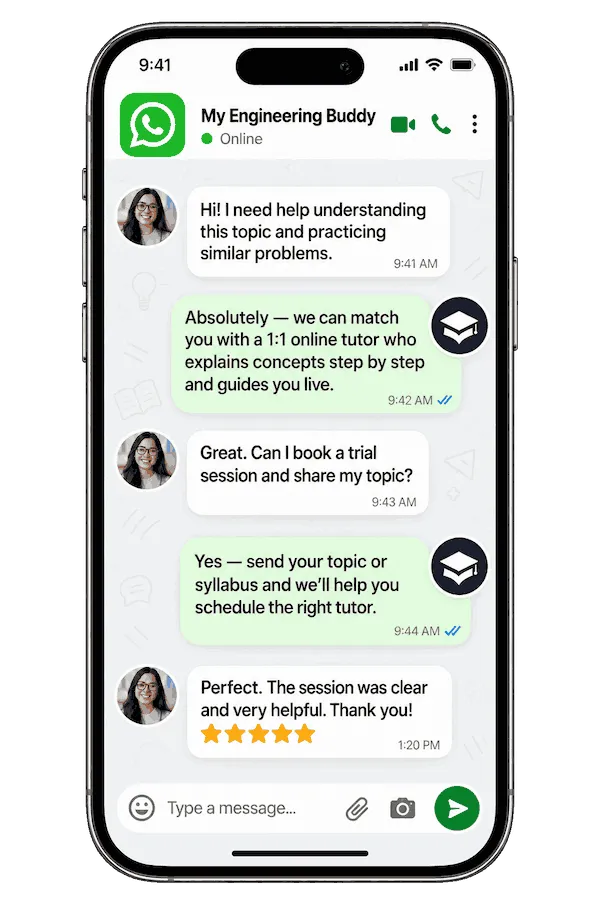
WhatsApp MEB for a quick quote — average response time under 1 minute.
Who This Statistical Software Tutoring Is For
Statistical software tutoring draws students from across the academic spectrum. The common thread: they know what answer they need, they’re not sure how to make the software produce it correctly.
- Undergraduate students running their first regression in SPSS or R and getting output they can’t interpret
- Masters students working through structural equation modelling in SmartPLS tutor sessions for their thesis chapter
- PhD researchers who need to clean, reshape, or merge datasets before any analysis can run
- Students retaking after a failed first attempt at a quantitative methods module — gaps from the first round don’t close on their own
- Students at universities including MIT, University of Michigan, University of Edinburgh, University of Toronto, University of Sydney, Monash University, and LSE who need software-specific support their department doesn’t offer one-to-one
- Researchers transitioning from one platform to another — SPSS to R, Excel to Stata — mid-project
If your deadline is real and your output table is wrong, this is for you. The $1 trial is the fastest way to confirm the tutor can actually help before you commit to more sessions.
At MEB, we’ve found that most statistical software errors aren’t random — they follow predictable patterns tied to how a student first learned the platform. Fixing the root misconception in one session often clears up three or four downstream errors the student had been treating as separate problems.
1:1 Tutoring vs Self-Study vs AI vs YouTube vs Online Courses
Self-study works if your documentation reading is strong — but stats software manuals were not written for students under deadline pressure. AI tools like ChatGPT can suggest syntax, but they can’t see your actual dataset, your variable types, or why your model won’t converge. YouTube covers the standard walkthrough well; it stops the moment your data behaves differently. Online courses move at a fixed pace and rarely cover the edge cases that appear in real research data. With a 1:1 JMP tutor or any MEB statistical software specialist, the session is live, calibrated to your specific dataset and analysis plan, and every error gets diagnosed in the moment — not after you’ve spent two hours reading forum threads.
The gap between knowing what a regression is and knowing why your specific model is producing a negative R-squared in your software of choice — that gap is exactly where a statistical software tutor earns their rate.
Source: MEB tutor feedback summaries, 2022–2025.
Outcomes: What You’ll Be Able To Do in Statistical Software
After focused 1:1 sessions with an MEB statistical software tutor, students consistently move from confusion to execution. You’ll be able to run and correctly interpret output from regression, ANOVA, factor analysis, or your specific analysis type without needing to guess at what the numbers mean. You’ll apply assumption-checking procedures — normality tests, homoscedasticity, multicollinearity — and know what to do when an assumption is violated. You’ll model structural relationships between latent variables in SEM platforms, present findings in APA or journal-ready tables, and write a methods section that accurately describes what your software actually did. You’ll solve the data-cleaning and variable-coding problems that blocked your analysis before it even started.
Based on feedback from 40,000+ sessions collected by MEB from 2022 to 2025, 58% of students improved by one full grade after approximately 20 hours of 1:1 tutoring in subjects like statistical software. A further 23% achieved at least a half-grade improvement.
Source: MEB session feedback data, 2022–2025.
Try your first session for $1 — 30 minutes of live 1:1 tutoring or one homework question explained in full. No registration. No commitment. WhatsApp MEB now and get matched within the hour.
What We Cover in Statistical Software (Syllabus / Topics)

Core Statistical Analysis Platforms
- SPSS: data entry, variable labelling, descriptive statistics, cross-tabulations, and output interpretation
- R and RStudio: package installation, data frames, ggplot2 visualisation, tidyverse workflow, and script debugging
- Stata: do-files, panel data commands, time-series analysis, and log-file management
- SAS: PROC steps, macro language basics, dataset merging, and output delivery system
- Hypothesis testing: t-tests, chi-square, Mann-Whitney, and ANOVA across all major platforms
- Regression: simple, multiple, logistic, ordinal, and Poisson models with interpretation
- Assumption testing: Levene’s test, Shapiro-Wilk, VIF, Durbin-Watson, and remediation steps
Core references: Field, A. — Discovering Statistics Using IBM SPSS Statistics; Tabachnick & Fidell — Using Multivariate Statistics; Hadley Wickham — R for Data Science.
Structural Equation Modelling and Advanced Multivariate Methods
- Confirmatory factor analysis (CFA) and exploratory factor analysis (EFA) in AMOS and SmartPLS
- Path analysis, mediation, and moderation models with bootstrapped confidence intervals
- Partial least squares SEM (PLS-SEM) for variance-based research using SmartPLS
- Model fit indices: CFI, RMSEA, SRMR, TLI — what they mean and how to report them
- Multi-group analysis and measurement invariance testing
- Cluster analysis, discriminant analysis, and MANOVA
Core references: Hair et al. — Multivariate Data Analysis; Kline — Principles and Practice of Structural Equation Modeling; Ringle et al. — SmartPLS documentation.
Econometric and Time-Series Analysis
- EViews: unit root tests, Granger causality, VAR models, and ARCH/GARCH estimation
- RATS: time-series regression, cointegration, and VECM modelling
- Stata panel data: fixed effects, random effects, and Hausman test interpretation
- Forecasting: ARIMA model identification, estimation, and diagnostic checking
- Instrumental variable estimation and two-stage least squares
Core references: Greene — Econometric Analysis; Enders — Applied Econometric Time Series; EViews User Guide.
Platforms, Tools & Textbooks We Support
Statistical software tutoring at MEB covers every major platform used in social science, engineering, health, business, and economics research. Tutors work directly inside your chosen environment — not a generic statistics overview.
- IBM SPSS Statistics (all versions)
- R / RStudio (base R, tidyverse, caret, lavaan)
- Stata (versions 14–18)
- SAS (Base SAS, SAS Enterprise Guide)
- AMOS (structural equation modelling)
- SmartPLS (PLS-SEM)
- EViews (econometric and time-series analysis)
- RATS (regression analysis of time series)
- JMP (designed experiments and visual analytics)
- Mathematica (symbolic computation and statistical modelling)
- Microsoft Excel (data organisation, pivot tables, analysis toolpak)
What a Typical Statistical Software Session Looks Like
The tutor opens by checking what you worked on since the last session — usually the assumption-testing output or the model syntax you were debugging. You share your screen. The tutor sees your dataset, your variable view, and the exact error or output you’re stuck on. Together, you work through the specific block: maybe it’s why your factor loadings are below 0.4, or why your regression is reporting listwise deletion across 30% of your cases. The tutor uses a digital pen-pad to annotate — drawing out what the model is actually doing versus what you expected. You replicate the corrected steps yourself, not just watch. By the end, you have a working output, a clear understanding of what changed and why, and a concrete task to complete before the next session — usually running the next analysis stage and bringing the output back for interpretation.
How MEB Tutors Help You with Statistical Software (The Learning Loop)
Diagnose: In the first session, the tutor identifies exactly where the workflow is breaking down — whether that’s data preparation, model specification, output interpretation, or a fundamental gap in understanding what a particular test actually measures. Most students come in thinking they have one problem; the tutor usually finds two or three connected ones.
Explain: The tutor walks through the logic live — not just “click here.” Using a digital pen-pad and shared screen, they show you why a particular command works, what the output is actually telling you, and what a wrong result looks like versus a correct one. Real worked examples from your own dataset where possible.
Practice: You run the analysis yourself with the tutor watching. Not after the session — during it. This is where most students discover they understood the explanation but hadn’t yet internalised the process.
Feedback: Errors get corrected in real time, with a clear explanation of what the mistake was and why it matters for your results. The tutor tracks which steps you’re now confident on and which need another pass.
Plan: Each session ends with a specific task and a clear agenda for the next one. The tutor maps your remaining analysis stages against your deadline so nothing is left to the last week.
Sessions run on Google Meet with a digital pen-pad or iPad and Apple Pencil. Before your first session, have your dataset, your codebook or variable list, your analysis plan or assignment brief, and your software version ready. The first session is diagnostic — it tells both you and the tutor exactly what needs to happen, in what order, for you to hit your deadline.
Start with the $1 trial — 30 minutes of live tutoring that also serves as your first diagnostic session.
Students consistently tell us that the moment a statistical software concept clicks isn’t during the explanation — it’s during the practice replication, when they run the analysis themselves and get the right output for the first time. That moment is what the whole session structure is designed to create.
Tutor Match Criteria (How We Pick Your Tutor)
The match is made on specifics, not availability.
Subject depth: Tutors are matched to your exact software — an SPSS specialist for SPSS work, an R/RStudio expert for tidyverse and lavaan sessions, a dedicated SEM tutor for AMOS or SmartPLS projects. No generalists covering everything loosely.
Tools: Every tutor works via Google Meet with a digital pen-pad or iPad and Apple Pencil — screen annotation is part of how statistical output gets explained, not optional.
Time zone: Matched to your region — US, UK, Gulf, Canada, Australia. Sessions scheduled to your actual availability, not the tutor’s convenience.
Goals: Whether you need one session to fix a broken model or twelve sessions to build quantitative methods competence from the ground up, the tutor is matched to that scope.
Unlike platforms where you fill out a form and wait days for a response, MEB responds in under a minute, 24/7. Tutor match takes under an hour. The $1 trial means you test the match before you commit to anything. Everything runs over WhatsApp — no intake forms, no portals, no logins.
Pricing Guide
Statistical software tutoring starts at $20/hr for standard undergraduate-level work in mainstream platforms. Advanced methods — multilevel modelling, SEM, time-series econometrics, Bayesian analysis — run $40–$100/hr depending on tutor expertise and platform complexity.
Rate factors: software complexity, analysis type, your timeline, and tutor availability. A student needing SPSS for an intro methods course is priced differently from a PhD candidate debugging a convergence issue in a four-factor CFA model.
For students targeting research positions, doctoral programmes, or working within institutions such as the World Bank, central banks, or major research universities, tutors with active research or professional quantitative analysis backgrounds are available at higher rates — share your specific project and MEB will match the tier to your work.
Tutor availability tightens around dissertation submission periods and semester-end deadlines. Book ahead if you’re within six weeks of a hand-in date.
Start with the $1 trial — 30 minutes, no registration, no commitment. WhatsApp MEB for a quick quote.
FAQ
Is statistical software hard to learn?
The core logic isn’t — most students grasp what a test does quickly. The difficulty is translating that understanding into correct syntax, correct data structure, and correct interpretation of output. That’s exactly what a tutor bridges in the shortest time.
How many sessions will I need?
Most students working on a single analysis type — a regression chapter, an SEM model, a data-cleaning task — need between three and eight sessions. PhD-level or multi-method projects typically require more. The first diagnostic session gives a clearer estimate.
Can you help with projects and portfolio work?
MEB provides guided learning support for statistical software projects. The tutor explains the method, logic, and correct approach. All analysis is run and submitted by the student. See our Policies page for full details on what we help with and what we don’t.
Will the tutor match my exact software and exam board?
Yes. MEB matches tutors to your specific platform — SPSS, R, Stata, SAS, AMOS, SmartPLS, EViews, or others. If your course specifies a particular version or method framework, share that when you get in touch and the match will reflect it.
What happens in the first session?
The tutor runs a brief diagnostic — asking about your course, your dataset structure, your current analysis stage, and where you’re stuck. From that, they build the session plan. You leave the first session with a working understanding of your immediate next step.
Are online statistical software sessions as effective as in-person?
For software-based subjects, online is often better. Screen sharing, live annotation on output, and the ability to see exactly what the student is doing in real time removes barriers that in-person whiteboard teaching creates. The digital pen-pad replaces nothing that matters.
Can I get statistical software help at midnight or on weekends?
Yes. MEB operates 24/7. Tutors are available across time zones, and WhatsApp response time averages under one minute. Dissertation emergencies don’t respect business hours — neither does MEB’s availability.
What if I need to switch statistical software mid-project?
Switching platforms mid-project — SPSS to R, or Excel to Stata — is a common situation. MEB tutors handle platform transitions specifically: they map your existing analysis to the new software’s workflow so you’re not starting from scratch conceptually.
Which is better for my research — SPSS, R, or Stata?
It depends on your field and institution. SPSS suits social science survey data; R is preferred in epidemiology, ecology, and data science; Stata is standard in economics and public health. Your supervisor’s recommendation and department norms should guide the choice — your MEB tutor can advise if you’re undecided.
Do you offer group statistical software sessions?
MEB specialises in 1:1 tutoring — all sessions are private and individual. Group sessions are not currently offered. Every session is built around your specific dataset, your analysis plan, and your deadline — a format that doesn’t work in a group context.
How do I get started?
WhatsApp MEB, share your software, your analysis type, and your deadline. You’ll be matched with a tutor — usually within an hour. The $1 trial covers 30 minutes of live tutoring or one full question explained. Three steps: message, match, start.
Why does my SPSS output show different results than my R output for the same data?
Different default handling of missing data, listwise vs pairwise deletion, and minor algorithmic differences between platforms can produce this. A tutor identifies which platform is behaving correctly for your analysis type and why — this is a common dissertation chapter issue.
Trust & Quality at My Engineering Buddy
Every MEB tutor goes through subject-specific screening before taking sessions. That means a live demo evaluation, credentials review, and matching against the exact platform and method area they’ll teach — not a general statistics test. Rated 4.8/5 across 40,000+ verified reviews on Google. MEB has been running since 2008, and the feedback system means underperforming tutors don’t stay on the platform. Excel tutoring and advanced SEM work are held to the same vetting standard.
MEB provides guided learning support. All project work is produced and submitted by the student. See our Policies page for details.
MEB serves students across the US, UK, Canada, Australia, the Gulf, and Europe in 2,800+ subjects since 2008. Statistical software is one of the highest-demand areas on the platform — with tutors covering SAS software, EViews, and the full range of quantitative analysis tools used across academic and research institutions worldwide.
A common pattern our tutors observe is that students who struggled with a quantitative methods module in their first year carry that anxiety into their dissertation. The software isn’t the real problem — it’s the gap in confidence around what the numbers mean. That’s what a good statistical software tutor addresses first.
MEB has served students in statistical software and quantitative methods from institutions including LSE, University of Michigan, University of Edinburgh, University of Toronto, and Monash University — across undergraduate, Masters, and PhD levels.
Source: My Engineering Buddy, 2008–2025.
Explore Related Subjects
Students studying statistical software often also need support in:
Next Steps
When you get in touch, share:
- Your software, your analysis type, and your current sticking point
- Your deadline and how many sessions you’re expecting to need
- Your time zone and availability
MEB matches you with a verified statistical software tutor — usually within 24 hours, often faster. The first session is diagnostic, so every minute from session one is used on what actually matters for your project.
Before your first session, have ready: your dataset, your codebook or variable list, your assignment brief or analysis plan, and your software version. The tutor handles everything else.
Visit www.myengineeringbuddy.com for more on how MEB works.
WhatsApp to get started or email [email protected].
Reviewed by Subject Expert
This page has been carefully reviewed and validated by our subject expert to ensure accuracy and relevance.




