Hire Verified & Experienced
Structural Analysis Tutors
4.8/5 40K+ session ratings collected on the MEB platform



Hire The Best Structural Analysis Tutor
Top Tutors, Top Grades. Without The Stress!
52,000+ Happy Students From Various Universities






How Much For Private 1:1 Tutoring & Hw Help?
Private 1:1 Tutoring and HW help Cost $20 – 35 per hour* on average.
Most students who fail Structural Analysis don’t lack intelligence — they hit indeterminate structures and never recovered.
Structural Analysis Tutor Online
Structural Analysis is a core civil and structural engineering discipline covering the calculation of internal forces, reactions, deformations, and stability in beams, frames, trusses, and complex structures under static and dynamic loading conditions.
MEB offers 1:1 online tutoring and homework help in 2800+ advanced subjects, including Structural Analysis at every level from second-year undergraduate through to postgraduate coursework. Whether you’re searching for a Structural Analysis tutor near me or need someone who knows your exact university syllabus, MEB connects you with a verified specialist — usually within the hour. Sessions are live, targeted, and built around what you’re actually stuck on, not a generic curriculum walkthrough. Part of our broader Civil Engineering tutoring coverage.
- 1:1 online sessions tailored to your course syllabus and exam board
- Expert-verified tutors with postgraduate or professional structural engineering backgrounds
- Flexible time zones — US, UK, Canada, Australia, Gulf
- Structured learning plan built after an initial diagnostic session
- Ethical homework and assignment guidance — you understand the work before you submit
52,000+ students across the US, UK, Canada, Australia, and the Gulf have used MEB since 2008 — including students in Civil Engineering subjects like Structural Analysis, Structural Dynamics, and Foundation Design Engineering.
Source: My Engineering Buddy, 2008–2025.
How Much Does a Structural Analysis Tutor Cost?
Most Structural Analysis tutoring sessions run $20–$40/hr. Graduate-level or specialist topics — think matrix stiffness methods, nonlinear analysis, or seismic design — may reach $60–$100/hr depending on tutor depth. Not sure where you fall? Start with the $1 trial and MEB will advise from there.
| Level / Need | Typical Rate | What’s Included |
|---|---|---|
| Undergraduate (Years 1–3) | $20–$40/hr | 1:1 sessions, homework guidance |
| Advanced / Postgraduate | $40–$100/hr | Expert tutor, specialist depth |
| $1 Trial | $1 flat | 30 min live session or 1 homework question fully explained |
Tutor availability tightens during end-of-semester submission periods and resit windows. Book early if you’re approaching a deadline.
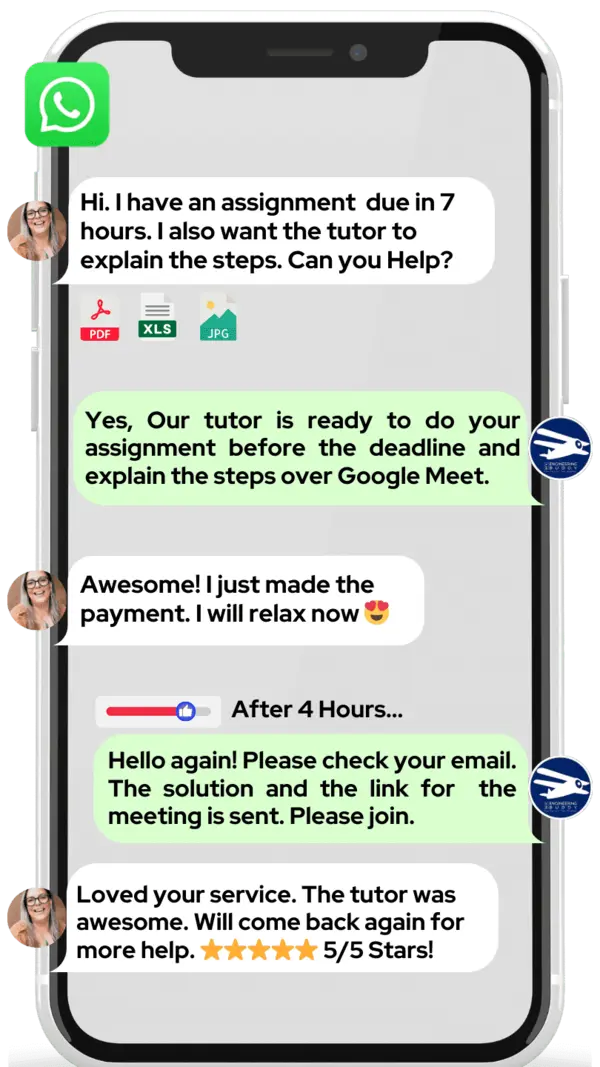
WhatsApp MEB for a quick quote — average response time under 1 minute.
Who This Structural Analysis Tutoring Is For
Structural Analysis sits at the heart of civil and structural engineering degrees. It’s also one of the subjects with the highest failure rates at second and third year. If you’re behind, confused, or just not connecting the theory to the calculations, you’re not alone.
- Second and third-year civil engineering undergraduates at universities like Georgia Tech, Imperial College London, ETH Zurich, University of Toronto, and UNSW Sydney
- Postgraduate students taking advanced structural analysis as part of an MSc in Structural or Civil Engineering
- Students retaking after a failed first attempt — working through indeterminate structures, moment distribution, or force method from scratch
- Students with a conditional offer at a graduate programme depending on their undergraduate grade in this module
- Students 4–6 weeks from finals with gaps in stiffness matrix methods, virtual work, or plastic analysis
- Students who need structured homework and assignment guidance — explained, not done for them
Try the $1 trial before committing to a package. Thirty minutes with the right tutor tells you more than any intake form.
1:1 Tutoring vs Self-Study vs AI vs YouTube vs Online Courses
Self-study: works if your textbook is Hibbeler and you’re disciplined, but there’s no one to catch a sign error before it cascades through six lines of working. AI tools: fast for definitions, unreliable for step-by-step structural problems — they miss your specific assumptions. YouTube: good for moment diagrams at a surface level, stops the moment your beam has a hinge in the wrong place. Online courses: fixed pace, no feedback on your actual submission. 1:1 tutoring with MEB: live, calibrated to your exact module, corrects the error in your stiffness matrix before you spend three hours going the wrong direction. In Structural Analysis, one wrong sign convention at the start means a completely wrong answer at the end.
Outcomes: What You’ll Be Able To Do in Structural Analysis
After working with an MEB Structural Analysis tutor, students can analyze statically determinate and indeterminate beams and frames using the force method and displacement method, solve for internal forces, shear force diagrams, and bending moment diagrams with confidence across multi-span problems, apply the stiffness matrix method to portal frames and continuous beams, explain the assumptions underlying plastic analysis and calculate collapse loads for real frame configurations, and present full working for truss and frame problems in the format their examiner expects. These aren’t generic goals — they reflect what the structural analysis module actually tests at universities like Delft, Melbourne, and Waterloo.
Based on feedback from 40,000+ sessions collected by MEB from 2022 to 2025, 58% of students improved by one full grade after approximately 20 hours of 1:1 tutoring in subjects like Structural Analysis. A further 23% achieved at least a half-grade improvement.
Source: MEB session feedback data, 2022–2025.
What We Cover in Structural Analysis (Syllabus / Topics)

Track 1: Statically Determinate Structures
- Equilibrium conditions and support reactions
- Internal forces in beams: shear force and bending moment diagrams
- Truss analysis: method of joints and method of sections
- Three-hinged arches and cable structures
- Deflection of beams: double integration, Macaulay’s method, moment-area theorems
- Virtual work and unit load method for deflection
Core textbooks: Hibbeler’s Structural Analysis (10th ed.), Leet’s Fundamentals of Structural Analysis.
Track 2: Statically Indeterminate Structures
- Compatibility method (force method / flexibility method)
- Moment distribution method — fixed-end moments, distribution factors, carry-over factors
- Slope-deflection equations and their application to continuous beams and frames
- Matrix stiffness method — element stiffness matrices, assembly, boundary conditions
- Analysis of symmetric and anti-symmetric structures
- Influence lines for indeterminate structures
Core textbooks: Kassimali’s Structural Analysis, Ghali and Neville’s Structural Analysis: A Unified Classical and Matrix Approach.
Track 3: Advanced Topics and Dynamic Loading
- Plastic analysis: plastic hinges, mechanism method, virtual work for collapse load
- Introduction to finite element concepts in structural analysis
- Dynamic loading fundamentals — free and forced vibration of SDOF systems
- Approximate methods: portal frame method, cantilever method for lateral loads
- Stability and buckling of columns — Euler’s formula, effective length factors
- Nonlinear analysis concepts — geometric and material nonlinearity
Core textbooks: Chopra’s Dynamics of Structures, McGuire, Gallagher, and Ziemian’s Matrix Structural Analysis.
At MEB, we’ve found that students who struggle with indeterminate structures usually have a gap one step earlier — they’re not confident with the compatibility conditions that underpin the force method. Fix that first, and the rest moves quickly.
What a Typical Structural Analysis Session Looks Like
The tutor starts by checking where you left off last time — say, moment distribution on a two-span continuous beam — and asking you to attempt the first few steps before anything is explained. That one move reveals exactly where the confusion sits. From there, the tutor works through a similar problem on a digital pen-pad in real time, narrating every decision: sign convention, release conditions, the logic behind each distribution cycle. You then replicate it on a new problem while the tutor watches, stopping you the moment an assumption slips. The session closes with two or three practice problems set for before next time, and the next topic logged so no session starts cold.
How MEB Tutors Help You with Structural Analysis (The Learning Loop)
Diagnose: In the first session, the tutor identifies where your understanding breaks down — not just what you got wrong, but which foundational concept the error traces back to. In Structural Analysis, this is almost always a specific gap: sign convention, degrees of indeterminacy, or misapplied boundary conditions.
Explain: The tutor works through a live problem using a digital pen-pad on Google Meet. Every line of working is shown, every assumption stated. No skipped steps.
Practice: You attempt a parallel problem with the tutor present. This is where most of the learning happens — not watching, but doing.
Feedback: The tutor corrects errors step by step, explains why marks would be lost in an exam, and reframes the method until it sticks. This is different from being told you’re wrong — it’s being shown exactly which line the logic failed and why.
Plan: Each session ends with a clear next topic, a small set of practice problems, and a note on where you are against your exam or submission deadline.
Sessions run over Google Meet with a digital pen-pad or iPad and Apple Pencil. Before your first session, share your course outline or module handbook, a past paper or assignment you’ve struggled with, and your exam or submission date. The first session covers the diagnostic and starts working on your highest-priority gap immediately. Start with the $1 trial — 30 minutes of live tutoring that also serves as your first diagnostic.
Students consistently tell us that the moment things click in Structural Analysis isn’t during the explanation — it’s the second time they attempt a problem themselves and get it right without prompting. We build every session around making that moment happen.
Tutor Match Criteria (How We Pick Your Tutor)
Not every structural engineer makes a good tutor for Structural Analysis. MEB screens specifically for subject depth and teaching ability — not just credentials.
Subject depth: Tutors are matched to your exact module level — whether that’s second-year determinate structures at a UK university or postgraduate matrix methods at a North American institution. Tools: Every tutor uses Google Meet with a digital pen-pad or iPad and Apple Pencil — essential for a calculation-heavy subject. Time zone: Matched to your region — US, UK, Gulf, Canada, or Australia — so availability is genuine, not theoretical. Goals: Whether you need exam score recovery, conceptual depth, assignment guidance, or ongoing weekly support, the tutor is briefed before your first session.
Unlike platforms where you fill out a form and wait, MEB responds in under a minute, 24/7. Tutor match takes under an hour. The $1 trial means you test before you commit. Everything runs over WhatsApp — no logins, no intake forms.
Study Plans (Pick One That Matches Your Goal)
After the diagnostic, your tutor builds the session sequence around your actual deadline. Catch-up (1–3 weeks): students behind on one or two major topics — indeterminate analysis, moment distribution — with a submission or test approaching fast. Exam prep (4–8 weeks): structured revision working through all syllabus tracks, past paper practice, and targeted gap-filling before finals. Weekly support: ongoing sessions aligned to your lecture schedule and assignment deadlines through the semester. The tutor sets the specific sequence after seeing your course outline and current level.
Pricing Guide
Structural Analysis tutoring starts at $20/hr for standard undergraduate modules. Graduate-level topics — finite element concepts, nonlinear analysis, advanced dynamics — run $40–$100/hr depending on tutor background and topic complexity. Rate factors include your level, the specific method being covered, your timeline, and tutor availability.
Demand spikes sharply in the weeks before finals and resit periods. If you’re in that window, reach out now rather than when every slot is taken.
For students targeting admission to competitive MSc programmes at universities like Imperial, TU Delft, or ETH Zurich — where undergraduate Structural Analysis grades carry weight — tutors with postgraduate research or professional structural engineering backgrounds are available at higher rates. Share your specific goal and MEB will match the right tier.
Start with the $1 trial — 30 minutes, no registration, no commitment. WhatsApp MEB for a quick quote.
MEB has supported students in Structural Engineering tutoring, Steel Structures help, and Structural Analysis since 2008 — across 52,000+ students in the US, UK, Canada, Australia, and the Gulf.
Source: My Engineering Buddy, 2008–2025.
FAQ
Is Structural Analysis hard?
It’s one of the higher-attrition modules in civil engineering degrees. The difficulty isn’t the maths — it’s knowing which method applies and applying it without sign errors. With consistent 1:1 practice targeting your specific gaps, most students recover quickly.
How many sessions are needed?
Most students need 8–15 sessions for a meaningful grade improvement. A catch-up before a specific exam can happen in 4–6 focused sessions. The diagnostic in session one gives your tutor enough to map a realistic plan for your timeline.
Can you help with homework and assignments?
Yes — MEB tutoring is guided learning. The tutor explains the method and works through similar problems with you; you complete and submit your own work. See our Academic Integrity policy and Why MEB page for full details on what we help with and what we don’t.
Will the tutor match my exact syllabus or exam board?
Yes. When you contact MEB, share your university, module code or name, and the topics currently being covered. Tutors are matched to your specific syllabus — not a generic Structural Analysis curriculum.
What happens in the first session?
The tutor runs a short diagnostic — usually a set of problems spanning two or three topics — to find exactly where your understanding breaks down. From that point, every remaining minute in the session addresses your highest-priority gap.
Is online tutoring as effective as in-person?
For Structural Analysis, yes. The digital pen-pad replicates a whiteboard session precisely. Students working on beam problems, frame analysis, and matrix methods report no meaningful difference versus face-to-face — the working is visible and interactive in real time.
What’s the difference between the force method and the stiffness method — and which should I learn first?
The force method treats unknown reactions as primary unknowns; the stiffness method treats displacements. Most undergraduate syllabi teach force method first as it builds physical intuition. Your tutor will sequence this based on what your module actually requires and where your exam questions come from.
Do MEB tutors cover software like ETABS or SAP2000 alongside hand calculations?
Yes. If your module or assignment requires both hand analysis and ETABS tutoring or SAP2000 help, MEB tutors can cover both — the theory and the software workflow. Mention this when you contact us so the right tutor is matched.
Can I get Structural Analysis help at midnight?
Yes. MEB operates 24/7 across all time zones. WhatsApp response time averages under a minute. If you’re a student in the Gulf, Australia, or the US West Coast working late, that’s a normal session time for MEB.
What if I don’t like my assigned tutor?
Tell MEB immediately via WhatsApp. A replacement is arranged within the hour at no cost. The $1 trial exists precisely so you can assess fit before committing to a package.
How do I get started?
Three steps: WhatsApp MEB, share your module name and exam date, and get matched with a verified Structural Analysis tutor — usually within the hour. Your first session is the $1 trial: 30 minutes of live 1:1 tutoring or one assignment question fully explained.
Is moment distribution method still tested, or has it been replaced by software?
It’s still tested at most universities — examiners use it to verify you understand the underlying structural behaviour, not just software output. Your tutor will confirm exactly what your exam requires and focus accordingly.
Trust & Quality at My Engineering Buddy
Every MEB tutor goes through subject-specific screening: a live demo session evaluated by senior tutors, verification of degrees and professional experience, and ongoing review based on student session feedback. For Structural Analysis, tutors hold postgraduate qualifications or professional engineering backgrounds — not just undergraduate-level familiarity. Rated 4.8/5 across 40,000+ verified reviews on Google.
MEB tutoring is guided learning — you understand the work, then submit it yourself. For full details on what we help with and what we don’t, read our Academic Integrity policy and Why MEB.
MEB has been serving students in Civil Engineering and related subjects since 2008 — 52,000+ students across the US, UK, Canada, Australia, the Gulf, and Europe, across 2,800+ subjects. That includes Structural Mechanics tutoring, Geotechnical Engineering help, and Reinforced Cement Concrete tutoring — subjects that sit directly alongside Structural Analysis in most civil engineering programmes. You can read more about how MEB vets and trains tutors on the Tutoring Methodology page.
A common pattern our tutors observe is this: a student in Structural Analysis has been losing marks on the same type of problem for weeks without knowing exactly why. One diagnostic session usually identifies it in under 20 minutes — and from there, progress is fast.
Explore Related Subjects
Students studying Structural Analysis often also need support in:
- Blast Resistant Design
- Composite Materials & Structures
- Earthquake Engineering
- Fracture Mechanics
- Masonry Structures
- Timber Structures
- Wind Engineering
- Slope Stability Analysis
Next Steps
Here’s what to do right now:
- Share your module name, university, and hardest topic — moment distribution, stiffness matrix, plastic analysis, or something else
- Share your time zone and availability
- MEB matches you with a verified Structural Analysis tutor, usually within 24 hours — often under an hour
- First session starts with a diagnostic so every minute is spent on what actually needs fixing
Before your first session, have ready:
- Your module handbook or course outline (or the specific topics being covered)
- A past paper attempt or assignment question you struggled with
- Your exam date or submission deadline
The tutor handles the rest.
IEEE Spectrum regularly covers how structural simulation tools are changing how engineers approach analysis — but the underlying theory in your exam is the same it’s always been. MEB tutors bridge both.
Source: IEEE Spectrum.
Visit www.myengineeringbuddy.com for more on how MEB works.
WhatsApp to get started or email meb@myengineeringbuddy.com.
Try your first session for $1 — 30 minutes of live 1:1 tutoring or one homework question explained in full. No registration. No commitment. WhatsApp MEB now and get matched within the hour.
Reviewed by Subject Expert
This page has been carefully reviewed and validated by our subject expert to ensure accuracy and relevance.