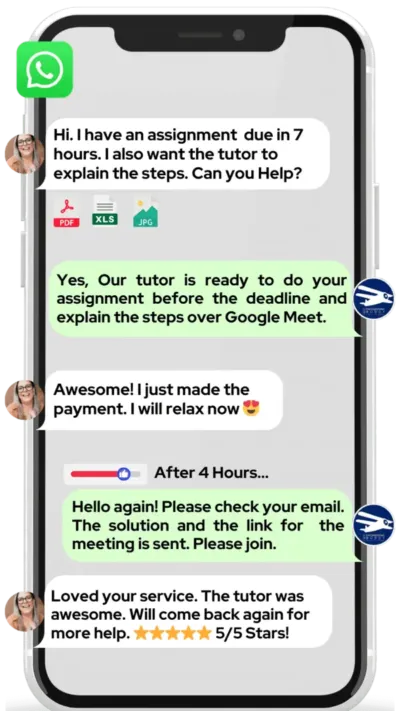
~1 min
Average Reply Time
~1 hour
To Be Matched With A Tutor
1 Trial
75% Find Their Tutor On The 1st Trial
$1
Your First 30 Minutes
Hire The Best Limnology Tutor
Top Tutors, Top Grades. Without The Stress!
Related Subjects
Most students who struggle with Limnology hit a wall at nutrient cycling or thermal stratification — and no textbook diagram fixes that in the week before an exam.
Limnology Tutor Online
Limnology is the scientific study of freshwater ecosystems — lakes, rivers, ponds, and wetlands — examining their physical, chemical, and biological properties to understand aquatic processes and ecosystem function.
If you’ve searched for a Limnology tutor near me, MEB’s 1:1 online tutoring and homework help covers the full range of Life Sciences disciplines, including Limnology at undergraduate and graduate level. You get a verified expert tutor, sessions built around your exact course, and a structured plan from the first diagnostic. No guarantees — but students who stay consistent see real results.
- 1:1 online sessions tailored to your specific course syllabus and university
- Expert-verified tutors with subject-specific freshwater science knowledge
- Flexible time zones — US, UK, Canada, Australia, Gulf
- Structured learning plan built after a diagnostic session
- Ethical homework and assignment guidance — you understand before you submit
52,000+ students across the US, UK, Canada, Australia, and the Gulf have used MEB since 2008 — including students in Life Sciences subjects like Limnology, Conservation Biology, and Environmental Health.
Source: My Engineering Buddy, 2008–2025.
How Much Does a Limnology Tutor Cost?
Most Limnology tutoring with MEB runs $20–$40/hr. Graduate-level or highly specialised topics may reach $100/hr. New students can start with the $1 trial — 30 minutes of live 1:1 tutoring or one homework question explained in full.
| Level / Need | Typical Rate | What’s Included |
|---|---|---|
| Undergraduate (most levels) | $20–$35/hr | 1:1 sessions, homework guidance |
| Graduate / Specialist | $35–$100/hr | Expert tutor, research-level depth |
| $1 Trial | $1 flat | 30 min live session or 1 homework question |
Tutor availability tightens around semester finals and field report deadlines. WhatsApp MEB for a quick quote — average response time under 1 minute.
Who This Limnology Tutoring Is For
This is for students who need more than a lecture recording and a textbook. Whether you’re stuck on oxygen depletion models or writing up a lake sampling lab, a Limnology tutor online works through it with you in real time.
- Undergraduate biology, ecology, or environmental science students taking a Limnology module
- Graduate students in freshwater ecology, hydrology, or aquatic biology programmes
- Students 4–6 weeks from an exam with significant gaps still to close in areas like nutrient cycling or thermal stratification
- Students with a coursework or field report submission deadline approaching
- Parents watching a child’s confidence drop alongside their grades in a science module
- Researchers needing to strengthen their understanding of water quality analysis or trophic dynamics before thesis work
Students come to MEB from programmes at universities including the University of Michigan, UC Davis, University of British Columbia, ETH Zurich, University of Waterloo, and Imperial College London.
1:1 Tutoring vs Self-Study vs AI vs YouTube vs Online Courses
Self-study works if you’re disciplined — but Limnology concepts like hydrological modelling and biogeochemical cycling rarely click from a diagram alone. AI tools give fast definitions but can’t trace where your reasoning broke down on a specific phosphorus loading calculation. YouTube handles the overview well; it stops the moment you need to debug your own dataset. Online courses move at a fixed pace regardless of where you’re stuck. With MEB, a live Limnology tutor online identifies your exact gap, works through it on screen, and adjusts the explanation until it holds.
Outcomes: What You’ll Be Able To Do in Limnology
After consistent sessions, students can analyze thermal stratification in a stratified lake and explain how the thermocline affects dissolved oxygen distribution. They can model nutrient loading scenarios using phosphorus and nitrogen inputs and interpret the eutrophication outcomes. Students learn to apply sampling protocols for benthic macroinvertebrate surveys and write up results with correct ecological interpretation. They can explain the biological oxygen demand of a water body and connect it to management decisions. And they can present trophic cascade dynamics — from phytoplankton blooms to top predator effects — in written assignments or oral exams with precision.
Based on feedback from 40,000+ sessions collected by MEB from 2022 to 2025, 58% of students improved by one full grade after approximately 20 hours of 1:1 tutoring in subjects like Limnology. A further 23% achieved at least a half-grade improvement.
Source: MEB session feedback data, 2022–2025.
Supporting a student through Limnology? MEB works directly with parents to set up sessions, track progress, and keep coursework on schedule. WhatsApp MEB — average response time is under a minute, 24/7.
Students consistently tell us that the moment thermal stratification finally clicks — when they can sketch a lake’s temperature profile and explain why the hypolimnion is anoxic — the rest of the module starts to make sense. That connection is what the first few sessions are designed to build.
What We Cover in Limnology (Syllabus / Topics)

Physical and Chemical Limnology
- Thermal stratification: epilimnion, metalimnion, hypolimnion, thermocline dynamics
- Light penetration, Secchi depth measurement, and photic zone calculations
- Dissolved oxygen profiles and the oxygen sag curve
- Nutrient chemistry: phosphorus and nitrogen cycles in lake systems
- pH buffering, alkalinity, and carbonate chemistry in freshwater
- Conductivity, salinity, and ion balance in lentic and lotic systems
- Sediment core analysis and paleolimnological interpretation
Core texts include Wetzel’s Limnology: Lake and River Ecosystems (3rd ed.) and Kalff’s Limnology — both widely assigned in North American and European programmes.
Biological Limnology and Aquatic Ecology
- Phytoplankton community structure and bloom dynamics (including harmful algal blooms)
- Zooplankton ecology: Daphnia, copepods, and their role in trophic transfer
- Benthic macroinvertebrate sampling, identification, and biotic indices
- Fish ecology in lake systems, biomanipulation, and food web modelling
- Trophic cascade theory and top-down vs bottom-up control
- Wetland ecology: hydrology, peat formation, and carbon sequestration
- Lake classification: oligotrophic, mesotrophic, eutrophic, and hypereutrophic
Recommended reading: Dodson’s Introduction to Limnology and Scheffer’s Ecology of Shallow Lakes for modelling chapters.
Applied and Environmental Limnology
- Eutrophication: causes, phosphorus loading models, and restoration strategies
- Water quality monitoring methods: grab sampling, continuous sensors, remote sensing
- Invasive species impacts: zebra mussels, Eurasian watermilfoil, signal crayfish
- Climate change effects on lake mixing regimes and ice phenology
- Lake management: biomanipulation, alum dosing, hypolimnetic aeration
- Environmental impact assessment for freshwater systems
Key references: Allan and Castillo’s Stream Ecology and reports from the National Institutes of Health on freshwater and environmental health research contexts.
What a Typical Limnology Session Looks Like
The tutor opens by checking the previous topic — usually dissolved oxygen dynamics or whichever calculation the student flagged as unresolved. From there, the session moves to the current problem: it might be working through a phosphorus budget for a case study lake, interpreting a Secchi depth dataset, or mapping the trophic structure of a freshwater food web. The tutor writes on a digital pen-pad so you see the working in real time, not just the answer. You replicate the steps or explain the reasoning back — whichever exposes the gap faster. The session closes with a specific practice task: one past paper question or a short dataset to analyse before the next session, and the next topic is logged.
How MEB Tutors Help You with Limnology (The Learning Loop)
Diagnose: In the first session, the tutor asks targeted questions about nutrient cycling, thermal stratification, or whichever area you’re covering — and identifies exactly where the understanding breaks down. Not a general topic review. A specific gap map.
Explain: The tutor works through a live problem on screen — say, calculating a lake’s trophic state index from chlorophyll-a and phosphorus data — using a digital pen-pad so every step is visible. No passive watching.
Practice: You attempt the next problem while the tutor is present. This is where most of the learning happens — when you get stuck mid-calculation on a biogeochemical cycle and the tutor corrects it in the moment.
Feedback: The tutor shows you exactly where marks were dropped and why — whether it’s a mislabelled diagram, an incomplete food web interpretation, or a missing unit in a dissolved oxygen calculation.
Plan: Each session ends with a clear next topic and a specific task. Progress is tracked across sessions so the tutor adjusts pace based on what’s holding.
Sessions run on Google Meet. The tutor uses a digital pen-pad or iPad with Apple Pencil. Before your first session, share your course outline or module handbook and any lab reports or assignments you’ve struggled with. The first session starts with the diagnostic — no wasted time. Start with the $1 trial — 30 minutes of live tutoring that also serves as your first diagnostic. Whether you need a quick catch-up before finals, structured revision over 4–8 weeks, or ongoing weekly support through the semester, the tutor maps the session plan after that first session.
At MEB, we’ve found that Limnology students often know the theory but can’t connect it to data interpretation. A student who can describe eutrophication from memory still freezes when handed a phosphorus loading spreadsheet. Closing that gap is what the first two or three sessions focus on.
Tutor Match Criteria (How We Pick Your Tutor)
Match quality determines whether sessions work. MEB selects tutors on four criteria.
Subject depth: The tutor must have studied or worked in aquatic ecology, freshwater science, or a closely related field — not just general biology. Their background is checked against your specific module and university.
Tools: Every tutor uses Google Meet plus a digital pen-pad or iPad with Apple Pencil. Visual explanation is non-negotiable for Limnology’s diagram-heavy content.
Time zone: Matched to your region — US, UK, Gulf, Canada, or Australia — so sessions happen at workable hours, not 2am compromises.
Goals: Whether you need exam score improvement, help with a specific lab report, conceptual depth for a thesis, or ongoing homework support — the tutor is briefed on your specific target before the first session.
Unlike platforms where you fill out a form and wait, MEB responds in under a minute, 24/7. Tutor match takes under an hour. The $1 trial means you test before you commit. Everything runs over WhatsApp — no logins, no intake forms.
Study Plans (Pick One That Matches Your Goal)
After the diagnostic, your tutor builds the session sequence around one of three patterns: a catch-up plan (1–3 weeks) for students behind on a specific topic like stratification or trophic dynamics; an exam prep plan (4–8 weeks) working through past papers and data interpretation systematically; or ongoing weekly support aligned to your semester schedule and coursework deadlines. The tutor adjusts the plan as you progress — there’s no fixed script.
Pricing Guide
Limnology tutoring starts at $20/hr for standard undergraduate level. Graduate-level work, research support, or highly specialist topics reach $35–$100/hr. Rate depends on the topic complexity, your timeline, and tutor availability.
For students targeting top research programmes or competitive graduate positions in freshwater ecology or environmental management, tutors with active research or professional fieldwork backgrounds are available at higher rates — share your specific goal and MEB will match the tier to your ambition.
Availability tightens around semester finals and field report deadlines — particularly in spring and autumn. Start with the $1 trial — 30 minutes, no registration, no commitment. WhatsApp MEB for a quick quote.
MEB has served students in 2,800+ subjects since 2008 — rated 4.8/5 across verified reviews, with tutors covering every level from first-year undergraduate modules to graduate research support in aquatic and environmental sciences.
Source: My Engineering Buddy, 2008–2025.
FAQ
Is Limnology hard?
It depends on your background. Students with strong chemistry and biology foundations find the concepts manageable. The difficulty is usually in applying theory to real datasets — nutrient budgets, oxygen profiles, biotic indices — rather than in memorising definitions.
How many sessions are needed?
Most students need 8–15 sessions to close significant gaps. A student targeting one specific exam topic may need as few as 3–4. The tutor gives a clearer estimate after the first diagnostic session based on where you are.
Can you help with homework and assignments?
Yes. MEB tutoring is guided learning — you understand the work, then submit it yourself. See our Academic Integrity policy and Why MEB page for full details on what we help with and what we don’t. Tutors explain methods and reasoning; they do not write assignments for students.
Will the tutor match my exact syllabus or exam board?
Yes. Share your module handbook or course outline before the first session. The tutor reviews it and aligns every session to your specific topics, assessment structure, and deadlines — not a generic Limnology curriculum.
What happens in the first session?
The tutor runs a short diagnostic — asking questions and reviewing any work you bring — to identify exactly where understanding breaks down. From that point, the session and the overall plan are built around those specific gaps.
Is online tutoring as effective as in-person?
For Limnology, yes — particularly for data interpretation and diagram-based work. The digital pen-pad means the tutor can annotate lake profiles, food webs, and oxygen curves in real time, which is often clearer than a physical whiteboard.
Can I get Limnology help at midnight or over the weekend?
Yes. MEB operates 24/7. WhatsApp the team at any hour and you’ll get a response in under a minute. Tutors span multiple time zones, so late-night and weekend sessions are standard — not exceptions.
What if I don’t like my assigned tutor?
Tell MEB via WhatsApp and a replacement is arranged immediately. There’s no paperwork, no waiting period. The $1 trial exists precisely so you can assess fit before committing to regular sessions.
What’s the difference between limnology and hydrology?
Hydrology focuses on water movement and distribution — rainfall, runoff, groundwater. Limnology studies the ecological and chemical properties of inland water bodies specifically. There’s overlap, but Limnology sits firmly in the biological and environmental sciences.
Do MEB tutors cover fieldwork methods and lab reports for Limnology?
Yes. Tutors help students understand sampling protocols — Ekman grabs, plankton nets, water column profiling — and how to write up field data correctly. This includes biotic index calculations, statistical treatment of results, and ecological interpretation in lab report format.
How do I find a Limnology tutor without waiting days for a match?
WhatsApp MEB directly. Share your subject, level, and availability. MEB matches you with a verified tutor — usually within the hour. Start with the $1 trial: 30 minutes of live tutoring or one homework question explained in full. No registration required.
How do I get started?
Three steps: WhatsApp MEB with your course details and availability. Get matched with a verified Limnology tutor — usually within the hour. Start your $1 trial: 30 minutes of live 1:1 tutoring or one homework question with a full explanation. No registration, no commitment.
Trust & Quality at My Engineering Buddy
Every MEB tutor goes through a screening process that includes subject knowledge verification, a live demo session evaluation, and ongoing review based on student feedback. Tutors covering Limnology hold degrees in ecology, environmental science, biology, or closely related fields — several have active or recent research experience in aquatic systems. Rated 4.8/5 across 40,000+ verified reviews on Google.
MEB tutoring is guided learning — you understand the work, then submit it yourself. For full details on what we help with and what we don’t, read our Academic Integrity policy and Why MEB.
MEB has been serving students across the US, UK, Canada, Australia, the Gulf, and Europe since 2008 — across 2,800+ subjects. In Life Sciences, that includes Natural Sciences tutoring, Molecular Genetics help, and Health Sciences tutoring alongside Limnology. Read more about how sessions are structured at MEB’s tutoring methodology page.
Try your first session for $1 — 30 minutes of live 1:1 tutoring or one homework question explained in full. No registration. No commitment. WhatsApp MEB now and get matched within the hour.
Explore Related Subjects
Students studying Limnology often also need support in:
Next Steps
Before your first session, have ready: your course outline or module handbook, a recent lab report or homework question you struggled with, and your exam or submission deadline date. The tutor handles the rest.
- Share your module, hardest topic, and current timeline
- Share your availability and time zone
- MEB matches you with a verified Limnology tutor — usually within 24 hours
The first session starts with a diagnostic so every minute is used well. Visit www.myengineeringbuddy.com for more on how MEB works.
WhatsApp to get started or email [email protected].
52,000+ Happy Students From Various Universities



Reviewed by Subject Expert
This page has been carefully reviewed and validated by our subject expert to ensure accuracy and relevance.