

Hire Verified & Experienced
AP Computer Science Principles Tutors
4.8/5 40K+ session ratings collected on the MEB platform



Hire The Best AP Computer Science Principles Tutor
Top Tutors, Top Grades. Without The Stress!

52,000+ Happy Students From Various Universities






How Much For Private 1:1 Tutoring & Hw Help?
Private 1:1 Tutoring and HW help Cost $20 – 35 per hour* on average.
Most students hit the Create Performance Task three weeks out and realize they’ve never actually debugged anything on their own.
AP Computer Science Principles Tutor Online
AP Computer Science Principles is a College Board course introducing foundational computing concepts — algorithms, data, the internet, programming, and societal impact — equipping students to reason about technology and earn college credit through a portfolio-based AP exam.
If you’ve searched for an AP Computer Science Principles tutor near me, MEB gives you something better — a verified online AP Computer Science Principles tutor, available in your time zone, matched to your exact College Board unit and Performance Task deadline. Our 1:1 online AP Computer Science Principles tutoring covers everything from binary data to the Create PT, with structured homework guidance so you understand the work before you submit it.
- 1:1 online sessions matched to your College Board AP CSP syllabus
- Verified tutors with subject-specific knowledge of AP CSP units and exam components
- Flexible scheduling across US, UK, Canada, Australia, and Gulf time zones
- Structured learning plan built after a diagnostic session in the first meeting
- Ethical homework and assignment guidance — you understand the concept before you submit
52,000+ students across the US, UK, Canada, Australia, and the Gulf have used MEB since 2008 — across 2,800+ subjects, from AP Calculus to A Level Music Technology to Data Science.
Source: My Engineering Buddy, 2008–2025.
How Much Does an AP Computer Science Principles Tutor Cost?
Most students pay between $20 and $40 per hour for online AP CSP tutoring. A $1 trial gets you 30 minutes of live 1:1 tutoring or one full homework question explained — no registration required.
| Level / Need | Typical Rate | What’s Included |
|---|---|---|
| Standard (most AP CSP levels) | $20–$35/hr | 1:1 sessions, homework guidance |
| Advanced / Specialist | $35–$70/hr | Expert tutor, deeper CS theory |
| $1 Trial | $1 flat | 30 min live session or 1 homework question |
Tutor availability tightens sharply in April — the month before the AP exam. Book early if your exam date is confirmed.
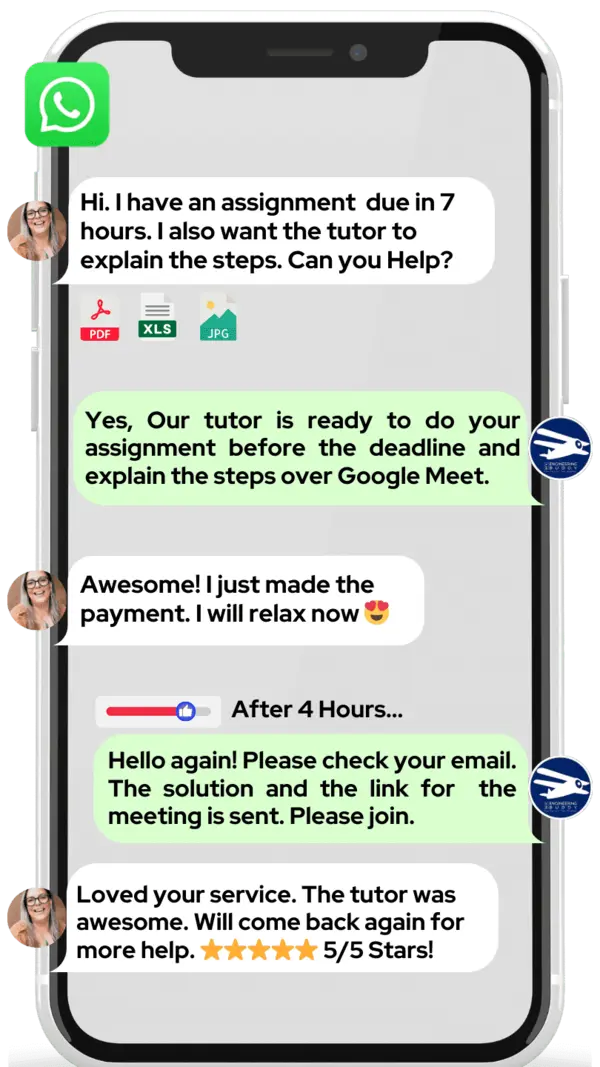
WhatsApp MEB for a quick quote — average response time under 1 minute.
Who This AP Computer Science Principles Tutoring Is For
AP CSP draws students from every background — some have coded before, most haven’t. The course is broad by design, and that breadth is exactly where students get lost.
- High school students enrolled in AP Computer Science Principles who are behind on units or unsure how to approach the Create Performance Task
- Students who scored a 1 or 2 on the AP exam and are retaking the course or sitting the exam again
- Students with a university conditional offer that depends on passing AP CSP — with weeks, not months, left on the clock
- Students who understand the coding labs but struggle to explain their reasoning in written responses
- Parents whose child is losing confidence as the Performance Task deadline approaches
- Students preparing for college CS coursework at schools like MIT, Carnegie Mellon, Georgia Tech, UC Berkeley, University of Toronto, or Imperial College London
If the Create PT or the multiple-choice section is the sticking point, an AP Computer Science A tutor or AP CSP tutor can pinpoint exactly which skills are missing within the first session.
1:1 Tutoring vs Self-Study vs AI Tools
Self-study works for some students — Khan Academy covers the basics, and the College Board’s own materials are solid. But without feedback, you can misread an algorithmic concept for weeks and not know it. AI tools like ChatGPT can explain how a sorting algorithm works in seconds, but they can’t watch you trace through pseudocode, catch where your logic breaks, or tell you why your Create PT written response won’t earn the rubric points it needs to. In AP CSP specifically, the difference between a 3 and a 5 often comes down to how precisely a student can explain their program’s purpose and the function of a specific algorithm — something that requires live, back-and-forth correction. MEB gives you that: online flexibility with a structured feedback loop calibrated to the College Board AP CSP framework.
Outcomes: What You’ll Be Able To Do in AP Computer Science Principles
After working with an online AP Computer Science Principles tutor at MEB, students can write and trace algorithms in both block-based and text-based programming environments, analyze how data is represented in binary and how compression affects file size, explain the function of specific abstractions within their Create PT program with enough precision to earn College Board rubric points, apply cybersecurity concepts like public key encryption and data privacy to real-world scenarios, and present how their program addresses a computing innovation in a way that satisfies the AP exam’s written response criteria.
Supporting a student through AP Computer Science Principles? MEB works directly with parents to set up sessions, track progress, and keep coursework on schedule. WhatsApp MEB — average response time is under a minute, 24/7.
Based on feedback from 40,000+ sessions collected by MEB from 2022 to 2025, 58% of students improved by one full grade after approximately 20 hours of 1:1 tutoring in a single subject. A further 23% achieved at least a half-grade improvement.
Source: MEB session feedback data, 2022–2025.
What We Cover in AP Computer Science Principles (Syllabus / Topics)

Unit 1–3: Data, Internet, and Algorithmic Thinking
- Binary representation of numbers, text, images, and sound
- Data compression — lossless vs lossy, and when each matters
- How the internet works: IP, DNS, HTTP, packets, and routing
- Cybersecurity concepts: encryption, malware, phishing, and public/private keys
- Algorithmic efficiency and the difference between polynomial and exponential time
- Undecidable problems and the limits of computation
Recommended texts: Blown to Bits by Abelson, Ledeen & Lewis; College Board AP CSP Course and Exam Description (CED).
Unit 4–5: Programming and Abstraction
- Variables, conditionals, loops, and functions in block-based and text-based environments
- Lists and iteration — processing data collections programmatically
- Defining and calling procedures; parameters and return values
- Identifying and writing abstractions that manage program complexity
- Debugging strategies: tracing, test cases, and systematic error isolation
- Reading and writing College Board pseudocode accurately
Recommended texts: Python for Everybody by Charles Severance; AP CSP CED pseudocode reference (College Board).
Unit 6–7: Create Performance Task and Societal Impact
- Designing and documenting a program that solves a real-world problem
- Writing the Create PT program code, video, and written responses to College Board rubric specifications
- Evaluating computing innovations: benefits, harms, and unintended consequences
- Digital divide, bias in algorithms, and ethical dimensions of large datasets
- Intellectual property, licensing, and safe computing practices
Recommended texts: Blown to Bits (chapters on privacy and security); College Board Create PT scoring guidelines and sample responses.
For students who want to go further after AP CSP, AP Statistics tutoring and AP Calculus help are natural next steps toward a CS or data science degree pathway.
What a Typical AP Computer Science Principles Session Looks Like
The tutor opens by checking where you left off — usually the specific algorithm or Create PT section you were working through. If you were stuck on how to write a procedure that processes a list, that’s where the session starts. The tutor pulls up the problem on screen and walks through it with a digital pen-pad, annotating each step in real time while asking you to predict what the next line of code will do. You replicate the logic, explain it back, and then attempt a similar problem yourself while the tutor watches and corrects without jumping in too early. By the end of the session, you have a concrete practice task — usually a pseudocode problem or a short written response to draft — and the next topic is already noted so the following session picks up without any reset time.
How MEB Tutors Help You with AP Computer Science Principles (The Learning Loop)
Diagnose: In the first session, the tutor identifies exactly which AP CSP unit is causing the most friction — whether that’s binary data, algorithm tracing, or the Create PT rubric. A short diagnostic task makes the gap visible within 15 minutes.
Explain: The tutor works through problems live using a digital pen-pad, showing every step of an algorithm or every component of a written response. Nothing is skipped. You see how a correct answer is built, not just what it looks like.
Practice: You attempt the next problem while the tutor watches. This matters more than most students expect — errors in AP CSP reasoning are often invisible until someone sees you work through it in real time.
Feedback: The tutor corrects errors step by step, pointing to exactly where the logic or the written response broke down and why that would cost rubric points on the actual exam.
Plan: Every session ends with a clear next step — a specific pseudocode exercise, a draft Create PT response, or a data representation practice set. The tutor tracks what’s covered and adjusts the sequence based on your exam date.
Sessions run over Google Meet with a digital pen-pad or iPad and Apple Pencil. Before your first session, share your current AP CSP unit, any Create PT drafts or past practice questions you’ve attempted, and your exam date. The first session covers your diagnostic and the highest-priority gap. Start with the $1 trial — 30 minutes of live tutoring that also serves as your first diagnostic.
At MEB, we’ve found that the students who improve fastest in AP CSP are the ones who stop treating pseudocode as a translation exercise and start thinking about it as a way to describe reasoning. That shift usually happens in the second or third session once a tutor has watched them work through a problem out loud.
Tutor Match Criteria (How We Pick Your Tutor)
Not every CS tutor is right for AP CSP. Here’s what MEB looks at when matching you.
Subject depth: Tutors are matched to the College Board AP CSP framework specifically — not just general programming experience. They know the Create PT rubric, the pseudocode conventions, and which exam components carry the most weight.
Tools: All sessions run on Google Meet with a digital pen-pad or iPad and Apple Pencil for annotated problem-solving. Screen sharing is used for live coding walkthroughs in Python or Scratch environments.
Time zone: MEB covers New York, Los Angeles, Chicago, London, Dubai, Toronto, Sydney, Melbourne — every major US, UK, Gulf, Canadian, Australian, and European time zone, including evenings and weekends.
Learning style: Calibrated from the first session. Some students need more worked examples; others need to attempt problems first and get corrected. The tutor adjusts after watching you work.
Communication: Clear English, adapted to the student’s level. No jargon that hasn’t been explained first.
Goals: Whether you need a 3 to secure a pass, a 5 for college credit, or just to get through the Create PT deadline, the tutor focuses the session sequence on that specific target.
Unlike platforms where you fill out a form and wait, MEB responds in under a minute, 24/7. Tutor match takes under an hour. The $1 trial means you test before you commit. Everything runs over WhatsApp — no logins, no intake forms.
Study Plans (Pick One That Matches Your Goal)
Once the diagnostic is done, your tutor builds the session sequence around one of three structures: a catch-up plan for students 1–3 weeks from an exam or Create PT deadline with specific gaps to close fast; an exam prep plan for students 4–8 weeks out who need structured unit-by-unit revision with timed practice; or weekly support aligned to your school’s AP CSP semester schedule and upcoming assignment deadlines. The tutor sets the sequence after session one — not before.
Pricing Guide
AP Computer Science Principles tutoring runs $20–$40 per hour for most students. Graduate-level CS or niche specialist support is available up to $100 per hour. Rate depends on the specific unit, timeline pressure, and tutor availability.
For students targeting CS programs at top universities — MIT, Carnegie Mellon, UC San Diego, University of Waterloo — tutors with undergraduate or graduate CS research backgrounds are available at higher rates. Share your goal and MEB matches the tier to what you actually need.
Availability drops in April as the AP exam window opens. Start with the $1 trial — 30 minutes, no registration, no commitment. WhatsApp MEB for a quick quote.
FAQ
Is AP Computer Science Principles hard?
AP CSP has a broad scope — algorithms, data, the internet, and the Create Performance Task all in one course. Students without any CS background find the programming units challenging, while others struggle more with written responses. Difficulty depends heavily on which units your school emphasizes and how much practice you get explaining your reasoning.
How many sessions are needed?
Most students see clear progress within 5–8 sessions of focused 1:1 work. Students tackling the Create PT from scratch or closing gaps across multiple units typically need 10–15 hours spread over 4–6 weeks. The tutor gives a clearer estimate after the first diagnostic session.
Can you help with AP CSP homework and assignments?
Yes. MEB tutors explain the concepts, walk through the logic, and help you understand what the question is asking — so you can complete the work yourself.
MEB tutoring is guided learning — you understand the work, then submit it yourself. For full details on what we help with and what we don’t, read our Academic Integrity policy and Why MEB.
Will the tutor match my exact AP CSP syllabus or exam board?
Yes. AP Computer Science Principles is a College Board course with a fixed framework. Tutors are matched specifically to the AP CSP CED, including the Create PT rubric, pseudocode conventions, and the multiple-choice exam format. If your school uses a specific programming language or tool, share that when you message MEB.
What happens in the first session?
The first session is a diagnostic. The tutor works through a short task with you — usually a pseudocode problem or a Create PT written response — to identify exactly where your understanding breaks down. By the end, you have a clear picture of the gap and a session plan that addresses it directly.
Is online AP CSP tutoring as effective as in-person?
For AP CSP, online is often more practical. The tutor can annotate pseudocode on a digital pen-pad, share programming environments on screen, and pull up the College Board rubric alongside your draft in real time. Students in the US, UK, and Gulf consistently report that the format feels no different from sitting across from someone.
Can I get AP CSP help at midnight or on weekends?
Yes. MEB operates 24/7 across all major time zones. Students in Los Angeles, London, Dubai, and Sydney all book evening and weekend sessions regularly. Message MEB on WhatsApp at any hour and you’ll get a response in under a minute.
What if I don’t get along with my assigned tutor?
It happens occasionally. Message MEB and a different tutor is matched — usually within the same day. The $1 trial exists partly for this reason: you’re testing fit before committing to a longer session plan. No long-form explanation required — just say it isn’t working.
How do I find an AP CSP tutor in my city?
You don’t need to. MEB tutors work entirely online via Google Meet and are matched to your time zone — not your postcode. Students in New York, Toronto, London, Dubai, and Sydney all use the same pool of verified AP CSP tutors. Geography is not a factor in the match.
How do I get started?
Message MEB on WhatsApp with your AP CSP unit, your exam or Create PT date, and your time zone. MEB matches you with a verified tutor — usually within the hour. Your first session is the $1 trial: 30 minutes of live tutoring or one full question explained, no registration, no commitment.
Trust & Quality at My Engineering Buddy
Every MEB tutor goes through a subject-specific screening process: application review, a live demo session evaluated by the MEB team, and an ongoing feedback loop tied to student outcomes. Tutors covering AP Computer Science Principles hold degrees in computer science, mathematics, or related fields and have direct experience with the College Board AP CSP framework — not just general programming. Rated 4.8/5 across 40,000+ verified reviews on Google.
MEB tutoring is guided learning — you understand the work, then submit it yourself. For full details on what we help with and what we don’t, read our Academic Integrity policy and Why MEB.
MEB has served 52,000+ students across the US, UK, Canada, Australia, Gulf, and Europe in 2,800+ subjects since 2008. If you’re also working through related College Board courses, MEB covers AP Calculus AB tutoring, AP Physics 1 help, and AP Biology tutoring — all with the same verified tutor matching process. You can read more about how we work at our tutoring methodology page.
MEB has operated since 2008. In that time, the platform has matched students to tutors across 2,800+ subjects — from AP Computer Science Principles to graduate-level machine learning — across more than 50 countries.
Source: My Engineering Buddy, 2008–2025.
Students consistently tell us that the Create Performance Task feels impossible until someone sits with them and reads the rubric out loud. Every single criterion becomes obvious when you stop guessing what College Board wants and start treating it as a checklist with a specific answer for each row.
Try your first session for $1 — 30 minutes of live 1:1 tutoring or one homework question explained in full. No registration. No commitment. WhatsApp MEB now and get matched within the hour.
The College Board’s AP Computer Science Principles course is one of the fastest-growing AP courses in the US by enrollment — making strong exam preparation and a clear understanding of the Create PT rubric more important than ever for students seeking college credit.
Source: College Board AP Program.
Explore Related Subjects
Students studying AP Computer Science Principles often also need support in:
Next Steps
Getting started takes less than two minutes.
- Share your AP CSP unit, your hardest component (Create PT, pseudocode, data representation), and your exam or deadline date
- Share your availability and time zone — evenings and weekends are fine
- MEB matches you with a verified AP CSP tutor — usually within 24 hours, often within the hour
Before your first session, have ready: your College Board AP CSP syllabus or course outline, a recent past paper attempt or homework question you struggled with, and your exam or Create PT deadline date. The tutor handles the rest.
Visit www.myengineeringbuddy.com for more on how MEB matches tutors and structures sessions.
WhatsApp to get started or email meb@myengineeringbuddy.com.
Reviewed by Subject Expert
This page has been carefully reviewed and validated by our subject expert to ensure accuracy and relevance.

