

Hire Verified & Experienced
Association for Psychological Therapies Tutors Online
Email: [email protected]



~1 min
Average Reply Time
~1 hour
To Be Matched With A Tutor
1 Trial
75% Find Their Tutor On The 1st Trial
$1
Your First 30 Minutes
Hire The Best Association for Psychological Therapies Tutor
Top Tutors, Top Grades. Without The Stress!
Related Subjects
Most students who struggle with APT frameworks don’t lack intelligence — they lack a tutor who knows exactly which competency descriptors assessors look for.
Association for Psychological Therapies Tutor Online
Association for Psychological Therapies (APT) is a UK-based training and accreditation body providing structured frameworks — including the Cognitive Behavioural Therapy and Reasoning & Rehabilitation programmes — equipping practitioners to deliver evidence-based psychological interventions in clinical and forensic settings.
If you’re searching for an Association for Psychological Therapies tutor near me, MEB gives you 1:1 online tutoring and homework help across 2,800+ advanced subjects — including the full APT curriculum. Our psychology tutoring network covers everyone from undergraduate students first encountering CBT theory to practitioners working through APT accreditation portfolios. One tutor. Your syllabus. Your timeline.
- 1:1 online sessions tailored to your APT course, framework, and competency level
- Expert verified tutors with clinical psychology and CBT-specific knowledge
- Flexible time zones — US, UK, Canada, Australia, Gulf
- Structured learning plan built after a diagnostic session
- Ethical homework and assignment guidance — you understand the work, then submit it yourself
52,000+ students across the US, UK, Canada, Australia, and the Gulf have used MEB since 2008 — including students in Psychology subjects like Association for Psychological Therapies, Psychotherapy, and Psychopathology.
Source: My Engineering Buddy, 2008–2025.
How Much Does an Association for Psychological Therapies Tutor Cost?
Most APT tutoring sessions run at $20–$40/hr. Specialist tutors with clinical accreditation or forensic psychology backgrounds may run up to $100/hr. The $1 trial gives you 30 minutes of live 1:1 tutoring or a full explanation of one homework question — no registration required.
| Level / Need | Typical Rate | What’s Included |
|---|---|---|
| Undergraduate / Foundation | $20–$35/hr | 1:1 sessions, assignment guidance |
| Postgraduate / Practitioner | $35–$70/hr | Expert tutor, portfolio and case study depth |
| APT Accreditation Support | $50–$100/hr | Clinical specialist, competency framework mapping |
| $1 Trial | $1 flat | 30 min live session or 1 homework question explained |
Availability tightens during APT assessment submission windows and clinical placement seasons. Book early if you’re approaching a competency portfolio deadline.
WhatsApp MEB for a quick quote — average response time under 1 minute.
Who This Association for Psychological Therapies Tutoring Is For
APT content sits at the intersection of clinical theory and evidence-based practice. It’s not easy to get right without targeted support, especially when assessors are looking for precise use of therapeutic frameworks.
- Undergraduate psychology students covering CBT theory, therapeutic models, or psychopathology modules
- Postgraduate trainees working through APT-accredited programmes in CBT or Reasoning & Rehabilitation
- Practitioners completing portfolio evidence and competency write-ups for APT accreditation
- Students retaking after a failed first attempt at a clinical psychology assessment
- Students with a university conditional offer depending on their psychology grade
- Parents watching a child’s confidence drop alongside their grades in psychology coursework
Students at universities across the US, UK, Canada, and Australia — including those progressing toward clinical psychology postgraduate programmes — use MEB for structured, tutor-led support. The $1 trial is a low-risk way to find out whether the fit is right.
Need abnormal psychology tutoring alongside your APT work? MEB covers both.
1:1 Tutoring vs Self-Study vs AI vs YouTube vs Online Courses
Self-study works if you’re disciplined — but APT frameworks require feedback on your application of theory, not just recall. AI tools give fast explanations but can’t tell you why your case formulation is missing a key CBT element. YouTube covers the basics but stops short when you’re stuck on a specific competency descriptor. Online courses move at a fixed pace with no room for your specific gap. With MEB’s 1:1 cognitive psychology help, a tutor identifies exactly where your APT reasoning breaks down and corrects it live — session by session.
Outcomes: What You’ll Be Able To Do in Association for Psychological Therapies
After targeted 1:1 APT tutoring, students consistently report being able to apply CBT formulation models accurately to case vignettes, analyse therapeutic session transcripts against APT competency standards, explain the theoretical basis of Reasoning & Rehabilitation and its forensic applications, write structured case conceptualisations that meet portfolio submission criteria, and present treatment rationales with clear reference to evidence-based intervention frameworks. These are not generic skills — they map directly to the components APT assessors and university markers evaluate.
Based on feedback from 40,000+ sessions collected by MEB from 2022 to 2025, 58% of students improved by one full grade after approximately 20 hours of 1:1 tutoring in subjects like Association for Psychological Therapies. A further 23% achieved at least a half-grade improvement.
Source: MEB session feedback data, 2022–2025.
At MEB, we’ve found that APT students who struggle most are usually very capable — they just haven’t had anyone show them how to bridge the gap between reading a therapeutic model and applying it precisely in written form. That gap closes faster than most students expect.
What We Cover in Association for Psychological Therapies (Syllabus / Topics)

CBT Theory and Practice
- Core cognitive and behavioural models — Beck’s cognitive model, ABC framework
- Case formulation: presenting problem, precipitating, perpetuating, and protective factors
- Thought records, behavioural experiments, and exposure hierarchies
- Schema therapy concepts and their relationship to standard CBT
- Therapeutic alliance and session structuring within APT frameworks
- Measuring therapeutic progress using validated outcome tools (PHQ-9, GAD-7)
- Adapting CBT for anxiety disorders, depression, and OCD presentations
Core texts include Westbrook, Kennerley & Kirk’s An Introduction to Cognitive Behaviour Therapy and Beck’s Cognitive Therapy: Basics and Beyond.
Reasoning and Rehabilitation (R&R)
- Origins and theoretical basis of R&R in forensic and offender rehabilitation
- Core modules: social cognitive skills, values, creative thinking, problem-solving
- Delivering R&R sessions: facilitation skills and group dynamics
- Evaluating programme fidelity and participant progress
- Risk assessment frameworks used alongside R&R delivery
- Ethical considerations in forensic psychological intervention
Key references include Ross, Fabiano & Ewles’ original R&R manuals and current AQA A-Level psychology resources covering forensic applications.
APT Competency Portfolio and Assessment
- Mapping session evidence to APT competency domains
- Writing structured portfolio entries: structure, language, and assessor expectations
- Video and transcript analysis against APT rating scales
- Supervision logs and reflective practice documentation
- Common portfolio errors and how APT assessors identify them
- Preparing for APT oral examinations or viva components
Tutors draw on the APT Diploma and Certificate frameworks alongside Roth and Pilling’s Competence Frameworks for CBT.
What a Typical Association for Psychological Therapies Session Looks Like
The tutor opens by checking where you left off — often a case formulation you attempted or a competency domain you were drafting portfolio evidence for. You pull up your draft or a case vignette on screen and work through it together. The tutor uses a digital pen-pad to annotate your formulation in real time, showing exactly where the cognitive model mapping breaks down or where your language doesn’t match APT descriptor language. You rewrite a section while the tutor watches, then explain your reasoning aloud — a technique that quickly exposes gaps that look fine on paper. The session closes with a concrete task: redraft a specific portfolio entry, attempt a new case vignette under timed conditions, or review a session transcript against the APT rating scale. The next topic is set before you leave.
How MEB Tutors Help You with Association for Psychological Therapies (The Learning Loop)
Diagnose: In the first session, the tutor reviews your current APT coursework, portfolio draft, or the specific exam component causing problems. They identify whether the gap is conceptual (misunderstanding of the CBT model), applied (inability to translate theory into case formulation), or technical (portfolio language and structure).
Explain: The tutor works through live examples using a digital pen-pad — annotating a case vignette, demonstrating how to structure a competency narrative, or walking through an APT rating scale line by line. Nothing is left abstract.
Practice: You attempt a formulation or portfolio entry with the tutor present. This isn’t homework — it’s deliberate practice with immediate support available. The moment you stall, the tutor redirects.
Feedback: Step-by-step correction follows. The tutor explains not just what’s wrong but why it would lose marks or fail a competency check — the specific language assessors expect versus what you wrote.
Plan: Each session ends with a clear next step: the next competency domain, the next module topic, or the next practice vignette. The tutor tracks your progress across sessions and adjusts the sequence if something needs revisiting.
Sessions run on Google Meet with a digital pen-pad or iPad and Apple Pencil. Before your first session, share your APT programme handbook, any portfolio entries you’ve already attempted, and your submission or exam date. The first session runs as a diagnostic — so the tutor knows exactly what to prioritise from session two onward. Start with the $1 trial — 30 minutes of live tutoring that also serves as your first diagnostic.
Students consistently tell us that the moment APT clicks is when they stop reading therapeutic models as theory and start seeing them as structured decision trees they can apply to any case. Getting there requires someone to walk them through the application — not just the concept.
Tutor Match Criteria (How We Pick Your Tutor)
Not every psychology tutor is equipped for APT. MEB matches on four criteria.
Subject depth: Tutors have direct experience with APT frameworks — CBT, R&R, or clinical competency portfolios — at the level you’re working at. A practitioner-level student gets a tutor with clinical experience, not just an academic background in health psychology.
Tools: Every tutor works on Google Meet with a digital pen-pad or iPad and Apple Pencil. Live annotation is non-negotiable for APT — you need to see corrections made to your formulation in real time.
Time zone: Matched to your region — US, UK, Gulf, Canada, or Australia. No scheduling across impossible time gaps.
Goals: Whether you’re after a pass on a specific competency, a distinction on an academic essay, or structured preparation for an APT viva, the tutor aligns their approach to your specific target — not a generic syllabus sweep.
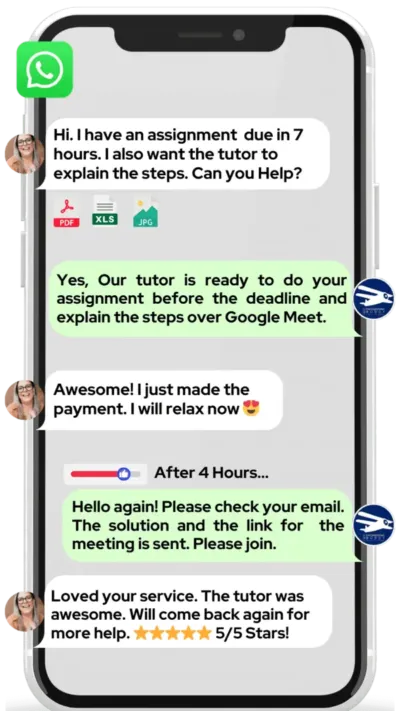
Unlike platforms where you fill out a form and wait, MEB responds in under a minute, 24/7. Tutor match takes under an hour. The $1 trial means you test before you commit. Everything runs over WhatsApp — no logins, no intake forms.
Study Plans (Pick One That Matches Your Goal)
Catch-up (1–3 weeks): for students behind on a competency domain or facing an imminent portfolio deadline. The tutor focuses on the highest-impact gaps first. Exam prep (4–8 weeks): structured revision across all APT components, with timed practice and mock portfolio entries. Weekly support: ongoing sessions aligned to your programme schedule, coursework submissions, or clinical placement cycle. After the first diagnostic, the tutor builds the specific sequence — you don’t have to plan it yourself.
Pricing Guide
APT tutoring starts at $20/hr for undergraduate-level support. Postgraduate and practitioner-level sessions typically run $35–$70/hr. Specialist tutors with APT accreditation or forensic psychology backgrounds are available up to $100/hr.
Rate factors: your programme level, the complexity of the competency domain, timeline pressure, and tutor availability. Rates can shift upward during peak submission windows.
For students targeting clinical psychology doctoral programmes or APT-accredited practitioner status, tutors with professional clinical backgrounds are available at higher rates — share your specific goal and MEB will match the tier to your ambition.
Start with the $1 trial — 30 minutes, no registration, no commitment. WhatsApp MEB for a quick quote.
MEB has served 52,000+ students since 2008 — across psychology, therapy training, and clinical skills — with a 4.8/5 rating and 40,000+ reviews. Tutors are matched to your APT programme level, not assigned at random.
Source: My Engineering Buddy, 2008–2025.
FAQ
Is Association for Psychological Therapies hard?
APT frameworks are demanding because they require you to apply clinical theory precisely, not just understand it. Students who struggle most usually have the knowledge — they haven’t had enough guided practice translating theory into competency-standard written or verbal output.
How many sessions are needed?
Most students see clear improvement in 4–8 sessions. Portfolio and accreditation work often runs longer — 10–20 sessions across a semester. The first session diagnostic tells the tutor exactly how many sessions your specific gaps realistically require.
Can you help with homework and assignments?
Yes. MEB tutoring is guided learning — you understand the work, then submit it yourself. See our Academic Integrity policy and Why MEB page for full details on what we help with and what we don’t.
Will the tutor match my exact syllabus or exam board?
Yes. Before your first session, share your programme handbook, institution, and the specific APT framework or competency domain you’re working on. The tutor is matched to that — not a generic psychology syllabus.
What happens in the first session?
The tutor runs a focused diagnostic — reviewing your current work, identifying conceptual or applied gaps, and mapping the session sequence. You leave with a clear plan and at least one concrete task to complete before session two.
Is online tutoring as effective as in-person?
For APT work, yes. The tutor annotates your formulations and portfolio entries in real time using a digital pen-pad on Google Meet. Students consistently report that live screen annotation is more efficient than face-to-face written feedback.
Can I get Association for Psychological Therapies help at short notice — even the night before a deadline?
MEB operates 24/7 and average response time on WhatsApp is under a minute. Last-minute portfolio support and deadline-week sessions are available. Availability is tighter during peak clinical placement periods, so contact MEB as early as you can.
Do you help with APT competency portfolio writing specifically?
Yes — this is one of the most common APT requests MEB handles. Tutors help you structure portfolio entries, match your language to APT competency descriptors, and review evidence mapping before submission. You write and submit your own work; the tutor guides the structure and approach.
What is the difference between APT CBT and standard CBT training?
APT delivers accredited CBT training using its own competency frameworks and assessment tools, distinct from BABCP or university-only routes. APT programmes are widely used in NHS and forensic settings. MEB tutors familiar with APT-specific frameworks can explain these distinctions and help you navigate the competency requirements for your specific route.
How do I find an Association for Psychological Therapies tutor in my city?
MEB tutoring is fully online — so location doesn’t limit your options. Students in London, Manchester, Toronto, Sydney, and across the Gulf access the same verified APT-specialist tutor pool. No geography barrier, no commute.
Do you offer group Association for Psychological Therapies sessions?
MEB specialises in 1:1 tutoring. Group sessions are not available. The 1:1 format means every session is calibrated to your specific gaps — no time lost covering material you already understand.
How do I get started?
Start with the $1 trial — 30 minutes of live 1:1 tutoring or one full explanation of a homework question. Three steps: WhatsApp MEB, get matched with a verified APT tutor within the hour, and start your trial session.
Trust & Quality at My Engineering Buddy
Every MEB tutor goes through subject-specific vetting — not a generic interview. For APT, that means screening for direct experience with CBT frameworks, R&R delivery, or clinical competency portfolio assessment. Tutors complete a live demo evaluation before joining the platform, and ongoing session feedback is reviewed continuously. Rated 4.8/5 across 40,000+ verified reviews on Google.
MEB tutoring is guided learning — you understand the work, then submit it yourself. For full details on what we help with and what we don’t, read our Academic Integrity policy and Why MEB.
MEB has been running since 2008, serving 52,000+ students across the US, UK, Canada, Australia, Gulf, and Europe in 2,800+ subjects. Psychology is one of MEB’s strongest subject families — tutors cover everything from psychoanalysis tutoring and neuropsychology help to clinical frameworks like those assessed in APT programmes. Our tutoring methodology is built on the same diagnostic-practice-feedback loop used across every subject we cover.
A common pattern our tutors observe is that APT students arrive having read everything on the reading list and still can’t structure a case formulation that meets portfolio standards. The knowledge is there. The applied translation is what’s missing — and that’s exactly what 1:1 sessions address.
Explore Related Subjects
Students studying Association for Psychological Therapies often also need support in:
- Developmental Psychology
- Social Psychology
- Biopsychology
- Mental Health
- Positive Psychology
- Psychometrics
- Behavioral Neuroscience
Next Steps
Getting started takes under two minutes. Here’s what helps MEB match you quickly:
- Share your APT programme level, the specific competency domain or module causing problems, and your submission or exam date
- Share your availability and time zone
- MEB matches you with a verified APT tutor — usually within the hour
Before your first session, have ready: your APT programme handbook or course outline, a recent portfolio entry or assignment you struggled with, and your deadline or exam date. The tutor handles the rest.
Visit www.myengineeringbuddy.com for more on how MEB works.
WhatsApp to get started or email [email protected].
52,000+ Happy Students From Various Universities



Reviewed by Subject Expert
This page has been carefully reviewed and validated by our subject expert to ensure accuracy and relevance.

