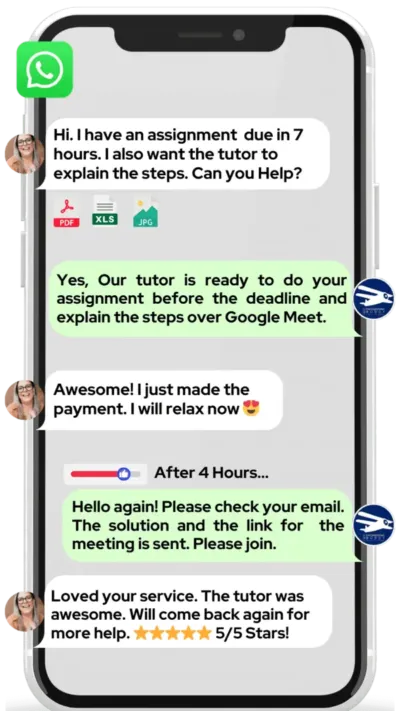
~1 min
Average Reply Time
~1 hour
To Be Matched With A Tutor
1 Trial
75% Find Their Tutor On The 1st Trial
$1
Your First 30 Minutes
Hire The Best Fusion 360 Tutor
Top Tutors, Top Grades. Without The Stress!





Related Subjects
Most Fusion 360 users hit the same wall: they can sketch, but the moment a project demands parametric constraints, sheet metal rules, or CAM toolpaths, progress stops cold.
Fusion 360 Tutor Online
Fusion 360 is Autodesk’s cloud-based CAD/CAM/CAE platform used for 3D modelling, simulation, and CNC manufacturing. It equips engineers, designers, and students to design, test, and manufacture parts within a single integrated environment.
MEB connects you with a verified Fusion 360 tutor online who knows the software at the level your project or course actually demands — not just basic sketching, but constraints, assemblies, generative design, and toolpath generation. If you’ve searched for a Fusion 360 tutor near me, working live with an expert over Google Meet is faster and more targeted than any local option. Our computer-aided design tutoring covers the full CAD/CAM spectrum, with Fusion 360 as one of the most-requested tools we support.
- 1:1 online sessions matched to your specific project, course module, or certification goal
- Expert-verified tutors with hands-on Fusion 360 and manufacturing industry experience
- Flexible time zones — US, UK, Canada, Australia, Gulf
- Structured session plan built after a short diagnostic of where you’re stuck
- Guided project support — we explain the workflow and constraints, you build the model
52,000+ students across the US, UK, Canada, Australia, and the Gulf have used MEB since 2008 — including students in Computer-Aided Design subjects like Fusion 360, SolidWorks tutoring, and Autodesk Inventor help.
Source: My Engineering Buddy, 2008–2025.
How Much Does a Fusion 360 Tutor Cost?
Most Fusion 360 sessions run $20–$40/hr. Advanced manufacturing workflows, generative design, or simulation-heavy projects sit at the higher end. The $1 trial gets you 30 minutes of live 1:1 project help — or a full walkthrough of one specific problem you’re stuck on.
| Level / Need | Typical Rate | What’s Included |
|---|---|---|
| Standard (most levels) | $20–$35/hr | 1:1 sessions, workflow guidance |
| Advanced / Specialist | $35–$70/hr | CAM, simulation, generative design |
| $1 Trial | $1 flat | 30 min live session or 1 project question |
Tutor availability tightens around university project submission deadlines and end-of-semester crunch periods. Book early if you have a fixed deadline.
WhatsApp MEB for a quick quote — average response time under 1 minute.
Who This Fusion 360 Tutoring Is For
Fusion 360 tutoring at MEB is used by engineering students, product design students, and working professionals who need targeted help — not a YouTube walkthrough that stops the moment their specific constraint fails.
- Undergraduate and graduate mechanical, industrial, or product design students with a project submission deadline approaching
- Students whose university coursework requires parametric modelling, assembly constraints, or CNC toolpath generation they haven’t covered yet
- Professionals upskilling from AutoCAD or SolidWorks who need to get productive in Fusion 360 quickly
- Students retaking a CAD module after a failed first attempt — who need to understand where the model logic broke down
- Parents supporting an engineering student whose confidence has dropped alongside their project grades
MEB has worked with students from institutions including MIT, Georgia Tech, Purdue, the University of Michigan, Imperial College London, TU Delft, and KAUST — across both undergraduate and graduate engineering programmes. If your course requires Fusion 360, your tutor already knows the software at that level.
Students consistently tell us that the biggest shift happens when they stop treating Fusion 360 as a drawing tool and start using it as a parametric system. That mindset change — guided by someone who models in it professionally — usually happens within the first two sessions.
1:1 Tutoring vs Self-Study vs AI vs YouTube vs Online Courses
Self-study works if you have a clear goal and no deadline pressure — but Fusion 360’s constraint system and CAM workflows punish gaps fast. AI tools explain concepts but can’t watch you model in real time and catch the moment your sketch goes over-constrained. YouTube is excellent for feature overviews; it breaks down the instant your specific geometry doesn’t match the tutorial. Online courses are structured but fixed-pace — they won’t slow down for your assembly failure at 11pm. With a 1:1 Fusion 360 tutor from MEB, the session runs at your pace, on your actual file, correcting the exact error in front of you.
Outcomes: What You’ll Be Able To Do in Fusion 360
After focused 1:1 sessions, students consistently move from broken sketches and failed constraints to confidently building fully defined parametric models. You’ll apply timeline-based design history to modify parts without rebuilding from scratch. You’ll model sheet metal components with correct bend allowances and export flat patterns ready for fabrication. You’ll analyse stress distribution across a part using Fusion 360’s built-in FEA simulation tools. You’ll generate adaptive toolpaths in the CAM workspace and post-process G-code for a specific CNC machine. And you’ll present assemblies with exploded views and technical drawings that meet engineering documentation standards.
Based on feedback from 40,000+ sessions collected by MEB from 2022 to 2025, students working 1:1 on Fusion 360 consistently report faster progress on complex assemblies, fewer failed constraints, and stronger confidence presenting design work to course assessors. Progress varies by starting level and practice frequency.
Source: MEB session feedback data, 2022–2025.
Try your first session for $1 — 30 minutes of live 1:1 tutoring or one homework question explained in full. No registration. No commitment. WhatsApp MEB now and get matched within the hour.
What We Cover in Fusion 360 (Syllabus / Topics)

Track 1: Parametric Modelling and Assembly Design
- Sketch constraints — fully defined vs under-constrained geometry
- Feature-based modelling: extrude, revolve, sweep, loft, and fillet
- Timeline management and design history editing
- Component and sub-assembly creation with joints and motion links
- Top-down vs bottom-up assembly strategies
- Appearance, material assignment, and rendering in Fusion 360
- Technical drawing generation — views, dimensions, tolerances, title blocks
Recommended references: Autodesk Fusion 360: A Power Guide for Beginners and Intermediate Users (Sandeep Dogra); Engineering Design with Fusion 360 (Hans Sagan); official Autodesk Fusion 360 Learning Panel documentation.
Track 2: Sheet Metal, CAM, and Manufacturing Workflows
- Sheet metal rules: bend radius, K-factor, and flat pattern export
- Converting solid bodies to sheet metal components
- CAM workspace setup: stock, machine configuration, and coordinate systems
- 2D and 3D toolpath strategies: adaptive clearing, parallel, contour
- Post-processing G-code for specific CNC machines
- CAM tutoring integration — linking design intent to machining decisions
- Simulation of toolpaths to detect collisions before cutting
Recommended references: Fusion 360 for Makers (Lydia Sloan Cline); CNC Programming Handbook (Peter Smid); Autodesk CAM post-processor documentation.
Track 3: Simulation, Generative Design, and Advanced Workflows
- Static stress simulation: loads, constraints, material assignment, and safety factor interpretation
- Modal frequency analysis for vibration-sensitive components
- Thermal simulation basics — heat loads and boundary conditions
- Generative design: define preserve and obstacle geometry, set load cases, compare outcomes
- Mesh refinement and result validation against hand calculations
- Linking Fusion 360 simulation results to design iteration in the timeline
Recommended references: Autodesk Fusion 360: Introduction to Parametric Modeling (Autodesk); Finite Element Analysis for Engineers (Zeid and Sivasubramanian); Autodesk generative design official documentation.
Platforms, Tools & Textbooks We Support
Fusion 360 runs on Windows and macOS and requires an active Autodesk account — tutors can guide you through education licence setup if you haven’t activated yours. Sessions run on Google Meet with screen sharing; tutors use a digital pen-pad to annotate directly on your model or sketch. MEB tutors also support adjacent tools including AutoCAD tutoring for 2D documentation, ANSYS tutoring for higher-fidelity FEA, and Mastercam help for advanced CAM work beyond Fusion 360’s native toolpaths.
What a Typical Fusion 360 Session Looks Like
The tutor opens by checking where the previous session’s model left off — usually a specific feature that wasn’t resolving correctly, like a loft between non-parallel profiles or a joint that was allowing unintended degrees of freedom. You share your screen and walk through what you tried. The tutor takes over briefly with the pen-pad to show the correct constraint logic or feature sequence, then hands control back to you immediately. You rebuild the step yourself while explaining your reasoning out loud. The session closes with one specific task — finish the assembly, run the stress simulation on the revised geometry, or generate and verify the CAM toolpath — and the next topic is noted before the call ends.
How MEB Tutors Help You with Fusion 360 (The Learning Loop)
Diagnose: In the first session, the tutor opens your existing file — or asks you to model a simple part from scratch — to identify where your understanding breaks down. Is it sketch constraints? Feature ordering? Assembly joint logic? The answer shapes every session that follows.
Explain: The tutor works through the problem on screen using a digital pen-pad, narrating decisions as they go. Why this constraint before that one. Why the timeline order matters for this particular edit. Not just what — why.
Practice: You rebuild the same step immediately, with the tutor watching. No moving on until the logic holds.
Feedback: Errors are corrected the moment they appear — not at the end of the session. The tutor shows exactly where the model logic failed and what it costs you downstream if left unfixed.
Plan: Each session ends with a concrete next task and a note on which track — parametric modelling, CAM, or simulation — the next session will cover. If you have a submission deadline, the tutor maps backwards from it.
Everything runs on Google Meet with screen sharing and a digital pen-pad or iPad with Apple Pencil. Before your first session, have your Fusion 360 file (or course brief), your project spec or module outline, and your deadline date ready. Whether you need a focused catch-up before a submission, structured work across four to eight weeks, or ongoing weekly support through the semester, the tutor maps the session plan after the first diagnostic. Start with the $1 trial — 30 minutes of live tutoring that also serves as your first diagnostic.
At MEB, we’ve found that Fusion 360 learners who share their actual project file in the first session — rather than a sample file — progress roughly twice as fast. Real geometry, real constraints, real deadline. That’s the most efficient starting point.
Tutor Match Criteria (How We Pick Your Tutor)
Not every CAD tutor is a Fusion 360 tutor. MEB matches on four criteria.
Subject depth: The tutor must have demonstrable Fusion 360 experience at your required level — undergraduate coursework, professional product design, or advanced CAM and simulation work. CAE tutoring and Fusion 360 simulation often overlap; tutors with both are prioritised where simulation is part of your project scope.
Tools: Google Meet, screen sharing, and a digital pen-pad or iPad with Apple Pencil — standard for every session.
Time zone: Matched to your region. US, UK, Gulf, Canada, and Australia are all covered across multiple time slots including evenings and weekends.
Goals: Exam pass, project submission, portfolio build, or professional upskilling — the match criteria differ. Tell MEB which one applies.
Unlike platforms where you fill out a form and wait, MEB responds in under a minute, 24/7. Tutor match takes under an hour. The $1 trial means you test before you commit. Everything runs over WhatsApp — no logins, no intake forms.
Pricing Guide
Fusion 360 tutoring starts at $20/hr for standard undergraduate-level coursework. Advanced CAM programming, generative design optimisation, and simulation-heavy projects run $35–$70/hr. Tutors with professional manufacturing or product design backgrounds are available at higher rates for students targeting roles at firms like Boeing, Dyson, or SpaceX — share your specific goal and MEB will match the tier to your ambition.
Rate factors: complexity of the workflow, tutor specialism, your timeline, and peak-period availability. Submission deadlines in May, November, and April tend to create demand spikes — earlier is better.
Start with the $1 trial — 30 minutes, no registration, no commitment. WhatsApp MEB for a quick quote.
Fusion 360 sits at the intersection of design and manufacturing. MEB tutors don’t just know the software — they understand the engineering decisions behind it. That’s the difference between learning clicks and learning to think like a designer.
Source: My Engineering Buddy, 2008–2025.
FAQ
Is Fusion 360 hard to learn?
The basics are accessible, but parametric logic, assembly constraints, and CAM workflows catch most learners off guard. With a tutor correcting constraint errors and explaining the timeline logic in real time, the learning curve compresses significantly.
How many sessions will I need?
Most students working on a specific university project need four to eight sessions. Broader skill-building for a professional portfolio typically runs eight to twelve sessions. The first diagnostic session gives you a clear picture.
Can you help with my project and portfolio work?
Yes. Tutors guide you through the design and manufacturing decisions — explaining workflow, constraint logic, and toolpath strategy — while you build the model yourself. MEB provides guided learning support; all project work is produced and submitted by you. See our Policies page for details on what we help with and what we don’t.
Will the tutor match my exact course or project requirements?
Yes. Share your module brief, course software version, and any specific deliverables when you message MEB. Tutors are matched on that basis — not assigned generically.
What happens in the first session?
The tutor opens your file or asks you to model a reference part to see where your understanding breaks down — sketch constraints, feature ordering, or assembly logic. That diagnostic shapes the session plan from session two onward.
Is online tutoring as effective as in-person for Fusion 360?
For software-based subjects, screen sharing with live annotation is often more effective than sitting side-by-side. The tutor sees your exact file, your cursor, and your constraint errors in real time — which is precisely what matters.
Can you help at midnight or over the weekend?
Yes. MEB operates 24/7 across time zones. Weekend and late-night sessions are available — particularly in demand during the week before major project submissions. WhatsApp MEB and expect a response in under a minute.
What if I don’t get on with my assigned tutor?
Request a different match — no explanation needed. MEB will reassign within hours. Most students are matched well on the first attempt because the matching criteria are specific to Fusion 360 workflow experience, not just general CAD background.
Do you offer group Fusion 360 sessions?
No. All MEB sessions are 1:1. Group sessions reduce the ability to work on a specific student’s file and constraint logic in real time — which is exactly where Fusion 360 learners get stuck.
How do I get started?
Three steps: WhatsApp MEB, share your project or course details, and get matched with a verified tutor — usually within the hour. The $1 trial covers your first 30 minutes of live tutoring or one full project question explained.
Does Fusion 360 use a different workflow to SolidWorks or CATIA — and does that matter for tutoring?
Yes — and it matters more than most students expect. Fusion 360’s cloud-based timeline and integrated CAM workspace behave differently from SolidWorks’s feature manager or CATIA’s part body structure. Tutors are matched specifically on Fusion 360 experience, not just general parametric CAD knowledge.
Can a tutor help me set up and understand the generative design workspace in Fusion 360?
Yes. Generative design — defining preserve geometry, obstacle geometry, load cases, and manufacturing constraints — is one of the more technically demanding Fusion 360 features. MEB tutors with simulation and advanced design backgrounds cover this directly, including how to evaluate and iterate on generated outcomes.
Trust & Quality at My Engineering Buddy
Every MEB tutor goes through a structured vetting process: degree and professional background check, a live demo session reviewed by an MEB subject lead, and ongoing feedback monitoring after they’re onboarded. For Fusion 360, that means tutors with demonstrable experience in parametric modelling, CAM programming, or simulation work — not just general software familiarity. Rated 4.8/5 across 40,000+ verified reviews on Google.
MEB provides guided learning support. All project work is produced and submitted by the student. Read our Academic Integrity policy and Why MEB for full details on what we help with and what we don’t.
MEB has been running since 2008 — 18 years, 52,000+ students, 2,800+ subjects across the US, UK, Canada, Australia, the Gulf, and Europe. Within Computer-Aided Design, the most-requested subjects alongside Fusion 360 include CATIA tutoring, Creo help, and Siemens NX tutoring. All are covered by verified subject-specialist tutors under the same matching and vetting process.
Explore Related Subjects
Students studying Fusion 360 often also need support in:
- Abaqus
- ANSYS Workbench
- Engineering Drawing
- HyperMesh
- Machine Design
- Rhino 3D
- Surface Modeling
- Technical Drawing
Next Steps
When you message MEB, share your project brief or course module, the specific Fusion 360 workflow you’re stuck on, your deadline, and your time zone. MEB matches you with a verified tutor — usually within 24 hours, often sooner.
Before your first session, have ready:
- Your Fusion 360 file or project specification (even a rough brief)
- The specific feature, constraint, or workflow that’s blocking you
- Your submission deadline or exam date
The tutor runs a short diagnostic in the first session so every minute of paid time is spent on what actually matters. Visit www.myengineeringbuddy.com for more on how MEB works.
WhatsApp to get started or email [email protected].
52,000+ Happy Students From Various Universities






Reviewed by Subject Expert
This page has been carefully reviewed and validated by our subject expert to ensure accuracy and relevance.