~1 min
Average Reply Time
~1 hour
To Be Matched With A Tutor
1 Trial
75% Find Their Tutor On The 1st Trial
$1
Your First 30 Minutes
Hire The Best Creo Tutor
Top Tutors, Top Grades. Without The Stress!


Related Subjects
Creo won’t explain why your assembly fails or why your drawing views are wrong — it just fails silently and costs you hours. That’s where a 1:1 online Creo tutor makes the difference.
Creo Tutor Online
Creo (formerly Pro/ENGINEER) is PTC’s parametric 3D CAD software used for part modeling, assembly design, surfacing, and engineering drawings. It equips engineers to design, simulate, and document mechanical components and systems for manufacturing.
Finding a Creo tutor near me is harder than it sounds — most tutors list CAD generically, but Creo’s parametric logic, constraint-driven sketcher, and assembly management tools are unlike any other platform. MEB provides 1:1 online Creo tutoring and project help matched specifically to your course, your version of Creo, and your actual deliverables. As part of our broader Computer-Aided Design tutoring offer, Creo sits alongside some of the most technically demanding tools we cover. Start with the $1 trial and work with a tutor who knows parametric modeling — not just CAD in general.
- 1:1 online sessions tailored to your university course or industry project
- Expert verified tutors with hands-on Creo Parametric experience
- Flexible time zones — US, UK, Canada, Australia, Gulf
- Structured learning plan built after a diagnostic session
- Guided project support — we explain the logic, you build the model
52,000+ students across the US, UK, Canada, Australia, and the Gulf have used MEB since 2008 — including students in Computer-Aided Design subjects like Creo, CATIA, and Siemens NX.
Source: My Engineering Buddy, 2008–2025.
How Much Does a Creo Tutor Cost?
Most Creo tutoring sessions run $20–$40/hr. Advanced parametric surfacing, Creo Simulate, or industry-level assembly work may reach $60–$100/hr depending on tutor expertise. The $1 trial gives you 30 minutes of live 1:1 tutoring or one project problem solved with a full explanation — before you commit to anything.
| Level / Need | Typical Rate | What’s Included |
|---|---|---|
| Standard (undergraduate course) | $20–$35/hr | 1:1 sessions, project guidance |
| Advanced / Specialist (Simulate, surfacing) | $35–$100/hr | Expert tutor, niche depth |
| $1 Trial | $1 flat | 30 min live session or 1 project question |
Tutor availability tightens during university submission periods — especially in April–May and November–December. Book ahead if you have a fixed deadline.
WhatsApp MEB for a quick quote — average response time under 1 minute.
Who This Creo Tutoring Is For
Most students who come to MEB for Creo help aren’t beginners who’ve never opened the software. They’ve been using it for weeks and something specific has broken down — a failed regeneration, a drawing that won’t behave, an assembly with conflicting constraints.
- Undergraduate mechanical, aerospace, or product design students with a Creo project submission due
- Students retaking a CAD module after a failed first attempt
- Students whose university switched from SolidWorks or AutoCAD to Creo mid-programme
- Graduate students using Creo Simulate for FEA as part of a thesis or research project
- Students 4–6 weeks from a final deadline with significant modeling gaps still to close
- Professionals upskilling in Creo Parametric for a new role or certification
Students from institutions including MIT, Georgia Tech, Imperial College London, TU Delft, ETH Zürich, University of Toronto, and UNSW Sydney regularly work with MEB tutors on Creo projects. Start with the $1 trial — no commitment needed to see whether MEB is the right fit.
1:1 Tutoring vs Self-Study vs AI vs YouTube vs Online Courses
Self-study works if you already know what’s wrong — but Creo’s parametric tree logic means a mistake made 20 steps back can silently corrupt everything downstream. AI tools can describe Creo features but can’t watch you model in real time and catch the constraint error before it cascades. YouTube covers standard workflows well; it stops when your specific assembly throws an error no tutorial anticipated. Online courses move at a fixed pace and assume you started from step one. With 1:1 Creo tutoring at MEB, the tutor watches your screen, identifies exactly where the model logic breaks, and corrects it in the session — not three days later in a forum.
Outcomes: What You’ll Be Able To Do in Creo
After working with an online Creo tutor at MEB, students consistently move from surface-level tool use to real modeling competence. You’ll be able to build fully constrained parametric parts using Creo’s sketch-based feature tree without regeneration failures. You’ll apply assembly constraints — coincident, offset, pin, slider — correctly across multi-component models. You’ll analyze your design using Creo Simulate for basic stress and thermal loads, interpreting results rather than just running them. You’ll produce manufacturing-ready 2D drawings with proper tolerances, GD&T callouts, and section views. And you’ll manage design intent — so when a dimension changes, the model updates cleanly rather than breaking.
Based on feedback from 40,000+ sessions collected by MEB from 2022 to 2025, students working 1:1 on Creo consistently report faster model completion, fewer regeneration failures, and greater confidence handling complex assemblies and drawing outputs in assessed projects.
Source: MEB session feedback data, 2022–2025.
Try your first session for $1 — 30 minutes of live 1:1 tutoring or one project question explained in full. No registration. No commitment. WhatsApp MEB now and get matched within the hour.
What We Cover in Creo (Syllabus / Topics)

Part Modeling & Feature-Based Design
- Sketch-based features: extrude, revolve, sweep, blend, and helical sweep
- Datum planes, axes, and coordinate systems for reference geometry
- Parent-child relationships and feature order in the model tree
- Rounds, chamfers, drafts, shells, and ribs
- Patterns (linear, radial, fill) and mirroring geometry
- Relations and parameters for driven, intent-based design
- Suppressing and reordering features to resolve regeneration failures
Recommended texts: Creo Parametric 9.0 Tutorial by Roger Toogood; Introduction to Creo Parametric by PTC Education.
Assembly Design & Constraint Management
- Bottom-up and top-down assembly strategies
- Constraint types: mate, align, insert, coincident, pin, slider, cylinder
- Component packaging and flexible components
- Exploded views and assembly sequence for documentation
- Interference detection and clearance analysis
- Simplified representations and shrinkwrap for large assemblies
Recommended texts: Creo Parametric 9.0 Tutorial by Roger Toogood; Mastering Creo Parametric by Johan Segers.
Engineering Drawings, Surfacing & Simulation
- 2D drawing creation: orthographic, auxiliary, and section views
- Dimensioning standards and GD&T callouts in Creo drawings
- Surface modeling with boundary blends, style features, and ISDX
- Importing and repairing geometry from STEP and IGES files
- Creo Simulate: structural, modal, and thermal analysis setup
- Mesh controls, constraints, and load application in FEA studies
- Sheet metal design: flanges, bends, flat pattern, and forming
Recommended texts: Creo Parametric 9.0 Tutorial by Roger Toogood; Engineering Design with Creo Parametric by Michael Rider.
Platforms, Tools & Textbooks We Support
Creo tutoring at MEB covers all current versions of PTC Creo Parametric (Creo 7 through Creo 11), Creo Simulate (structural and thermal FEA), Creo Sheet Metal, and Creo Direct. Tutors work with students across university-licensed Creo versions and are familiar with PTC’s academic licence interface. Sessions run over Google Meet with screen sharing; tutors use a digital pen-pad to annotate models live.
- PTC Creo Parametric (versions 7–11)
- Creo Simulate (FEA — structural, modal, thermal)
- Creo Sheet Metal
- Creo Direct (direct modeling workflow)
- Google Meet + screen share for live model review
- STEP / IGES file import troubleshooting
What a Typical Creo Session Looks Like
The tutor opens by checking where you left off — usually a specific feature or assembly constraint that wasn’t resolving. You share your screen and open the model tree together. For part modeling sessions, the tutor watches you rebuild the problematic feature from the sketch level, spotting where the constraint scheme is under- or over-defined. For drawing sessions, you’ll work through view creation, section cuts, and GD&T callouts with the tutor annotating directly over your screen using a pen-pad. The session closes with a concrete task: one model to complete independently before the next session, with the specific feature type or constraint type named. Nothing vague — you leave knowing exactly what to do next.
How MEB Tutors Help You with Creo (The Learning Loop)
Diagnose: In the first session, the tutor reviews your model tree, checks your sketch constraints, and identifies whether your issues are conceptual (you don’t understand parametric logic) or procedural (you understand it but execute it wrong in Creo’s interface). These require different fixes.
Explain: The tutor works through a live example — building the same feature type you’re struggling with from scratch on their own screen, explaining the why behind each step. The digital pen-pad highlights constraint references, parent-child links, and feature order as they go.
Practice: You replicate the approach on your own model with the tutor watching. This is where most students discover the actual gap — not the concept, but a specific setting or sequence they were skipping.
Feedback: The tutor stops you at the exact point of error. Not at the regeneration failure three steps later — at the moment the constraint scheme went wrong. That precision is what self-study and YouTube can’t deliver.
Plan: Each session ends with a named next topic and a specific model task. If you’re on a deadline, the tutor sequences sessions against your submission date — surfacing before drawings, drawings before FEA, never in the wrong order.
Sessions run over Google Meet with screen share. Tutors use a digital pen-pad or iPad with Apple Pencil to annotate live. Before your first session, share your course outline or project brief, the Creo version your university uses, and any model files or error screenshots you already have. The first session is diagnostic — every minute is used to build a clear picture of where you are and what comes next. Start with the $1 trial — 30 minutes of live tutoring that also serves as your first diagnostic.
At MEB, we’ve found that Creo errors students describe as “the software is broken” almost always trace back to a constraint or parent-child relationship set up incorrectly early in the model tree. The software isn’t broken. The model logic is. One session usually locates it.
Tutor Match Criteria (How We Pick Your Tutor)
Not every CAD tutor can teach Creo. MEB matches on four specific factors.
Subject depth: Tutors are matched by Creo version, module (Parametric, Simulate, Sheet Metal), and the level of work — undergraduate coursework, graduate research, or professional upskilling.
Tools: Every tutor uses Google Meet plus a digital pen-pad or iPad with Apple Pencil for live model annotation. No static screenshots — they annotate your actual model tree in real time.
Time zone: Matched to your region. US East, US West, UK, Gulf, Canada, and Australia all covered without unsociable hours.
Goals: Whether your goal is submitting a passing project, learning Creo Simulate for a thesis, or preparing for PTC’s Creo certification, the tutor match reflects that specific aim — not a generic CAD background.
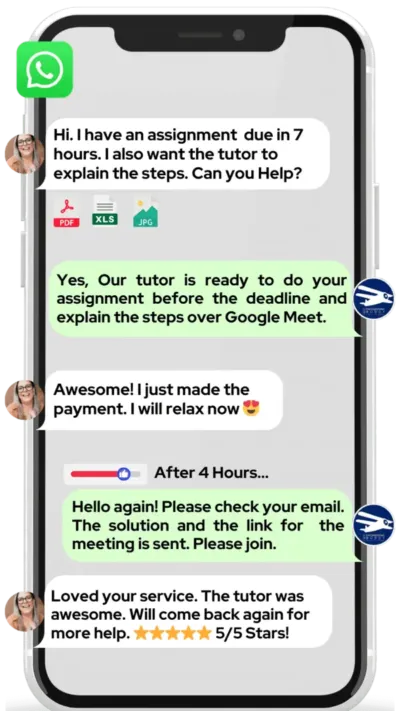
Unlike platforms where you fill out a form and wait, MEB responds in under a minute, 24/7. Tutor match takes under an hour. The $1 trial means you test before you commit. Everything runs over WhatsApp — no logins, no intake forms.
Students consistently tell us that the tutor match is what separates MEB from platforms where you pick from a list. We ask about your version, your deadline, and your specific failure point — then we match, not the other way around.
Study Plans (Pick One That Matches Your Goal)
Catch-up (1–3 weeks): for students behind on a module or with a submission approaching fast — the tutor focuses on the exact deliverable, nothing else. Exam prep / project sprint (4–8 weeks): structured session plan covering part modeling, assembly, drawings, and simulation in sequence, aligned to your project brief or assessment criteria. Weekly support: ongoing sessions through a semester, timed to coursework milestones. After the first diagnostic, the tutor builds the specific sequence — not a generic CAD syllabus.
Pricing Guide
Creo tutoring starts at $20/hr for standard undergraduate coursework. Graduate-level FEA with Creo Simulate, advanced surfacing, or professional certification prep runs $40–$100/hr depending on tutor expertise and timeline. Rate factors include module complexity, Creo version, and how close your deadline is.
For students targeting roles at aerospace and defence firms — Boeing, Airbus, Rolls-Royce, Lockheed Martin — or preparing for PTC’s Creo certification, tutors with professional mechanical design backgrounds are available at higher rates. Share your specific goal and MEB will match the tier to your ambition.
Availability drops fast in April–May and November–December when university project deadlines cluster. Book early if your submission window is fixed.
Start with the $1 trial — 30 minutes, no registration, no commitment. WhatsApp MEB for a quick quote.
FAQ
Is Creo hard to learn?
Creo’s parametric logic is genuinely difficult — harder than direct modelers like Fusion 360 or Inventor for most beginners. The constraint-driven sketcher and feature tree require a different mental model. Students who struggle usually do so because no one explained parametric intent clearly at the start.
How many sessions do most students need?
Students with a specific project problem typically resolve it in 3–5 sessions. Students building Creo competence from scratch for a module usually work across 8–15 sessions over a semester. The tutor assesses this after the first diagnostic and maps a plan.
Can you help with Creo projects and portfolio work?
Yes. MEB provides guided project support — the tutor explains the approach, walks through the modeling logic, and helps you understand what you’re building and why. All model files and submissions are produced and submitted by you. See our Policies page for full details on what we help with and what we don’t.
Will the tutor match my exact Creo version and course requirements?
Yes. When you contact MEB, share your Creo version (e.g. Creo 9, Creo 10), your university or course, and your specific deliverable. The tutor matched to you will have hands-on experience with that version and module type — not just generic CAD experience.
What happens in the first session?
The first session is diagnostic. The tutor reviews your current model or project brief, checks your feature tree and constraint logic, identifies where the gaps are, and sets the session plan. You leave the first session knowing exactly what’s wrong and what the next three sessions will cover.
Is online Creo tutoring as effective as in-person?
For CAD, yes — often more so. Screen sharing means the tutor sees exactly what you see in the model tree. Pen-pad annotation is clearer than pointing at a shared screen. Students in the US, UK, and Gulf consistently report that the live annotation format works better than side-by-side in-person sessions.
What’s the difference between Creo Parametric and Creo Direct — and which one should I learn?
Creo Parametric is history-based and constraint-driven — standard for engineering courses and professional mechanical design. Creo Direct is history-free for quick geometry edits. Most university programmes and industry roles use Parametric. If your course specifies Creo, it almost certainly means Creo Parametric.
Can a Creo tutor help me with Creo Simulate for FEA?
Yes. MEB has tutors with specific Creo Simulate experience covering structural, modal, and thermal FEA. This is common at graduate level and in thesis projects. Share your analysis type and mesh/load setup challenges when you first contact MEB — the match will reflect that.
Can I get Creo help at midnight or on weekends?
Yes. MEB operates 24/7 across time zones. WhatsApp response time averages under a minute regardless of when you message. Tutors are available in every major region — including late-night slots for students in the US, Gulf, and Australia with submission deadlines.
What if I don’t get along with my assigned tutor?
Tell MEB on WhatsApp. There’s no process to navigate — you message, explain what isn’t working, and a replacement tutor is matched. Most students only need to do this once. The $1 trial exists specifically so you can test the match before paying for full sessions.
How do I get started?
Three steps: WhatsApp MEB with your Creo version, your project brief or course module, and your deadline. MEB matches you with a verified tutor — usually within the hour. Your first session is the $1 trial — 30 minutes live or one project problem solved with a full walkthrough.
Trust & Quality at My Engineering Buddy
Every MEB tutor goes through a subject-specific screening process — not a general CAD test. For Creo, that means live evaluation of parametric modeling competence, feature tree management, and drawing standards. Tutors with professional experience in mechanical design, aerospace, or manufacturing are preferred for advanced Creo requests. Ongoing session feedback is reviewed, and tutors with consistently poor ratings are removed. Rated 4.8/5 across 40,000+ verified reviews on Google.
MEB provides guided learning support. All project work is produced and submitted by the student. See our Policies page for details.
MEB has been serving students across the US, UK, Canada, Australia, Gulf, and Europe since 2008 — across 2,800+ subjects. Computer-Aided Design is one of our strongest subject areas. Students working on SolidWorks tutoring, Autodesk Inventor help, and Fusion 360 tutoring regularly move to Creo modules within the same programme — and MEB covers the transition. Learn more about our approach on our Tutoring Methodology page.
MEB has served 52,000+ students across 18 years. In Computer-Aided Design alone, sessions span Creo, ANSYS tutoring, and AutoCAD help — with tutors who hold degrees and industry experience in the subjects they teach.
Source: My Engineering Buddy, 2008–2025.
Explore Related Subjects
Students studying Creo often also need support in:
- Abaqus
- HyperMesh
- Computer-Aided Engineering (CAE)
- Computer-Aided Manufacturing (CAM)
- Machine Design
- Engineering Drawing
- Sheet Metal Design
- Surface Modeling
A common pattern our tutors observe is students arriving with strong SolidWorks instincts who apply direct-modeling habits to Creo’s parametric environment. That mismatch causes most of the frustration in early Creo sessions — and it’s fixed quickly once it’s named.
Next Steps
Before your first session, have ready: your Creo version and university module name (or project brief), a model file or screenshot showing where things are breaking, and your submission or exam deadline. The tutor handles the rest.
- Share your Creo version, module, and deadline over WhatsApp
- Share your time zone — MEB covers US, UK, Canada, Australia, and the Gulf
- MEB matches you with a verified Creo tutor — usually within the hour
Visit www.myengineeringbuddy.com for more on how MEB works.
WhatsApp to get started or email [email protected].
52,000+ Happy Students From Various Universities






Reviewed by Subject Expert
This page has been carefully reviewed and validated by our subject expert to ensure accuracy and relevance.