

Hire Verified & Experienced
Adobe XD Tutors
Email: [email protected]
4.8/5 40K+ session ratings collected on the MEB platform



Hire The Best Adobe XD Tutor
Top Tutors, Top Grades. Without The Stress!
Stuck on a prototype that won’t click through properly — or a wireframe your instructor keeps sending back for revisions?
Adobe XD Tutor Online
Adobe XD is a vector-based UI/UX design and prototyping tool developed by Adobe, used to create wireframes, interactive prototypes, and design systems for web and mobile applications.
Finding a reliable Adobe XD tutor online makes a measurable difference when you’re juggling artboard layouts, component states, and auto-animate transitions all at once. MEB offers 1:1 online tutoring and project help across 2,800+ advanced subjects, including software engineering disciplines like Adobe XD, UI design, and prototyping. If you’ve searched for an Adobe XD tutor near me and found only pre-recorded courses, MEB is different — every session is live, and every tutor is matched to your exact project brief or course syllabus. Start with the $1 trial and see the difference in the first 30 minutes.
- 1:1 online sessions tailored to your course module, portfolio project, or freelance brief
- Expert verified tutors with hands-on Adobe XD and UI/UX experience
- Flexible time zones — US, UK, Canada, Australia, Gulf
- Structured learning plan built after a diagnostic session
- Guided project support — we explain the logic, you build the deliverable
52,000+ students across the US, UK, Canada, Australia, and the Gulf have used MEB since 2008 — including students in Software Engineering subjects like Adobe XD, web design, and wireframing.
Source: My Engineering Buddy, 2008–2025.
How Much Does an Adobe XD Tutor Cost?
Most Adobe XD sessions run $20–$40/hr. Graduate-level or portfolio-critical work with specialist tutors can reach $100/hr. The $1 trial gives you 30 minutes of live 1:1 tutoring or a full walkthrough of one project problem — no registration required.
| Level / Need | Typical Rate | What’s Included |
|---|---|---|
| Standard (most levels) | $20–$35/hr | 1:1 sessions, project guidance |
| Advanced / Specialist | $35–$70/hr | Expert tutor, niche depth, portfolio critique |
| $1 Trial | $1 flat | 30 min live session or 1 project question |
Tutor availability tightens at the end of academic semesters and portfolio submission periods. Book early if your deadline is within four weeks.
WhatsApp MEB for a quick quote — average response time under 1 minute.
Who This Adobe XD Tutoring Is For
Adobe XD sits at the intersection of design thinking and technical execution. Students at every level hit walls — sometimes it’s component libraries, sometimes it’s getting auto-animate to behave, sometimes it’s understanding why a prototype looks nothing like the design spec when handed to a developer.
- Undergraduate HCI, interaction design, or graphic design students with a UI project due
- Students whose portfolio prototype was rejected and needs a full redesign
- Graduate students building design systems for a thesis or capstone
- Students with a portfolio submission deadline approaching and major gaps still to close
- Bootcamp students transitioning from Figma who need to learn XD for a specific course or employer requirement
- Professionals at companies like Adobe, Deloitte Digital, or Accenture’s design practice who need to upskill quickly
1:1 Tutoring vs Self-Study vs AI vs YouTube vs Online Courses
Self-study works if you’re disciplined and the problem is simple — it breaks down fast when you’re debugging a prototype interaction at midnight. AI tools generate explanations quickly but can’t watch you work and catch the exact moment you set the wrong trigger. YouTube covers the basics well; it stops being useful the moment your specific component state doesn’t match the tutorial. Online courses are structured but fixed-pace — they don’t slow down because your repeat grid isn’t responding correctly. 1:1 tutoring with MEB is live, calibrated to your actual XD file, and corrects errors while you’re still looking at the screen. For Adobe XD specifically, where the gap between “watching someone prototype” and “building one yourself” is significant, that live correction matters.
Outcomes: What You’ll Be Able To Do in Adobe XD
After working with an app development specialist or dedicated Adobe XD tutor at MEB, you’ll be able to build outcomes that hold up in a real review. Apply artboard-based layout logic to produce clean, developer-ready design files. Solve component state issues — hover, default, selected — without breaking linked symbols across artboards. Analyze a user flow and translate it into a clickable prototype with properly sequenced triggers and transitions. Present your design rationale clearly when handing off to a developer, using XD’s share and inspect tools. Build and maintain a reusable component library that scales across a multi-screen project without visual inconsistency.
Based on feedback from 40,000+ sessions collected by MEB from 2022 to 2025, students working 1:1 on Adobe XD consistently report faster progress building interactive prototypes and clearer understanding of component-based design logic than through self-directed practice alone. Progress varies by starting level and practice frequency.
Source: MEB session feedback data, 2022–2025.
At MEB, we’ve found that most Adobe XD students don’t struggle with the tool itself — they struggle with design decisions they’ve never been taught to articulate. Once a tutor sits with them through one prototype review, the whole process changes.
What We Cover in Adobe XD (Syllabus / Topics)

Track 1: Wireframing and Layout Fundamentals
- Artboard setup for web, mobile (iOS, Android), and tablet targets
- Grids, guides, and responsive resize logic
- Repeat grid for lists, cards, and data-driven UI elements
- Typography and colour style management
- Asset export settings (PNG, SVG, PDF) for handoff
- Designing for both light and dark mode in a single XD document
Recommended references: Adobe XD CC: The Complete Guide (Udemy/Enfocus, updated annually), UX Design Foundations (Adobe Training).
Track 2: Prototyping and Interactivity
- Wiring artboards with triggers: tap, hover, drag, time, voice
- Auto-animate: easing curves, duration, property-based transitions
- Overlay and scroll group behaviour for modals and drawers
- Fixed elements (navigation bars, footers) across scroll areas
- Voice and keyboard prototyping for accessibility review
- Sharing prototypes for stakeholder review and collecting pin comments
Recommended references: Prototyping for Designers (Kathryn McElroy, O’Reilly), Adobe XD Help Documentation (Adobe official).
Track 3: Component Libraries and Design Systems
- Creating and nesting components with states (default, hover, selected, disabled)
- Using the Assets panel to manage and share components across files
- Linked assets: updating master components and propagating changes
- Building a UI kit from scratch vs adapting an existing one (Material, Human Interface)
- Exporting design tokens and specs for developer handoff via XD Share
- Plugin ecosystem: Content Reel, Stark (accessibility), Anima for code export
Recommended references: Design Systems (Alla Kholmatova, Smashing Media), Atomic Design (Brad Frost, available online).
Students consistently tell us that the component states section of Adobe XD is where most university projects fall apart. One session fixing a broken symbol propagation saves three hours of manual artboard edits.
Platforms, Tools & Textbooks We Support
Adobe XD tutoring at MEB covers the full design-to-handoff workflow. Tutors work directly inside your XD files over screen share and can also support adjacent tools where your project requires them.
- Adobe XD (all current versions, including Creative Cloud subscription builds)
- Adobe Photoshop (asset preparation and image editing for XD projects)
- Zeplin and Avocode (developer handoff alternatives)
- Figma (if switching workflows or working in a mixed-tool team)
- Stark plugin (accessibility contrast checking within XD)
- Anima plugin (HTML/CSS export from XD prototypes)
- Stanford University’s Human-Computer Interaction resources via Stanford Computer Science
What a Typical Adobe XD Session Looks Like
The tutor opens by checking the artboard structure from your last session — specifically whether the repeat grid you were building has collapsed or the linked components have desynced after an update. From there, the session moves into your active problem: you share your screen, the tutor uses a digital pen-pad to annotate directly on your prototype, and you work through the trigger-and-action chain on a specific screen flow. You replicate the fix on a second artboard while the tutor watches for the same error recurring. The session closes with a named task — “rebuild the modal overlay on Screen 7 using an overlay trigger, not a new artboard” — and the next topic is noted: developer handoff using XD Share and the inspect panel.
How MEB Tutors Help You with Adobe XD (The Learning Loop)
Diagnose: In the first session, the tutor reviews your existing XD file — artboard count, component structure, prototype wiring — and identifies where the project is technically sound versus where assumptions are breaking the design intent.
Explain: The tutor works through a live example on their own XD document using a digital pen-pad, annotating directly on screen. They show the correct approach to the exact issue you’re stuck on — not a generic tutorial example.
Practice: You attempt the same technique in your own file while the tutor watches. The first replication attempt always surfaces the real obstacle.
Feedback: The tutor steps in at the exact point of error — wrong trigger type, missing easing curve, component state not set — and explains why it broke, not just how to fix it. This is where most of the learning happens.
Plan: Before the session ends, the tutor maps the next two topics in sequence, sets a specific practice task, and notes which XD features to leave alone until you’ve consolidated the current ones.
Sessions run on Google Meet. The tutor uses a digital pen-pad or iPad with Apple Pencil. Before your first session, have your XD file open and shareable, plus any project brief or course rubric. The first session covers diagnostic review and one complete worked example. Start with the $1 trial — 30 minutes of live tutoring that also serves as your first diagnostic.
MEB tutors work inside your actual XD file — not a demo file, not a generic walkthrough. The session is built around the specific screen, component, or prototype flow you’re stuck on.
Source: My Engineering Buddy, 2008–2025.
A common pattern our tutors observe is that students learn XD from YouTube and can follow along — but can’t replicate it independently. That gap closes fast in a 1:1 session because the tutor watches you build, not just watches you watch.
Tutor Match Criteria (How We Pick Your Tutor)
Not every designer knows XD to the depth that teaching requires. MEB’s matching process focuses on four criteria.
Subject depth: Tutors are vetted on their actual XD project experience — specifically component libraries, auto-animate, and developer handoff workflows — not just general design familiarity.
Tools: Every tutor uses Google Meet with screen share and a digital pen-pad or iPad with Apple Pencil for annotation.
Time zone: Matched to your region — US, UK, Gulf, Canada, or Australia — so sessions don’t run at 3am unless you want them to.
Goals: Whether your focus is a university portfolio submission, a bootcamp capstone, or upskilling for a UX role, the tutor is matched to that specific outcome.
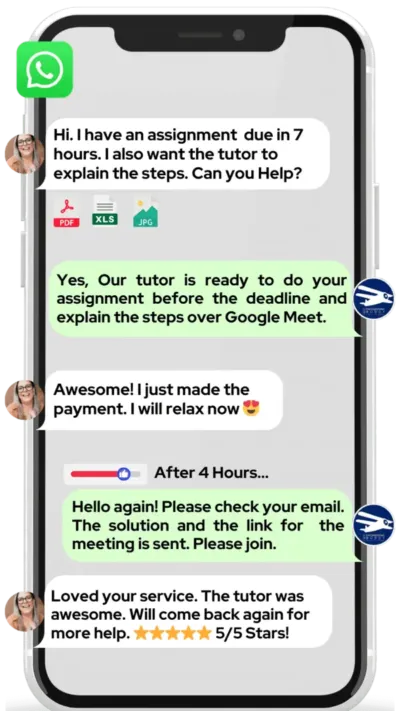
Unlike platforms where you fill out a form and wait, MEB responds in under a minute, 24/7. Tutor match takes under an hour. The $1 trial means you test before you commit. Everything runs over WhatsApp — no logins, no intake forms.
Pricing Guide
Adobe XD tutoring runs $20–$40/hr for most undergraduate, bootcamp, and self-directed learners. Graduate-level design systems work or portfolio-critical sessions with specialist tutors can reach $100/hr. Rate factors include your current level, project complexity, how close your deadline is, and tutor availability.
For students targeting roles at top UX consultancies or product design teams at major tech companies, tutors with professional product design and design systems backgrounds are available at higher rates — share your specific goal and MEB will match the tier to your ambition.
Demand spikes at the end of university semesters and bootcamp cohort deadlines. If your project is due in under three weeks, book now.
Start with the $1 trial — 30 minutes, no registration, no commitment. WhatsApp MEB for a quick quote.
FAQ
Is Adobe XD hard to learn?
The basics — placing artboards, drawing shapes, linking screens — are accessible in a few hours. The difficulty is in component states, auto-animate timing, and design system logic. Most students hit a wall at exactly those points, which is where 1:1 guidance pays off fastest.
How many sessions will I need?
For a single project fix, one or two sessions often resolves the immediate problem. For a full portfolio project from wireframe to prototype, most students work through five to eight sessions over three to five weeks depending on their current skill level and how much practice they do between sessions.
Can you help with projects and portfolio work?
Yes. MEB provides guided project support — the tutor explains the logic and technique, and you build the deliverable. See our Policies page for full details on what we help with and what we don’t.
Will the tutor match my exact syllabus or exam board?
Yes. Before matching, MEB asks for your course brief, module outline, or project rubric. The tutor is selected based on that specific context — university interaction design module, bootcamp UX track, or professional upskilling — not just general XD knowledge.
What happens in the first session?
The tutor reviews your existing XD file or project brief, identifies the most urgent gaps, and works through one complete example with you. By the end of 30 minutes you have a clear picture of what to fix and in what order.
Are online Adobe XD sessions as effective as in-person?
For a design tool like Adobe XD, online is often more effective — the tutor sees your exact screen, annotates directly on your prototype, and there’s no setup delay. Screen-share annotation via a digital pen-pad replicates in-person review closely.
Adobe XD vs Figma — which should I learn, and can MEB help with both?
Both are industry-used tools. Adobe XD is tighter within the Creative Cloud workflow; Figma has stronger real-time collaboration and is now more common in product teams. MEB tutors cover both — if your course or employer specifies one, start there. If you need front-end development integration alongside design, the tutor can bridge both tools.
Can I get help with the auto-animate feature specifically?
Auto-animate is one of the most requested topics. Tutors cover easing curves, duration settings, property-based transitions (position, opacity, size), and common failure points — including why transitions stutter when artboards aren’t set up identically. This is covered in the standard session scope.
Do you offer group Adobe XD sessions?
No. All MEB sessions are 1:1 — one tutor, one student. This is deliberate. Group sessions can’t address the specific component error in your file or the exact trigger logic your prototype is missing. Every session is built around your project, your gaps.
Can I get Adobe XD help late at night or on weekends?
Yes. MEB operates 24/7 across time zones. Students in the Gulf, Australia, and North America regularly book sessions outside standard office hours. WhatsApp MEB at any time — the average response is under a minute.
How do I get started?
WhatsApp MEB with your project brief or course module. MEB matches you with a verified tutor — usually within the hour. The first session is the $1 trial: 30 minutes of live 1:1 tutoring or a full walkthrough of one project problem. No registration, no forms.
Trust & Quality at My Engineering Buddy
Every MEB tutor goes through a screening process that includes subject-specific vetting, a live demo evaluation, and ongoing session feedback review. For Adobe XD, this means demonstrating hands-on fluency in prototyping, component libraries, and developer handoff — not just familiarity with the tool. Rated 4.8/5 across 40,000+ verified reviews on Google. MEB has been running since 2008 and has served 52,000+ students across the US, UK, Canada, Australia, the Gulf, and Europe.
MEB provides guided learning support. All project work is produced and submitted by the student. See our Policies page for details.
MEB covers 2,800+ subjects across software engineering and adjacent disciplines. Students working in Software Engineering often combine Adobe XD sessions with mobile app development tutoring, full stack help, and support in Flutter — particularly when building a prototype in XD that then needs to be implemented in code. MEB tutors across these subjects coordinate well when a student’s project crosses design and development boundaries.
MEB has operated since 2008 — long enough to have tutored students through six major Adobe XD version cycles, from the original public beta to the current Creative Cloud integration. That continuity shows up in tutor depth.
Source: My Engineering Buddy, 2008–2025.
Try your first session for $1 — 30 minutes of live 1:1 tutoring or one homework question explained in full. No registration. No commitment. WhatsApp MEB now and get matched within the hour.
Explore Related Subjects
Students studying Adobe XD often also need support in:
Next Steps
Getting started takes under two minutes. Share your project brief, course module, or the specific XD feature you’re stuck on. Add your availability and time zone. MEB matches you with a verified tutor — usually within 24 hours, often faster.
Before your first session, have ready:
- Your XD file (or project brief if you haven’t started yet) and any course rubric or module outline
- A specific screen, component, or prototype interaction you want to fix or build
- Your project deadline or submission date
The tutor handles the rest — diagnostic first, then a structured session plan built around your actual file and deadline.
Visit www.myengineeringbuddy.com for more on how MEB works.
WhatsApp to get started or email [email protected].
52,000+ Happy Students From Various Universities





How Much For Private 1:1 Tutoring & Hw Help?
Private 1:1 Tutoring and HW help Cost $20 – 35 per hour* on average.
Reviewed by Subject Expert
This page has been carefully reviewed and validated by our subject expert to ensure accuracy and relevance.
