Hire Verified & Experienced
Electrical Engineering Tutors
4.8/5 40K+ session ratings collected on the MEB platform
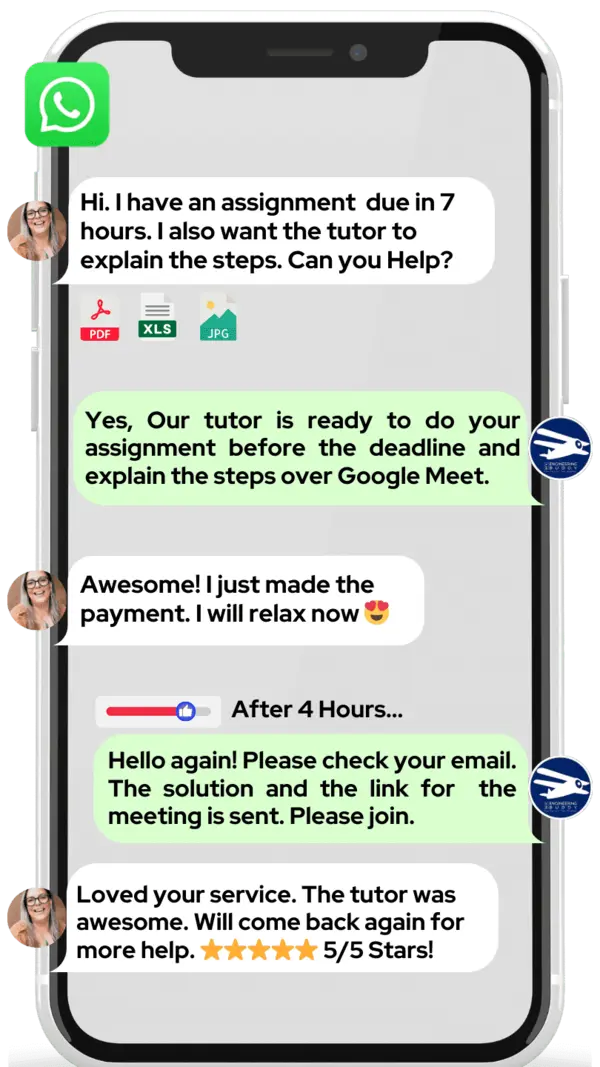



Hire The Best Electrical Engineering Tutor
Top Tutors, Top Grades. Without The Stress!
52,000+ Happy Students From Various Universities






How Much For Private 1:1 Tutoring & Hw Help?
Private 1:1 Tutoring and HW help Cost $20 – 35 per hour* on average.
Circuit analysis at 11 pm. An exam on power systems in five days. And a professor who moves on whether you’re ready or not. That’s the situation most students bring to MEB — and it’s exactly what a 1:1 electrical engineering tutor online is built to fix.
Electrical Engineering Tutor Online
Electrical engineering is the study of electricity, electronics, and electromagnetism applied to the design and analysis of circuits, power systems, and signal processing — equipping students to solve real engineering problems across hardware, energy, and communications.
MEB provides 1:1 online tutoring and homework help across the full spectrum of engineering disciplines, and electrical engineering is one of the highest-demand subjects on the platform. Whether you’re searching for an electrical engineering tutor near me or need someone who knows your exact university syllabus, MEB matches you with a verified expert — usually within the hour. Sessions run over Google Meet with a digital pen-pad, so the working is visible in real time. No vague explanations. No wasted sessions.
- 1:1 online sessions tailored to your course, module, or exam board
- Expert-verified tutors with degrees and professional experience in electrical engineering
- Flexible scheduling across US, UK, Canada, Australia, and Gulf time zones
- Structured learning plan built after a diagnostic session
- Ethical homework and assignment guidance — you understand the work before you submit it
52,000+ students across the US, UK, Canada, Australia, and the Gulf have used MEB since 2008 — including students in Engineering subjects like Electrical Engineering, Mechanical Engineering, and Electronics and Communications.
Source: My Engineering Buddy, 2008–2025.
How Much Does an Electrical Engineering Tutor Cost?
Most electrical engineering sessions run at $20–$40/hr, depending on level and topic complexity. Graduate-level or highly specialised work — power electronics, electromagnetic field theory, VLSI design — can reach up to $100/hr. The $1 trial gets you 30 minutes of live 1:1 tutoring or a full explanation of one homework question.
| Level / Need | Typical Rate | What’s Included |
|---|---|---|
| Standard (most undergrad levels) | $20–$35/hr | 1:1 sessions, homework guidance |
| Advanced / Specialist | $35–$100/hr | Expert tutor, graduate-level depth |
| $1 Trial | $1 flat | 30 min live session or 1 homework question |
Tutor availability tightens significantly around finals weeks and end-of-semester deadlines. Book early if you’re within six weeks of a key assessment.
WhatsApp MEB for a quick quote — average response time under 1 minute.
Who This Electrical Engineering Tutoring Is For
This isn’t a service for students who are coasting. It’s for students who’ve hit a wall — and need to break through it before the next assessment counts.
- First and second-year undergraduates overwhelmed by circuit analysis or linear algebra prerequisites
- Third and fourth-year students struggling with power systems, control theory, or electromagnetics
- Graduate students working through advanced topics like digital signal processing or semiconductor device physics
- Students retaking after a failed first attempt who need a different explanation, not the same one again
- Students with a university conditional offer depending on their electrical engineering grade this semester
- Parents watching a strong student’s confidence drop under the weight of a difficult module
Students from universities including MIT, Georgia Tech, Imperial College London, the University of Toronto, UNSW Sydney, and TU Delft have worked with MEB tutors on electrical engineering modules. A $1 trial is the lowest-risk way to find out if the match is right.
At MEB, we’ve found that most electrical engineering students don’t struggle because they lack ability — they struggle because one foundational concept (Kirchhoff’s laws, Laplace transforms, phasor analysis) was never fully resolved, and every topic after it sits on a shaky base. One session on the right thing changes the trajectory.
1:1 Tutoring vs Self-Study vs AI vs YouTube vs Online Courses
Self-study works if you’re disciplined and the textbook is enough — but electrical engineering problems rarely have a single path, and feedback is zero. AI tools give fast answers, but can’t watch you make an error mid-derivation and stop you. YouTube is useful for overviews of Ohm’s Law or basic AC circuits; it falls apart when you’re three steps into a nodal analysis problem and something doesn’t balance. Online courses move at a fixed pace with no room for your specific exam board’s question style. 1:1 tutoring with MEB is live, calibrated to your exact syllabus, and corrects errors the moment they happen — which matters when one sign error in a transfer function cascades through the whole answer.
Outcomes: What You’ll Be Able To Do in Electrical Engineering
After working with an MEB electrical engineering tutor, students consistently report being able to solve multi-loop circuit problems using mesh and nodal analysis without getting lost mid-step. They can apply Laplace transforms to analyse transient responses in RLC circuits, model and interpret Bode plots for control systems, and explain the trade-offs in power factor correction for real AC power distribution scenarios. Exam performance reflects this — not because the tutor did the work, but because the student finally understood it.
Based on feedback from 40,000+ sessions collected by MEB from 2022 to 2025, 58% of students improved by one full grade after approximately 20 hours of 1:1 tutoring in subjects like Electrical Engineering. A further 23% achieved at least a half-grade improvement.
Source: MEB session feedback data, 2022–2025.
Supporting a student through Electrical Engineering? MEB works directly with parents to set up sessions, track progress, and keep coursework on schedule. WhatsApp MEB — average response time is under a minute, 24/7.
Try your first session for $1 — 30 minutes of live 1:1 tutoring or one homework question explained in full. No registration. No commitment. WhatsApp MEB now and get matched within the hour.
What We Cover in Electrical Engineering (Syllabus / Topics)

Circuit Theory and Electronics
- DC and AC circuit analysis — Kirchhoff’s voltage and current laws
- Mesh analysis, nodal analysis, superposition, and Thevenin/Norton equivalents
- Capacitors, inductors, and RLC transient and steady-state response
- Semiconductor devices — diodes, BJTs, MOSFETs, and op-amp circuits
- Frequency response and filter design (low-pass, high-pass, bandpass)
- Digital logic gates, Boolean algebra, and combinational/sequential circuits
Core texts include Nilsson & Riedel’s Electric Circuits, Sedra & Smith’s Microelectronic Circuits, and Boylestad’s Introductory Circuit Analysis. Tutors work directly from whichever text your course uses.
Power Systems and Electromagnetics
- Three-phase power systems, power factor, and reactive power compensation
- Transformers — equivalent circuits, efficiency, and voltage regulation
- Synchronous and induction machines, motor starting and speed control
- Maxwell’s equations — differential and integral forms
- Electromagnetic wave propagation, transmission lines, and Smith charts
- High-voltage systems and protection relaying principles
Common references include Glover, Sarma & Overbye’s Power Systems Analysis and Design, Hayt & Buck’s Engineering Electromagnetics, and Chapman’s Electric Machinery Fundamentals.
Signals, Systems, and Control
- Continuous and discrete-time signals — convolution, Fourier, and Z-transforms
- Laplace transform methods for circuit and system analysis
- Transfer functions, poles and zeros, and stability analysis
- Root locus, Bode plots, Nyquist criteria for control system design
- State-space representation and modern control methods
- Digital signal processing — sampling, DFT, FIR and IIR filter design
Standard texts include Oppenheim & Willsky’s Signals and Systems, Ogata’s Modern Control Engineering, and Proakis & Manolakis’s Digital Signal Processing. Tutors are matched to the specific edition your course requires.
What a Typical Electrical Engineering Session Looks Like
The tutor opens by checking the previous session’s topic — usually whatever problem type caused the most errors, such as applying the Thevenin equivalent to a dependent-source circuit. From there, the student and tutor work through problems on screen together: the tutor writes each step on a digital pen-pad so the working is visible in real time, then asks the student to replicate the reasoning or explain why a particular step was taken. When an error appears — a sign dropped in a phasor calculation, a missed boundary condition in an electromagnetic field problem — the tutor stops there and works backward to the source. The session closes with a specific practice task (two to three problems from the next topic) and a note on what the following session will cover. Nothing is left open-ended.
How MEB Tutors Help You with Electrical Engineering (The Learning Loop)
Diagnose. In the first session, the tutor identifies exactly where understanding breaks down — not just which topic, but which step within it. For electrical engineering students, it’s often the jump from DC to AC analysis, or the conceptual gap between phasor arithmetic and what it physically represents.
Explain. The tutor works through problems live on a digital pen-pad, showing every step — not summarising the answer. For a control systems student, that means building a root locus sketch from scratch and narrating each decision, not just presenting the finished plot.
Practice. The student attempts the next problem while the tutor watches. This is where most of the learning happens. Errors surface immediately — not after a submitted assignment comes back marked wrong.
Feedback. Step-by-step error correction, with an explanation of why that step costs marks in a real exam context. The tutor connects the error to the underlying concept — not just the mechanical fix.
Plan. At the end of each session, the tutor maps the next topic, sets a specific task, and notes what should be reviewed before the next meeting. Students working toward finals get a clear six- to eight-week sequence from the first diagnostic.
Sessions run on Google Meet with a digital pen-pad or iPad and Apple Pencil. Before your first session, share your course syllabus or exam board, the topic giving you the most trouble, and your upcoming deadline. The tutor uses that to make the first diagnostic count. Start with the $1 trial — 30 minutes of live tutoring that also serves as your first diagnostic.
Students consistently tell us that the moment a concept finally lands — when phasor diagrams stop being symbols and start being something they can reason with — the whole module shifts. It’s not always the topic you think. Our tutors are trained to find the real block, not just address the one you’ve named.
Tutor Match Criteria (How We Pick Your Tutor)
MEB doesn’t assign the next available tutor. The match is based on four things.
Subject depth: tutors hold degrees in electrical engineering or closely related fields and are matched to your specific level — first-year circuits, upper-division power systems, or graduate electromagnetic theory.
Tools: every tutor works on Google Meet with a digital pen-pad or iPad and Apple Pencil, so handwritten working is always visible on screen.
Time zone: matched to your region — US, UK, Gulf, Canada, or Australia — so sessions fit your schedule without 5 am calls.
Goals: whether you need exam-score improvement, conceptual depth for a research module, or structured systems engineering support across concurrent subjects, the tutor is selected to match that specific aim.
Unlike platforms where you fill out a form and wait, MEB responds in under a minute, 24/7. Tutor match takes under an hour. The $1 trial means you test before you commit. Everything runs over WhatsApp — no logins, no intake forms.
Study Plans (Pick One That Matches Your Goal)
MEB tutors build the specific session sequence after the diagnostic, but most electrical engineering students fall into one of three plans. Catch-up (1–3 weeks): for students with gaps in foundational topics — circuit laws, basic electronics — who need to close them before the next unit. Exam prep (4–8 weeks): structured topic-by-topic revision tied to a specific exam date, with past paper practice built in from week three. Weekly support: ongoing sessions aligned to your semester schedule, covering new material as it’s introduced and keeping homework on track.
Pricing Guide
Most electrical engineering sessions fall between $20–$40/hr. Graduate-level topics — VLSI design, advanced control systems, electromagnetic compatibility — run up to $100/hr. Rate depends on level, topic complexity, how quickly you need a match, and tutor availability.
Availability during finals weeks and end-of-semester periods is limited. Students who book four or more weeks out get better access to experienced tutors at standard rates.
For students targeting top programmes at universities known for rigorous electrical engineering — Georgia Tech, Caltech, ETH Zurich, Imperial College London — tutors with professional industry or research backgrounds are available at higher rates. Share your specific goal and MEB will match the tier to your ambition.
Start with the $1 trial — 30 minutes, no registration, no commitment. WhatsApp MEB for a quick quote.
18 years. 52,000+ students. 2,800+ subjects. MEB has been operating since 2008, which means tutors have seen every version of every electrical engineering syllabus — and know exactly where students lose marks.
Source: My Engineering Buddy, 2008–2025.
FAQ
Is Electrical Engineering hard?
Honest answer: yes, for most students. The jump from physics to applying Maxwell’s equations or Laplace transforms to real circuits is steep. The difficulty isn’t intelligence — it’s that one unresolved concept compounds through every topic that follows. A targeted session resolves it faster than weeks of rereading.
How many sessions are needed?
For a specific exam topic — nodal analysis, Bode plots, transformer equivalents — two to four sessions is typical. For ongoing module support across a full semester, weekly sessions work best. The tutor gives a realistic estimate after the first diagnostic, not before.
Can you help with homework and assignments?
MEB tutoring is guided learning — you understand the work, then submit it yourself. The tutor explains the method, walks through a similar example, and checks your reasoning. See our Academic Integrity policy and Why MEB page for full details on what we help with and what we don’t.
Will the tutor match my exact syllabus or exam board?
Yes. Share your university, course code, and exam board (if applicable) when you message MEB. Tutors are matched to your specific curriculum — not a generic electrical engineering overview. This applies whether you’re on an ABET-accredited programme, a UK BEng, or an Australian bachelor course.
What happens in the first session?
The tutor runs a short diagnostic — usually 10 to 15 minutes of targeted questions — to locate exactly where understanding breaks down. The remaining time is used for live instruction on the highest-priority topic. You leave with a practice task and a plan for the next session.
Is online tutoring as effective as in-person for electrical engineering?
For mathematical and analytical subjects like electrical engineering, yes — with the right tools. The digital pen-pad means every circuit diagram, derivation, and working step is visible on screen in real time. Most MEB students report no meaningful difference from face-to-face tutoring.
What’s the difference between circuit analysis and circuit theory — and which should I focus on?
Circuit theory covers the mathematical foundations — Kirchhoff’s laws, phasors, Laplace transforms. Circuit analysis applies those tools to specific network problems. Most students need both, but the tutor identifies which is your limiting factor in the diagnostic and builds the session plan from there.
Can MEB tutors help with MATLAB, SPICE, or LTspice for electrical engineering simulations?
Yes. Many electrical engineering students need support not just with theory but with simulation tools. MEB tutors can work through MATLAB scripts for signals and systems coursework, LTspice circuit simulations, and SPICE netlist debugging — alongside the underlying theory they’re meant to demonstrate.
Can I get electrical engineering help at midnight or on weekends?
Yes. MEB operates 24/7, and tutors are available across multiple time zones. If you’re in the US or Gulf and need a session on a Sunday night before a Monday submission, message via WhatsApp — average first response is under a minute regardless of the hour.
Do you offer group electrical engineering sessions?
No. MEB is exclusively 1:1. Group sessions dilute the diagnostic accuracy and mean the tutor can’t stop and correct one student’s error mid-problem. The 1:1 format is not a preference — it’s what makes the method work for a subject this technical.
How do I get started?
Three steps: message MEB on WhatsApp with your subject, level, and exam date. MEB matches you with a verified tutor — usually within an hour. Start with the $1 trial: 30 minutes of live tutoring or one homework question explained in full, no registration required.
Trust & Quality at My Engineering Buddy
Every MEB tutor goes through subject-specific vetting — not just a CV review. Candidates complete a live demo session assessed by an experienced MEB tutor in the same discipline. Ongoing session feedback from students is reviewed regularly, and tutors whose ratings drop are placed on review. Rated 4.8/5 across 40,000+ verified reviews on Google, MEB’s quality process is built around the assumption that no human editor is checking before the session goes live — so the vetting has to be thorough upfront. Tutors hold degrees in electrical engineering or directly adjacent fields; many have industry or research backgrounds in power systems, embedded systems, RF engineering, or semiconductor design.
MEB tutoring is guided learning — you understand the work, then submit it yourself. For full details on what we help with and what we don’t, read our Academic Integrity policy and Why MEB.
MEB has served 52,000+ students across the US, UK, Canada, Australia, the Gulf, and Europe since 2008, covering 2,800+ subjects. Within engineering, the platform supports students in electrical engineering alongside subjects like mechanical engineering tutoring, mechatronics help, and power plant engineering tutoring — all with the same tutor vetting standard.
Explore Related Subjects
Students studying Electrical Engineering often also need support in:
- Aerospace Engineering
- Biomedical Engineering
- Chemical Engineering
- Civil Engineering
- Nuclear Engineering
- Materials Science and Engineering
- Industrial Engineering
Next Steps
When you message MEB, share your exam board or university course code, the topic giving you the most trouble right now, and your exam or assignment deadline. Include your time zone and when you’re available. MEB matches you with a verified electrical engineering tutor — usually within 24 hours, often within the hour.
Before your first session, have ready:
- Your syllabus or course outline (and exam board if applicable)
- A recent past paper attempt or homework question you struggled with
- Your exam or submission deadline date
The tutor handles the rest — diagnostic first, then a session plan built around your specific gaps and timeline.
Visit www.myengineeringbuddy.com for more on how MEB works.
WhatsApp to get started or email meb@myengineeringbuddy.com.
A common pattern our tutors observe is this: students who message MEB the week before an exam do better than students who tried to manage alone for six weeks. Earlier is better — but later is still better than not at all. The $1 trial removes the last reason to wait.
Reviewed by Subject Expert
This page has been carefully reviewed and validated by our subject expert to ensure accuracy and relevance.