Contact MEB Today To Get The Best
Financial statement analysis Tutoring Online
Email: [email protected]



~1 min
Average Reply Time
~1 hour
To Be Matched With A Tutor
30 Min Trial
75% Find Their Tutor On The 1st Trial
$20-35+/hr
Premium Yet Affordable Learning
Hire The Best Financial statement analysis Tutor

Most students can read a balance sheet. Fewer can explain why a company with rising revenue is running out of cash.
Financial Statement Analysis Tutor Online
Financial statement analysis is the process of evaluating a company’s income statement, balance sheet, and cash flow statement to assess financial health, performance, and risk — a core skill in accounting, finance, and CFA/CPA preparation.
If you’ve searched for a financial statement analysis tutor near me, you’re likely stuck on ratio interpretation, IFRS vs GAAP treatment, or reading between the lines of a set of accounts. MEB connects you with an online financial statement analysis tutor who knows the exact syllabus or exam format you’re working to — not a generalist who’ll talk theory while your assignment deadline moves closer. Our tutors have helped students across the US, UK, Canada, Australia, and the Gulf work through everything from cash flow analysis tutoring to complex multi-entity consolidations.
- 1:1 online sessions tailored to your course, exam board, or certification
- Expert verified tutors with subject-specific knowledge in financial reporting and analysis
- Flexible time zones — US, UK, Canada, Australia, Gulf, Europe
- Structured learning plan built after a diagnostic session
- Ethical homework and assignment guidance — you understand the work before you submit it
52,000+ students across the US, UK, Canada, Australia, and the Gulf have used MEB since 2008 — across 2,800+ subjects, from AP Calculus to A Level Music Technology to Data Science.
Source: My Engineering Buddy, 2008–2025.
How Much Does a Financial Statement Analysis Tutor Cost?
Most financial statement analysis tutoring sessions run $20–$40/hr. Advanced levels — CFA, CPA, graduate-level forensic accounting — can reach $100/hr depending on tutor specialisation. Start with the $1 trial: 30 minutes of live 1:1 tutoring, or one homework question explained in full.
| Level / Need | Typical Rate | What’s Included |
|---|---|---|
| Undergraduate / Standard | $20–$35/hr | 1:1 sessions, homework guidance |
| Graduate / CFA / CPA / Advanced | $35–$100/hr | Expert tutor, niche depth, exam strategy |
| $1 Trial | $1 flat | 30 min live session or 1 homework question |
Tutor availability tightens sharply in the weeks before CFA exam windows and end-of-semester deadlines. Book early if your timeline is fixed.
WhatsApp MEB for a quick quote — average response time under 1 minute.
Who This Financial Statement Analysis Tutoring Is For
This isn’t for students who need a general finance refresher. It’s for people stuck on a specific gap — a ratio they keep misapplying, a cash flow statement that won’t reconcile, or an IFRS standard they can’t connect to real company data.
- Undergraduate accounting and finance students at universities like NYU Stern, LSE, University of Melbourne, or Rotman School of Management
- CFA Level 1 and Level 2 candidates working through financial reporting and analysis
- MBA students who didn’t come from an accounting background
- Students with a conditional university offer that depends on passing their current financial accounting module
- Graduate students writing dissertation chapters involving empirical financial analysis
- Students needing financial reporting help aligned to IFRS or US GAAP frameworks
1:1 Tutoring vs Self-Study vs AI Tools
Self-study works if you have a solid foundation and can catch your own errors. Most students who struggle with financial statement analysis don’t — they repeat the same misreading of operating vs financing cash flows without realising it. AI tools can define liquidity ratios quickly, but they cannot watch you work through a DuPont decomposition, catch where your logic breaks, and redirect you before you’ve practised the wrong method fifteen times. That real-time correction is the difference between understanding a concept and being able to apply it under exam pressure. MEB’s online financial statement analysis tutor sessions run over Google Meet with a digital pen-pad — structured feedback, same course, every session.
Outcomes: What You’ll Be Able To Do in Financial Statement Analysis
After structured 1:1 sessions with an online financial statement analysis tutor, students work through problems differently. You’ll analyze a full set of accounts — income statement, balance sheet, and statement of cash flows — and explain what the numbers actually mean for a company’s solvency. You’ll apply ratio analysis across liquidity, profitability, efficiency, and leverage categories without confusing which denominator goes where. You’ll model the DuPont framework from scratch and interpret the result in terms of management decisions. You’ll explain the difference between IFRS and US GAAP treatment of leases, revenue recognition, and inventory — specific enough to answer exam questions or annotate a real filing from the SEC’s EDGAR database. You’ll present findings in the format your course or exam board requires.
Supporting a student through financial statement analysis? MEB works directly with parents to set up sessions, track progress, and keep coursework on schedule. WhatsApp MEB — average response time is under a minute, 24/7.
Based on feedback from 40,000+ sessions collected by MEB from 2022 to 2025, 58% of students improved by one full grade after approximately 20 hours of 1:1 tutoring in a single subject. A further 23% achieved at least a half-grade improvement.
Source: MEB session feedback data, 2022–2025.
At MEB, we’ve found that students who struggle with financial statement analysis usually aren’t struggling with arithmetic. They’re struggling with the question behind the question — what does this number tell a creditor, an investor, or a regulator? Once a tutor reframes the task that way, the ratios start to stick.
What We Cover in Financial Statement Analysis (Syllabus / Topics)

Core Financial Statements and Ratio Analysis
- Reading and structuring the income statement, balance sheet, and cash flow statement
- Liquidity ratios: current ratio, quick ratio, cash ratio
- Profitability ratios: ROE, ROA, net margin, gross margin
- Efficiency ratios: asset turnover, inventory days, receivables days
- Leverage and solvency: debt-to-equity, interest coverage, debt ratio
- DuPont analysis — decomposing ROE into its drivers
- Horizontal and vertical analysis across multiple reporting periods
Core textbooks: Penman’s Financial Statement Analysis and Security Valuation, Subramanyam’s Financial Statement Analysis, and Wild’s Financial Statement Analysis.
IFRS and US GAAP Frameworks
- Revenue recognition under IFRS 15 and ASC 606
- Lease accounting: IFRS 16 vs ASC 842 treatment
- Inventory valuation: FIFO, LIFO, weighted average — and GAAP vs IFRS restrictions
- Impairment testing under IAS 36 and ASC 350
- Financial instruments: IFRS 9 classification and measurement
- Segment reporting and disclosure requirements
Reference texts: Intermediate Accounting by Kieso, Weygandt & Warfield; Wiley IFRS standards guide. Also see FASB guidance for US GAAP codification.
Advanced Topics: Valuation, Forecasting, and Forensic Analysis
- Free cash flow to equity (FCFE) and free cash flow to the firm (FCFF)
- Earnings quality assessment — accruals, red flags, non-recurring items
- Pro forma statements and financial modelling basics
- Common-size statements and trend analysis for forecasting
- Bankruptcy prediction: Altman Z-score and other models
- Consolidation adjustments for group financial statements
Useful texts: Security Analysis by Graham and Dodd; Damodaran’s Investment Valuation. Students pursuing advanced auditing techniques help will find forensic content overlaps here.
What a Typical Financial Statement Analysis Session Looks Like
The tutor opens by checking last session’s topic — usually ratio interpretation or a specific IFRS standard — and asks the student to explain one concept from memory before anything new starts. From there, student and tutor work through a live problem: for example, calculating and interpreting a company’s operating cash flow conversion ratio from a real or practice-set filing, with the tutor annotating each line on a digital pen-pad. The student then attempts a parallel example independently while the tutor watches the working process, not just the answer. Errors in logic — like double-counting a non-cash adjustment — get caught and corrected immediately. The session closes with a specific practice task: two past-paper questions on earnings quality or a ratio reconciliation exercise, with the next topic confirmed.
How MEB Tutors Help You with Financial Statement Analysis (The Learning Loop)
Diagnose: In the first session, the tutor asks the student to walk through a recent assignment or a set of accounts they found difficult. This surfaces the actual gap — whether it’s the indirect method of cash flow preparation, understanding why deferred tax arises, or simply not knowing which line items appear on which statement.
Explain: The tutor works through a live example using a digital pen-pad — annotating a real income statement or building a ratio table from scratch while narrating each decision. Nothing is left abstract.
Practice: The student attempts the next problem with the tutor present. Speed matters less than process — the tutor watches how the student reads the data before they calculate anything.
Feedback: Errors are corrected at the step level, not just marked wrong at the end. The tutor explains exactly where marks would be lost in an exam context and why the correct approach works.
Plan: Each session ends with a topic progression note and a specific task. If the student needs financial analysis tutoring across multiple statement types, the tutor builds that sequence deliberately.
Sessions run over Google Meet with a digital pen-pad or iPad and Apple Pencil. Before your first session, share your syllabus or course outline and one recent piece of work you struggled with. The first session acts as a diagnostic — every minute is used on your actual gaps. Start with the $1 trial — 30 minutes of live tutoring that also serves as your first diagnostic.
Students consistently tell us that the moment financial statements start making sense isn’t when they memorise the ratios — it’s when they understand what question each ratio is trying to answer. Our tutors build toward that shift deliberately, from session one.
Tutor Match Criteria (How We Pick Your Tutor)
Not every finance tutor can teach financial statement analysis at CFA Level 2 depth. Here’s what MEB checks before matching.
Subject depth: The tutor must have demonstrable knowledge of the specific level — undergraduate GAAP-based courses, IFRS-heavy MBA programmes, or CFA financial reporting and analysis. Syllabus fit is verified before assignment.
Tools: All sessions use Google Meet with a digital pen-pad or iPad and Apple Pencil, so live annotation of statements and ratio workings is standard — not optional.
Time zone: MEB covers New York, Los Angeles, Chicago, London, Dubai, Toronto, Sydney, Melbourne, and all major US, UK, Gulf, Canadian, Australian, and European time zones, including evenings and weekends.
Learning style: Calibrated from the first session. Some students need worked examples first; others need to attempt problems before theory lands. The tutor adjusts.
Communication: Clear English, adapted to the student’s level — whether that’s a first-year undergraduate or a candidate preparing for the CFA Institute exam.
Goals: Exam score improvement, homework completion, conceptual depth for a dissertation, or research support — the tutor’s approach is set by the student’s stated objective.
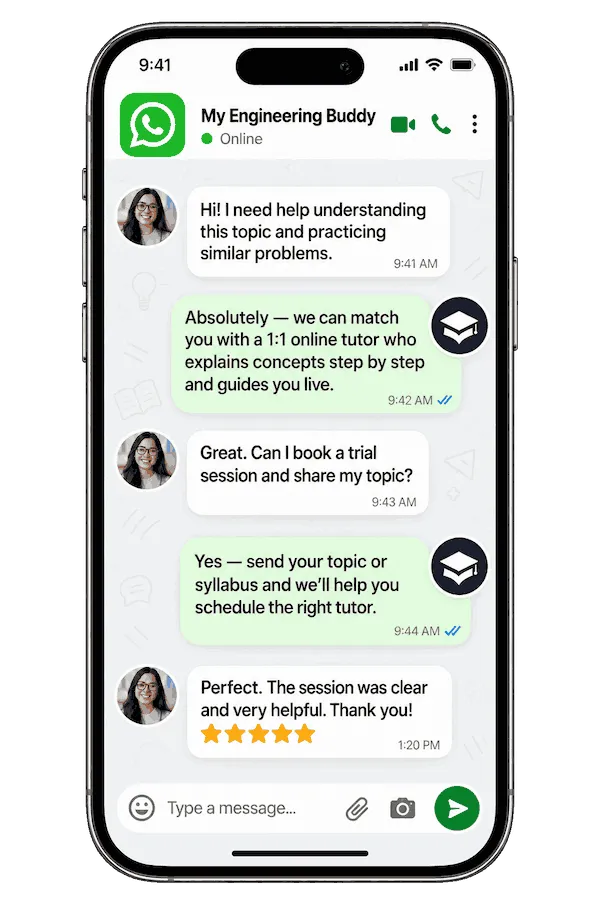
Unlike platforms where you fill out a form and wait, MEB responds in under a minute, 24/7. Tutor match takes under an hour. The $1 trial means you test before you commit. Everything runs over WhatsApp — no logins, no intake forms.
Study Plans (Pick One That Matches Your Goal)
A catch-up plan runs 1–3 weeks for students with an immediate deadline — focused on the highest-yield gaps first. Exam prep runs 4–8 weeks with structured coverage of all testable topics, past-paper practice, and regular progress checks. Weekly support runs alongside your semester or coursework deadlines, with sessions timed to assignments and module assessments. The tutor builds the specific session sequence after the diagnostic — not before it.
Pricing Guide
Financial statement analysis tutoring runs $20–$40/hr for most undergraduate and early postgraduate levels. Graduate, CFA, CPA, and forensic accounting content can reach $100/hr depending on tutor background and topic complexity. Rate factors include your level, the depth of material, your timeline, and tutor availability in your time zone.
Availability is limited in the four weeks before CFA exam windows and at end-of-semester crunch points. Students who book during those periods often wait longer for a match.
For students targeting CFA charterholder status, Big Four advisory roles, or graduate finance programmes, tutors with professional financial analysis or investment banking backgrounds are available at higher rates — share your specific goal and MEB will match the tier to your ambition.
Start with the $1 trial — 30 minutes, no registration, no commitment. WhatsApp MEB for a quick quote.
MEB has served students preparing for CFA, CPA, and university-level financial accounting across 18 years — matching each student to a tutor who knows the exact syllabus, exam board, or professional standard they’re working to.
Source: My Engineering Buddy, 2008–2025.
A common pattern our tutors observe is students who have practised dozens of ratio calculations but freeze when asked to interpret what those ratios mean for a company’s creditworthiness. Interpretation is the skill the exam tests. That’s where session time goes.
FAQ
Is financial statement analysis hard?
It’s not the arithmetic that trips students up — it’s connecting the numbers to what they mean for a business. Most students can calculate a current ratio. Fewer can explain what a declining current ratio means for a company’s short-term lenders. That interpretive layer is where a tutor makes a real difference.
How many sessions are needed?
That depends on your starting point and goal. Students closing a specific gap before an assignment typically need 3–5 sessions. Those building from foundational statement reading through to CFA-level analysis work over 10–20 hours. The tutor gives a realistic estimate after the first diagnostic session.
Can you help with homework and assignments?
Yes — the tutor explains the method, works through the logic with you, and guides you to produce your own answer. MEB tutoring is guided learning — you understand the work, then submit it yourself. For full details on what we help with and what we don’t, read our Academic Integrity policy and Why MEB.
Will the tutor match my exact syllabus or exam board?
Yes. MEB tutors are matched to your specific course — CFA Institute curriculum, ACCA, university module, or IFRS-based programme. If you share your syllabus or course outline before the session, the tutor arrives knowing exactly what’s testable and what the assessor is looking for.
What happens in the first session?
The tutor asks you to walk through a recent piece of work or a topic you found difficult. This diagnostic shapes everything that follows — topic order, pace, and the specific type of practice you need. No generic introduction. The hour is used on your actual gaps from minute one.
Is online tutoring as effective as in-person?
For financial statement analysis, often more so. The tutor can pull up live filings, annotate statements with a digital pen-pad on screen, and share worked spreadsheets in real time. Students consistently report that watching a tutor work through a cash flow reconciliation live on screen is clearer than any textbook worked example.
Can I get financial statement analysis help at midnight?
Yes. MEB operates across all major time zones and responds to WhatsApp messages around the clock — average response time is under a minute. If you have a submission due in eight hours and need help with a ratio analysis section, message now. A tutor can often be matched the same night.
What if I don’t like my assigned tutor?
Tell MEB via WhatsApp. No forms, no waiting period. A replacement tutor is matched, usually within an hour. The $1 trial exists precisely so you can evaluate fit before committing to ongoing sessions — you’re not locked into anything.
Do you cover both IFRS and US GAAP in the same sessions?
Yes, and it’s one of the most commonly requested combinations. Students in comparative accounting modules, CFA candidates, or those moving between international programmes often need both frameworks in the same session. The tutor handles the comparison directly, including differences in lease and revenue recognition treatment.
How do I get started?
Message MEB on WhatsApp with your subject, level, and exam date or deadline. You’ll be matched with a verified financial statement analysis tutor — usually within an hour. Your first session is the $1 trial: 30 minutes live or one homework question explained in full. No registration, no commitment.
Trust & Quality at My Engineering Buddy
Every MEB tutor goes through a subject-specific screening process — credentials check, live demo evaluation, and ongoing session feedback review. Tutors covering financial statement analysis hold degrees in accounting, finance, or economics, and many have professional experience in financial reporting, audit, or investment analysis. Rated 4.8/5 across 40,000+ verified reviews on Google. MEB has been running since 2008 and has served 52,000+ students across the US, UK, Canada, Australia, the Gulf, and Europe.
MEB tutoring is guided learning — you understand the work, then submit it yourself. For full details on what we help with and what we don’t, read our Academic Integrity policy and Why MEB. We guide — you submit your own work.
MEB operates across 2,800+ subjects — from financial accounting tutoring to managerial accounting help to IFRS assignment help. Whatever financial subject sits alongside your financial statement analysis module, MEB can cover it in the same platform, same process. Learn more about how tutors are screened and sessions are structured at our tutoring methodology page.
18 years. 52,000+ students. 2,800+ subjects. MEB’s model has always been the same: match the right tutor, run a diagnostic first session, and build from there — no generic syllabuses, no one-size approach.
Source: My Engineering Buddy, 2008–2025.
Try your first session for $1 — 30 minutes of live 1:1 tutoring or one homework question explained in full. No registration. No commitment. WhatsApp MEB now and get matched within the hour.
Explore Related Subjects
Students studying financial statement analysis often also need support in:
- Financial Accounting
- Auditing
- Balance Sheet
- Cost Accounting
- Budgeting
- Corporate Governance
- Generally Accepted Accounting Principles (GAAP)
Next Steps
Getting started takes about two minutes.
- Share your exam board or course name, your hardest topic, and your current deadline or exam date
- Share your availability and time zone
- MEB matches you with a verified financial statement analysis tutor — usually within 24 hours
Before your first session, have ready:
- Your syllabus or course outline (or the module handbook)
- A recent past-paper attempt, assignment, or problem set you found difficult
- Your exam or submission deadline date
The tutor handles the rest. Visit www.myengineeringbuddy.com for more on how the MEB process works from first message to first session.
WhatsApp to get started or email [email protected].
Reviewed by Subject Expert
This page has been carefully reviewed and validated by our subject expert to ensure accuracy and relevance.