




~1 min
Average Reply Time
~1 hour
To Be Matched With A Tutor
30 Min Trial
75% Find Their Tutor On The 1st Trial
$20-35+/hr
Premium Yet Affordable Learning
Most students who struggle with GCSE Computer Science aren’t bad at it — they’ve just never had someone explain binary arithmetic or algorithm design in a way that sticks.
GCSE Computer Science Tutor Online
GCSE Computer Science is a UK secondary qualification covering programming, algorithms, data representation, computer systems, and networks, typically assessed by AQA, OCR, or Eduqas, equipping students aged 14–16 with core computational thinking skills.
MEB connects you with a verified GCSE Computer Science tutor near me — online, available across the US, UK, Canada, Australia, and the Gulf, and matched to your specific exam board. Whether you’re behind on Python, lost in Boolean logic, or facing the written paper in six weeks, a 1:1 online GCSE Computer Science tutor works through your exact gaps in real time. Our GCSE tutoring covers the full suite of subjects at this level — and Computer Science is one of the most in-demand.
- 1:1 online sessions tailored to your AQA, OCR, or Eduqas syllabus
- Expert verified tutors with subject-specific CS knowledge and teaching experience
- Flexible time zones — US, UK, Canada, Australia, Gulf
- Structured learning plan built after a diagnostic session
- Ethical homework and assignment guidance — you understand before you submit
52,000+ students across the US, UK, Canada, Australia, and the Gulf have used MEB since 2008 — including students in GCSE subjects like Computer Science, GCSE Mathematics tutoring, and GCSE Physics help.
Source: My Engineering Buddy, 2008–2025.
How Much Does a GCSE Computer Science Tutor Cost?
Most GCSE Computer Science tutoring sessions run $20–$40/hr. Advanced support — covering the programming project component or higher-tier paper strategies — may reach $50/hr. Start with the $1 trial: 30 minutes of live 1:1 tutoring, or one full question explained. No registration required.
| Level / Need | Typical Rate | What’s Included |
|---|---|---|
| Standard (Foundation & Higher) | $20–$35/hr | 1:1 sessions, homework guidance, past paper work |
| Programming Project / NEA Support | $35–$50/hr | Code review, debugging walkthroughs, design logic |
| $1 Trial | $1 flat | 30 min live session or one full homework question explained |
Tutor availability tightens in April and May — the peak GCSE exam window. Book early if your exams fall in that period.
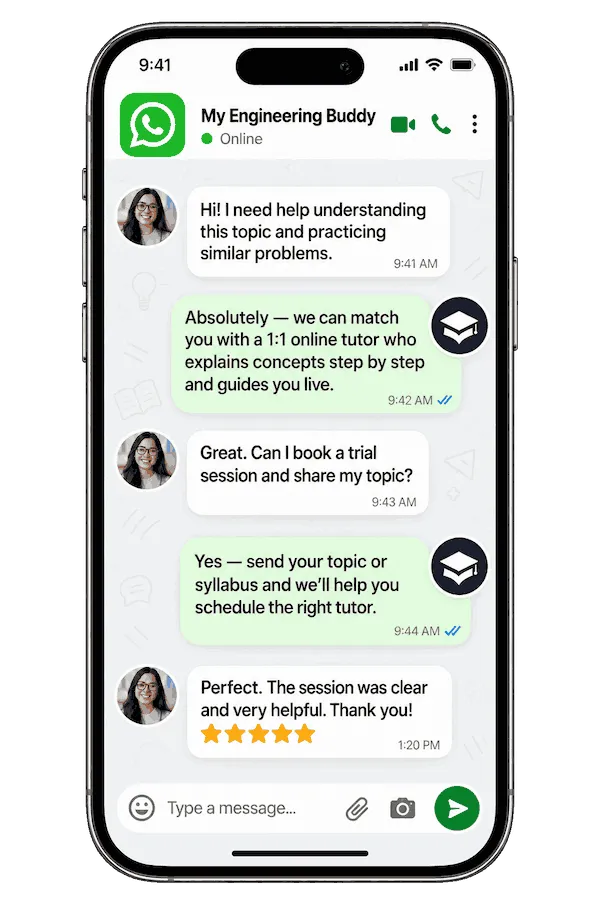
WhatsApp MEB for a quick quote — average response time under 1 minute.
Who This GCSE Computer Science Tutoring Is For
GCSE Computer Science draws in students with very different starting points. Some are confident coders who fall apart on the theory paper. Others understand the concepts but freeze when asked to write pseudocode under exam conditions.
- Students who passed mock programming tasks but are weak on data representation or Boolean algebra
- Students with a university conditional offer depending on achieving a grade 6 or above in Computer Science
- Students 4–6 weeks from their written exam with significant topic gaps still to close
- Students with a Non-Examined Assessment (NEA) submission deadline approaching
- Parents watching a child’s confidence drop as the written paper content builds up
- Students studying at schools where CS teaching quality is inconsistent or the teacher has limited programming depth
Students who go on to study Computer Science, Software Engineering, or related programmes at universities including Imperial College London, University of Edinburgh, Durham, University of Toronto, and Carnegie Mellon often cite GCSE Computer Science as the foundation that either helped or hurt their early progress.
1:1 Tutoring vs Self-Study vs AI vs YouTube vs Online Courses
Self-study works if you’re disciplined — but most students don’t know which gaps matter most for the paper. AI tools can explain what a linked list is, but they can’t watch you write pseudocode and catch where your logic breaks. YouTube is fine for overviews of CPU fetch-execute cycles; it stops being useful when you’re stuck on a specific mark scheme question. Online courses move at a fixed pace — not yours. With a 1:1 GCSE Computer Science tutor, every session is calibrated to your syllabus, your exam board, and the specific components where you’re losing marks.
Outcomes: What You’ll Be Able To Do in GCSE Computer Science
After consistent 1:1 sessions, students solve multi-step algorithm trace questions without losing track of variable states. They write and explain Python or pseudocode programs clearly enough to score full marks on the written paper. They apply binary, denary, and hexadecimal conversions accurately under timed conditions. They explain how protocols like TCP/IP and HTTP operate in network communication questions. They analyse security threats — SQL injection, phishing, malware — and propose appropriate countermeasures with the precision the mark scheme rewards.
Supporting a student through GCSE Computer Science? MEB works directly with parents to set up sessions, track progress, and keep NEA work on schedule. WhatsApp MEB — average response time is under a minute, 24/7.
Based on feedback from 40,000+ sessions collected by MEB from 2022 to 2025, 58% of students improved by one full grade after approximately 20 hours of 1:1 tutoring in subjects like GCSE Computer Science. A further 23% achieved at least a half-grade improvement.
Source: MEB session feedback data, 2022–2025.
At MEB, we’ve found that GCSE Computer Science students often arrive strong in one area — usually programming — and significantly weaker in another, typically data representation or networks. The first session almost always reveals a gap the student didn’t know existed. That’s where the real work begins.
What We Cover in GCSE Computer Science (Syllabus / Topics)
Sessions follow your exact exam board specification — AQA (8525), OCR (J277), or Eduqas. Coverage across all three boards is consistent; the structure below reflects the shared core with board-specific notes where they differ.
Programming and Algorithms
- Sequence, selection, iteration — writing and tracing programs
- Pseudocode and Python syntax (AQA uses its own pseudocode; OCR uses its own — your tutor knows both)
- Decomposition, abstraction, and algorithmic thinking
- Searching algorithms: linear and binary search
- Sorting algorithms: bubble, merge, and insertion sort
- Arrays, lists, and string handling
- Subroutines, functions, and parameter passing
Key texts: GCSE Computer Science for AQA (Waller & Sargent), OCR GCSE Computer Science (Cushing), Computer Science: A Level and GCSE (Langfield & Duddell).
Data Representation and Computer Systems
- Binary, denary, and hexadecimal conversion
- Binary arithmetic: addition and overflow
- Two’s complement for negative numbers
- Representing images, sound, and text (ASCII, Unicode)
- CPU architecture: ALU, control unit, registers, cache
- Fetch-decode-execute cycle
- Primary and secondary storage — types and trade-offs
Key texts: GCSE Computer Science for OCR (Hodder Education), Eduqas GCSE Computer Science (PG Online).
Networks, Security, and Ethics
- LAN vs WAN, topologies, and hardware components
- Protocols: TCP/IP, HTTP, HTTPS, FTP, DNS
- Wired vs wireless transmission — advantages and limitations
- Cybersecurity threats: malware, phishing, SQL injection, brute force
- Defensive measures: firewalls, encryption, access controls
- Ethical, legal, and environmental impacts of digital technology
- Legislation: Computer Misuse Act, GDPR, Data Protection Act
Key texts: GCSE Computer Science (CGP Complete Revision & Practice), AQA GCSE Computer Science (Bond SATs Papers series).

Platforms, Tools & Textbooks We Support
GCSE Computer Science sessions regularly involve live coding and debugging. MEB tutors support Python (the dominant language across all three boards), as well as pseudocode interpretation for both AQA and OCR formats. Sessions run on Google Meet with a shared screen for live code walkthroughs.
- Python 3 (IDLE, Thonny, or browser-based editors like Replit)
- Pseudocode interpreters and trace table tools
- Logic gate simulators (for Boolean algebra and circuit diagrams)
- Google Meet with digital pen-pad for diagram annotation
- Past paper PDFs from Edexcel A-Level Specifications and equivalent AQA/OCR sources
What a Typical GCSE Computer Science Session Looks Like
The tutor opens by checking the previous topic — say, you were working on binary addition and two’s complement last time. They ask you to attempt one short problem cold, then watch where you hesitate. From there, the session moves into the current focus: maybe it’s sorting algorithms today, so the tutor traces through a bubble sort step by step on the digital pen-pad, then asks you to replicate the trace for a different data set. You explain your reasoning out loud. The tutor corrects errors in the moment — not after. The session closes with two or three specific practice questions to attempt before next time, and a note of which topic comes next.
How MEB Tutors Help You with GCSE Computer Science (The Learning Loop)
Diagnose: In the first session, the tutor runs a short diagnostic — a mix of theory questions and a small programming task. This reveals which areas are solid and which are costing marks. Most students are surprised by where their real gaps are.
Explain: The tutor works through problems live on the digital pen-pad — writing pseudocode, annotating diagrams, converting binary values step by step. Nothing is left abstract. Every rule gets a worked example.
Practice: You attempt problems with the tutor present. Not after the session — during it. This is where errors surface and get fixed before they become habits.
Students consistently tell us that the moment they stop copying the tutor’s method and start explaining their own reasoning out loud is when GCSE Computer Science starts to feel manageable. That shift — from passive watching to active explaining — is what we’re building toward in every session.
Feedback: The tutor explains exactly why a mark was dropped — wrong keyword in a describe question, missing step in a trace table, incomplete justification in an evaluation answer. Mark scheme language gets practised directly.
Plan: After each session, the tutor notes what to cover next and sets a realistic target for the following week. Progress is tracked — not assumed.
Sessions run over Google Meet. The tutor uses a digital pen-pad or iPad with Apple Pencil for annotations and live diagram work. Before your first session, have your exam board confirmed and a recent past paper attempt or homework question you got wrong. The first session covers the diagnostic and the first topic in your plan. Start with the $1 trial — 30 minutes of live tutoring that also serves as your first diagnostic.
MEB tutors cover all three major GCSE Computer Science exam boards — AQA, OCR, and Eduqas — and adapt to whichever pseudocode convention your board uses. Board-specific preparation matters: a tutor who only knows one format can cost you marks on the other.
Source: My Engineering Buddy, 2008–2025.
Tutor Match Criteria (How We Pick Your Tutor)
Not every CS tutor is right for every student. Here’s how MEB matches them.
Subject depth: Tutors are matched to your specific exam board — AQA 8525, OCR J277, or Eduqas — and to your current component focus, whether that’s the written theory paper or the programming project. Tools: All tutors use Google Meet with a digital pen-pad or iPad and Apple Pencil for live code annotation and trace table work. Time zone: Matched to your region — UK, US, Gulf, Canada, or Australia — so sessions happen at sensible hours. Goals: Whether you need exam score improvement, help understanding specific topics, or NEA project guidance, the tutor is briefed on your exact target before the first session.
Unlike platforms where you fill out a form and wait, MEB responds in under a minute, 24/7. Tutor match takes under an hour. The $1 trial means you test before you commit. Everything runs over WhatsApp — no logins, no intake forms.
Study Plans (Pick One That Matches Your Goal)
After the diagnostic, your tutor builds a session sequence around your timeline. A catch-up plan (1–3 weeks) focuses on the highest-yield topics for your specific paper — often data representation and algorithm questions, which carry the most marks. An exam prep plan (4–8 weeks) works through all three topic areas systematically, with past paper practice built in from week two. Weekly support runs alongside your school term, aligned to what your class is covering and any NEA deadlines. The tutor sets the specific sequence after seeing your diagnostic results.
Pricing Guide
GCSE Computer Science tutoring runs $20–$40/hr for standard sessions. Higher-tier support — for students targeting grade 8 or 9, or needing detailed NEA code review — is available at up to $50/hr. Rate factors include the specific component focus, your exam timeline, and tutor availability.
Availability is limited during April and May — book before the exam window tightens.
For students targeting top university Computer Science programmes — Imperial, Edinburgh, Warwick, Toronto, or similar — tutors with undergraduate or postgraduate CS backgrounds are available at higher rates. Share your target grade and MEB will match the tier to your goal.
Start with the $1 trial — 30 minutes, no registration, no commitment. WhatsApp MEB for a quick quote.
FAQ
Is GCSE Computer Science hard?
It has two distinct demands: programming logic and written theory. Students who are strong coders often underestimate the theory paper, and vice versa. The subject isn’t especially hard with the right preparation — but the gap between a grade 5 and a grade 7 is almost always in the theory questions.
How many sessions are needed to improve?
Most students see measurable progress in 6–10 sessions. Students starting 8 weeks before their exam and covering 2 sessions per week typically close the major gaps before the paper. The diagnostic in session one sets the realistic timeline for your specific situation.
Can you help with homework and assignments?
Yes. MEB tutoring is guided learning — you understand the work, then submit it yourself. The tutor explains the concept and walks through the method; you apply it and submit your own answer. See our Academic Integrity policy and Why MEB page for full details on what we help with and what we don’t.
Will the tutor match my exact exam board?
Yes. When you contact MEB, share your board — AQA, OCR, or Eduqas — and your tutor is matched accordingly. AQA and OCR use different pseudocode conventions and slightly different topic weightings. Board-specific matching is not optional; it’s how MEB operates.
What happens in the first session?
The tutor runs a short diagnostic — a mix of theory questions and a small programming task. This identifies which topics are solid and which are losing marks. The session plan for subsequent weeks is set based on this, not on a generic syllabus template.
Is online GCSE Computer Science tutoring as effective as in-person?
For this subject, online tutoring has a specific advantage: live code sharing, digital pen-pad annotation, and screen-based trace table work are all natural in an online format. Students report no meaningful difference in learning quality compared to in-person sessions for this subject specifically.
What’s the difference between AQA and OCR GCSE Computer Science?
Both cover the same core areas but use different pseudocode syntax in exams — AQA has its own reference language, OCR uses its own. Paper weightings and NEA structures also differ slightly. Your tutor is matched to your specific board so these distinctions are handled correctly from session one.
Do I need to know Python before starting?
No prior Python experience is required. Tutors start from where you are — whether that’s complete beginner or needing to refine your syntax for the exam paper. OCR J277 does not mandate Python specifically, but it is the most common language used and the one most tutors teach.
Can you help with the GCSE Computer Science NEA or programming project?
Yes. Tutors provide guided support — explaining design approaches, reviewing logic, and helping you understand debugging steps. The code and write-up are always yours to produce and submit. NEA guidance stays within the school’s academic integrity framework.
Can I get GCSE Computer Science help at midnight or on weekends?
Yes. MEB operates 24/7 across all time zones. Students in the UK, Gulf, and Australia regularly book late evening or weekend sessions. WhatsApp MEB at any hour — the average response time is under a minute regardless of when you message.
How do I get started?
WhatsApp MEB, share your exam board and the topics you’re struggling with, and you’ll be matched with a verified tutor — usually within an hour. The first session is the $1 trial: 30 minutes of live tutoring or one full question explained. Three steps: WhatsApp, get matched, start the trial.
Trust & Quality at My Engineering Buddy
Every MEB tutor goes through a subject-specific vetting process — not a general interview. For GCSE Computer Science, that means demonstrating working knowledge of AQA, OCR, and Eduqas specifications, completing a live demo session evaluated against our marking rubric, and holding relevant degrees or professional experience in computing or software development. Rated 4.8/5 across 40,000+ verified reviews on Google. Tutors are reviewed after every session, and persistent low ratings result in removal — not redeployment to different subjects.
MEB tutoring is guided learning — you understand the work, then submit it yourself. For full details on what we help with and what we don’t, read our Academic Integrity policy and Why MEB.
MEB has served 52,000+ students across the US, UK, Canada, Australia, the Gulf, and Europe since 2008, covering 2,800+ subjects. GCSE subjects are among our most active categories — students regularly combine GCSE Maths tutoring with Computer Science support, and many also take GCSE Combined Science help or GCSE Electronics tutoring alongside it. See our tutoring methodology for how sessions are structured across subjects.
A common pattern our tutors observe is that students who start GCSE Computer Science sessions within 6 weeks of their exam — and commit to at least two sessions per week — consistently close more ground than students who spread the same number of sessions over a longer timeline. Intensity, within reason, produces faster results.
Explore Related Subjects
Students studying GCSE Computer Science often also need support in:
- GCSE Mathematics
- GCSE Physics
- GCSE Statistics
- GCSE Design and Technology
- GCSE Economics
- GCSE Business Studies
Next Steps
Before your first session, have ready: your exam board and syllabus (AQA, OCR, or Eduqas), a recent past paper attempt or a homework question you got wrong, and your exam or NEA deadline date. The tutor handles the rest.
- Share your exam board, hardest topic, and current timeline
- Share your availability and time zone
- MEB matches you with a verified tutor — usually within an hour
The first session starts with a diagnostic so every minute is spent on what actually matters for your paper.
Visit www.myengineeringbuddy.com for more on how MEB works.
WhatsApp to get started or email [email protected].
Try your first session for $1 — 30 minutes of live 1:1 tutoring or one homework question explained in full. No registration. No commitment. WhatsApp MEB now and get matched within the hour.
Reviewed by Subject Expert
This page has been carefully reviewed and validated by our subject expert to ensure accuracy and relevance.




