




~1 min
Average Reply Time
~1 hour
To Be Matched With A Tutor
30 Min Trial
75% Find Their Tutor On The 1st Trial
$20-35+/hr
Premium Yet Affordable Learning
Hire The Best Jupyter Notebook Tutor



Your Jupyter Notebook cells keep erroring out. Your advisor expects clean, reproducible analysis. You have 48 hours.
Jupyter Notebook Tutor Online
Jupyter Notebook is an open-source, browser-based interactive computing environment that allows users to write and execute code, embed visualisations, and document analysis in a single shareable file — used across data science, machine learning, and research workflows.
If you’re searching for a Jupyter Notebook tutor near me, MEB connects you with verified specialists in software engineering and data workflows who know Jupyter inside out — from environment setup to publishing reproducible notebooks. Sessions run 1:1 online, matched to your exact course, framework, or project. One outcome you can expect: fewer broken environments and cleaner, submission-ready notebooks.
- 1:1 online sessions tailored to your course, dataset, or project specification
- Expert verified tutors with hands-on Jupyter, Python, and data science experience
- Flexible time zones — US, UK, Canada, Australia, Gulf
- Structured learning plan built after a diagnostic session
- Guided project support — we explain the logic, you write and submit the code
52,000+ students across the US, UK, Canada, Australia, and the Gulf have used MEB since 2008 — including students working in software engineering and data subjects like Jupyter Notebook, Anaconda, and Matplotlib.
Source: My Engineering Buddy, 2008–2025.
How Much Does a Jupyter Notebook Tutor Cost?
Most Jupyter Notebook tutoring sessions run $20–$40/hr depending on your level and goals. Graduate-level or research-focused support can reach $60–$100/hr. Not sure it’s worth it? The $1 trial gives you 30 minutes live or a full explanation of one project problem — before you commit to anything.
| Level / Need | Typical Rate | What’s Included |
|---|---|---|
| Standard (undergrad, bootcamp) | $20–$35/hr | 1:1 sessions, project guidance, debugging |
| Advanced / Graduate / Research | $35–$100/hr | Expert tutor, ML pipelines, thesis support |
| $1 Trial | $1 flat | 30 min live session or 1 project question explained |
Availability drops fast in the weeks before semester project deadlines and dissertation submissions. Book early if your timeline is tight.
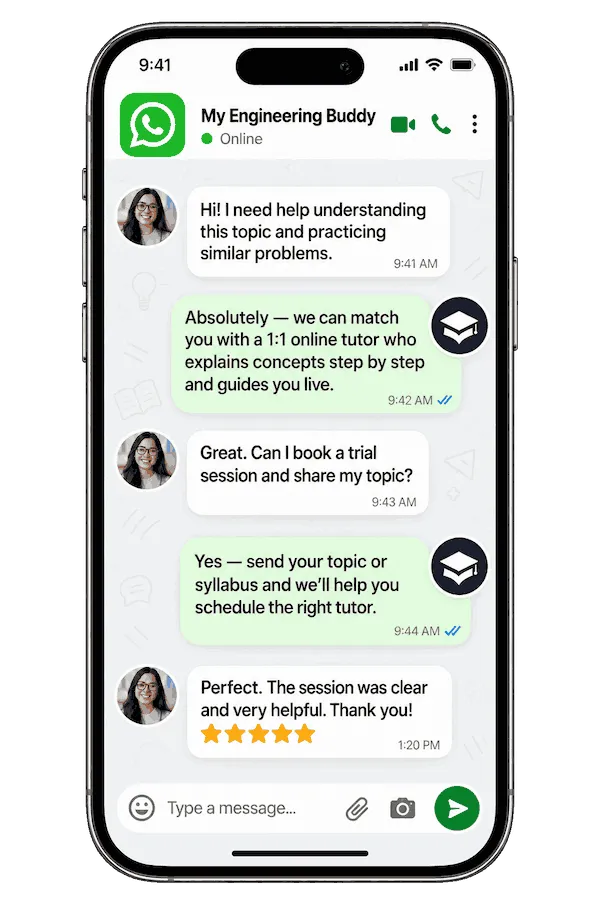
WhatsApp MEB for a quick quote — average response time under 1 minute.
Who This Jupyter Notebook Tutoring Is For
This is for students and researchers who are stuck — not just beginners. Whether your notebook runs locally but breaks on the submission server, or you can’t get your visualisations to render properly inside a report, these are real problems with specific fixes.
- Undergraduate students in data science, computer science, or statistics using Jupyter for the first time
- Graduate and PhD students building reproducible research notebooks for their thesis or publications
- Students whose project works on their machine but not in the marked environment
- Students who submitted a broken or incomplete notebook and need to fix it fast before the late deadline closes
- Researchers needing help structuring a notebook for peer review or conference submission
- Professionals upskilling in data science who need guided project support to build a portfolio
Students at institutions including MIT, UC Berkeley, the University of Toronto, Imperial College London, ETH Zurich, the University of Melbourne, and NYU regularly use Jupyter Notebook as part of data science, ML, and computational research courses. MEB tutors have supported students across all these contexts.
At MEB, we’ve found that most Jupyter Notebook problems aren’t about the code itself — they’re about the environment. Kernel crashes, dependency conflicts, and path errors account for more failed submissions than any conceptual gap. A tutor who’s seen these patterns dozens of times fixes them in minutes, not hours of Stack Overflow searching.
1:1 Tutoring vs Self-Study vs AI vs YouTube vs Online Courses
Self-study works if you know exactly what you’re missing — rare when your notebook keeps throwing unfamiliar errors. AI tools like ChatGPT give fast code snippets but can’t see your actual environment or diagnose why your kernel is dying. YouTube covers Jupyter setup well but stops the moment your specific dataset or dependency stack is involved. Online courses move at a fixed pace and won’t pause for your Friday deadline. 1:1 tutoring with MEB runs inside your actual notebook, on your actual project, correcting the exact error in front of you.
Outcomes: What You’ll Be Able To Do in Jupyter Notebook
After working with an MEB Jupyter Notebook tutor, you’ll be able to structure a complete, reproducible analysis notebook from raw data to final visualisation. You’ll apply pandas and NumPy correctly for data cleaning and transformation, without guessing at method arguments. You’ll solve kernel restart loops, broken virtual environments, and missing dependency errors independently. You’ll present results using Matplotlib or Seaborn with properly labelled axes and exportable figures. You’ll explain your code logic to a marker or supervisor — not just run it and hope.
Based on feedback from 40,000+ sessions collected by MEB from 2022 to 2025, students working 1:1 on Jupyter Notebook consistently report faster project completion, fewer environment errors, and noticeably stronger confidence presenting their analysis to supervisors or markers. Progress varies by starting level and practice frequency.
Source: MEB session feedback data, 2022–2025.
Try your first session for $1 — 30 minutes of live 1:1 tutoring or one homework question explained in full. No registration. No commitment. WhatsApp MEB now and get matched within the hour.
What We Cover in Jupyter Notebook (Topics)

Environment Setup and Notebook Fundamentals
- Installing Jupyter via Anaconda or pip — choosing the right approach for your OS
- Kernel management: starting, interrupting, and restarting without losing work
- Cell types: code, Markdown, and raw — correct use for each
- Virtual environments — creating, activating, and linking to Jupyter kernels
- Running Jupyter on remote servers and cloud platforms including Google Colab
- Exporting notebooks to PDF, HTML, and LaTeX for submission
- Magic commands: %timeit, %matplotlib inline, %%bash, and others
Recommended references: Python Data Science Handbook by Jake VanderPlas; Learning Python by Mark Lutz; Project Jupyter official documentation.
Data Analysis and Visualisation
- Pandas DataFrames: loading, indexing, filtering, groupby, and merging
- NumPy arrays: broadcasting, slicing, vectorised operations
- Data cleaning: handling nulls, outliers, type conversion, and duplicates
- Matplotlib: figure and axes objects, subplots, formatting, and export
- Seaborn: statistical plots, heatmaps, pairplots, and style configuration — get help with Matplotlib tutoring alongside Jupyter work
- Interactive widgets with ipywidgets for dynamic visualisation
- Integrating Kaggle datasets into notebook workflows
Recommended references: Python for Data Analysis by Wes McKinney; Hands-On Data Analysis with Pandas by Stefanie Molin.
Machine Learning and Advanced Workflows
- Scikit-learn pipelines inside Jupyter: preprocessing, model fitting, evaluation — including scikit-learn tutoring for deeper model work
- PyTorch and Keras model training notebooks: structuring training loops and logging metrics
- Reproducibility: setting random seeds, version pinning, and requirements.txt
- Notebook parameterisation with Papermill for automated runs
- Git integration for version-controlled notebooks — ties directly to Git tutoring
- Connecting to PostgreSQL and other databases from within a notebook
Recommended references: Hands-On Machine Learning with Scikit-Learn, Keras, and TensorFlow by Aurélien Géron; Deep Learning with Python by François Chollet.
Platforms, Tools & Textbooks We Support
Jupyter Notebook tutoring at MEB covers the full ecosystem students actually use. Tutors are comfortable working inside JupyterLab, JupyterHub (used by many universities for shared environments), Google Colab, VS Code with the Jupyter extension, and PyCharm‘s notebook mode. Sessions also address dependency management tools including conda, pip, and Poetry, and version control via GitLab for notebook repositories.
What a Typical Jupyter Notebook Session Looks Like
The tutor starts by checking what you worked on since the last session — usually a specific cell block or function that wasn’t producing the expected output. From there, you share your screen and open the notebook together. The tutor watches you run the problematic cells, asks you to explain what you expected versus what happened, then works through the fix using a digital pen-pad to annotate the logic directly. You might spend 20 minutes on a single GroupBy aggregation that’s silently dropping rows, or on understanding why your train/test split is leaking. The tutor doesn’t just fix it — they make you reproduce the fix yourself in a slightly different context. By the end of the session, you have a concrete task: clean one more column in the dataset using the same pattern, or add a proper model evaluation block before the next session.
How MEB Tutors Help You with Jupyter Notebook (The Learning Loop)
Diagnose: In the first session, the tutor looks at your actual notebook — not a toy example. They identify whether the problem is environment-level, logic-level, or conceptual, and set a realistic session plan from there.
Explain: The tutor works through the fix live, writing on the screen with a digital pen-pad so you can see the reasoning — not just the answer. They name the method, explain why it works, and point to where the documentation confirms it.
Practice: You replicate the fix in a parallel example while the tutor watches. If you get it wrong, they catch it immediately — before the misunderstanding becomes a habit.
Feedback: The tutor tells you exactly where the error came from and why it would lose marks if this were a graded submission. No vague encouragement — specific correction.
Plan: Each session ends with a clear next step: which notebook section to finish, which concept to review, and what to bring to the next session.
Sessions run over Google Meet with screen sharing. The tutor uses a digital pen-pad or iPad with Apple Pencil for annotation. Before your first session, share your notebook file, your error output, and your project brief or course specification. The first session acts as your diagnostic — the tutor maps exactly where to start and how many sessions you’ll likely need. Start with the $1 trial — 30 minutes of live tutoring that also works as your first diagnostic session.
Students consistently tell us that the moment things click in Jupyter Notebook isn’t when they finally get a cell to run — it’s when they understand why it was failing. That shift from “it works” to “I know why it works” is what makes the next project go faster without needing help.
Tutor Match Criteria (How We Pick Your Tutor)
Not every Python tutor knows Jupyter well enough to diagnose a kernel crash or fix a broken conda environment in a session. MEB matches on specifics.
Subject depth: Tutors are matched based on your exact use case — data analysis, ML pipelines, academic research notebooks, or bootcamp projects. A tutor who uses Jupyter daily for production data work is different from one who covered it in a course.
Tools: Every session runs on Google Meet with digital pen-pad or iPad and Apple Pencil for annotation. No friction with setup.
Time zone: Matched to your region — US, UK, Gulf, Canada, or Australia. Sessions available at hours that actually work for your schedule.
Goals: Whether you need a broken notebook fixed before tomorrow, conceptual understanding of dataframe operations, or ongoing support through a semester-long project, the match reflects that specific goal — not a generic “Python tutor.”
Unlike platforms where you fill out a form and wait days for a response, MEB replies via WhatsApp in under a minute — 24/7. Tutor match happens in under an hour. The $1 trial means you test the fit before spending anything significant. No logins, no intake portals, no waiting.
Source: My Engineering Buddy, 2008–2025.
Pricing Guide
Standard Jupyter Notebook tutoring runs $20–$40/hr for most undergraduate and bootcamp-level work. Graduate, research, or ML-pipeline-focused sessions run $40–$100/hr depending on tutor background and topic depth.
Rate factors: your level, the complexity of the notebook (single analysis vs multi-model pipeline), your timeline, and tutor availability.
Seats fill quickly in the two weeks before semester project deadlines. If your submission is coming up, don’t wait.
For students targeting competitive data science roles, research positions, or graduate programmes at institutions where portfolio notebooks matter, tutors with professional data engineering or ML research backgrounds are available at higher rates — share your goal and MEB matches the tier to where you’re headed.
Start with the $1 trial — 30 minutes, no registration, no commitment. WhatsApp MEB for a quick quote.
FAQ
Is Jupyter Notebook hard to learn?
The basics — running cells, writing Markdown, loading a CSV — take an afternoon. The difficulty jumps when you hit environment errors, broken kernels, or complex data transformations. Most students get stuck at that point, not at the beginning. A tutor gets you past those specific blocks fast.
How many sessions will I need?
For a specific broken notebook or project deadline, one to three focused sessions often resolves the issue. For building solid Jupyter and data analysis skills from scratch, most students see clear progress over eight to twelve hours of 1:1 work. The tutor maps this after the first diagnostic session.
Can you help with my project and portfolio work?
Yes. MEB provides guided project support — the tutor explains the logic, the approach, and the fix. You write the code and submit the work yourself. MEB provides guidance, not a finished notebook handed over for submission. See our Policies page for full details on what we help with and what we don’t.
Will the tutor match my exact course or project specification?
Yes. Before matching, MEB asks for your course outline, project brief, or specification. The tutor is selected based on that specific context — not assigned generically. If your course uses JupyterHub on a university server, the tutor knows that environment.
What happens in the first session?
You share your notebook and explain where you’re stuck. The tutor reviews what you’ve built, identifies the root issue, and works through it with you on screen. By the end of the session you have a clear plan: what to fix, what to learn next, and how many sessions you’ll likely need.
Is online Jupyter Notebook tutoring as effective as in-person?
For Jupyter Notebook work, online is often better. Everything happens on screen already — screen sharing and live annotation over Google Meet replicates the in-person experience with no loss. The tutor can annotate your actual notebook in real time, which isn’t possible face-to-face.
My notebook runs on my machine but fails when I submit it — can you help with that?
This is one of the most common Jupyter problems MEB tutors handle. Environment mismatches, hardcoded file paths, missing requirements.txt files, and kernel version differences are the usual causes. A tutor diagnoses and fixes this in a single session in most cases.
Can I get Jupyter Notebook help at midnight or on weekends?
Yes. MEB operates 24/7 across time zones. WhatsApp MEB at any hour — average response time is under a minute. Tutors available in US, UK, Gulf, Canada, and Australia time zones cover most overnight windows without a gap.
What if I don’t connect with my assigned tutor?
Request a different match — no questions asked. MEB’s response team handles reassignment via WhatsApp, usually within the hour. The $1 trial is specifically designed so you test the fit before committing to a full session block.
Do you support JupyterLab, JupyterHub, and Google Colab as well?
Yes. MEB tutors work across the full Jupyter ecosystem — classic Jupyter Notebook, JupyterLab, JupyterHub (including university-managed instances), and Google Colab. If your course uses a specific platform, tell MEB when you first make contact so the tutor is matched to that environment.
What is the difference between Jupyter Notebook and JupyterLab, and which should I learn?
JupyterLab is the newer, more full-featured interface — multiple notebooks open side by side, a file browser, and a terminal built in. Classic Jupyter Notebook is simpler and still widely used in courses and research. Most MEB tutors cover both; your course specification usually decides which one you work in.
How do I get started?
Start with the $1 trial: 30 minutes of live 1:1 tutoring or a full explanation of one project problem. Three steps — WhatsApp MEB, get matched to a verified tutor (usually within the hour), then start your trial session. No registration required.
Trust & Quality at My Engineering Buddy
Every MEB tutor goes through a structured vetting process: subject-area screening, a live demo session evaluated by a senior tutor, and ongoing review based on student feedback after every session. Tutors working in Jupyter Notebook, data science, and Python-based projects hold degrees in computer science, data science, statistics, or a related field — many with industry experience in data engineering or ML. Rated 4.8/5 across 40,000+ verified reviews on Google.
MEB provides guided learning support. All project work is produced and submitted by the student. See our Policies page for details on what we help with and what we don’t.
MEB has served 52,000+ students across the US, UK, Canada, Australia, Gulf, and Europe since 2008 — across 2,800+ subjects in software engineering, data science, and adjacent technical fields. Students working in Jupyter Notebook often also need help with PyTorch, Docker, and related tools — MEB covers all of them under one platform, with the same tutor matching and WhatsApp response model. See our tutoring methodology for how MEB structures sessions across technical subjects.
Explore Related Subjects
Students studying Jupyter Notebook often also need support in:
Next Steps
When you message MEB, share your exam board, your hardest notebook problem or project component, and your current deadline. Include your time zone and availability — sessions are matched to your region.
MEB matches you with a verified Jupyter Notebook tutor, usually within 24 hours. Often within the hour.
Before your first session, have ready:
- Your project brief, course outline, or specification
- The notebook file you’re working on and any error output
- Your submission or exam deadline date
The tutor handles the rest. First session starts with a diagnostic — every minute is used on your actual problem, not generic instruction.
Visit www.myengineeringbuddy.com for more on how MEB works.
WhatsApp to get started or email [email protected].
Reviewed by Subject Expert
This page has been carefully reviewed and validated by our subject expert to ensure accuracy and relevance.




