Hire Verified & Experienced
Microsoft PowerPoint Tutors
4.8/5 40K+ session ratings collected on the MEB platform



Hire The Best Microsoft PowerPoint Tutor
Top Tutors, Top Grades. Without The Stress!





52,000+ Happy Students From Various Universities






How Much For Private 1:1 Tutoring & Hw Help?
Private 1:1 Tutoring and HW help Cost $20 – 35 per hour* on average.
Your slides look cluttered, your animations are broken, and the presentation is due in 48 hours. A 1:1 Microsoft PowerPoint tutor online fixes that faster than any tutorial video.
Microsoft PowerPoint Tutor Online
Microsoft PowerPoint is a presentation software application developed by Microsoft, used to create slide-based visual content for academic, professional, and technical purposes. It equips users to design, structure, and deliver clear, data-supported presentations.
MEB offers 1:1 online tutoring and project help in 2,800+ advanced subjects — including a full range of software engineering tools and platforms. If you’ve searched for a Microsoft PowerPoint tutor near me, MEB matches you with a verified expert, usually within the hour. Sessions are live, hands-on, and built around what you’re actually trying to produce.
- 1:1 online sessions tailored to your specific project, course, or workplace deliverable
- Expert-verified tutors with hands-on PowerPoint and presentation design experience
- Flexible time zones — US, UK, Canada, Australia, Gulf
- Structured learning plan built after a diagnostic session
- Guided project support — we explain the technique, you build the slides
52,000+ students across the US, UK, Canada, Australia, and the Gulf have used MEB since 2008 — including students working on Microsoft Office tools like Microsoft PowerPoint, Microsoft Word, and Google Sheets.
Source: My Engineering Buddy, 2008–2025.
How Much Does a Microsoft PowerPoint Tutor Cost?
Most Microsoft PowerPoint tutoring sessions run $20–$40/hr. Specialist sessions covering advanced animation, data visualisation, or presentation coaching for high-stakes pitches can reach higher. Start with the $1 trial — 30 minutes live or one specific problem walked through in full.
| Level / Need | Typical Rate | What’s Included |
|---|---|---|
| Standard (most levels) | $20–$35/hr | 1:1 sessions, slide design guidance |
| Advanced / Specialist | $35–$70/hr | Expert tutor, animation, data viz, pitch decks |
| $1 Trial | $1 flat | 30 min live session or 1 project question |
Tutor availability tightens around semester deadlines and corporate presentation cycles. Book early if you have a fixed date.
WhatsApp MEB for a quick quote — average response time under 1 minute.
Who This Microsoft PowerPoint Tutoring Is For
Most students and professionals arrive with the same problem: they know PowerPoint exists, but they don’t know why their slides look wrong or how to fix it efficiently. This tutoring is for people who need a working result, not a 40-minute YouTube overview.
- Undergraduate and graduate students building research presentations or thesis defences
- Professionals preparing client-facing pitch decks or board-level reports
- Students with a coursework or project submission deadline approaching fast
- Students who submitted a presentation that received poor feedback and need to understand exactly why
- Faculty and administrators producing lecture slides or conference materials
- Anyone switching from Google Slides or Keynote who needs to get up to speed quickly
MEB has supported students at institutions including MIT, University of Toronto, University of Melbourne, Imperial College London, NYU, TU Delft, and the American University of Sharjah — among many others.
1:1 Tutoring vs Self-Study vs AI vs YouTube vs Online Courses
Self-study works if you already know what you’re missing. AI tools give fast answers but can’t watch you build a slide and catch the layout error in real time. YouTube covers the basics and stops there. Online courses move at a fixed pace with no adjustment for your specific deliverable. A 1:1 Microsoft PowerPoint tutor online watches what you’re doing, corrects the exact mistake, and gets you to a working slide in the same session — not after three more videos.
Outcomes: What You’ll Be Able To Do in Microsoft PowerPoint
After working with an online Microsoft PowerPoint tutor, you’ll be able to apply slide master and layout templates without breaking existing formatting, build charts and SmartArt that communicate data clearly, use animation and transition timing that supports rather than distracts from your argument, and present a polished deck with consistent typography and visual hierarchy. You’ll also be able to embed and link external files — Excel data, PDFs, video — without the common errors that break presentations on other machines.
Based on feedback from 40,000+ sessions collected by MEB from 2022 to 2025, 58% of students improved by one full grade after approximately 20 hours of 1:1 tutoring in subjects like Microsoft PowerPoint. A further 23% achieved at least a half-grade improvement.
Source: MEB session feedback data, 2022–2025.
At MEB, we’ve found that most PowerPoint problems aren’t software problems — they’re structure problems. Once a student understands how slide masters, layouts, and content hierarchy work together, the technical fixes take minutes, not hours.
What We Cover in Microsoft PowerPoint (Syllabus / Topics)

Track 1: Slide Design and Visual Communication
- Slide master setup, layout editing, and theme customisation
- Typography: font pairing, sizing hierarchy, and readability across screen sizes
- Colour schemes, brand consistency, and accessible contrast ratios
- Alignment, spacing, and the grid system in PowerPoint
- SmartArt diagrams — choosing the right type and editing efficiently
- Image handling: compression, cropping, background removal, and positioning
- Building visually consistent multi-slide decks without repeated manual formatting
Recommended references: Presentation Zen by Garr Reynolds; slide:ology by Nancy Duarte; Microsoft’s own design documentation.
Track 2: Data Visualisation and Charts
- Inserting and linking Excel charts — keeping data live vs embedding static copies
- Chart type selection: when to use bar, line, scatter, waterfall, or combo charts
- Formatting chart axes, labels, and legends for clarity at projection scale
- Building tables in PowerPoint vs pasting from Excel — trade-offs and best practice
- Infographic-style data slides using shapes, icons, and layered elements
- Avoiding common chart errors: truncated axes, 3D distortion, colour overload
Recommended references: The Functional Art by Alberto Cairo; Storytelling with Data by Cole Nussbaumer Knaflic.
Track 3: Animation, Transitions, and Delivery
- Animation pane: sequencing, timing, and trigger-based reveals
- Transition types — which work for professional decks, which to avoid
- Presenter View setup: notes, timers, dual-monitor configuration
- Embedding and linking video and audio files without playback errors on other machines
- Exporting to PDF, video (MP4), and PowerPoint Show (.ppsx) formats
- Slide Show rehearsal tools and recording narration for asynchronous presentations
- Cross-platform compatibility — what breaks when opening a .pptx on Mac, Google Slides, or older Office versions
Recommended references: Microsoft 365 official help documentation; Speaking PowerPoint by Bruce Gabrielle.
What a Typical Microsoft PowerPoint Session Looks Like
The tutor opens by reviewing what you worked on since the last session — typically a specific slide or section you were asked to rebuild. You share your screen and walk through the deck together. If you’re stuck on animation sequencing or a chart that’s not updating from its linked Excel file, the tutor replicates the problem on their end, identifies the cause, and shows the fix using a digital pen-pad to annotate directly on the slide. You redo the step while the tutor watches. The session closes with a clear task: rebuild slides 8–12 using the layout principles covered, and flag any new formatting issues before the next session.
How MEB Tutors Help You with Microsoft PowerPoint (The Learning Loop)
Diagnose: In the first session, the tutor asks you to share your current deck — or describe what you’re trying to build from scratch. They identify whether the core issue is design structure, data handling, animation logic, or export compatibility. Most students arrive with a mix of all four.
Explain: The tutor works through the problem live. They annotate your slides using a digital pen-pad, highlight why a specific layout decision is causing the visual clutter, and show the corrected approach step by step.
Practice: You replicate the fix while the tutor watches. This is non-negotiable. Reading or watching isn’t enough — you have to build it yourself in the session to retain it.
Feedback: The tutor catches errors as they happen. If your slide master change is pushing body text off-centre, they stop you immediately rather than letting the habit solidify across 20 slides.
Plan: Each session ends with a specific task and a target for the next meeting. Progress is tracked against your deadline — whether that’s a university submission, a conference, or a client pitch.
Sessions run on Google Meet with screen sharing. The tutor uses a digital pen-pad or iPad with Apple Pencil to annotate directly on your slides. Before the first session, share your current deck or a brief of what you need to build, plus your deadline. The first session is diagnostic and usually produces a working fix within the hour. Whether you need a quick two-session fix before a deadline, four weeks of structured slide design development, or ongoing support through a semester of research presentations, the tutor maps the plan after that first diagnostic.
Start with the $1 trial — 30 minutes of live tutoring that also serves as your first diagnostic.
Students consistently tell us that the gap between “I watched a tutorial” and “I can actually build this” is the moment when someone watches them do it and corrects the first wrong move. That’s what the live session provides.
Tutor Match Criteria (How We Pick Your Tutor)
Not every PowerPoint expert is the right tutor for your specific need. MEB matches on four criteria.
Subject depth: The tutor’s PowerPoint experience is matched to your use case — academic research presentations, corporate pitch decks, data-heavy financial slides, or design-forward creative decks each require different expertise.
Tools: All tutors work via Google Meet with a digital pen-pad or iPad and Apple Pencil — so annotation on your actual slides is possible in every session.
Time zone: Matched to your region — US, UK, Gulf, Canada, or Australia — so sessions run at hours that work for you.
Goals: Whether the target is a polished thesis defence, a workplace deliverable, or building general presentation skills for ongoing use, the tutor’s approach is calibrated to that goal from session one.
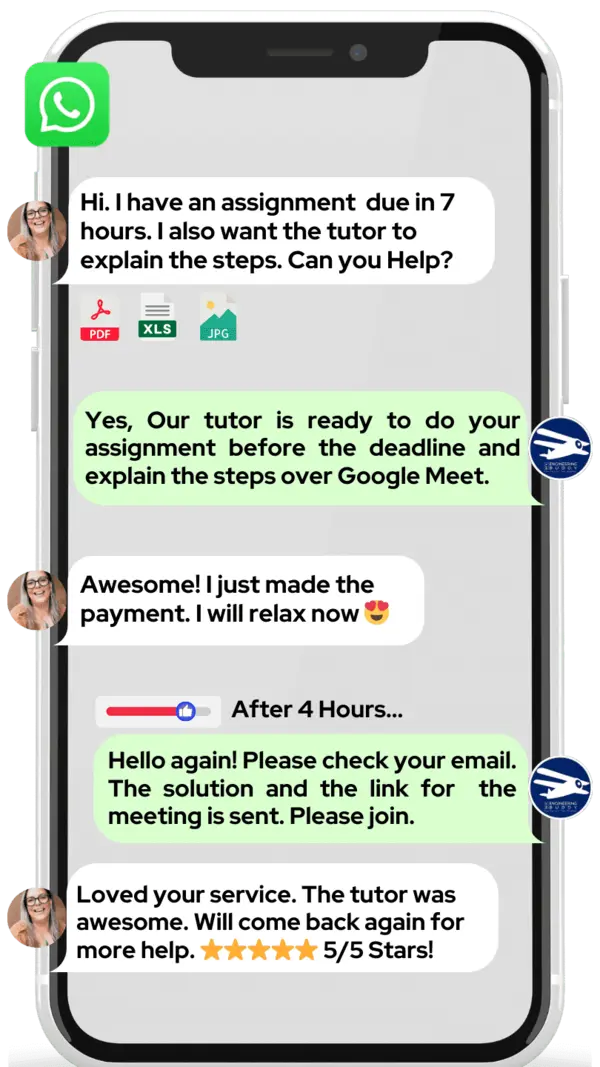
Unlike platforms where you fill out a form and wait, MEB responds in under a minute, 24/7. Tutor match takes under an hour. The $1 trial means you test before you commit. Everything runs over WhatsApp — no logins, no intake forms.
MEB tutors covering Microsoft PowerPoint also support adjacent tools — students frequently move between Microsoft Loop, Adobe XD, and presentation design workflows in the same engagement.
Source: My Engineering Buddy, 2008–2025.
Pricing Guide
Microsoft PowerPoint tutoring starts at $20/hr for standard sessions. Graduate-level research presentation coaching or high-stakes pitch deck preparation with tutors who have professional design or consulting backgrounds can reach $60–$100/hr.
Rate factors include the complexity of the deliverable, your timeline, the tutor’s specialist background, and session frequency. Availability becomes limited in the weeks before major semester submission periods.
For students targeting admission to competitive programmes, professionals preparing investor-facing materials, or anyone working to a hard deadline with a high-stakes deck, tutors with professional design or business communication backgrounds are available at higher rates — share your goal and MEB matches the tier.
Start with the $1 trial — 30 minutes, no registration, no commitment. WhatsApp MEB for a quick quote.
Try your first session for $1 — 30 minutes of live 1:1 tutoring or one homework question explained in full. No registration. No commitment. WhatsApp MEB now and get matched within the hour.
FAQ
Is Microsoft PowerPoint hard to learn?
The basics take an afternoon. Getting professional-quality output — consistent layouts, clean data charts, controlled animation — takes longer because the software has many hidden dependencies. A tutor cuts that learning time significantly by targeting your specific gaps.
How many sessions are needed?
Most students resolve an immediate project problem in 2–3 sessions. Building solid, repeatable slide design skills typically takes 6–10 hours. The tutor confirms a realistic plan after the first diagnostic session.
Can you help with projects and portfolio work?
Yes. MEB provides guided project support — the tutor explains the technique and principles, you build and submit the slides yourself. MEB provides guided learning support. All project work is produced and submitted by the student. See our Policies page for full details on what we help with and what we don’t.
Will the tutor match my exact syllabus or use case?
Yes. Whether you’re following a university course brief, a corporate template guide, or a specific conference format, the tutor aligns to your actual requirements. Share your brief before the first session and the tutor prepares accordingly.
What happens in the first session?
The tutor reviews your current deck or project brief, identifies the core gaps, and works through at least one concrete fix with you in the session. You leave with a clear task and a plan for the next meeting.
Are online sessions as effective as in-person for PowerPoint tutoring?
For screen-based software like PowerPoint, online is often more effective. The tutor can annotate directly on your slides, see exactly what you see, and share their screen to demonstrate without any setup friction.
Can I get Microsoft PowerPoint help at short notice — including late at night?
Yes. MEB operates 24/7. WhatsApp response time averages under a minute. If your presentation is due tomorrow morning, message now and MEB will match you with an available tutor within the hour.
What if I don’t like my assigned tutor?
Request a different match immediately via WhatsApp. MEB reassigns at no extra cost. The $1 trial exists precisely so you can evaluate fit before committing to a longer engagement.
What’s the difference between using PowerPoint’s built-in Designer and working with a tutor?
PowerPoint Designer suggests layouts based on your content. It can’t explain why a visual hierarchy isn’t working, help you structure an argument across 30 slides, or fix the chart that’s pulling wrong data from your Excel file. A tutor handles all of that.
Do you cover PowerPoint for Mac and Microsoft 365 online, not just the desktop app?
Yes. Tutors cover PowerPoint across Windows desktop, Mac, and Microsoft 365 web. They also help with cross-version compatibility — a common problem when files move between team members on different Office versions or operating systems.
How do I get started?
Message MEB on WhatsApp, share what you’re working on and your deadline. MEB matches you with a tutor — usually within the hour. Your first session is the $1 trial: 30 minutes live or one specific problem walked through in full. Three steps: WhatsApp, match, start.
Do you offer group Microsoft PowerPoint sessions?
MEB specialises in 1:1 sessions. Group sessions are not the standard format. For team-level presentation training in a corporate context, contact MEB via WhatsApp to discuss what’s available for your specific situation.
Trust & Quality at My Engineering Buddy
Every MEB tutor is screened through a subject-specific vetting process: degree or professional qualification in a relevant field, a live demo session evaluated by MEB staff, and ongoing review based on session feedback. Tutors are matched to students based on subject depth, not just availability. Rated 4.8/5 across 40,000+ verified reviews on Google.
MEB provides guided learning support. All project work is produced and submitted by the student. For full details on what we help with and what we don’t, read our Academic Integrity policy and Why MEB.
MEB has been operating since 2008, serving 52,000+ students across the US, UK, Canada, Australia, the Gulf, and Europe in 2,800+ subjects. The Microsoft Windows and broader Microsoft ecosystem — including PowerPoint, Word, and related productivity tools — is one of the most frequently requested subject areas on the platform. Students also regularly request support for web design and image editing alongside their PowerPoint work. Learn more about MEB’s approach at our tutoring methodology page.
Explore Related Subjects
Students studying Microsoft PowerPoint often also need support in:
Next Steps
Before your first session, have ready: your current deck or project brief, the deadline or presentation date, and any specific feedback you’ve already received on your slides. The tutor handles the rest.
- Share your timeline, use case, and the specific PowerPoint problem you’re facing
- Share your availability and time zone
- MEB matches you with a verified tutor — usually within the hour
The first session starts with a diagnostic so no time is wasted. Visit www.myengineeringbuddy.com for more on how MEB works.
WhatsApp to get started or email meb@myengineeringbuddy.com.
Reviewed by Subject Expert
This page has been carefully reviewed and validated by our subject expert to ensure accuracy and relevance.