~1 min
Average Reply Time
~1 hour
To Be Matched With A Tutor
30 Min Trial
75% Find Their Tutor On The 1st Trial
$20-35+/hr
Premium Yet Affordable Learning
Most MRCP(UK) candidates who fail Part 1 do so on the same 4 topic clusters — a tutor who’s seen that pattern changes the preparation strategy fast.
MRCP(UK) Tutor Online
The MRCP(UK) — Membership of the Royal Colleges of Physicians of the United Kingdom — is a postgraduate medical examination assessing clinical knowledge, reasoning, and patient management skills across internal medicine, required for specialty training in the UK.
Finding the right MRCP(UK) tutor near me matters when the exam covers 19 clinical specialties and your training schedule leaves almost no time to diagnose your own gaps. MEB connects you with a specialist test preparation tutor who knows exactly where MRCP(UK) candidates lose marks — and builds every session around closing those gaps. One outcome you can expect: sharper clinical reasoning in the topics that appear most often in the Best of Five questions.
- 1:1 online sessions mapped to your MRCP(UK) Part 1, Part 2 Written, or PACES component
- Expert-verified tutors with postgraduate medical knowledge and MRCP(UK) exam familiarity
- Flexible time zones — US, UK, Canada, Australia, Gulf
- Structured learning plan built after a diagnostic session in your first hour
- Ethical academic guidance — you understand the material, then apply it yourself
52,000+ students across the US, UK, Canada, Australia, and the Gulf have used MEB since 2008 — including candidates in medical licensing and postgraduate exams like MRCP(UK), MRCS, and USMLE.
Source: My Engineering Buddy, 2008–2025.
How Much Does a MRCP(UK) Tutor Cost?
Most MRCP(UK) tutoring sessions run at $20–$40/hr. For tutors with specialist clinical depth — cardiology, nephrology, neurology — rates can reach $60–$100/hr depending on complexity and availability. Not sure which tier fits your needs? Start with the $1 trial first.
| Level / Need | Typical Rate | What’s Included |
|---|---|---|
| Part 1 (BOF preparation) | $20–$40/hr | 1:1 sessions, topic review, question walk-throughs |
| Part 2 Written (BOF + EMQ) | $35–$60/hr | Clinical reasoning, data interpretation, scenario analysis |
| PACES (clinical skills) | $50–$100/hr | Station-by-station coaching, communication skills, examination technique |
| $1 Trial | $1 flat | 30 min live session or one question explained in full |
Demand spikes sharply in the weeks before each sitting window. Tutor slots fill fast during those periods — don’t leave matching until the last week.
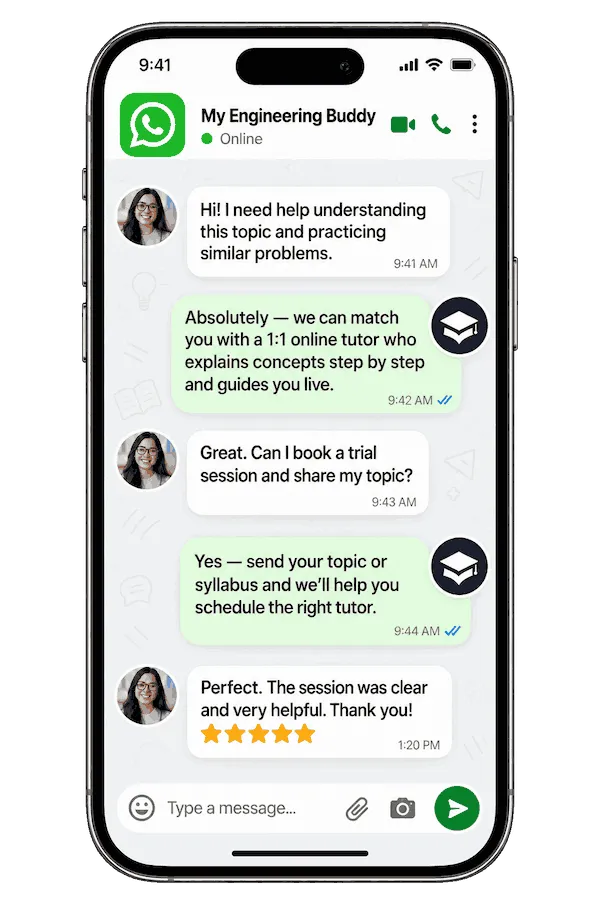
WhatsApp MEB for a quick quote — average response time under 1 minute.
Who This MRCP(UK) Tutoring Is For
MRCP(UK) covers a wide range of clinical medicine at a postgraduate level. Whether you’re sitting Part 1 for the first time or returning after an unsuccessful attempt, 1:1 support targets the exact areas holding you back. Most candidates come to MEB with a clear deadline and a specific component to address.
- Doctors retaking after a failed Part 1 or Part 2 Written attempt
- IMGs preparing for MRCP(UK) while working full-time clinical jobs
- Candidates 4–6 weeks from a sitting with significant topic gaps still to close
- Foundation doctors preparing early to secure specialist training pathways
- Candidates struggling with clinical data interpretation or the PACES communication stations
- Students who passed Part 1 but find Part 2’s clinical complexity a different challenge entirely
Candidates preparing for MRCP(UK) have gone on to specialty training programmes at NHS Trusts and teaching hospitals across the UK, including University College London Hospitals, Manchester Royal Infirmary, and the Royal Infirmary of Edinburgh.
1:1 Tutoring vs Self-Study vs AI vs YouTube vs Online Courses
Self-study works if your discipline is exceptional — but most MRCP(UK) candidates can’t identify which BOF distractors they consistently fall for without external input. AI tools explain clinical concepts quickly but can’t watch you reason through a scenario live and catch the moment you go wrong. YouTube covers pathophysiology well; it stops the second you need to interrogate a specific EMQ type. Online question banks give you volume but no coached feedback on why your reasoning is off. A 1:1 online MRCP(UK) tutor from MEB works through real past-paper questions with you, identifies your distractor patterns, and recalibrates your approach in real time — which is exactly what Part 1 and Part 2 require.
Outcomes: What You’ll Be Able To Do in MRCP(UK)
After a structured block of 1:1 MRCP(UK) tutoring, you’ll be able to apply clinical reasoning systematically to Best of Five questions without second-guessing your logic. You’ll analyze data interpretation scenarios — blood gases, ECGs, haematology profiles — without freezing on the numbers. You’ll explain the underlying mechanism behind common MRCP(UK) distractors rather than simply memorizing answers. You’ll present clinical findings confidently in PACES Station 5 and handle the communication stations without dropping marks on clarity or structure. Progress depends on your starting level and available study hours — but the direction is set from session one.
Based on feedback from 40,000+ sessions collected by MEB from 2022 to 2025, 58% of students improved by one full grade after approximately 20 hours of 1:1 tutoring in subjects like MRCP(UK). A further 23% achieved at least a half-grade improvement.
Source: MEB session feedback data, 2022–2025.
Try your first session for $1 — 30 minutes of live 1:1 tutoring or one homework question explained in full. No registration. No commitment. WhatsApp MEB now and get matched within the hour.
What We Cover in MRCP(UK) (Syllabus / Topics)
MRCP(UK) spans 19 clinical specialties across three components. Tutoring is mapped to whichever part you’re sitting — Part 1, Part 2 Written, or PACES — and focused on the tracks where your performance data shows the most room to gain marks. The Royal Colleges of Physicians publish the syllabus and sitting schedules officially.
Part 1: Core Clinical Knowledge (Best of Five)
- Cardiology — ECG interpretation, heart failure management, arrhythmia differentials
- Respiratory medicine — ABG analysis, obstructive vs restrictive patterns, pleural disease
- Gastroenterology and hepatology — liver function derangements, IBD, upper GI bleeds
- Nephrology — AKI vs CKD classification, electrolyte disorders, renal replacement thresholds
- Endocrinology — diabetes complications, thyroid emergencies, adrenal pathology
- Neurology — stroke syndromes, demyelination, cranial nerve palsies
- Haematology — anaemia workup, coagulation cascades, haematological malignancies
Key references: Kumar and Clark’s Clinical Medicine (10th ed.), Oxford Handbook of Clinical Medicine (10th ed.), Passmedicine and OnExamination question banks.
Part 2 Written: Advanced Clinical Reasoning (BOF + EMQ)
- Clinical data interpretation — LFTs, FBC, clotting screens, paired blood gas scenarios
- Dermatology, rheumatology, and immunology — rash-to-diagnosis reasoning, autoantibody patterns
- Oncology and palliative care — staging, symptom management, treatment decision frameworks
- Psychiatry in general medicine — capacity assessment, delirium vs dementia differentiation
- Evidence-based medicine — NNT, sensitivity/specificity, study design critique
Key references: Essential Revision Notes for MRCP (Kalra), mrcp.co.uk, Medipass MRCP question bank.
PACES: Clinical and Communication Skills
- Station 1 — Respiratory and abdominal examination: structured presentation, differential construction
- Station 2 — History taking: patient-centred approach, ICE framework, safety-netting
- Station 3 — Cardiovascular and neurological examination: clinical sign identification, murmur characterization
- Station 4 — Communication skills: breaking bad news, consent, conflict scenarios, MDT framing
- Station 5 — Integrated clinical assessment: brief clinical encounter, focused examination, management plan
Key references: PACES for the MRCP with 250 Clinical Cases (Ryder), MRCP PACES: A Comprehensive Guide (Mehta), RCP PACES Mark Sheets.

What a Typical MRCP(UK) Session Looks Like
The tutor opens by reviewing the last session’s topic — say, AKI staging and when to escalate to nephrology referral. They pull up two or three Part 1 BOF questions from that topic and ask you to walk through your reasoning out loud before committing to an answer. The tutor uses a digital pen-pad to annotate the question stem, marking the clinical cues you identified and the ones you missed. You rework the question with those cues visible. For Part 2 or PACES candidates, the session shifts to scenario work — a data interpretation set or a mock Station 4 communication exercise. The session closes with a specific practice task: three targeted BOF questions on the next topic, or a written brief-encounter plan for the following PACES station.
How MEB Tutors Help You with MRCP(UK) (The Learning Loop)
Diagnose: In the first session, the tutor runs a short diagnostic — usually 8–10 BOF questions drawn from your weakest specialty clusters. This identifies whether your problem is knowledge gaps, clinical reasoning errors, or distractor management.
Explain: The tutor works through the correct reasoning live — not just the right answer, but why each distractor fails and what clinical sign or mechanism rules it out. The digital pen-pad keeps the explanation visual and traceable.
Practice: You attempt similar questions with the tutor present. No looking away. The tutor watches your reasoning process, not just your final answer choice.
At MEB, we’ve found that MRCP(UK) candidates who struggle on resits aren’t usually weak on knowledge — they’re losing marks on reasoning under pressure. The diagnostic session makes that visible within the first 30 minutes, and the correction is faster than most candidates expect.
Feedback: Every wrong answer gets a step-by-step breakdown: where the reasoning diverged, which clinical feature was missed, and what the question was actually testing. Patterns across multiple questions get named and addressed as a strategy problem.
Plan: Each session ends with the next topic queued, a short independent task set, and a note of any recurring error pattern to revisit. The tutor tracks progress across sessions and adjusts the plan when a topic is secure.
Sessions run over Google Meet. The tutor uses a digital pen-pad or iPad with Apple Pencil for live annotation. Before your first session, share your target sitting date, which component you’re preparing for, and a recent practice paper result if you have one. The first session covers diagnostic work and session-one content in the same hour. Start with the $1 trial — 30 minutes of live tutoring that also serves as your first diagnostic.
Tutor Match Criteria (How We Pick Your Tutor)
Every MRCP(UK) match is specific. MEB does not send a general science tutor for a postgraduate medical exam.
Subject depth: Tutors are matched to your specific component — Part 1, Part 2 Written, or PACES — and to your weakest specialty clusters identified in the diagnostic.
Tools: All tutors use Google Meet with digital pen-pad or iPad and Apple Pencil. No session runs without live annotation capability.
Time zone: Matched to your region — UK sittings, Gulf-based candidates, and Australian IMGs all get viable session windows without unreasonable hours.
Goals: Whether you need a fast gap-close before a sitting in six weeks or ongoing weekly support through a longer prep cycle, the tutor match reflects that timeline.
Unlike platforms where you fill out a form and wait, MEB responds in under a minute, 24/7. Tutor match takes under an hour. The $1 trial means you test before you commit. Everything runs over WhatsApp — no logins, no intake forms.
MEB has matched candidates preparing for postgraduate medical exams — MRCP(UK), USMLE Step 1, and USMLE Step 2 CK — with verified specialist tutors since 2008. Response time: under one minute.
Source: My Engineering Buddy, 2008–2025.
Study Plans (Pick One That Matches Your Goal)
The tutor builds the exact session sequence after your diagnostic, but most MRCP(UK) candidates fall into one of three preparation cycles. Catch-up (1–3 weeks): for candidates close to a sitting with 3–4 specific specialty gaps to close fast. Exam prep (4–8 weeks): structured revision across all high-yield specialties with timed BOF practice built in from week three. Weekly support: ongoing sessions aligned to your working schedule, covering one specialty cluster per week with cumulative review every fourth session. The tutor adjusts the pace after session two once your distractor patterns are clear.
Pricing Guide
MRCP(UK) tutoring starts at $20/hr for Part 1 core topic review. Part 2 Written and PACES coaching — which require specialist clinical depth and scenario facilitation — typically run $35–$100/hr depending on tutor experience and the complexity of the component. Rate factors include: exam component, specialty depth required, proximity to your sitting date, and tutor availability.
Availability tightens significantly in the 3–4 weeks before each MRCP(UK) sitting window. Book early if your date is set.
For candidates targeting competitive specialty training programmes — cardiology, neurology, gastroenterology — tutors with active clinical backgrounds in those specialties are available at higher rates. Share your target specialty and sitting date, and MEB will match the tier to your goal.
Start with the $1 trial — 30 minutes, no registration, no commitment. WhatsApp MEB for a quick quote.
FAQ
Is MRCP(UK) hard?
Yes. Pass rates for Part 1 hover around 40–50% per sitting. Part 2 Written is similarly demanding. PACES failure often comes from communication station marking rather than clinical knowledge. Consistent 1:1 preparation changes those odds materially.
How many sessions are needed?
Most candidates see meaningful progress in 8–12 sessions of focused 1:1 work. Candidates with significant knowledge gaps or retaking after a fail often benefit from 15–20 sessions spread across 6–8 weeks, depending on their starting position and study availability.
Can you help with homework and assignments?
MEB tutoring is guided learning — you understand the work, then submit it yourself. See our Academic Integrity policy and Why MEB page for full details on what we help with and what we don’t.
Will the tutor match my exact syllabus or exam board?
Yes. MRCP(UK) is administered by the Federation of Royal Colleges of Physicians. Tutors are matched to your specific component — Part 1, Part 2 Written, or PACES — and to your target sitting date and specialty weakness profile.
What happens in the first session?
The tutor runs a short diagnostic — typically 8–10 BOF questions across your weakest specialties. This maps your knowledge gaps and reasoning errors. The session plan for subsequent sessions is built from that data, not from a generic MRCP(UK) curriculum template.
Is online tutoring as effective as in-person for MRCP(UK)?
For MRCP(UK) written components, online is equally effective — live annotation on Google Meet replicates whiteboard explanation. For PACES, online coaching covers examination technique, structured presentation, and communication station rehearsal with strong results reported by MEB candidates.
Can I get MRCP(UK) help at midnight or on weekends?
Yes. MEB operates 24/7 across time zones. UK, Gulf, and Australian candidates regularly schedule sessions outside standard working hours. WhatsApp response time is under one minute regardless of when you message.
What if I don’t connect well with my assigned tutor?
Request a change via WhatsApp. MEB rematch requests are handled within hours, not days. The $1 trial exists precisely so you can test the fit before committing to a longer block of sessions.
What is the difference between MRCP(UK) Part 1 and Part 2 Written?
Part 1 tests core clinical knowledge across 19 specialties using Best of Five questions. Part 2 Written adds Extended Matching Questions and places greater weight on clinical reasoning, data interpretation, and applied decision-making in complex multi-system scenarios.
How do I prepare for MRCP(UK) PACES specifically?
PACES requires a different preparation strategy from the written papers. Tutors focus on structured examination technique for each station, rehearsed presentation formats for findings, and live communication station practice — including breaking bad news and consent scenarios that mark candidates down on language and structure rather than clinical accuracy.
How do I get started?
Start with the $1 trial — 30 minutes of live MRCP(UK) tutoring or one question fully explained. Three steps: WhatsApp MEB, get matched to a specialist tutor within the hour, begin your trial session at a time that suits your schedule.
Trust & Quality at My Engineering Buddy
Every MEB tutor goes through a subject-specific screening process: credential review, a live demo evaluation, and ongoing session feedback monitoring. MRCP(UK) tutors are assessed on their postgraduate medical knowledge, familiarity with the BOF question format, and ability to coach PACES communication stations — not just their clinical background. Rated 4.8/5 across 40,000+ verified reviews on Google.
MEB tutoring is guided learning — you understand the work, then submit it yourself. For full details on what we help with and what we don’t, read our Academic Integrity policy and Why MEB.
MEB has served 52,000+ students across the US, UK, Canada, Australia, Gulf, and Europe since 2008 — across 2,800+ subjects including test preparation, postgraduate medical licensing, and clinical certification exams. On this platform you’ll find support for USMLE tutoring, MCAT tutoring, and GAMSAT preparation alongside MRCP(UK). Read more about how sessions are structured at MEB’s tutoring methodology page.
Students consistently tell us that the first diagnostic session is the most useful hour they’ve spent in their MRCP(UK) prep — not because it’s comprehensive, but because it shows them exactly where their time has been going wrong. That specificity is what changes the preparation from that point on.
Explore Related Subjects
Students studying MRCP(UK) often also need support in:
MEB has supported postgraduate medical candidates — across NREMT, NCLEX-RN, and clinical licensing exams — since 2008. Expert match in under an hour.
Source: My Engineering Buddy, 2008–2025.
Next Steps
Before your first session, have ready: your target component (Part 1, Part 2 Written, or PACES), your sitting date or target window, and a recent practice paper result or a list of the specialties where you’re losing the most marks. The tutor handles the rest.
- Share your sitting date, target component, and current weak spots
- Share your time zone and available session windows
- MEB matches you with a verified MRCP(UK) tutor — usually within the hour
First session starts with a diagnostic so every minute of prep time is used well. Visit www.myengineeringbuddy.com for more on how MEB works.
WhatsApp to get started or email [email protected].
Reviewed by Subject Expert
This page has been carefully reviewed and validated by our subject expert to ensure accuracy and relevance.