




~1 min
Average Reply Time
~1 hour
To Be Matched With A Tutor
30 Min Trial
75% Find Their Tutor On The 1st Trial
$20-35+/hr
Premium Yet Affordable Learning
Most students who struggle with Police Science don’t lack effort. They lack someone who can explain why the Fourth Amendment exclusionary rule applies in one case and doesn’t in another — and then walk them through it live.
Police Science Tutor Online
Police Science is an academic discipline covering law enforcement principles, criminal procedure, constitutional policing, criminology, and public safety administration, equipping students to analyze policing systems, legal frameworks, and crime control policy.
MEB offers 1:1 online tutoring and homework help in 2800+ advanced subjects — including Law and Police Science. Whether you’re working through criminal procedure doctrine, use-of-force frameworks, or criminological theory for a graded assignment, finding a reliable Police Science tutor near me online means you can get expert help on your schedule, in your time zone, without leaving your desk. MEB tutors have worked with students across the US, UK, Canada, Australia, and the Gulf on exactly these topics.
- 1:1 online sessions tailored to your course outline and syllabus
- Expert-verified tutors with subject-specific knowledge in policing law and criminology
- Flexible time zones — US, UK, Canada, Australia, Gulf
- Structured learning plan built after a diagnostic session
- Ethical homework and assignment guidance — you understand the work before you submit it
52,000+ students across the US, UK, Canada, Australia, and the Gulf have used MEB since 2008 — including students in Law subjects like Police Science, Criminal Law, and Criminal Procedure.
Source: My Engineering Buddy, 2008–2025.
How Much Does a Police Science Tutor Cost?
Most Police Science tutoring sessions run $20–$40/hr. Graduate-level or specialist topics — federal law enforcement law, advanced criminological theory — can reach up to $100/hr. Not sure if it’s worth it? Start with the $1 trial: 30 minutes of live 1:1 tutoring or one homework question fully explained.
| Level / Need | Typical Rate | What’s Included |
|---|---|---|
| Standard (most undergrad levels) | $20–$35/hr | 1:1 sessions, homework guidance |
| Advanced / Specialist | $35–$100/hr | Expert tutor, niche depth |
| $1 Trial | $1 flat | 30 min live session or 1 homework question |
Availability tightens during finals and end-of-semester submission windows. Book early if your deadline is within three weeks.
WhatsApp MEB for a quick quote — average response time under 1 minute.
Who This Police Science Tutoring Is For
Police Science sits at the intersection of law, criminology, and public policy. Students often hit a wall when abstract doctrine meets applied scenarios — and standard lecture notes don’t bridge that gap.
- Undergraduates in criminal justice, policing, or public safety administration programmes
- Students retaking after a failed first attempt in a Police Science or law enforcement module
- Students 4–6 weeks from a final exam with significant gaps in criminal procedure or constitutional policing still to close
- Graduate students writing dissertations on policing reform, use-of-force law, or criminological theory
- Students with a coursework or essay submission deadline approaching who need fast, focused help
- Parents watching a child’s confidence drop alongside their grades in a Police Science course
Students supported by MEB have come from programmes at institutions including John Jay College of Criminal Justice, Arizona State University, the University of Leicester, Charles Sturt University, and Carleton University — among many others.
At MEB, we’ve found that Police Science students often understand the law in isolation but collapse under scenario-based questions. The tutor’s job in session one is to find exactly where the reasoning breaks down — then rebuild it from that point.
1:1 Tutoring vs Self-Study vs AI vs YouTube vs Online Courses
Self-study works if you’re disciplined, but reading case law alone gives you no feedback on whether your analysis is correct. AI tools explain doctrine quickly but can’t challenge your reasoning in real time or catch the specific error in your essay structure. YouTube covers policing theory at a surface level and stops when the question gets specific. Online courses move at a fixed pace with no adjustment for what you already know. With a 1:1 Police Science tutor from MEB, sessions are live, calibrated to your exact module, and focused on correcting the gaps that cost you marks — whether that’s Fourth Amendment application, criminological frameworks, or use-of-force policy analysis.
Outcomes: What You’ll Be Able To Do in Police Science
After working with an online Police Science tutor through MEB, you’ll be able to apply Fourth Amendment doctrine to realistic stop-and-search scenarios with precision. You’ll analyze use-of-force incidents using the Graham v. Connor standard and explain where legal thresholds are crossed. You’ll write structured criminological arguments that connect theory — strain, social learning, rational choice — to contemporary policing case studies. You’ll present police accountability frameworks clearly in essays and exams, and solve procedural questions on arrest, search, and seizure without second-guessing your reasoning.
Based on feedback from 40,000+ sessions collected by MEB from 2022 to 2025, 58% of students improved by one full grade after approximately 20 hours of 1:1 tutoring in subjects like Police Science. A further 23% achieved at least a half-grade improvement.
Source: MEB session feedback data, 2022–2025.
Supporting a student through Police Science? MEB works directly with parents to set up sessions, track progress, and keep coursework on schedule. WhatsApp MEB — average response time is under a minute, 24/7.

What We Cover in Police Science (Syllabus / Topics)
Constitutional and Legal Frameworks in Policing
- Fourth Amendment — search, seizure, and the exclusionary rule
- Fifth and Sixth Amendment rights in police interrogation contexts
- Miranda doctrine: application, waiver, and exceptions
- Use-of-force law: Graham v. Connor, Tennessee v. Garner, and proportionality standards
- Qualified immunity: doctrine, current debates, and reform proposals
- Arrest law, warrant requirements, and exigent circumstances
- Constitutional law tutoring is available separately for students who need deeper coverage of the Bill of Rights in non-policing contexts
Core texts for this track include Klotter’s Criminal Law, del Carmen’s Criminal Procedure: Law and Practice, and relevant US Supreme Court case reporters.
Criminological Theory and Crime Analysis
- Classical and neoclassical criminology — Beccaria, Bentham, rational choice
- Strain theory: Merton, Agnew’s general strain, and institutional anomie
- Social learning and differential association — Sutherland, Akers
- Control theories: Hirschi’s social bond and self-control theory
- Labelling theory and its policing implications
- Hot spots policing, predictive policing, and crime mapping
- Students who also study criminal law help often cover criminological theory alongside substantive offences
Key texts include Lilly, Cullen & Ball’s Criminological Theory: Context and Consequences and Siegel’s Criminology: The Core.
Policing Systems, Ethics, and Public Policy
- History and development of modern police organisations in the US and UK
- Community policing models: broken windows, problem-oriented policing (POP)
- Police discretion, bias, and racial profiling — evidence and policy
- Internal accountability: early intervention systems, disciplinary processes
- Civilian oversight bodies and external accountability mechanisms
- Police reform policy: defund debates, consent decrees, body-worn cameras
- Students working on law enforcement tutoring often pair this track with procedural law modules
Recommended reading includes Walker & Katz’s The Police in America and Bayley’s Police for the Future.
Students consistently tell us that the hardest part of Police Science isn’t memorising doctrine — it’s applying it correctly under exam conditions. That’s exactly what session practice targets: scenario questions, timed responses, and tutor feedback on where the reasoning went wrong.
What a Typical Police Science Session Looks Like
The tutor opens by checking the previous session’s practice task — usually a scenario question on search and seizure or a short criminological argument. From there, student and tutor work through the current topic together on screen: if it’s use-of-force law, the tutor annotates the Graham v. Connor balancing test live using a digital pen-pad while the student explains their reasoning aloud. The student then attempts a parallel scenario independently, with the tutor stepping in only when the analysis drifts. The session closes with a concrete task — a practice question on qualified immunity or a brief outline of a criminological argument — and the next topic is noted so both sides arrive prepared.
How MEB Tutors Help You with Police Science (The Learning Loop)
Diagnose: In the first session, the tutor identifies exactly where understanding breaks down — whether that’s constitutional doctrine, theory application, essay structure, or procedural sequencing. No assumptions. The diagnostic is live and specific to your course material.
Explain: The tutor works through problems in real time using a digital pen-pad on Google Meet — annotating case law, mapping doctrine, and walking through scenario questions step by step. Not a lecture. A live conversation.
Practice: You attempt a similar question while the tutor watches. The point is to catch errors before the exam does.
Feedback: The tutor explains each error at the reasoning level — not just “that’s wrong” but why the Fourth Amendment analysis failed and what the correct sequencing looks like. That’s where the marks actually come from.
Plan: At the end of each session, the tutor sets the next topic and a specific practice task. Progress is tracked across sessions so revision doesn’t circle back to already-mastered material.
Sessions run on Google Meet with a digital pen-pad or iPad and Apple Pencil. Before the first session, share your course syllabus or module outline, a recent assignment or past paper you struggled with, and your exam or submission date. The tutor uses that to structure the diagnostic and the session plan that follows. Start with the $1 trial — 30 minutes of live tutoring that also serves as your first diagnostic.
Tutor Match Criteria (How We Pick Your Tutor)
Not every tutor who knows criminal law can teach Police Science effectively. MEB matches on four criteria.
Subject depth: Tutors are matched to your specific module level — undergraduate survey course, upper-division law enforcement law, or graduate criminology — and to your institution’s syllabus where possible.
Tools: Every tutor uses Google Meet with a digital pen-pad or iPad and Apple Pencil. No exceptions. This is how live annotation of case law and scenario questions works.
Time zone: Matched to your region. US students get tutors available during US hours. Same for UK, Gulf, Canada, and Australia.
Goals: Whether you need exam score improvement, help with a specific essay, conceptual depth in criminological theory, or ongoing support through a semester, the tutor is selected with that goal in mind.
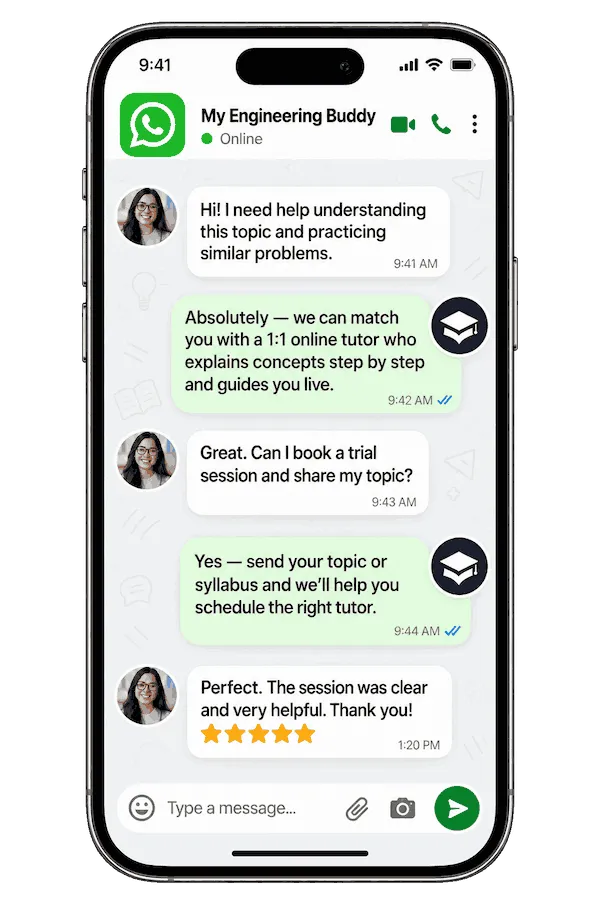
Unlike platforms where you fill out a form and wait, MEB responds in under a minute, 24/7. Tutor match takes under an hour. The $1 trial means you test before you commit. Everything runs over WhatsApp — no logins, no intake forms.
Study Plans (Pick One That Matches Your Goal)
The tutor builds a specific sequence after the diagnostic, but most Police Science students fall into one of three tracks. Catch-up (1–3 weeks): rapid coverage of the topics with the largest gaps — typically constitutional doctrine or criminological theory — with daily or every-other-day sessions. Exam prep (4–8 weeks): structured revision tied to your exam date, covering all assessable topics with past-paper practice built in. Weekly support: ongoing sessions aligned to your semester schedule, covering new material as it appears on the course. The tutor adjusts across all three based on your diagnostic results and how quickly topics are consolidating.
Pricing Guide
Police Science tutoring starts at $20/hr for standard undergraduate modules. Upper-division and graduate-level topics — policing law, advanced criminological theory, dissertation support — typically run $35–$70/hr. Highly specialised needs, such as federal law enforcement policy or research-level analysis, can reach up to $100/hr. Rate factors include topic complexity, academic level, timeline, and tutor availability.
Availability tightens during finals and end-of-term submission windows. If your exam or deadline is within four weeks, book early.
For students targeting programmes at competitive institutions or professional roles in law enforcement policy, tutors with relevant professional or research backgrounds are available at higher rates — share your goal and MEB will match the tier accordingly.
Start with the $1 trial — 30 minutes, no registration, no commitment. WhatsApp MEB for a quick quote.
MEB has supported students in Law, Criminal Justice, and Public Policy since 2008 — across subjects including Criminal Procedure, Administrative Law, and Police Science specifically.
Source: My Engineering Buddy, 2008–2025.
FAQ
Is Police Science hard?
It depends on which part. Constitutional doctrine and case law application catch most students off guard — the rules seem clear until a scenario question reveals the gaps. Criminological theory is more manageable but requires structured argumentation skills many students haven’t built yet.
How many sessions are needed?
Most students see clear improvement in 6–10 sessions. Students with significant gaps — particularly in Fourth Amendment application or criminological theory — typically need 15–20 hours to reach consistent exam performance. The tutor assesses this in the first diagnostic session.
Can you help with homework and assignments?
Yes. MEB tutoring is guided learning — you understand the work, then submit it yourself. This applies to essays, case analyses, scenario questions, and research assignments. See our Academic Integrity policy and Why MEB page for full details on what we help with and what we don’t.
Will the tutor match my exact syllabus or exam board?
Yes, as closely as possible. Share your course outline, institution, and module name when you contact MEB. Tutors are matched to your specific syllabus — US criminal justice programmes, UK criminology degrees, and Australian policing courses have meaningfully different content.
What happens in the first session?
The first session is a diagnostic. The tutor identifies which topics are solid and which need work, then builds the session plan from that point. Bring a recent assignment, past paper, or a specific topic you’re stuck on. Nothing is assumed.
Is online tutoring as effective as in-person?
For Police Science, yes — and in some ways better. The digital pen-pad allows real-time annotation of case law and scenario questions. Sessions are recorded on request. Students in different time zones access the same tutor quality without geographic restriction.
Can I get Police Science help at short notice — even the night before an exam?
MEB operates 24/7. If a tutor is available, you can start the same night. WhatsApp MEB and you’ll know within a minute whether a session is possible. Same-night bookings happen regularly, especially during exam periods.
What if my Police Science course covers both US and UK policing systems?
MEB has tutors familiar with both. Comparative policing is a distinct sub-field — covering different accountability models, constitutional frameworks, and organisational structures. Tell MEB which systems your syllabus covers and the tutor will be matched accordingly.
Does MEB cover police ethics and use-of-force policy specifically?
Yes. Use-of-force law — including Graham v. Connor, Tennessee v. Garner, and proportionality doctrine — is one of the most frequently requested topics. Police ethics, discretion, and bias are also covered. These topics come up in both law school contexts and criminal justice degree programmes.
Do you offer group Police Science sessions?
No. All MEB sessions are 1:1. Group sessions dilute the diagnostic precision that makes the sessions effective — every student’s gaps in Police Science are different, and the tutor needs to work at your pace, not the group’s.
How do I get started?
Three steps. WhatsApp MEB with your subject, level, and exam or deadline date. MEB matches you with a verified tutor — usually within an hour. Your first session starts as the $1 trial: 30 minutes of live tutoring or one question fully explained.
A common pattern our tutors observe is that Police Science students arrive knowing what the law says but not how to reason through its application. The gap between doctrine and scenario is exactly what 1:1 sessions are designed to close.
Trust & Quality at My Engineering Buddy
Every MEB tutor goes through a subject-specific screening process — degree verification, live demo session evaluation, and ongoing review of student feedback after every session. Tutors covering Police Science hold relevant degrees in law, criminal justice, criminology, or public policy, with teaching experience across the topics students actually struggle with. Rated 4.8/5 across 40,000+ verified reviews on Google.
MEB tutoring is guided learning — you understand the work, then submit it yourself. For full details on what we help with and what we don’t, read our Academic Integrity policy and Why MEB.
MEB has served 52,000+ students since 2008 across the US, UK, Canada, Australia, the Gulf, and Europe — across 2,800+ subjects including Law, Police Science, and adjacent areas like human rights law tutoring and constitutional law tutoring. The MEB tutoring methodology is built around the diagnostic-to-mastery loop — not one-size-fits-all lesson plans.
Police Science students working with MEB tutors regularly report that structured 1:1 sessions — particularly on constitutional doctrine and scenario-based exam questions — produce faster progress than any alternative they tried first.
Source: My Engineering Buddy student feedback, 2008–2025.
Try your first session for $1 — 30 minutes of live 1:1 tutoring or one homework question explained in full. No registration. No commitment. WhatsApp MEB now and get matched within the hour.
Explore Related Subjects
Students studying Police Science often also need support in:
Next Steps
Getting started takes under two minutes. Have these ready when you contact MEB:
- Your exam board, institution, and course outline (or module name)
- A recent past paper attempt, essay, or homework question you struggled with
- Your exam or deadline date, and your available time zones
MEB matches you with a verified Police Science tutor — usually within 24 hours. The first session starts with a diagnostic so every minute is used well.
Visit www.myengineeringbuddy.com for more on how MEB works.
WhatsApp to get started or email [email protected].
Reviewed by Subject Expert
This page has been carefully reviewed and validated by our subject expert to ensure accuracy and relevance.




