




~1 min
Average Reply Time
~1 hour
To Be Matched With A Tutor
1 Trial
75% Find Their Tutor On The 1st Trial
$1
Your First 30 Minutes
Hire The Best Python Tutor





Related Subjects
Most Python students don’t fail because the language is hard. They fail because nobody caught the logic error in week two — and it compounded into every assignment after that.
Python Tutor Online
Python is a high-level, general-purpose programming language known for readable syntax and broad application across data science, machine learning, web development, and automation. It is taught in undergraduate and graduate computer science programmes worldwide and assessed through coursework and project-based evaluation.
If you’ve searched for a Python tutor near me, you already know what self-directed learning can’t fix: the gap between reading code and actually writing it under pressure. MEB connects students with 1:1 online computer programming tutoring specialists who know your course, your errors, and exactly where to push. Every session is live, structured, and built around what you’re stuck on right now — not a pre-recorded playlist.
- 1:1 online sessions tailored to your specific course, module, or project brief
- Expert-verified tutors with Python-specific knowledge at undergraduate through graduate level
- Flexible time zones — US, UK, Canada, Australia, Gulf
- Structured learning plan built after a diagnostic session
- Ethical homework and assignment guidance — you understand the code before you submit it
52,000+ students across the US, UK, Canada, Australia, and the Gulf have used MEB since 2008 — including students in Computer Programming subjects like Python, Java, and C++.
Source: My Engineering Buddy, 2008–2025.
How Much Does a Python Tutor Cost?
Most Python tutoring sessions at MEB run $20–$40/hr, covering undergraduate coursework, data science modules, and scripting fundamentals. Graduate-level or highly specialised machine learning topics can reach up to $100/hr. Not sure if it’s right for you? Start with the $1 trial first.
| Level / Need | Typical Rate | What’s Included |
|---|---|---|
| Standard (most levels) | $20–$35/hr | 1:1 sessions, homework guidance, code review |
| Advanced / Specialist | $35–$100/hr | Expert tutor, ML/AI depth, research support |
| $1 Trial | $1 flat | 30 min live session or one full question explained |
Tutor availability tightens around semester submission windows, particularly in November and April. WhatsApp MEB for a quick quote — average response time under 1 minute.
Who This Python Tutoring Is For
Python sits inside dozens of degree programmes under different course names — Intro to Programming, Data Structures, Computational Methods, Applied Machine Learning. The struggles are surprisingly consistent regardless of where you’re enrolled.
- Undergraduate CS or data science students hitting object-oriented programming for the first time
- Students resubmitting a failed assignment or retaking a module after a rough first attempt
- Students with a university conditional offer that depends on passing this unit
- Graduate students using Python for dissertation data analysis or research pipelines in NumPy, pandas, or scikit-learn
- Parents watching a child’s confidence fall alongside their coursework grades
- Students at universities including MIT, University of Toronto, University of Melbourne, Imperial College London, TU Delft, McGill, and NYU — or anywhere Python is part of the core curriculum
If you’re four weeks from a submission deadline with gaps still open, that’s exactly when 1:1 Python tutoring online makes the biggest difference. Try the $1 trial to see how quickly a session can move things.
1:1 Tutoring vs Self-Study vs AI vs YouTube vs Online Courses
Self-study works if you’re disciplined and the problem is conceptual — but it has no feedback loop when your logic is wrong from line one. AI tools like ChatGPT generate code fast, but can’t diagnose why you keep making the same scoping error. YouTube covers syntax well and falls apart the moment you’re stuck on a project-specific bug. Online courses like those on Coursera give structure but move at a fixed pace with no personalisation. 1:1 tutoring with MEB is live, calibrated to your exact module and assignment brief, and catches errors before they become submission problems — which matters especially in Python, where a misunderstood loop structure in week three shows up in every lab after it.
Outcomes: What You’ll Be Able To Do in Python
After working with an MEB Python tutor online, students consistently solve multi-file projects using functions, classes, and modules without needing to look up basic syntax. They apply data manipulation logic using pandas and NumPy to clean, filter, and summarise real datasets. Students explain their own code clearly during vivas or code-review sessions — a skill that separates passing grades from strong ones. They write and debug exception-handling routines in Flask or Django projects, and present working visualisations using Matplotlib or Seaborn backed by actual analysis. These aren’t generic outcomes. They map directly to what examiners and project supervisors ask for.
Supporting a student through Python? MEB works directly with parents to set up sessions, track progress, and keep coursework on schedule. WhatsApp MEB — average response time is under a minute, 24/7.
Based on feedback from 40,000+ sessions collected by MEB from 2022 to 2025, 58% of students improved by one full grade after approximately 20 hours of 1:1 tutoring in subjects like Python. A further 23% achieved at least a half-grade improvement.
Source: MEB session feedback data, 2022–2025.
What We Cover in Python (Syllabus / Topics)

Core Python & Programming Fundamentals
- Variables, data types, operators, and control flow (if/else, loops)
- Functions, scope, recursion, and lambda expressions
- Object-oriented programming — classes, inheritance, encapsulation, polymorphism
- File I/O, exception handling, and error debugging
- Modules, packages, and virtual environments (pip, venv)
- List comprehensions, generators, and iterators
- Common data structures — lists, tuples, dictionaries, sets
Recommended texts: Python Crash Course by Eric Matthes; Learning Python by Mark Lutz; Fluent Python by Luciano Ramalho.
Data Science & Machine Learning with Python
- NumPy arrays, broadcasting, and vectorised operations
- pandas DataFrames — cleaning, merging, groupby, and time series
- Data visualisation with Matplotlib and Seaborn
- Scikit-learn — regression, classification, clustering, and model evaluation
- Feature engineering and train/test splits
- Introduction to TensorFlow and PyTorch for deep learning
- Jupyter Notebook workflow and reproducible analysis
Recommended texts: Python for Data Analysis by Wes McKinney; Hands-On Machine Learning with Scikit-Learn, Keras & TensorFlow by Aurélien Géron; Python Data Science Handbook by Jake VanderPlas.
Web Development & Automation with Python
- Flask fundamentals — routes, templates, forms, and REST APIs
- Django models, views, templates, and the ORM
- Web scraping with BeautifulSoup and requests
- Selenium for browser automation and testing
- Working with APIs — JSON parsing, authentication, rate limiting
- Scripting and task automation with os, shutil, and subprocess
Recommended texts: Flask Web Development by Miguel Grinberg; Django for Beginners by William S. Vincent; Automate the Boring Stuff with Python by Al Sweigart.
Platforms, Tools & Textbooks We Support
Python tutoring at MEB covers the full development environment, not just syntax. Tutors work across VS Code, PyCharm, Jupyter Notebook, Google Colab, Anaconda, GitHub, Replit, and university-specific environments including Gradescope and Moodle-submitted labs. Whether your assignment runs locally or in the cloud, the tutor meets you in the environment your course actually uses.
What a Typical Python Session Looks Like
The tutor opens by checking the previous topic — say, dictionary comprehensions or class inheritance — with two quick questions to confirm what’s solid and what isn’t. Then the real work starts: the student shares their screen, the tutor pulls up the assignment brief or a relevant problem set, and they work through it together. The tutor uses a digital pen-pad to annotate logic flow and trace variable states visually. When the student gets stuck on a recursion base case or a pandas merge conflict, the tutor doesn’t just fix it — they ask the student to explain the logic first, then redirect. The session closes with a specific practice task and the next topic flagged. Students leave knowing what to do before the next session, not just what went wrong in this one. Sessions run over Google Meet, making Java tutoring and Python equally accessible regardless of time zone.
At MEB, we’ve found that the students who improve fastest in Python aren’t the ones who practice most — they’re the ones who get corrected earliest. A logic error left unchecked for two weeks becomes a habit. A tutor catches it in the first session.
How MEB Tutors Help You with Python (The Learning Loop)
Diagnose: In the first session, the tutor identifies exactly which concepts are missing — not just “loops are confusing” but whether the issue is iteration logic, scope, or how Python handles mutable default arguments. That distinction changes the entire session plan.
Explain: The tutor works through a live problem using a digital pen-pad or iPad with Apple Pencil, tracing execution step by step. No slides. No passive watching. The student sees the code run line by line with annotations as it goes.
Practice: The student attempts a parallel problem with the tutor present. Not after the session — during it. That’s where real learning happens, because errors surface immediately instead of embedding.
Feedback: The tutor reviews each attempt and explains where marks would be lost, not just where the code fails. In Python assignments, partial credit often hinges on code readability, docstrings, and correct use of built-ins — tutors address all of it.
Plan: Every session ends with a clear next topic and a specific practice task. If the exam or deadline is in four weeks, the tutor maps backward from it. If it’s ongoing module support, the plan updates each week based on what the course covers next.
Sessions run over Google Meet with a shared screen and digital pen-pad. Before the first session, send your course outline or assignment brief and any recent code you’ve struggled with. The tutor uses session one as a diagnostic, so every minute from the start is spent on the right things. Start with the $1 trial — 30 minutes of live tutoring that doubles as your first diagnostic.
Students consistently tell us that the turning point in Python isn’t a concept — it’s the moment they stop reading code and start writing it with someone watching. That shift usually happens in the second or third session, sometimes the first.
Tutor Match Criteria (How We Pick Your Tutor)
Not every strong Python developer makes an effective Python tutor. MEB matches on four factors specifically.
Subject depth: The tutor must have worked with Python at the level you’re studying — introductory CS, data science pipelines, ML research, or web development — not just general programming experience.
Tools: All tutors use Google Meet with a digital pen-pad or iPad + Apple Pencil. No whiteboard apps. No static PDFs. Live annotation on actual code.
Time zone: Matched to your region — US, UK, Gulf, Canada, or Australia — so scheduling doesn’t require a 6am alarm to catch your tutor.
Goals: Whether you need to pass a specific module, build a project portfolio, or close a gap before a viva, the tutor is selected for that goal — not just assigned by availability.
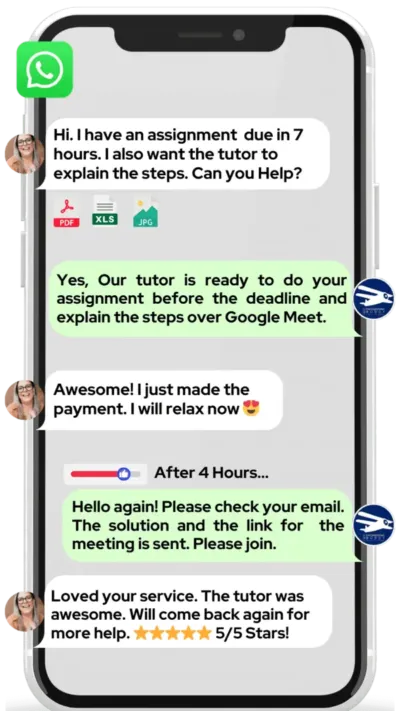
Unlike platforms where you fill out a form and wait, MEB responds in under a minute, 24/7. Tutor match takes under an hour. The $1 trial means you test before you commit. Everything runs over WhatsApp — no logins, no intake forms.
Study Plans (Pick One That Matches Your Goal)
The tutor builds the exact sequence after the first diagnostic, but most Python students fall into one of three patterns. Catch-up (1–3 weeks): you’re behind on a module and have a submission deadline closing in. Exam prep (4–8 weeks): structured revision across the full syllabus with timed practice and code review. Weekly support: ongoing, aligned to semester deadlines and project milestones, with the session plan updating each week as the course progresses.
Pricing Guide
Python tutoring starts at $20/hr for most undergraduate levels and general coursework. Advanced topics — machine learning, deep learning, large-scale data pipelines, or research-level scripting — run $35–$100/hr depending on tutor background and topic complexity. Rate factors include your level, timeline pressure, and tutor availability.
Availability tightens during semester submission peaks in November and April. Book early if you’re working toward a fixed deadline.
For students targeting roles at companies like Google, Meta, or Jane Street — or PhD programmes where Python proficiency is expected at a research level — tutors with professional data engineering or ML research backgrounds are available at higher rates. Share your specific goal and MEB will match the right tier.
Start with the $1 trial — 30 minutes, no registration, no commitment. WhatsApp MEB for a quick quote.
MEB has served 52,000+ students across 2,800+ subjects since 2008, with a 4.8/5 rating across 40,000+ reviews. Python is one of the most consistently requested programming subjects on the platform.
Source: My Engineering Buddy, 2008–2025.
FAQ
Is Python hard to learn?
Python’s syntax is readable compared to C++ or Java, but the difficulty is real: object-oriented design, recursion, and data structures trip up most students. The language is forgiving early and unforgiving later. A tutor catches the gaps before they compound.
How many sessions do students usually need?
Students closing a specific gap — one assignment topic, one failed concept — typically need 3–5 sessions. Those working through a full module or building project confidence over a semester usually run 12–20 sessions. The first diagnostic sets the actual number.
Can you help with homework and assignments?
MEB tutoring is guided learning — you understand the code, then submit it yourself. The tutor explains the logic, walks through the approach, and checks your reasoning. See our Academic Integrity policy and Why MEB page for full details on what we help with and what we don’t.
Will the tutor match my exact syllabus or course module?
Yes. Before the first session, you share your course outline or assignment brief. The tutor reviews it and builds the session around your specific module — not a generic Python curriculum that may not match what your lecturer is actually assessing.
What happens in the first session?
The first session is a diagnostic. The tutor asks targeted questions and reviews a recent piece of code or assignment you’ve struggled with. By the end, you have a clear picture of which gaps to close and in what order — and the tutor has everything needed to build the session plan.
Is online Python tutoring as effective as in-person?
For programming specifically, online is often better. Screen sharing means the tutor sees exactly what you’re running, not a paraphrased description of it. Digital pen-pad annotation on live code is more precise than a physical whiteboard. Most students prefer it after the first session.
Should I learn Python 2 or Python 3?
Python 2 reached end-of-life in 2020 and is no longer supported. All current academic programmes, data science workflows, and professional environments use Python 3. MEB tutors work exclusively in Python 3 — if your course specifies a version, confirm it before the first session.
Can I get Python help at midnight or on weekends?
Yes. MEB operates across time zones and accepts WhatsApp messages 24/7. Tutor matching typically completes within the hour, and session scheduling is built around your availability — not a fixed office-hours window. Late-night submission crunches happen; MEB is set up for them.
What if I don’t like my assigned tutor?
Tell MEB over WhatsApp. The $1 trial exists precisely so you can test the match before committing. If the tutor isn’t right — different communication style, wrong depth, wrong pace — MEB reassigns. No forms, no waiting period.
How do I get started?
Three steps: WhatsApp MEB, get matched with a verified Python tutor within the hour, then run the $1 trial — 30 minutes of live 1:1 tutoring or one full question explained. No registration, no commitment beyond that first dollar.
What’s the difference between learning Python for data science vs web development?
Data science Python centres on NumPy, pandas, scikit-learn, and Jupyter workflows. Web development Python focuses on Flask or Django, REST APIs, and database interaction. The syntax is the same; the libraries, mental models, and project structures differ significantly. MEB matches your tutor to your specific track.
Do you support Python tutoring for machine learning and AI coursework?
Yes. MEB covers TensorFlow, PyTorch, scikit-learn, and research-level ML pipelines. Tutors for graduate ML modules or dissertation-level work are available at specialist rates. Share your course outline or research brief when you WhatsApp MEB and the match will reflect that depth.
Trust & Quality at My Engineering Buddy
Every MEB tutor goes through subject-specific screening — not a generic platform sign-up. Tutors are evaluated on their Python knowledge at the level they’ll teach, complete a live demo session assessment, and are reviewed continuously based on student feedback. Degrees, professional experience, and actual teaching ability all factor into selection. Rated 4.8/5 across 40,000+ verified reviews on Google.
MEB tutoring is guided learning — you understand the work, then submit it yourself. For full details on what we help with and what we don’t, read our Academic Integrity policy and Why MEB.
MEB has been running since 2008, serving 52,000+ students across the US, UK, Canada, Australia, the Gulf, and Europe in 2,800+ subjects. Computer Programming is one of the platform’s most active categories — Python sits alongside subjects like JavaScript tutoring and C++ tutoring as consistently high-demand subjects year-round. See MEB’s tutoring methodology for how sessions are structured and quality is maintained.
A common pattern our tutors observe is students arriving with working code they can’t explain. That’s a problem. In a viva, a code review, or an exam question about your own project, “it worked when I ran it” isn’t enough. MEB sessions fix that gap specifically.
Explore Related Subjects
Students studying Python often also need support in:
Next Steps
Getting started takes less than five minutes.
- Share your course module, assignment brief, or the specific topic you’re stuck on
- Share your availability and time zone
- MEB matches you with a verified Python tutor — usually within the hour
- First session starts with a diagnostic so every minute is spent on the right problem
Before your first session, have ready: your course outline or syllabus, a recent assignment or piece of code you struggled with, and your submission or exam date. The tutor handles the rest.
Visit www.myengineeringbuddy.com for more on how MEB works.
WhatsApp to get started or email [email protected].
Try your first session for $1 — 30 minutes of live 1:1 tutoring or one homework question explained in full. No registration. No commitment. WhatsApp MEB now and get matched within the hour.
52,000+ Happy Students From Various Universities






Reviewed by Subject Expert
This page has been carefully reviewed and validated by our subject expert to ensure accuracy and relevance.
