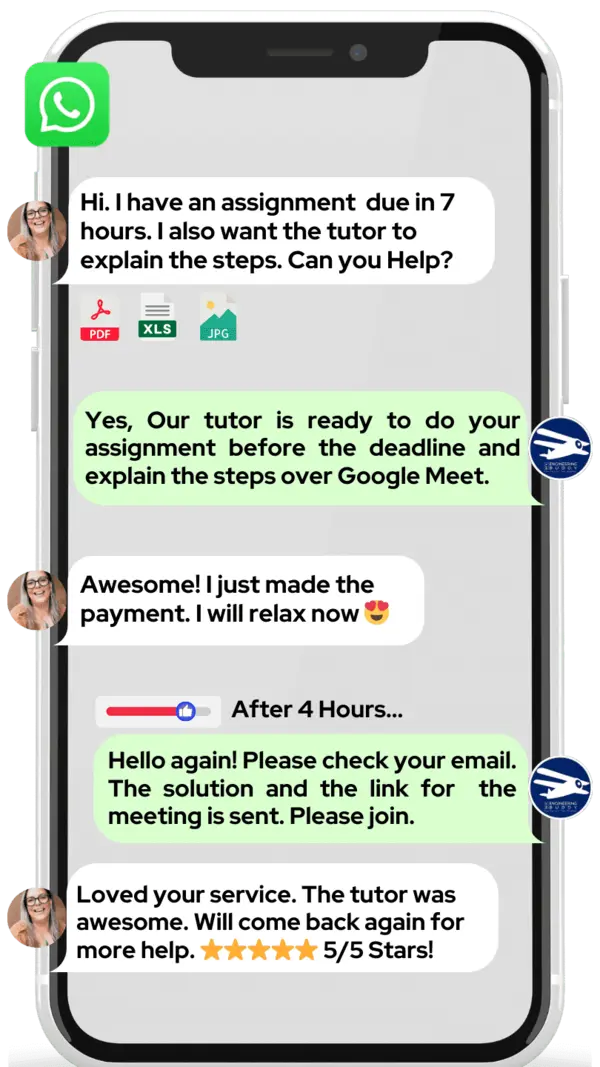



Hire The Best Surveying Tutor
Top Tutors, Top Grades. Without The Stress!

52,000+ Happy Students From Various Universities






How Much For Private 1:1 Tutoring & Hw Help?
Private 1:1 Tutoring and HW help Cost $20 – 35 per hour* on average.
Struggling to close a traverse or make sense of total station data? Most students hit that wall in week three — and don’t tell anyone until the exam is four weeks away.
Surveying Tutor Online
Surveying is the science of measuring and mapping the Earth’s surface — covering plane and geodetic methods, levelling, traversing, GPS, and GIS — equipping students to collect, process, and apply spatial data in civil and construction engineering contexts.
MEB offers 1:1 online civil engineering tutoring and homework help across 2,800+ advanced subjects, including Surveying at every level from first-year undergraduate through graduate coursework. Whether you’re hunting for a Surveying tutor near me or need someone who knows your exact syllabus, MEB matches you with a verified expert — usually within the hour. One targeted session can shift a shaky concept into something you can actually use on paper.
- 1:1 online sessions tailored to your course syllabus and exam board
- Expert-verified tutors with hands-on surveying and civil engineering backgrounds
- Flexible time zones — US, UK, Canada, Australia, Gulf
- Structured learning plan built after a first diagnostic session
- Ethical homework and assignment guidance — you understand before you submit
52,000+ students across the US, UK, Canada, Australia, and the Gulf have used MEB since 2008 — including students in Civil Engineering subjects like Surveying, geotechnical engineering, and structural engineering.
Source: My Engineering Buddy, 2008–2025.
How Much Does a Surveying Tutor Cost?
Most Surveying tutoring sessions run $20–$40/hr depending on level and topic complexity. Graduate coursework and specialist areas like geodetic surveying or photogrammetry can reach up to $100/hr. Not sure if it’s worth it? Start with the $1 trial first.
| Level / Need | Typical Rate | What’s Included |
|---|---|---|
| Standard (most undergrad levels) | $20–$35/hr | 1:1 sessions, homework guidance |
| Advanced / Specialist (graduate, geodetic) | $35–$100/hr | Expert tutor, niche depth |
| $1 Trial | $1 flat | 30 min live session or 1 homework question |
Tutor availability tightens during end-of-semester submission periods and before major civil engineering exams. Book early if your deadline is within four weeks.
WhatsApp MEB for a quick quote — average response time under 1 minute.
Who This Surveying Tutoring Is For
This isn’t a course for people just starting out. It’s for students who are already in the thick of it — mid-semester, behind on traverses, confused by coordinate geometry, or staring at a total station dataset they can’t process.
- First and second-year civil engineering undergraduates tackling plane surveying for the first time
- Students retaking after a failed first attempt — and needing to close real conceptual gaps, not just re-read notes
- Graduate students working with GPS, GIS integration, or photogrammetric methods at research level
- Students with a coursework or field report submission deadline approaching and specific questions they can’t resolve alone
- Parents watching a child’s confidence drop alongside their grades in an engineering programme at universities like Purdue, Georgia Tech, University of Toronto, University of Melbourne, TU Delft, or Imperial College London
- Students needing clear homework and assignment guidance — explained step by step before they submit
1:1 Tutoring vs Self-Study vs AI vs YouTube vs Online Courses
Self-study works if you’re disciplined — but surveying calculations have a way of going wrong silently, and you won’t catch it without feedback. AI tools explain concepts fast but can’t spot the error in your traverse closure calculation in real time. YouTube is solid for overviews of levelling or triangulation, but it stops the moment your specific dataset behaves unexpectedly. Online courses move at a fixed pace regardless of where you’re stuck. With MEB’s 1:1 Surveying tutoring, a tutor watches you work through a bearing and distance problem live, catches the sign error in row three, and explains exactly why — so it doesn’t happen again on the actual submission.
Outcomes: What You’ll Be Able To Do in Surveying
After working with an online Surveying tutor through MEB, students can solve traverse misclosure problems and apply Bowditch and transit rule adjustments confidently. They can analyze levelling runs for acceptable error and apply third-order accuracy standards. Students learn to apply coordinate geometry to set out curves and calculate areas from survey data. They can explain the sources of systematic and random error in GPS observations and apply dilution of precision (DOP) concepts. They can present field notes, reduction sheets, and final plans in formats expected at university and in professional practice.
Supporting a student through Surveying? MEB works directly with parents to set up sessions, track progress, and keep coursework on schedule. WhatsApp MEB — average response time is under a minute, 24/7.
Based on feedback from 40,000+ sessions collected by MEB from 2022 to 2025, 58% of students improved by one full grade after approximately 20 hours of 1:1 tutoring in subjects like Surveying. A further 23% achieved at least a half-grade improvement.
Source: MEB session feedback data, 2022–2025.
At MEB, we’ve found that most surveying errors aren’t careless mistakes — they’re the same misconception applied consistently across every calculation. One session that targets that root error saves three weeks of compounding confusion.
What We Cover in Surveying (Syllabus / Topics)

Track 1: Plane Surveying — Traverses, Levelling & Setting Out
- Chain surveying and offset methods
- Compass traversing: whole circle bearing vs quadrant bearing systems
- Theodolite and total station operation — angles, distances, and coordinates
- Traverse computation: Bowditch rule, transit rule, and misclosure adjustment
- Differential levelling, fly levelling, and benchmark reduction
- Setting out curves — simple circular, compound, and transition curves
- Area and volume calculation from survey data
Core texts: Surveying by Bannister, Raymond & Baker; Elementary Surveying by La Putt; Surveying: Principles and Applications by Kavanagh.
Track 2: GPS, Remote Sensing & GIS Integration
- GNSS fundamentals — satellite geometry, pseudorange, and carrier phase
- Sources of GPS error: ionospheric delay, multipath, DOP
- Differential GPS and RTK surveying methods
- Introduction to photogrammetry and drone-based survey workflows
- LiDAR data interpretation and point cloud basics
- GIS data integration — importing survey control into ArcGIS or QGIS
- Coordinate reference systems: WGS84, local datums, and transformations
Core texts: GPS Satellite Surveying by Leick; Introduction to GIS by Longley et al.; Remote Sensing and Image Interpretation by Lillesand.
Track 3: Engineering Surveying & Construction Applications
- Control networks: horizontal and vertical control for construction projects
- Setting out buildings, roads, and infrastructure from design drawings
- As-built surveying and deformation monitoring
- Underground and tunnel surveying considerations
- Quantity measurement from survey data linked to estimation and costing in civil engineering
- Use of Civil 3D for terrain modelling and volume calculations
Core texts: Engineering Surveying by Schofield & Breach; Construction Surveying and Layout by Crawford; Civil 3D Essentials by Middlecamp.
What a Typical Surveying Session Looks Like
The tutor opens by checking the previous topic — usually traverse computation or levelling reduction — and asks you to walk through what you tried. From there, you and the tutor work through a closed traverse problem on screen together: the tutor uses a digital pen-pad to annotate the calculation step by step while you follow in your own notebook. When you hit the adjustment phase, the tutor asks you to apply the Bowditch correction yourself and explain your reasoning — catching any sign errors or unit confusion before they become habits. The session closes with a specific practice problem set for before next time, and the next topic — coordinate geometry or curve ranging — is noted so the tutor can prepare the right worked examples.
How MEB Tutors Help You with Surveying (The Learning Loop)
Diagnose: In the first session, the tutor works through a short set of problems with you to identify exactly where the process breaks down — whether that’s bearing arithmetic, misclosure tolerance, or interpreting a level book. No time wasted on topics you already understand.
Explain: The tutor works through a solved example live using a digital pen-pad, annotating each step as they talk. You see the reasoning, not just the answer. This matters most in surveying, where a correct method applied to a wrong starting bearing produces a plausible-looking wrong answer.
Practice: You attempt the next problem with the tutor present. You’re not watching — you’re doing, and the tutor watches your process, not just your final number.
Feedback: Errors get corrected step by step. The tutor explains exactly why a step was wrong and what it costs in marks — not just what the right answer should have been.
Plan: At the end of each session, the tutor notes what’s solid, what needs one more pass, and what comes next. You leave with a clear task, not a vague instruction to “review chapter 4.”
Sessions run over Google Meet with a digital pen-pad or iPad and Apple Pencil. Before your first session, have a recent assignment or past paper attempt ready, along with your course outline or syllabus. The first session covers diagnostic problems and sets the plan for everything that follows. Start with the $1 trial — 30 minutes of live tutoring that also serves as your first diagnostic.
Students consistently tell us that the moment things click in surveying is when they stop treating it as pure calculation and start reading the geometry. That shift usually happens in session two or three — not from rereading a textbook.
Tutor Match Criteria (How We Pick Your Tutor)
Not every civil engineer can teach surveying. MEB matches on four criteria.
Subject depth: tutors hold degrees in civil, geomatics, or spatial engineering and have worked with the specific topics in your syllabus — whether that’s plane surveying at first-year level or GNSS at graduate level.
Tools: all tutors work via Google Meet with a digital pen-pad or iPad and Apple Pencil — essential for annotating traverse diagrams and level books in real time.
Time zone: matched to your region — US, UK, Gulf, Canada, or Australia — so early morning and late evening slots are genuinely available.
Goals: whether you need to pass a specific exam component, close gaps before a field report submission, or build deeper understanding of GIS integration, the tutor is selected to match that aim, not a generic civil engineering profile.
Unlike platforms where you fill out a form and wait, MEB responds in under a minute, 24/7. Tutor match takes under an hour. The $1 trial means you test before you commit. Everything runs over WhatsApp — no logins, no intake forms.
Study Plans (Pick One That Matches Your Goal)
Catch-up (1–3 weeks): for students behind on traverse computation, levelling reduction, or coordinate geometry with an imminent submission. Exam prep (4–8 weeks): structured revision targeting every assessment component in sequence — calculations, field techniques, and written components. Weekly support: ongoing, aligned to your semester schedule and assignment deadlines. The tutor maps the specific session sequence after the first diagnostic — no generic plan applied to everyone.
Pricing Guide
Surveying tutoring starts at $20/hr for standard undergraduate topics. Graduate-level work — geodetic surveying, photogrammetry, GNSS adjustment — runs $35–$100/hr depending on depth and tutor background. Rate factors include your level, topic complexity, timeline, and tutor availability.
Availability tightens around end-of-semester submission weeks and university exam periods. If your deadline is within three weeks, book sooner rather than later.
For students targeting roles at major engineering consultancies or graduate programmes at institutions with strong geomatics and spatial engineering departments, tutors with professional land surveying and GIS industry backgrounds are available at higher rates — share your specific goal and MEB will match the tier to your ambition.
Start with the $1 trial — 30 minutes, no registration, no commitment. WhatsApp MEB for a quick quote.
A common pattern our tutors observe is that students who spend the first two weeks of a surveying course copying worked examples — without attempting problems independently — arrive at their first assessment unable to start from a blank page. Independent attempt first, then check.
FAQ
Is Surveying hard?
It’s methodical rather than conceptually abstract — but that’s exactly what trips students up. Errors compound silently across a traverse, and field data rarely looks clean. Students who struggle usually have one or two procedural gaps, not a fundamental inability to understand the subject.
How many sessions are needed?
Most students targeting a specific assignment or exam component need 4–8 sessions. Students with broader gaps across traverse computation, levelling, and GPS concepts typically work over 10–20 hours. The tutor sets an honest timeline after the first diagnostic session.
Can you help with homework and assignments?
Yes. MEB tutoring is guided learning — you understand the work, then submit it yourself. The tutor explains the method, works through a similar example, and guides you through your own solution. See our Academic Integrity policy and Why MEB page for full details on what we help with and what we don’t.
Will the tutor match my exact syllabus or exam board?
Yes. Share your university, course code, and current topic when you WhatsApp MEB. Tutors are matched to your specific syllabus — not a generic surveying curriculum. This applies whether you’re following a US, UK, Australian, or Gulf university programme.
What happens in the first session?
The tutor works through a short diagnostic set of problems with you — typically a traverse computation and a levelling reduction. This identifies exactly where your process breaks down. The rest of the session and the plan going forward are built from that information.
Is online tutoring as effective as in-person?
For calculation-based subjects like surveying, yes. The digital pen-pad replicates whiteboard working exactly. Students share their own workings on screen; the tutor annotates in real time. The only limitation is hands-on equipment operation — which MEB sessions supplement, not replace.
What’s the difference between plane surveying and geodetic surveying, and do I need to know both?
Plane surveying treats the Earth as flat — valid for most construction and engineering projects covering small areas. Geodetic surveying accounts for Earth’s curvature and is required for large-scale mapping and GPS work. Most undergraduate programmes cover plane surveying; graduate and geomatics programmes go into geodetic methods. Your tutor covers whichever your course requires.
My university uses total stations and I don’t understand how to reduce the raw data — can a tutor help with that?
Yes. Tutors work through total station data reduction step by step — from raw angle and distance observations through coordinate computation and adjustment. This is one of the most common specific requests MEB receives for Surveying tutoring, particularly from second-year civil engineering students.
Can I get Surveying help at midnight?
Yes. MEB operates across time zones 24/7. Students in the Gulf, Australia, and the US West Coast regularly start sessions late at night. WhatsApp MEB at any hour and you’ll typically have a tutor matched within the hour.
Do you offer group Surveying sessions?
No. MEB is strictly 1:1 — that’s the model. Group sessions reduce the tutor’s ability to diagnose individual errors in real time, which is the core of how MEB works. If you and a classmate both need help, each gets their own session.
How do I get started?
Three steps: WhatsApp MEB, get matched with a verified Surveying tutor, then start the $1 trial — 30 minutes of live 1:1 tutoring or one full homework question explained. No registration, no intake form, no commitment beyond that first session.
What if I don’t like my assigned tutor?
Tell MEB on WhatsApp. A different tutor will be matched — usually within the same day. MEB does not lock students into a single tutor assignment. The match is a starting point, not a contract.
Trust & Quality at My Engineering Buddy
Every MEB tutor goes through subject-specific vetting — not a generic interview. For Surveying, that means demonstrating working knowledge of traverse computation, levelling methods, and at least one specialist area such as GPS, GIS, or engineering setting-out. Tutors hold degrees in civil engineering, geomatics, or spatial science, and many have professional field experience. Demo sessions are evaluated before tutors go live on the platform. Rated 4.8/5 across 40,000+ verified reviews on Google.
MEB tutoring is guided learning — you understand the work, then submit it yourself. For full details on what we help with and what we don’t, read our Academic Integrity policy and Why MEB.
MEB has served 52,000+ students across the US, UK, Canada, Australia, the Gulf, and Europe since 2008 — across 2,800+ subjects in Civil Engineering and related disciplines including geotechnical engineering tutoring, highway design help, and hydrology tutoring. See our tutoring methodology for details on how sessions are structured and reviewed.
MEB has matched students with verified civil engineering tutors since 2008 — covering everything from first-year traverse problems to graduate-level GNSS adjustment and photogrammetric workflows.
Source: My Engineering Buddy, 2008–2025.
Try your first session for $1 — 30 minutes of live 1:1 tutoring or one homework question explained in full. No registration. No commitment.
WhatsApp MEB now
and get matched within the hour.
Explore Related Subjects
Students studying Surveying often also need support in:
- Soil Mechanics
- Foundation Design Engineering
- Transportation Engineering
- Environmental Engineering
- Quantity Surveying
- Civil3D
- Water Resources Engineering
- Structural Analysis
Next Steps
Ready to get started? Here’s what to do:
- Share your university, course code, hardest topic, and current timeline
- Share your availability and time zone
- MEB matches you with a verified Surveying tutor — usually within 24 hours
- First session starts with a diagnostic so every minute is used well
Before your first session, have ready: your course syllabus or outline, a recent assignment or past paper attempt you struggled with, and your submission or exam date. The tutor handles the rest.
Visit www.myengineeringbuddy.com for more on how MEB works.
WhatsApp to get started or email meb@myengineeringbuddy.com.
Reviewed by Subject Expert
This page has been carefully reviewed and validated by our subject expert to ensure accuracy and relevance.