

Hire Verified & Experienced
Water Resources Engineering Tutors
Email: [email protected]
4.8/5 40K+ session ratings collected on the MEB platform



Hire The Best Water Resources Engineering Tutor
Top Tutors, Top Grades. Without The Stress!





Flood models failing. Pipe networks not converging. Hydrology assignments due in 48 hours with three unsolved problems still on the board.
Water Resources Engineering Tutor Online
Water Resources Engineering is a civil engineering discipline covering hydrology, hydraulics, groundwater, irrigation, and water supply systems, equipping students to design, analyse, and manage water infrastructure for urban, agricultural, and environmental applications.
If you are searching for a Water Resources Engineering tutor near me, MEB connects you with a verified online Water Resources Engineering tutor in under an hour. We cover undergraduate and graduate-level courses in Civil Engineering — from open-channel flow and flood routing to stormwater design and reservoir operations. One session often reframes a topic that weeks of lecture left opaque.
- 1:1 online sessions tailored to your course syllabus and exam board
- Expert-verified tutors with postgraduate subject-specific knowledge
- Flexible time zones — US, UK, Canada, Australia, Gulf
- Structured learning plan built after a diagnostic session
- Ethical homework and assignment guidance — you understand before you submit
52,000+ students across the US, UK, Canada, Australia, and the Gulf have used MEB since 2008 — including students in Civil Engineering subjects like Water Resources Engineering, Hydrology tutoring, and Groundwater Engineering help.
Source: My Engineering Buddy, 2008–2025.
How Much Does a Water Resources Engineering Tutor Cost?
Most Water Resources Engineering tutoring sessions run $20–$40/hr. Graduate-level or highly specialised topics — stochastic hydrology, advanced reservoir simulation, SWMM/HEC-HMS modelling — can reach $60–$100/hr depending on tutor background. Start with the $1 trial before committing to a package.
| Level / Need | Typical Rate | What’s Included |
|---|---|---|
| Undergraduate (most modules) | $20–$40/hr | 1:1 sessions, assignment guidance |
| Graduate / Specialist | $40–$100/hr | Expert tutor, advanced modelling depth |
| $1 Trial | $1 flat | 30 min live session or one full homework question |
Tutor availability tightens significantly around end-of-semester deadlines and final exam periods. Book early if your timeline is within four weeks.
WhatsApp MEB for a quick quote — average response time under 1 minute.
Who This Water Resources Engineering Tutoring Is For
Water Resources Engineering sits at the intersection of mathematics, environmental science, and infrastructure design. It is conceptually dense and computationally demanding — and most students hit at least one wall during the course.
- Undergraduate civil engineering students stuck on Manning’s equation, rational method calculations, or unit hydrograph derivations
- Graduate students working through stochastic hydrology, groundwater modelling, or water quality transport problems
- Students retaking after a failed first attempt who need targeted gap-filling before the next sitting
- Students with a university conditional offer depending on this grade — the pressure is real, and so is the timeline
- Students 4–6 weeks from finals with open-channel hydraulics or reservoir routing still to master
- Students at universities such as Purdue, Georgia Tech, University of Texas Austin, University of Waterloo, Imperial College London, Delft, and UNSW who need support beyond scheduled office hours
Parents supporting an engineering student through a tough semester: MEB works directly with you to set up sessions and keep coursework on track. WhatsApp MEB — response time is under a minute, 24/7.
1:1 Tutoring vs Self-Study vs AI vs YouTube vs Online Courses
Self-study works if you already understand the framework — most students don’t in Water Resources Engineering. AI tools explain Manning’s equation in seconds but cannot tell you why your specific HEC-RAS model is diverging. YouTube covers the rational method at surface level, then leaves when the numbers get messy. Online courses move at a fixed pace whether or not the unit hydrograph has clicked. A 1:1 online Water Resources Engineering tutor with MEB works through your actual assignment, corrects your routing errors in real time, and adjusts the session the moment you’re lost.
Outcomes: What You’ll Be Able To Do in Water Resources Engineering
After focused 1:1 sessions, students can solve flood frequency analysis problems using log-Pearson Type III distributions, analyse open-channel flow profiles using gradually varied flow equations, model rainfall-runoff relationships using the SCS curve number method, apply Darcy’s Law and groundwater flow equations to confined and unconfined aquifer problems, and present stormwater infrastructure designs that satisfy both hydraulic capacity and regulatory requirements. Progress is built on understanding, not memorisation.
Based on feedback from 40,000+ sessions collected by MEB from 2022 to 2025, 58% of students improved by one full grade after approximately 20 hours of 1:1 tutoring in subjects like Water Resources Engineering. A further 23% achieved at least a half-grade improvement.
Source: MEB session feedback data, 2022–2025.
At MEB, we’ve found that students who struggle with Water Resources Engineering are rarely bad at maths — they’re missing one conceptual link, usually somewhere between the hydrograph shape and the storage equation. Find that link, and the rest falls into place faster than anyone expects.
What We Cover in Water Resources Engineering (Syllabus / Topics)

Track 1: Hydrology and Rainfall-Runoff Analysis
- Precipitation analysis — intensity-duration-frequency (IDF) curves and return periods
- Infiltration models: Green-Ampt, Horton, and SCS curve number method
- Unit hydrograph theory — derivation, S-curve, and synthetic hydrographs
- Flood frequency analysis using log-Pearson Type III and Gumbel distributions
- Streamflow measurement and hydrograph separation techniques
- Evapotranspiration estimation — Penman-Monteith and Thornthwaite methods
Key texts: Chow, Maidment & Mays — Applied Hydrology; Bedient, Huber & Vieux — Hydrology and Floodplain Analysis.
Track 2: Hydraulics and Open-Channel Flow
- Energy and momentum principles in open channels — specific energy, critical flow
- Gradually varied flow — water surface profile classification (M1, M2, S1, S2, etc.)
- Manning’s equation applications in natural and engineered channels
- Hydraulic jump analysis and stilling basin design
- Pipe flow networks — Hardy-Cross method and pressure analysis
- Weirs, spillways, and culvert hydraulics
Key texts: Chaudhry — Open-Channel Hydraulics; Streeter & Wylie — Fluid Mechanics.
Track 3: Groundwater, Irrigation, and Water Supply Systems
- Groundwater flow equations — Darcy’s Law, Laplace equation, aquifer testing
- Well hydraulics — Theis equation, Cooper-Jacob method
- Irrigation system design — canal capacity, duty, delta, and consumptive use
- Water supply engineering — distribution networks, demand analysis, pressure zones
- Reservoir routing — Muskingum method and storage-indication technique
- Stormwater management — detention basins, permeable pavement, and green infrastructure
Key texts: Todd & Mays — Groundwater Hydrology; Linsley, Franzini & Freyberg — Water Resources Engineering.
What a Typical Water Resources Engineering Session Looks Like
The tutor opens by checking the previous topic — usually wherever the student left off, whether that was a partially completed flood routing problem or a pipe network that wouldn’t balance. From there, the session moves into the current problem set. The tutor works through a representative example on a digital pen-pad — say, deriving a synthetic unit hydrograph from a given storm event — while the student follows on screen. Then the student attempts the next problem while the tutor watches. Errors in the runoff coefficient selection or time-of-concentration calculation get caught immediately. The session closes with a specific practice task — complete two IDF curve problems before next session — and the next topic is noted.
How MEB Tutors Help You with Water Resources Engineering (The Learning Loop)
Diagnose: In the first session, the tutor identifies exactly where the gap is. For most Water Resources Engineering students, it’s one of three places — the hydrology fundamentals, the hydraulic calculations, or the software application (HEC-HMS, HEC-RAS, EPANET). The diagnosis takes 15–20 minutes and shapes every session after it.
Explain: The tutor works through live problems on a digital pen-pad. Not slides — actual calculations. A flood frequency analysis solved step by step, with every assumption explained before it’s applied.
Practice: The student attempts the next problem with the tutor present. This is not optional. It’s where the session becomes learning instead of watching.
Feedback: Errors are corrected step by step — not just “that’s wrong” but why that step loses marks on a graded assignment. Typical issues include sign errors in energy equations, wrong return period selection, and misapplied boundary conditions in HEC-RAS.
Plan: At the end of each session, the tutor sets the next topic, notes the practice task, and records where to pick up. Students who follow the plan consistently close a full module gap in three to four sessions.
All sessions run on Google Meet. The tutor uses a digital pen-pad or iPad with Apple Pencil. Before your first session, share your course syllabus or module outline, a recent homework question you couldn’t finish, and your assignment or exam deadline. The first session uses that material as the diagnostic baseline — no time wasted on generic problems. Start with the $1 trial — 30 minutes of live tutoring that also serves as your first diagnostic.
Students consistently tell us that the moment things shift in Water Resources Engineering is when they stop copying the formula and start asking what each term actually represents physically. That shift usually happens in session two or three — not in a lecture hall.
Tutor Match Criteria (How We Pick Your Tutor)
MEB matches tutors on four criteria, not just availability.
Subject depth: Tutors hold postgraduate qualifications in civil or environmental engineering and have taught Water Resources Engineering at university level or hold relevant professional experience in hydrological modelling, water infrastructure, or stormwater design.
Tools: Every tutor uses Google Meet with a digital pen-pad or iPad and Apple Pencil. Sessions are whiteboard-style, not slide-based.
Time zone: Matched to your region — US, UK, Canada, Australia, or Gulf — so sessions land at workable hours, not 2 a.m.
Goals: Whether you need assignment guidance, exam preparation, or conceptual depth in a specific sub-topic, the tutor match reflects that — not a generic “civil engineering” assignment.
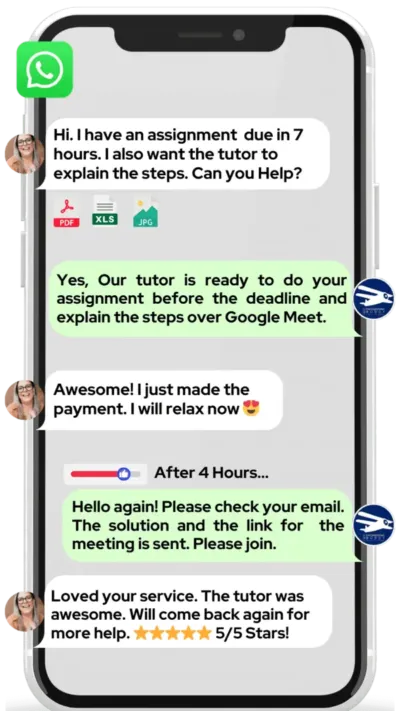
Unlike platforms where you fill out a form and wait, MEB responds in under a minute, 24/7. Tutor match takes under an hour. The $1 trial means you test before you commit. Everything runs over WhatsApp — no logins, no intake forms.
Study Plans (Pick One That Matches Your Goal)
For students with an exam or project deadline approaching, the tutor builds a specific session sequence after the diagnostic. A catch-up plan over one to three weeks targets the highest-priority gaps — usually the topics most heavily weighted in your final exam. An exam-prep plan over four to eight weeks covers the full syllabus with timed practice problems and past-paper walkthroughs. Weekly ongoing support aligns sessions to your semester schedule and assignment deadlines. The tutor designs the sequence — you just need to know your exam date and your weakest topic.
Pricing Guide
Water Resources Engineering tutoring starts at $20/hr for standard undergraduate modules. Graduate-level work — stochastic hydrology, advanced numerical modelling, thesis support — typically runs $60–$100/hr depending on tutor background and topic complexity. Rate factors include your course level, the complexity of the topic, how tight your timeline is, and tutor availability during peak periods.
For students targeting top graduate programmes in environmental or civil engineering — MIT, Stanford, ETH Zurich, Delft, Imperial — tutors with active research or professional backgrounds in water systems are available at specialist rates. Share your specific goal and MEB matches the tier to it.
Start with the $1 trial — 30 minutes, no registration, no commitment. WhatsApp MEB for a quick quote.
Try your first session for $1 — 30 minutes of live 1:1 tutoring or one homework question explained in full. No registration. No commitment. WhatsApp MEB now and get matched within the hour.
FAQ
Is Water Resources Engineering hard?
Yes — it draws on fluid mechanics, probability and statistics, differential equations, and software tools simultaneously. Most students find the hydrology-hydraulics integration the steepest part. With targeted 1:1 sessions, the conceptual structure clicks faster than solo study.
How many sessions are needed?
Students closing a specific module gap typically need three to five sessions. Those preparing for finals across the full course usually need eight to twelve sessions over four to six weeks. The diagnostic session in week one sets the exact plan.
Can you help with homework and assignments?
Yes. MEB tutoring is guided learning — you understand the work, then submit it yourself. The tutor explains the method, you apply it. See our Academic Integrity policy and Why MEB page for full details on what we help with and what we don’t.
Will the tutor match my exact syllabus or exam board?
Yes. Share your university, course code, and module outline when you WhatsApp MEB. Tutors are matched to your specific syllabus — not a generic Water Resources Engineering curriculum. This matters most when your course uses a particular software stack or assessment format.
What happens in the first session?
The tutor reviews your syllabus, past paper attempt, or the assignment you struggled with. Gaps are identified in the first 15–20 minutes. The remaining time starts closing the most urgent one. You leave with a clear plan for the next session.
Is online tutoring as effective as in-person?
For Water Resources Engineering, yes. The digital pen-pad replicates whiteboard problem-solving precisely. Students working through HEC-RAS or EPANET models share their screens directly. Most MEB students report they cover more ground online than in a typical face-to-face office hour.
Can I get Water Resources Engineering help at midnight?
Yes. MEB operates 24/7 across time zones. WhatsApp at midnight in the US, UK, Gulf, or Australia and you’ll get a response within minutes. Tutor availability at off-peak hours depends on your region — ask when you message.
What if I don’t like my assigned tutor?
Tell MEB after the first session and you’ll be rematched at no extra charge. The $1 trial is specifically designed so you test the match before committing. No awkward conversations — just WhatsApp MEB and a new tutor is arranged.
Do MEB tutors help with HEC-RAS and HEC-HMS modelling?
Yes. HEC-RAS for river hydraulics and flood inundation mapping, and HEC-HMS for rainfall-runoff simulation, are both covered. Tutors walk through model setup, boundary condition input, and results interpretation. Share your model file before the session and the tutor reviews it in advance.
How do I find a Water Resources Engineering tutor in my city?
MEB tutors online — you don’t need one in your city. Students in Houston, London, Dubai, Toronto, Sydney, and Amsterdam all access the same verified tutor pool. Time zone matching means sessions are scheduled at hours that work for your location.
Can MEB support a thesis or research project in water resources?
Yes — for Masters and PhD students working on topics like flood risk assessment, aquifer modelling, or urban drainage design. Tutors help with methodology, data analysis interpretation, and technical writing clarity. Share your research brief when you message MEB.
How do I get started?
WhatsApp MEB with your course name and your most urgent topic. You’ll be matched with a verified Water Resources Engineering tutor — usually within the hour. The first session is the $1 trial: 30 minutes live or one question fully explained. Three steps: WhatsApp, get matched, start the trial.
Trust & Quality at My Engineering Buddy
Every MEB tutor goes through subject-specific vetting — not a generic teaching interview. For Water Resources Engineering, that means demonstrating competency in hydraulic analysis, hydrological modelling, and software tools relevant to the subject. Tutors complete a live demo evaluation before being assigned any student. Ongoing session feedback is reviewed and tutors with declining ratings are removed. Rated 4.8/5 across 40,000+ verified reviews on Google.
MEB tutoring is guided learning — you understand the work, then submit it yourself. For full details on what we help with and what we don’t, read our Academic Integrity policy and Why MEB.
MEB has served 52,000+ students across the US, UK, Canada, Australia, the Gulf, and Europe since 2008 — across 2,800+ subjects. In Civil Engineering, that includes Environmental Engineering tutoring, Irrigation Engineering help, and Coastal Engineering tutoring. The platform is built for advanced technical subjects — not general homework help for school-level courses. Read more about our approach at MEB Tutoring Methodology.
MEB has operated since 2008 — before most edtech platforms existed. The tutors who work in Water Resources Engineering are not generalists. They have postgraduate training in hydraulics, hydrology, or water systems. That difference shows up in the first session.
Source: My Engineering Buddy, 2008–2025.
A common pattern our tutors observe is that Water Resources Engineering students arrive knowing the formulas but not when to apply which one. The HEC-RAS versus Manning’s choice, the Muskingum versus storage-indication decision — these are judgement calls that only click through worked examples, not rereading the textbook.
Explore Related Subjects
Students studying Water Resources Engineering often also need support in:
- Water and Wastewater Treatment
- Open Channel Flow
- Dam Engineering
- EPANET
- HEC-RAS
- Soil Mechanics
- Geotechnical Engineering
- Solid Waste Management
Next Steps
Getting started takes under two minutes.
- Share your course name, university, and the topic or assignment giving you the most trouble
- Share your availability and time zone
- MEB matches you with a verified Water Resources Engineering tutor — usually within 24 hours, often faster
Before your first session, have ready: your module syllabus or course outline, a recent homework question or past paper attempt you struggled with, and your assignment or exam deadline. The tutor handles the rest.
Visit www.myengineeringbuddy.com for more on how MEB works.
WhatsApp to get started or email [email protected].
52,000+ Happy Students From Various Universities






How Much For Private 1:1 Tutoring & Hw Help?
Private 1:1 Tutoring and HW help Cost $20 – 35 per hour* on average.
Reviewed by Subject Expert
This page has been carefully reviewed and validated by our subject expert to ensure accuracy and relevance.

