




~1 min
Average Reply Time
~1 hour
To Be Matched With A Tutor
1 Trial
75% Find Their Tutor On The 1st Trial
$1
Your First 30 Minutes
Hire The Best Visual Basic Programming Tutor
Top Tutors, Top Grades. Without The Stress!





Related Subjects
Most VB students don’t fail because the language is hard. They fail because nobody showed them how to connect the event model to real program logic — and that gap compounds fast.
Visual Basic Programming Tutor Online
Visual Basic Programming is a Microsoft event-driven language built on the .NET framework, used to develop Windows desktop applications. It teaches procedural logic, GUI design, and object-oriented concepts, equipping students to build functional software across academic and professional contexts.
If you’ve searched for a Visual Basic Programming tutor near me, MEB’s 1:1 online tutoring and homework help in computer programming is built for exactly this. Tutors cover everything from form controls and event procedures to class modules and database connectivity — at your pace, on your syllabus. One session often clarifies what weeks of lecture missed.
- 1:1 online sessions tailored to your course syllabus and IDE environment
- Expert-verified tutors with Visual Basic and .NET subject-specific knowledge
- Flexible time zones — US, UK, Canada, Australia, Gulf
- Structured learning plan built after a diagnostic session
- Ethical homework and assignment guidance — you understand the code before you submit it
52,000+ students across the US, UK, Canada, Australia, and the Gulf have used MEB since 2008 — including students in Computer Programming subjects like Visual Basic, VB.NET, and Excel VBA.
Source: My Engineering Buddy, 2008–2025.
How Much Does a Visual Basic Programming Tutor Cost?
Rates run $20–$40/hr for most undergraduate and college-level Visual Basic courses. Graduate-level or niche project work can reach $100/hr. Start with the $1 trial — 30 minutes live or one homework question explained in full before you commit to anything.
| Level / Need | Typical Rate | What’s Included |
|---|---|---|
| Standard (most levels) | $20–$35/hr | 1:1 sessions, homework guidance |
| Advanced / Specialist | $35–$100/hr | Expert tutor, niche project depth |
| $1 Trial | $1 flat | 30 min live session or 1 homework question |
Tutor availability tightens during semester-end project deadlines and exam periods. Book early if you’re within four weeks of a submission date.
WhatsApp MEB for a quick quote — average response time under 1 minute.
Who This Visual Basic Programming Tutoring Is For
Visual Basic is taught in introductory programming courses at colleges across the US, UK, Canada, and Australia — and it trips up more students than most expect. The language looks simple until the event-driven model, error handling, and ADO.NET database connections land at once.
- Students failing or barely passing their first programming module
- Students with a conditional university offer who need to pass this course to proceed
- Students 3–5 weeks from a project submission with logic errors they can’t debug alone
- Students retaking after a failed first attempt at a CS or IT qualification
- Parents watching a child’s confidence collapse as their code refuses to run
- Graduate students using VB as part of a data or systems integration project
Students at institutions including MIT, Georgia Tech, University of Toronto, University of Melbourne, University of Edinburgh, King’s College London, and NYU have all used MEB to work through Visual Basic coursework.
The $1 trial session is a low-risk way to find out whether the tutor-student fit is right before committing to a full plan.
1:1 Tutoring vs Self-Study vs AI vs YouTube vs Online Courses
Self-study works if you’re disciplined — but Visual Basic’s event model is genuinely counterintuitive, and reading docs doesn’t tell you why your button click fires twice. AI tools give fast code suggestions but can’t watch you debug live or catch the conceptual gap behind the error. YouTube covers the basics well and stops completely when your specific form layout breaks. Online courses move at a fixed pace — you’re either waiting or already behind. With a 1:1 Visual Basic Programming tutor, the session runs at your speed, on your actual assignment, correcting your actual errors in the moment.
Outcomes: What You’ll Be Able To Do in Visual Basic Programming
After structured 1:1 sessions, students can write event-driven Windows applications using controls, properties, and procedures without hesitation. They can apply object-oriented principles — encapsulation, inheritance, and polymorphism — inside Visual Basic class modules. They can analyze and debug runtime and logic errors using breakpoints and the Immediate window. They can connect a VB application to an Access or SQL Server database using ADO.NET and execute queries programmatically. They can present completed coursework projects that demonstrate structured design, clean code, and accurate output — which is what assessors actually mark.
Based on feedback from 40,000+ sessions collected by MEB from 2022 to 2025, 58% of students improved by one full grade after approximately 20 hours of 1:1 tutoring in subjects like Visual Basic Programming. A further 23% achieved at least a half-grade improvement.
Source: MEB session feedback data, 2022–2025.
At MEB, we’ve found that most Visual Basic students arrive with one specific sticking point — usually the event procedure model or ADO.NET connections — and once that’s cleared with a worked example, the rest of the course starts making sense within two or three sessions.
What We Cover in Visual Basic Programming (Syllabus / Topics)

Track 1: Visual Basic Fundamentals and GUI Development
- Variables, data types, constants, and type conversion
- Control structures: If/Else, Select Case, For/While loops
- Form design: buttons, text boxes, labels, combo boxes, list boxes
- Event procedures and event-driven programming model
- Procedures and functions: Sub, Function, parameter passing
- String manipulation and built-in math functions
- Error handling: Try/Catch/Finally blocks and structured exception handling
Core texts: Starting Out with Visual Basic by Tony Gaddis and Kip Irvine; Programming in Visual Basic by Julia Case Bradley and Anita Millspaugh (check your course edition).
Track 2: Object-Oriented Programming in Visual Basic
- Classes and objects: defining, instantiating, and using
- Properties, methods, and constructors
- Inheritance and overriding methods
- Polymorphism and interfaces
- Collections: ArrayList, List(Of T), Dictionary
- File I/O: reading and writing text and binary files
Recommended reference: Visual Basic 2019 Made Easy by Dr. Liew; Programming with Microsoft Visual Basic by Diane Zak (any recent edition maps to standard OOP modules).
Track 3: Database Integration and Advanced Applications
- ADO.NET fundamentals: Connection, Command, DataReader, DataAdapter
- Connecting to Microsoft Access and SQL Server from VB applications
- Displaying and editing data using DataGridView
- LINQ to DataSet and basic query syntax
- Deploying and packaging Windows Forms applications
- Introduction to Crystal Reports within VB projects
Supporting texts: Visual Basic .NET: How to Program by Deitel and Deitel; course-specific lab manuals issued by your institution.
Platforms, Tools & Textbooks We Support
Visual Basic programming is almost always taught and submitted inside a specific IDE and version. MEB tutors work with Visual Studio Community (2019, 2022), the legacy Visual Basic 6.0 environment still used in some curricula, and Microsoft Access for database exercises. Tutors also support students using GitHub for version control on coursework projects and Canvas or Blackboard when assignment briefs and submission portals need navigating alongside the code.
- Visual Studio 2019 / 2022 (Community and Professional editions)
- Visual Basic 6.0 (legacy course environments)
- Microsoft Access and SQL Server Express
- GitHub / Git for source control
- Canvas, Blackboard, Moodle (assignment submission support)
- IEEE Xplore for literature references in research-adjacent VB projects — see IEEE Xplore for technical papers relevant to software engineering coursework
What a Typical Visual Basic Programming Session Looks Like
The tutor opens by checking last session’s topic — say, the DataAdapter fill method and why the DataGridView wasn’t populating. They pull up the student’s actual code on screen. The student shares their project file, and together they trace the connection string error, fix it, and immediately rerun. The tutor uses a digital pen-pad to annotate the event flow diagram while the student rewrites the procedure independently. By the session’s end, the student has debugged the database form, written one new working query, and received a clear practice task: connect a second table and display a filtered result. Next session topic: parameterised queries and input validation.
How MEB Tutors Help You with Visual Basic Programming (The Learning Loop)
Diagnose: The first session identifies exactly where understanding breaks down — whether that’s the difference between a Sub and a Function, the event firing sequence, or why inheritance isn’t behaving as expected. The tutor doesn’t assume; they ask you to explain your code out loud first.
Explain: The tutor works through a live example using a digital pen-pad, building the solution step by step. For Visual Basic, this usually means constructing a working form, running it, and narrating each property and event binding as it takes effect.
Practice: The student attempts a parallel problem with the tutor watching. Not later — right now, in the session. Errors surface immediately, before they calcify into wrong habits.
Feedback: Every mistake is traced back to the concept, not just the syntax. “Your loop runs one iteration too many because the condition uses <= instead of <” is more useful than “fix line 14.”
Plan: The tutor closes every session with the next topic and a concrete practice task. Progress is tracked across sessions so nothing is left to chance.
Sessions run on Google Meet with screen sharing. The tutor uses a digital pen-pad or iPad with Apple Pencil to annotate code and draw flow diagrams in real time. Before your first session, share your assignment brief or course outline and any code you’ve already written — even if it doesn’t run. The first session is diagnostic, so every minute is spent on your actual gaps, not a generic overview.
Start with the $1 trial — 30 minutes of live tutoring that also functions as your first diagnostic session.
Try your first session for $1 — 30 minutes of live 1:1 tutoring or one homework question explained in full. No registration. No commitment. WhatsApp MEB now and get matched within the hour.
Tutor Match Criteria (How We Pick Your Tutor)
Not every programmer can teach Visual Basic — and not every VB programmer knows your specific course version or exam board structure. Here’s what MEB checks before matching.
Subject depth: Tutors must demonstrate working knowledge of the VB version your course uses — VB6, VB.NET, or the specific Visual Studio edition — not just general .NET familiarity.
Tools: All tutors use Google Meet and a digital pen-pad or iPad with Apple Pencil. Code review, debugging, and concept annotation happen live on screen.
Time zone: Matched to your region — US, UK, Gulf, Canada, or Australia — so sessions happen at hours that don’t cost you sleep.
Goals: Whether you need to pass a single assignment, finish a semester project, or achieve a grade that keeps a conditional offer on the table, the match factors that in from day one.
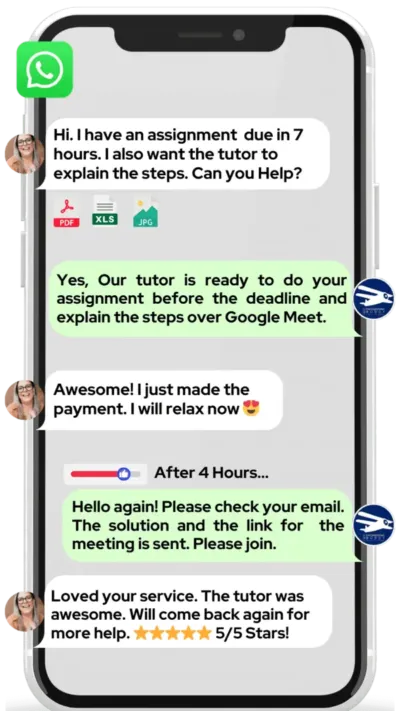
Unlike platforms where you fill out a form and wait, MEB responds in under a minute, 24/7. Tutor match takes under an hour. The $1 trial means you test before you commit. Everything runs over WhatsApp — no logins, no intake forms.
Study Plans (Pick One That Matches Your Goal)
After the first diagnostic session, the tutor builds a specific sequence. Three common structures: Catch-up (1–3 weeks) for students with an assignment due soon and clear gaps to close; Exam prep (4–8 weeks) for structured revision tied to a specific exam or final project date; Weekly support for ongoing help aligned to semester pacing and coursework deadlines. The tutor adjusts the sequence as your understanding develops — the plan is a starting point, not a fixed contract.
Pricing Guide
Most Visual Basic Programming sessions run $20–$40/hr. Graduate-level work, database integration projects, or sessions requiring a tutor with professional software development experience can reach $100/hr. Rate factors include course level, topic complexity, your timeline, and tutor availability.
Peak demand hits hard during semester-end project weeks. If your submission is within three weeks, availability at the preferred rate tier may be limited — book early.
For students targeting roles at software firms or pursuing postgraduate research involving legacy VB systems, tutors with professional development backgrounds are available at higher rates — share your specific goal and MEB will match the right tier.
Start with the $1 trial — 30 minutes, no registration, no commitment. WhatsApp MEB for a quick quote.
Students consistently tell us that the moment the event-driven model “clicks” — usually in session two or three — the rest of Visual Basic stops feeling arbitrary and starts feeling logical. That shift is what MEB tutors are specifically trained to create.
Source: My Engineering Buddy, tutor feedback, 2022–2025.
Students consistently tell us that arriving at a session with a broken project and leaving with working code — and understanding why it works — is the most confidence-building experience they’ve had in a programming course. That’s what the $1 trial is designed to show you.
FAQ
Is Visual Basic Programming hard?
It’s accessible compared to C++ or Java, but the event-driven model confuses most beginners — and ADO.NET database connections have a steep early curve. Most students find it clicks once they see a working form built from scratch with a tutor explaining each step live.
How many sessions are needed?
Students with one specific assignment gap typically need 2–4 sessions. Those covering a full semester module from foundational syntax through database integration usually benefit from 10–15 hours spread across 5–8 weeks. The first diagnostic session gives a clearer estimate.
Can you help with homework and assignments?
Yes — MEB tutoring is guided learning. The tutor explains the logic, walks through the concept, and checks your understanding. You write and submit your own code. See our Academic Integrity policy and Why MEB page for full details on what we help with and what we don’t.
Will the tutor match my exact syllabus or exam board?
Yes. Share your course outline, institution, and VB version before the first session. Tutors are matched on that basis — not just general programming knowledge. If your course uses VB6 rather than VB.NET, that’s matched specifically.
What happens in the first session?
The tutor reviews what you’ve submitted — an assignment brief, broken code, or course outline — and runs a short diagnostic to locate the real gaps. The session then shifts into active work on the most pressing topic. Nothing is wasted on material you already know.
Is online tutoring as effective as in-person?
For programming subjects it often works better. Screen sharing means the tutor sees your exact IDE, your exact error messages, and your actual code — not a description of it. Digital pen annotation on top of live code is more precise than a whiteboard in most cases.
Should I learn Visual Basic or go straight to VB.NET?
If your course specifies VB.NET, start there — it’s the current Microsoft standard and integrates with the full .NET ecosystem. Classic Visual Basic 6.0 is still taught in some legacy curricula; MEB tutors cover both. For career purposes, VB.NET tutoring is the more future-relevant choice.
What’s the difference between Visual Basic and Excel VBA — and can MEB help with both?
Visual Basic is a standalone language for building Windows applications. Excel VBA uses a related syntax but runs inside Excel to automate spreadsheets. They share concepts but differ in scope and context. MEB covers both — see Excel VBA tutoring if your coursework is spreadsheet-automation focused.
Can I get Visual Basic help at midnight or on weekends?
Yes. MEB tutors operate across time zones — US, UK, Australia, Gulf — and WhatsApp matching runs 24/7. Late-night requests before a morning submission are common. Average response time under one minute. Match and first session typically within the hour.
What if I don’t like my assigned tutor?
Request a switch over WhatsApp — no forms, no waiting. MEB re-matches within the hour. The $1 trial exists partly for this reason: you test fit before paying for a full session plan. No tutor is locked in until you’re satisfied.
How do I get started?
Three steps: WhatsApp MEB, get matched with a verified Visual Basic tutor — usually within an hour — then start your $1 trial: 30 minutes of live tutoring or one homework question explained in full. No registration, no upfront commitment beyond $1.
Do you offer group Visual Basic sessions or is it always 1:1?
MEB sessions are always 1:1. Group sessions introduce fixed pacing that defeats the purpose — you’d be waiting for other students or being left behind. Every session is calibrated to your exact gaps, your IDE, your assignment, your deadline.
Trust & Quality at My Engineering Buddy
Every MEB tutor goes through subject-specific vetting — not a generic programming test, but evaluation against the exact Visual Basic topics and course levels they claim to teach. Tutors demonstrate live problem-solving in a demo session before they work with any student. Ongoing session feedback triggers re-evaluation if ratings drop. All tutors hold degrees or professional experience in software development, computer science, or a closely related field. Rated 4.8/5 across 40,000+ verified reviews on Google.
MEB tutoring is guided learning — you understand the work, then submit it yourself. For full details on what we help with and what we don’t, read our Academic Integrity policy and Why MEB.
MEB has served 52,000+ students across the US, UK, Canada, Australia, the Gulf, and Europe since 2008 — across 2,800+ subjects including Computer Programming, C# tutoring, and Python tutoring. The tutoring methodology behind every session is documented at MEB’s tutoring methodology page.
A common pattern our tutors observe is that students who stick with 1:1 sessions through the first three weeks of a Visual Basic module — even when it’s slow — consistently outperform peers who try to catch up alone in the final week before submission.
Explore Related Subjects
Students studying Visual Basic Programming often also need support in:
MEB has covered Visual Basic Programming alongside C#, SQL, and Python tutoring since 2008 — matching students to subject-specific tutors, not generic programming generalists, from the first session.
Source: My Engineering Buddy, 2008–2025.
Next Steps
Before your first session, have ready: your course outline or assignment brief, a recent piece of code you’ve struggled to debug, and your submission or exam date. The tutor handles the rest.
- Share your VB version, course level, and hardest topic so far
- Share your availability and time zone
- MEB matches you with a verified Visual Basic tutor — usually within an hour
The first session opens with a short diagnostic so every minute is spent on your real gaps — not a generic walkthrough.
Visit www.myengineeringbuddy.com for more on how MEB works.
WhatsApp to get started or email [email protected].
52,000+ Happy Students From Various Universities






Reviewed by Subject Expert
This page has been carefully reviewed and validated by our subject expert to ensure accuracy and relevance.

