~1 min
Average Reply Time
~1 hour
To Be Matched With A Tutor
1 Trial
75% Find Their Tutor On The 1st Trial
$1
Your First 30 Minutes
Hire The Best Visual communication Tutor
Top Tutors, Top Grades. Without The Stress!

Related Subjects
Most students lose marks in visual communication not because they can’t think visually — but because nobody taught them to justify their design choices in academic language.
Visual Communication Tutor Online
Visual communication is the practice of conveying ideas through images, typography, layout, colour, and motion. Studied at undergraduate and postgraduate level, it equips students to analyse, design, and critique visual messages across print, digital, and multimedia contexts.
MEB connects students with a 1:1 online visual communication tutor who knows exactly what your course requires — whether that’s semiotic analysis, design theory, brand identity projects, or screen-based media critique. If you’ve searched for a visual communication tutor near me, working online with an expert tutor from MEB gives you the same depth of engagement without the geography problem. Our Communication & Media Studies tutoring covers visual communication and every related strand at any level. One diagnostic session, one matched tutor, and a plan that fits your deadline.
- 1:1 online sessions tailored to your specific course, unit, or brief
- Expert-vetted tutors with backgrounds in design, media theory, and visual studies
- Flexible time zones — US, UK, Canada, Australia, Gulf
- Structured learning plan built after a first diagnostic session
- Ethical homework and assignment guidance — you understand the work before you submit
52,000+ students across the US, UK, Canada, Australia, and the Gulf have used MEB since 2008 — including students in Communication & Media Studies subjects like visual communication, communication studies, and advertising.
Source: My Engineering Buddy, 2008–2025.
How Much Does a Visual Communication Tutor Cost?
Most visual communication tutoring sessions run $20–$40/hr depending on level and topic complexity. Graduate-level or highly specialised areas can reach $100/hr. Start with the $1 trial — 30 minutes of live 1:1 tutoring or one assignment question explained in full.
| Level / Need | Typical Rate | What’s Included |
|---|---|---|
| Undergraduate (most modules) | $20–$35/hr | 1:1 sessions, assignment guidance |
| Graduate / Specialist | $35–$70/hr | Expert tutor, design theory depth |
| $1 Trial | $1 flat | 30 min live session or 1 assignment question |
Tutor availability tightens significantly around portfolio submission deadlines and end-of-semester critique weeks. Book early.
WhatsApp MEB for a quick quote — average response time under 1 minute.
Who This Visual Communication Tutoring Is For
Visual communication is one of those subjects where the gap between what you see and what you can articulate on paper feels enormous. Most students hit a wall when they move from making work to writing about it — or from abstract theory to applying it in a live brief.
- Undergraduate students struggling to connect semiotics or Gestalt theory to their own design work
- Students whose written analysis of visual texts is consistently marked down for lacking theoretical grounding
- Students with a portfolio or written submission deadline approaching who still have significant gaps to close
- Graduate students preparing a visual research project or thesis with a strong methodological component
- Students retaking a module after a failed first attempt at written critique or design theory assessment
- Parents watching a student’s confidence drop as design crits and essay marks diverge from expectations
MEB tutors have supported students at universities including Goldsmiths, the Royal College of Art, Parsons School of Design, RMIT, Emily Carr University of Art + Design, and NYU Tisch — students preparing for the same kind of rigorous written and practical assessment your programme demands.
1:1 Tutoring vs Self-Study vs AI vs YouTube vs Online Courses
Self-study works if you can read visual theory and apply it cold — most students can’t without someone to check their reasoning. AI tools will summarise Roland Barthes in seconds but can’t tell you why your semiotic reading of a specific advertisement misses the connotative layer. YouTube is useful for software walkthroughs, not for dissecting whether your colour theory argument holds up under a marker’s rubric. Online courses give you frameworks but can’t adapt when your tutor feedback says “more critical distance” and you don’t know what that means. A 1:1 visual communication tutor from MEB reads your actual work, identifies the precise gap — whether it’s in your theoretical vocabulary, your design rationale, or your written analysis — and fixes it before your next submission.
Outcomes: What You’ll Be Able To Do in Visual Communication
After structured 1:1 sessions, students routinely move from surface description to genuinely analytical reading of visual texts. You’ll be able to apply semiotic frameworks — Barthes, Peirce, or Hall’s encoding/decoding model — to real advertisements, editorial layouts, or screen interfaces with confidence. You’ll write design rationales that explain typographic and colour decisions in terms your tutor and markers can follow. You’ll analyse composition using Gestalt principles without having to look up the terminology mid-essay. You’ll present a visual argument — in a critique, a viva, or a written submission — that holds up to direct questioning. None of these are guaranteed outcomes, but they are what consistent, well-targeted sessions build toward.
Try your first session for $1 — 30 minutes of live 1:1 tutoring or one homework question explained in full. No registration. No commitment. WhatsApp MEB now and get matched within the hour.
Based on feedback from 40,000+ sessions collected by MEB from 2022 to 2025, 58% of students improved by one full grade after approximately 20 hours of 1:1 tutoring in subjects like visual communication. A further 23% achieved at least a half-grade improvement.
Source: MEB session feedback data, 2022–2025.
What We Cover in Visual Communication (Syllabus / Topics)

Visual Theory and Semiotics
- Sign systems: Saussure, Peirce, and Barthes — denotation and connotation
- Stuart Hall’s encoding/decoding model applied to contemporary media
- Ideology and representation in visual texts
- Gestalt principles: figure-ground, proximity, similarity, closure
- Colour theory: psychological associations, cultural coding, and contrast ratios
- Typography as communication: hierarchy, legibility, and voice
- Visual rhetoric and persuasion in advertising and political imagery
Core texts include Donis A. Dondis’s A Primer of Visual Literacy, Roland Barthes’s Image Music Text, and Gunther Kress and Theo van Leeuwen’s Reading Images: The Grammar of Visual Design.
Design Practice and Visual Analysis
- Layout and grid systems for print and digital formats
- Brand identity: logo analysis, visual consistency, and style guides
- Information design: data visualisation, infographics, wayfinding systems
- Screen-based media critique: UX, interface aesthetics, and interaction design language
- Photography and image editing in editorial and commercial contexts
- Motion graphics and the grammar of animated communication
Tutors reference industry practice frameworks alongside academic texts such as Ellen Lupton’s Thinking with Type and Michael Bierut’s How to for applied design discussion.
Written Critique, Essays, and Research Methods
- How to write a design rationale — structure, evidence, and critical voice
- Visual analysis essay technique: from description to argument
- Contextualising design history: modernism, postmodernism, and contemporary movements
- Research methodology for practice-based visual projects
- Referencing visual sources — citing images, artworks, and design artefacts correctly
Tutors help students with essay editing and written critique structure, drawing on academic writing conventions specific to art and design programmes.
What a Typical Visual Communication Session Looks Like
The tutor opens by checking where the previous topic — say, applying Gestalt principles to a layout critique — landed. What stuck, what didn’t. Then the student shares their current work: an essay draft, a design brief response, or a past paper question. The tutor uses a digital pen-pad to annotate directly on the student’s work or on a shared document — underlining where the theoretical argument slips into description, sketching alternative compositional choices, marking where the design rationale needs a clearer link between decision and intention. The student replays the reasoning in their own words. The session closes with one concrete task: revise the opening paragraph of the analysis using the encoding/decoding framework, or redraft the colour rationale with three specific references. Next session’s focus is set before the call ends.
How MEB Tutors Help You with Visual Communication (The Learning Loop)
Diagnose: In the first session, the tutor reads a piece of your actual written work or reviews a brief you’re working on. They identify whether the gap is in theoretical vocabulary, analytical method, written structure, or design decision-making — and build the session plan from there.
Explain: The tutor works through a live example — your own essay paragraph, or a real advertisement — using the pen-pad to show exactly how a semiotic reading is constructed, step by step. Not a lecture. A worked demonstration on your material.
Practice: You attempt the same analytical move on a new example, with the tutor present. They don’t correct as you go — they let you reach a conclusion, then show you precisely where the reasoning broke down.
Feedback: Error correction is specific. Not “needs more analysis” but “you’ve described the signifier without identifying what it connotes in this cultural context — here’s how to fix that sentence.”
Plan: Each session ends with a clear next step: a specific paragraph to revise, a framework to apply to new material, a chapter to read before the next session. The tutor tracks this across sessions.
Sessions run over Google Meet with a digital pen-pad or iPad and Apple Pencil. Before your first session, share your course brief or essay question, one piece of written work you’re not happy with, and your submission date. Start with the $1 trial — 30 minutes of live tutoring that also functions as your first diagnostic. Whether you need a quick catch-up before a critique week, structured revision over four to eight weeks, or ongoing weekly support through the semester, the tutor maps the session plan after that first diagnostic.
At MEB, we’ve found that visual communication students often arrive knowing what they want to say visually but struggling to say it in academic language. The tutor’s job in early sessions is almost always the same: close the gap between what the student sees and what they can write.
Tutor Match Criteria (How We Pick Your Tutor)
Not every tutor who knows design theory can teach written critique. MEB matches on both.
Subject depth: Tutors are matched on specific competencies — semiotics, design history, practice-based research, or screen media — not just “visual communication” as a broad label. Your level and exact course focus determine who is shortlisted.
Tools: Every tutor uses Google Meet and a digital pen-pad or iPad with Apple Pencil — essential for annotating visual work and marking up written drafts in real time.
Time zone: Matched to your region. US, UK, Gulf, Canada, and Australia students each get a pool matched to their available hours.
Goals: Whether you need help with communication theory assignments, design rationale writing, or long-form visual analysis essays, the tutor’s focus areas are aligned to your specific outcome before the first session.
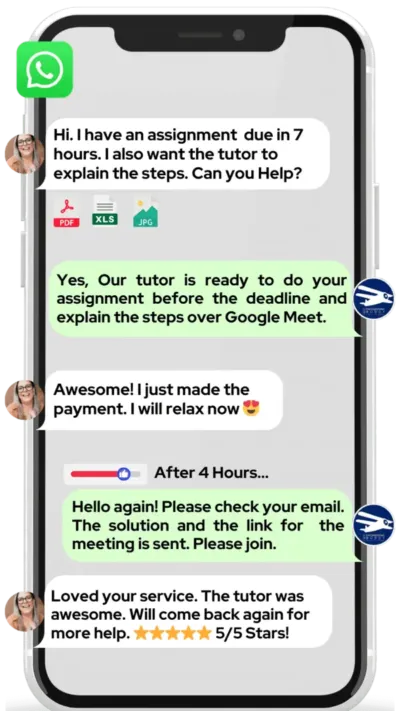
Unlike platforms where you fill out a form and wait, MEB responds in under a minute, 24/7. Tutor match takes under an hour. The $1 trial means you test before you commit. Everything runs over WhatsApp — no logins, no intake forms.
Students consistently tell us that the tutor match is the part they were most sceptical about. Then they get on a session with someone who has read Kress and van Leeuwen and can also explain why their grid isn’t working, and scepticism tends to disappear.
Study Plans (Pick One That Matches Your Goal)
Most visual communication students fall into one of three patterns. Catch-up (one to three weeks): you’re behind on theory and have a submission in two weeks — the tutor identifies the three frameworks you need and drills written application fast. Exam or critique prep (four to eight weeks): structured sessions working through past essay questions, design briefs, or written analysis tasks in sequence, with feedback on each attempt. Weekly support: ongoing sessions aligned to your semester timetable, tracking assignment feedback and building analytical vocabulary across the year. The tutor builds the specific sequence after the diagnostic — not before it.
Pricing Guide
Visual communication tutoring starts at $20/hr for most undergraduate modules. Graduate-level theory, practice-based research support, and dissertation-stage visual analysis run $35–$70/hr. Highly specialised or short-notice tutoring can reach $100/hr.
Rate factors include your level, the complexity of the topic (semiotics vs. software support vs. thesis methodology), your timeline, and tutor availability. Availability tightens around end-of-semester critique weeks and dissertation submission periods.
For students targeting graduate programmes at institutions with strong visual culture or design research reputations, tutors with professional design industry or academic research backgrounds are available at higher rates — share your specific goal and MEB will match the tier to your ambition.
Start with the $1 trial — 30 minutes, no registration, no commitment. WhatsApp MEB for a quick quote.
MEB has served students across 2,800+ subjects since 2008, with a 4.8/5 average rating drawn from over 40,000 verified reviews. Visual communication sits within one of the most consistently requested subject families on the platform.
Source: My Engineering Buddy, 2008–2025.
FAQ
Is visual communication hard?
It depends on the component. Design practice tends to feel intuitive; written theory — semiotics, visual rhetoric, design history — is where most students struggle. The gap between making visual work and writing analytically about it is where most marks are lost.
How many sessions are needed?
Most students see a clear improvement in written analysis quality within four to six sessions. Closing a full grade gap across an essay-heavy module typically takes eight to fifteen hours of focused 1:1 work, depending on starting point and submission timeline.
Can you help with homework and assignments?
Yes — MEB tutoring is guided learning. The tutor explains the framework, works through an example with you, and you apply it yourself. You understand the work, then submit it yourself. See our Academic Integrity policy and Why MEB page for full details on what we help with and what we don’t.
Will the tutor match my exact syllabus or exam board?
Yes. Visual communication is taught across a wide range of programmes — from UK foundation degrees to US BFA programmes to Australian postgraduate design research. Share your institution, course name, and current unit and MEB matches accordingly.
What happens in the first session?
The tutor reads your actual work — an essay draft, a brief response, or a past piece of feedback. They identify exactly where the analytical or written gap is and map a plan from there. It is a diagnostic, not a generic introduction.
Is online tutoring as effective as in-person?
For visual communication, often more so. The tutor can annotate your visual work, mark up your essay live, and share their screen to demonstrate analytical methods. You get a record of every session to review. No commute, no scheduling friction.
Can I get visual communication help at midnight or on weekends?
Yes. MEB operates 24/7. WhatsApp MEB at any hour and you’ll typically be matched with an available tutor or get a confirmed session time within the hour. This is particularly useful in the days before a portfolio or essay deadline.
What if I don’t click with my assigned tutor?
Tell MEB over WhatsApp. A different tutor is matched, usually the same day. The $1 trial is specifically designed so you can test the match before committing to a full session block — no obligation, no awkward conversations.
Do you offer help with the written rationale alongside the design work itself?
Yes, and this is one of the most common requests. Many visual communication students produce strong visual work but struggle to write the rationale that explains their decisions. Tutors work specifically on this translation — from visual instinct to written argument — using your actual briefs and feedback.
How do I know whether my tutor understands contemporary visual culture, not just classical design theory?
MEB matches on both. When you share your course focus — whether that’s digital media aesthetics, motion graphics, UX critique, or social media visual grammar — the tutor shortlist is filtered to those with relevant working knowledge. Ask during the match conversation if you want to verify specific competencies before committing.
How do I get started?
WhatsApp MEB, share your course and current challenge, and you’ll be matched with a tutor within the hour. Your first session is the $1 trial — 30 minutes of live tutoring or one assignment question explained in full. Three steps: WhatsApp, match, start.
Trust & Quality at My Engineering Buddy
Every MEB tutor goes through a subject-specific screening process — not a generic application form. For visual communication, that means tutors are evaluated on their knowledge of design theory, written critique methodology, and subject-specific frameworks before they take a session. They complete a live demo evaluation and are reviewed on an ongoing basis through session feedback. Rated 4.8/5 across 40,000+ verified reviews on Google.
MEB tutoring is guided learning — you understand the work, then submit it yourself. For full details on what we help with and what we don’t, read our Academic Integrity policy and Why MEB.
MEB has been operating since 2008, serving 52,000+ students across the US, UK, Canada, Australia, the Gulf, and Europe in 2,800+ subjects. Communication & Media Studies is one of the platform’s most requested categories — students come for help with mass communication tutoring, interpersonal communication help, and journalism tutoring alongside visual communication. The platform’s tutoring methodology is built around diagnostic-first sessions and structured feedback loops rather than generic lesson plans.
Explore Related Subjects
Students studying visual communication often also need support in:
- Cinematography
- Film Studies
- Video Production
- Photo Editing
- Cultural Studies
- Broadcast Journalism
- Nonverbal Communication
- Data Journalism
Next Steps
Before your first session, have ready: your course brief or essay question, a recent piece of written work you were marked down on (or a feedback sheet you didn’t understand), and your submission or exam date. The tutor handles the rest.
- Share your exam board or programme, the specific component you’re struggling with, and your current deadline
- Share your time zone and available hours
- MEB matches you with a verified visual communication tutor — usually within the hour
The first session starts with a diagnostic so every minute is used on the right problem.
A common pattern our tutors observe is that visual communication students already know what’s wrong with their analysis — they just don’t have the vocabulary to fix it. That’s exactly what the first session addresses. The gap closes faster than most students expect.
Visit www.myengineeringbuddy.com for more on how MEB works.
WhatsApp to get started or email [email protected].
52,000+ Happy Students From Various Universities



Reviewed by Subject Expert
This page has been carefully reviewed and validated by our subject expert to ensure accuracy and relevance.