

Contact MEB Today To Get The Best
Airport Engineering & Planning Tutoring Online
Email: [email protected]



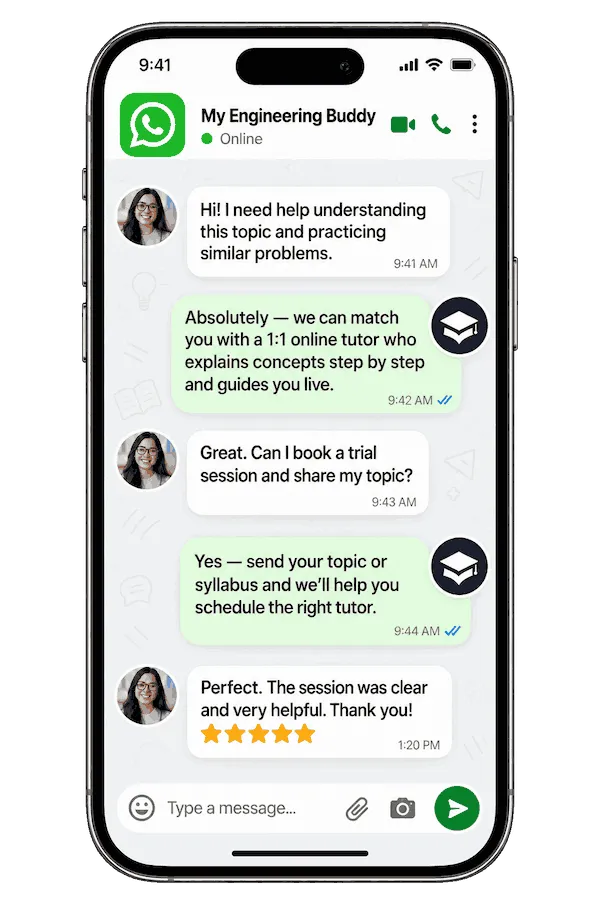
~1 min
Average Reply Time
~1 hour
To Be Matched With A Tutor
30 Min Trial
75% Find Their Tutor On The 1st Trial
$20-35+/hr
Premium Yet Affordable Learning
Most students who fail their airport engineering module underestimate one thing: runway geometry calculations and airside capacity modelling are tested together — not separately.
Airport Engineering & Planning Tutor Online
Airport engineering and planning is a civil and transportation engineering discipline covering airport site selection, runway and taxiway design, terminal layout, airside capacity analysis, pavement design, and noise and land-use planning around aviation facilities.
MEB provides 1:1 online tutoring and academic guidance in 2,800+ advanced subjects, including civil engineering and specialist transport infrastructure subjects like airport engineering and planning. If you’ve searched for an airport engineering and planning tutor near me, online sessions remove the geography problem entirely — you get an expert matched to your exact course, not whoever happens to be local. One structured session on runway PCN calculations or ICAO Annex 14 design standards can close a gap that weeks of lecture notes haven’t.
- 1:1 online sessions tailored to your specific course or university syllabus
- Expert-verified tutors with transport infrastructure and airport design backgrounds
- Flexible time zones — US, UK, Canada, Australia, Gulf
- Structured learning plan built after a diagnostic session
- Ethical academic guidance — you understand the work, then submit it yourself
52,000+ students across the US, UK, Canada, Australia, and the Gulf have used MEB since 2008 — including students in Civil Engineering subjects like Airport Engineering & Planning, transportation engineering, and highway design.
Source: My Engineering Buddy, 2008–2025.
How Much Does an Airport Engineering & Planning Tutor Cost?
Sessions run $20–$40/hr for most undergraduate and postgraduate levels. Specialist topics like airfield pavement design or ATC capacity modelling may reach $60–$100/hr depending on tutor background. The $1 trial gets you 30 minutes of live tutoring or one full homework question solved and explained.
| Level / Need | Typical Rate | What’s Included |
|---|---|---|
| Undergraduate (most modules) | $20–$40/hr | 1:1 sessions, assignment guidance |
| Advanced / Specialist topics | $40–$100/hr | Expert tutor, niche design depth |
| $1 Trial | $1 flat | 30 min live session or 1 homework Q |
Tutor availability tightens significantly during semester submission windows and final exam periods. Book early if you have a hard deadline.
WhatsApp MEB for a quick quote — average response time under 1 minute.
Who This Airport Engineering & Planning Tutoring Is For
This is for civil engineering and transportation engineering students who hit the wall when lecture notes stop being enough. Airport design modules demand that you integrate structural, traffic, environmental, and regulatory knowledge simultaneously — and most students aren’t prepared for that.
- Undergraduate civil or transport engineering students with airport modules
- Postgraduate students on MSc transport planning or airport management programmes
- Students retaking after a failed first attempt at an airport engineering assessment
- Students with a university conditional offer depending on this grade
- Students 4–6 weeks from submission with significant gaps still to close in runway design or capacity analysis
- Parents watching a child’s confidence drop alongside their grades in a demanding infrastructure module
Students come from institutions including MIT, Georgia Tech, Delft University of Technology, Imperial College London, University of Toronto, and UNSW Sydney — all of which run transport infrastructure or civil engineering programmes where airport engineering features as a core or elective module.
If you need help with your airport engineering and planning coursework, the $1 trial is the lowest-friction way to test whether a tutor can actually close your gap before you commit to a full session block.
1:1 Tutoring vs Self-Study vs AI vs YouTube vs Online Courses
Self-study works if you’re disciplined, but airport engineering spans too many sub-disciplines for gaps to stay invisible for long. AI tools explain concepts quickly but can’t work through your specific runway PCN problem live or identify where your load classification calculation broke down. YouTube covers ICAO basics well but stops the moment your question gets course-specific. Online courses move at a fixed pace — useless when you need to close one topic fast. 1:1 tutoring with MEB is live, calibrated to your exact syllabus and assignment brief, and corrects errors in real time. For airport engineering and planning specifically, where a single misapplied design standard can cascade through an entire analysis, live correction matters.
Outcomes: What You’ll Be Able To Do in Airport Engineering & Planning
After targeted sessions, students can apply ICAO Annex 14 geometric standards to runway and taxiway layout problems, analyse airside capacity using demand-capacity curves and delay models, solve airfield pavement design problems using the ACN-PCN method, explain noise contour generation and its role in land-use planning around airports, and present a site selection report that accounts for wind coverage, airspace constraints, and surface access. These are the outputs examiners and project supervisors actually look for — not just definitions.
Based on feedback from 40,000+ sessions collected by MEB from 2022 to 2025, 58% of students improved by one full grade after approximately 20 hours of 1:1 tutoring in subjects like Airport Engineering & Planning. A further 23% achieved at least a half-grade improvement.
Source: MEB session feedback data, 2022–2025.
What We Cover in Airport Engineering & Planning (Syllabus / Topics)

Track 1: Airfield Design and Geometry
- Runway orientation, length determination, and gradient design
- Taxiway geometry, rapid exit taxiway placement, and holding bay design
- ICAO Annex 14 aerodrome reference codes and obstacle limitation surfaces
- Runway strip, clearway, and stopway dimensions
- Apron layout, gate capacity, and aircraft stand sizing
- Airfield lighting, marking, and signage systems
- Wind rose analysis and runway orientation selection
Core texts for this track include Airport Engineering by Ashford, Mumayiz & Wright and Airport Design and Operation by Kazda & Caves — both cover ICAO geometric standards with worked examples.
Track 2: Airport Capacity, Demand, and Planning
- Airside capacity analysis using FAA and EUROCONTROL methodologies
- Delay modelling: queuing theory applied to runway and gate operations
- Passenger terminal planning — flow analysis, level of service, gate assignment
- Air traffic demand forecasting and scenario planning
- Master planning: phased development, land-use zoning, surface access integration
- Noise contour generation and land-use compatibility planning
- Environmental impact assessment for airport development projects
Key references include Airport Systems: Planning, Design and Management by de Neufville & Odoni — widely used on MSc transport and airport management programmes at institutions including MIT and TU Delft.
Track 3: Airfield Pavement Design and Maintenance
- Aircraft Classification Number (ACN) and Pavement Classification Number (PCN) method
- Flexible and rigid pavement design for airfield applications
- FAA Advisory Circular AC 150/5370 pavement standards
- Pavement condition assessment and maintenance planning
- Frost design, drainage, and sub-base requirements for airfield pavements
- Overlay design and pavement rehabilitation strategies
The FAA Advisory Circular series and ICAO Doc 9157 (Aerodrome Design Manual) are the primary regulatory references students are expected to apply in design assignments.
What a Typical Airport Engineering & Planning Session Looks Like
The tutor opens by checking where the previous session’s runway geometry calculation left off — specifically whether the student correctly applied the ICAO obstacle limitation surface gradients. From there, the session moves into the current problem: often a combined capacity and delay question, or a PCN back-calculation from aircraft mix data. The tutor works through the methodology on a digital pen-pad while the student watches, then hands it back — the student attempts the next step and explains their reasoning aloud. Errors get flagged immediately, not at the end. The session closes with a specific practice task: one full runway design problem using a provided wind rose dataset, due before the next session, and the next topic — terminal LOS analysis — is noted as the starting point.
How MEB Tutors Help You with Airport Engineering & Planning (The Learning Loop)
Diagnose: In the first session, the tutor identifies exactly which component is broken — whether that’s misapplying ICAO Annex 14 codes, errors in ACN-PCN calculations, or confusion between airside capacity concepts and delay modelling frameworks. Most students arrive thinking the problem is general; it’s almost always specific.
Explain: The tutor works through a live example on a digital pen-pad — showing the full calculation chain for something like a runway length correction for altitude and temperature, step by step, with the reasoning made explicit at each stage.
Practice: You attempt the next problem while the tutor is present. Not after the session. Now — so errors surface before they calcify into habits.
Feedback: The tutor marks exactly where the reasoning broke down and why that step costs marks in an assessment context. Not just “this is wrong” — but “here’s the examiner’s expectation and here’s where you diverged from it.”
Plan: Each session ends with a clear next topic, a specific practice task, and a progress note. If you’re 6 weeks from submission, the tutor maps backwards from your deadline to a session sequence that covers the gaps.
Sessions run on Google Meet with a digital pen-pad or iPad + Apple Pencil. Before your first session, have your course syllabus or module guide ready, bring the assignment brief or past paper you’re stuck on, and note your exam or submission date. Start with the $1 trial — 30 minutes of live tutoring that also serves as your first diagnostic.
At MEB, we’ve found that airport engineering students almost always struggle with the same two transitions: moving from geometric design rules to applying them under site-specific constraints, and shifting from descriptive answers to quantitative capacity analysis. Identifying which one applies to you in session one saves weeks.
Tutor Match Criteria (How We Pick Your Tutor)
Not every civil engineering tutor can handle an airport engineering and planning module. Here’s what MEB checks before a match.
Subject depth: The tutor must have direct experience with airport engineering content — ICAO Annex 14 design, ACN-PCN pavement method, airside capacity modelling — not just general transport or civil engineering knowledge.
Tools: All sessions use Google Meet with a digital pen-pad or iPad + Apple Pencil. Tutors are assessed on their ability to work through complex spatial and numerical problems visually in real time.
Time zone: Matched to your region — US, UK, Gulf, Canada, or Australia — so you’re not scheduling at 3am.
Goals: Whether you need to pass a specific exam component, complete a design assignment, or build deeper conceptual understanding for a research project, the tutor is briefed on your exact objective before session one.
Unlike platforms where you fill out a form and wait, MEB responds in under a minute, 24/7. Tutor match takes under an hour. The $1 trial means you test before you commit. Everything runs over WhatsApp — no logins, no intake forms.
Study Plans (Pick One That Matches Your Goal)
If you’re behind with 1–3 weeks to go, sessions focus on the highest-yield topics first — typically runway design and capacity analysis, which appear most frequently in assessments. For structured revision over 4–8 weeks, the tutor sequences topics to match your module timetable and builds in practice assignments after each block. Ongoing weekly support aligns to semester deadlines and coursework submissions. The tutor confirms the sequence after the first diagnostic session — every plan is specific to your syllabus and gaps, not a generic revision schedule.
Pricing Guide
Standard undergraduate airport engineering and planning sessions run $20–$40/hr. Specialist postgraduate work — airfield pavement design, airport master planning, ATC capacity simulation — typically falls in the $60–$100/hr range depending on topic complexity and tutor background. Rate factors include your level, how niche the topic is, timeline pressure, and tutor availability.
Availability tightens during semester assessment periods. If you have a fixed submission or exam date, earlier booking protects your preferred tutor and time slot.
For students targeting positions at ARUP, Jacobs, WSP, or AECOM — firms where airport infrastructure work demands specialist knowledge — tutors with professional airport design backgrounds are available at higher rates. Share your specific goal and MEB matches the tier to your ambition.
Start with the $1 trial — 30 minutes, no registration, no commitment. WhatsApp MEB for a quick quote.
Airport engineering and planning sits at the intersection of structural design, traffic engineering, and aviation regulation — it demands more cross-disciplinary integration than most civil engineering modules. That’s exactly where a specialist 1:1 tutor earns the rate.
Source: My Engineering Buddy, internal curriculum analysis, 2024.
Try your first session for $1 — 30 minutes of live 1:1 tutoring or one homework question explained in full. No registration. No commitment. WhatsApp MEB now and get matched within the hour.
FAQ
Is airport engineering and planning hard?
Yes — it demands simultaneous application of structural, traffic, environmental, and regulatory knowledge. Runway geometry, PCN calculations, and capacity delay modelling are the topics where most students lose marks. These are learnable with targeted practice.
How many sessions are needed?
Most students close specific topic gaps in 3–6 sessions. A full module support programme covering airfield design through to capacity planning typically runs 10–15 hours over a semester. The tutor confirms a realistic estimate after the first diagnostic.
Can you help with practice exercises?
Yes. MEB tutoring is guided learning — you understand the work, then submit it yourself. See our Academic Integrity policy and Why MEB page for full details on what we help with and what we don’t. The tutor explains methodology; you produce the submission.
Will the tutor match my exact syllabus or exam board?
Yes. Before matching, MEB confirms your university, module code if available, and which design standards apply — ICAO, FAA, or institution-specific frameworks. The tutor is briefed on your specific course before session one.
What happens in the first session?
The tutor runs a short diagnostic — usually a set of questions across runway design, pavement, and capacity topics — to identify exactly where your understanding breaks down. The rest of the session addresses the highest-priority gap immediately.
Is online tutoring as effective as in-person?
For airport engineering and planning, yes. The digital pen-pad replicates the whiteboard experience exactly. Complex geometry and calculation workflows are fully workable on screen — often clearer, since the student can zoom and replay worked examples.
What’s the difference between ICAO and FAA design standards, and which does my course use?
ICAO Annex 14 sets international standards used in most non-US programmes; FAA Advisory Circulars apply to US-based design work. Most university modules specify one or both. Your tutor confirms which framework applies before session one and teaches to that standard.
Can MEB help with a full airport master planning project or dissertation?
Yes. Tutors support structured project work including site selection methodology, demand forecasting, phased development scenarios, and environmental impact sections. Guidance covers methodology and analytical framing — you write and submit the work yourself.
Can I get airport engineering and planning help at midnight?
Yes. MEB operates across time zones 24/7. WhatsApp response time averages under a minute regardless of hour. If your deadline is tomorrow morning, message now — a tutor can often be matched within the hour.
Do you offer group airport engineering and planning sessions?
No. Every MEB session is 1:1. Group sessions dilute the diagnostic precision that makes airport engineering tutoring effective — your specific calculation error doesn’t get addressed when the tutor is managing four students simultaneously.
How do I find an airport engineering and planning tutor in my city?
You don’t need one. All MEB sessions are online. Location is irrelevant — students in Houston, London, Dubai, and Sydney access the same pool of verified tutors. Time zone matching handles the scheduling.
How do I get started?
Message MEB on WhatsApp — average response under one minute. You describe your module and gap; MEB matches you with a verified tutor, usually within an hour. The first session starts with a $1 trial: 30 minutes live or one full question solved and explained.
Trust & Quality at My Engineering Buddy
Every MEB tutor goes through subject-specific screening before they teach. For airport engineering and planning, that means demonstrating knowledge of ICAO Annex 14 geometric standards, ACN-PCN pavement design, and capacity analysis methodology — not just general civil engineering competence. Tutors complete a live demo session evaluation and are reviewed after every session. Rated 4.8/5 across 40,000+ verified reviews on Google.
MEB tutoring is guided learning — you understand the work, then submit it yourself. For full details on what we help with and what we don’t, read our Academic Integrity policy and Why MEB.
MEB has served 52,000+ students across the US, UK, Canada, Australia, the Gulf, and Europe since 2008, covering 2,800+ subjects. Civil Engineering is one of MEB’s strongest categories — with tutors covering everything from airport engineering and planning through to geotechnical engineering tutoring, structural engineering help, and urban transportation planning tutoring. If your programme touches any of these, MEB already has a verified tutor for it.
Students consistently tell us that the first session is the one that reorients them — not because the tutor covers more content, but because they finally understand exactly which step they’ve been getting wrong and why it keeps producing the wrong answer.
Explore Related Subjects
Students studying airport engineering and planning often also need support in:
- Railway Engineering
- Environmental Engineering
- Foundation Design Engineering
- Quantity Surveying
- Air Pollution Control
- PTV VISSIM
- Feasibility Study
- Estimation and Costing in Civil Engineering
Next Steps
Here’s what to do now:
- Share your exam board or university module name, the topics giving you the most trouble, and how far out your exam or submission is
- Share your availability and time zone
- MEB matches you with a verified airport engineering tutor — usually within an hour
- First session starts with a diagnostic so every minute counts
Before your first session, have ready: your course syllabus or module guide, a recent assignment or past paper you struggled with, and your exam or deadline date. The tutor handles the rest.
A common pattern our tutors observe is that airport engineering students who book early in the semester close their gaps methodically — those who wait until two weeks before submission are patching, not building. Don’t wait.
Visit www.myengineeringbuddy.com for more on how MEB works.
WhatsApp to get started or email [email protected].
Reviewed by Subject Expert
This page has been carefully reviewed and validated by our subject expert to ensure accuracy and relevance.




