




~1 min
Average Reply Time
~1 hour
To Be Matched With A Tutor
1 Trial
75% Find Their Tutor On The 1st Trial
$1
Your First 30 Minutes
Hire The Best Simulink Tutor
Top Tutors, Top Grades. Without The Stress!





Related Subjects
Your Simulink model runs without errors — but the output is wrong, and you have no idea why. That’s where most students get stuck, and why a 1:1 Simulink tutor changes everything.
Simulink Tutor Online
Simulink is a MATLAB-based graphical environment for model-based design and dynamic system simulation, used to build, simulate, and analyse control systems, signal processing pipelines, and embedded algorithms in engineering courses and industry.
MEB provides 1:1 online tutoring and project help in 2,800+ advanced subjects, including Simulink and the broader field of mechanical engineering tutoring. If you’ve searched for a Simulink tutor near me, online sessions work just as well — you share your screen, the tutor takes over with a digital pen-pad, and you work through the model together in real time. One targeted session on a misunderstood block can recover hours of lost work.
- 1:1 online sessions tailored to your course syllabus and specific model
- Expert-verified tutors with hands-on Simulink and MATLAB experience
- Flexible time zones — US, UK, Canada, Australia, Gulf
- Structured learning plan built after a diagnostic session
- Guided project support — we explain the logic, you build and submit the model
52,000+ students across the US, UK, Canada, Australia, and the Gulf have used MEB since 2008 — including students in mechanical engineering subjects like Simulink, nonlinear control systems, and engineering dynamics.
Source: My Engineering Buddy, 2008–2025.
How Much Does a Simulink Tutor Cost?
Most Simulink tutoring sessions run $20–$40/hr depending on level and topic complexity. Graduate-level or highly specialised work can reach $100/hr. The $1 trial gives you 30 minutes of live 1:1 tutoring or one full project question explained — no registration required.
| Level / Need | Typical Rate | What’s Included |
|---|---|---|
| Standard (undergraduate) | $20–$35/hr | 1:1 sessions, project guidance |
| Advanced / Graduate | $35–$70/hr | Expert tutor, niche control systems depth |
| $1 Trial | $1 flat | 30 min live session or 1 project question |
Tutor availability tightens significantly at the end of semester. Book early if your submission deadline is within three weeks.
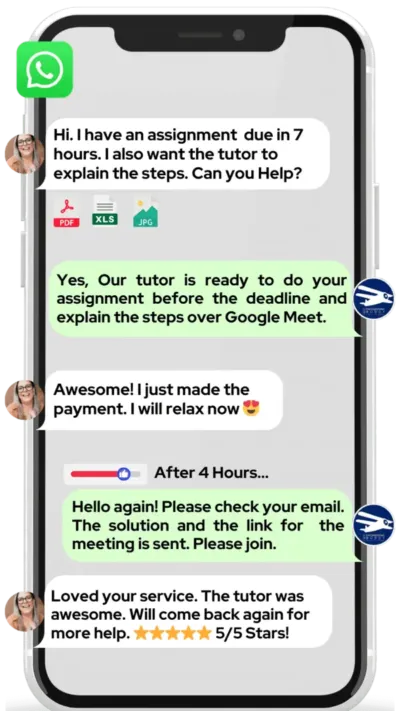
WhatsApp MEB for a quick quote — average response time under 1 minute.
Who This Simulink Tutoring Is For
Simulink trips up students who are comfortable with MATLAB but underestimate the visual modelling layer. It also frustrates experienced engineers new to Stateflow or embedded code generation. This service is built for both.
- Undergraduate mechanical, electrical, or aerospace engineering students building their first closed-loop control model
- Graduate students working on model-based design projects or thesis simulations
- Students with a course submission deadline approaching and a broken model they can’t debug
- Students retaking a failed lab or project after a first attempt that didn’t pass
- Researchers using Simulink for system identification or hardware-in-the-loop testing
- Students at universities including MIT, Georgia Tech, TU Delft, University of Michigan, Imperial College London, ETH Zurich, and RMIT needing specialist simulation support
The $1 trial works particularly well as a first diagnostic — bring your current model file and the error or output mismatch you’re dealing with.
1:1 Tutoring vs Self-Study vs AI vs YouTube vs Online Courses
Self-study works if you already know what you don’t know — Simulink rarely lets you figure that out alone. AI tools give you block descriptions but can’t look at your model and tell you why the integrator is saturating. YouTube covers basic block libraries well, then stops. Online courses teach Simulink linearly; your deadline isn’t linear. With MEB, a tutor sees your exact model, identifies the error, explains the reasoning, and hands control back to you — all within the session. That’s the difference when you’re debugging a PID controller at 11pm before a morning submission.
Outcomes: What You’ll Be Able To Do in Simulink
After targeted sessions with an MEB Simulink tutor online, students consistently report being able to model closed-loop control systems from scratch using transfer functions and state-space representations. They can analyse system stability using root locus and Bode plots generated directly within Simulink. Students learn to apply Stateflow charts for event-driven logic, solve signal routing errors that previously caused incorrect simulation outputs, and present their model architecture and results clearly in lab reports and project documentation.
Based on feedback from 40,000+ sessions collected by MEB from 2022 to 2025, 58% of students improved by one full grade after approximately 20 hours of 1:1 tutoring in subjects like Simulink. A further 23% achieved at least a half-grade improvement.
Source: MEB session feedback data, 2022–2025.
What We Cover in Simulink (Topics)

Control Systems Modelling
- Building transfer function and state-space models in Simulink
- Closed-loop feedback systems — plant, controller, sensor blocks
- PID controller tuning using the PID Tuner app and manual methods
- Root locus, Bode plot, and Nyquist analysis within the Simulink/Control System Toolbox environment
- Linearisation of nonlinear systems around operating points
- Discrete-time vs continuous-time model implementation
- Connecting Simulink models to MATLAB scripts for parameter sweeps
Core texts: Ogata Modern Control Engineering (5th ed.), Franklin, Powell & Emami-Naeini Feedback Control of Dynamic Systems.
Stateflow and Event-Driven Logic
- Creating and connecting Stateflow charts to Simulink models
- Hierarchical states, transitions, and guard conditions
- Moore vs Mealy machine implementation
- Temporal logic operators and event broadcasting
- Debugging Stateflow — unreachable states, transition conflicts
- Integrating Stateflow with physical plant models for hybrid systems
Core texts: MathWorks Stateflow documentation, Dabney & Harman Mastering Simulink.
Simulation, Code Generation and Hardware-in-the-Loop
- Solver selection — fixed-step vs variable-step, stiffness, tolerances
- Scope, To Workspace, and signal logging for result analysis
- Simulink Coder and Embedded Coder for C/C++ code generation
- Hardware-in-the-loop (HIL) testing concepts and setup
- Real-time simulation with Speedgoat and dSPACE targets
- Model verification and validation — model advisor, code coverage
Core texts: MathWorks Simulink User’s Guide, Bishop Modern Control Systems (13th ed.).
At MEB, we’ve found that most Simulink errors aren’t logic errors — they’re configuration errors. Wrong solver settings, incorrect signal dimensions, or a mismatched sample time account for the majority of the “model runs but outputs nonsense” complaints we hear. One session focused purely on solver and signal configuration clears most of these in under an hour.
Platforms, Tools & Textbooks We Support
Simulink runs inside MATLAB and version differences matter — tutors work across MATLAB R2020a through R2024b. MEB also supports related MathWorks toolboxes and third-party simulation environments where relevant.
- MATLAB / Simulink (R2020a–R2024b)
- Control System Toolbox, Signal Processing Toolbox, Stateflow
- Simulink Coder, Embedded Coder, Simscape
- Speedgoat and dSPACE (HIL platforms)
- GitHub for version control of model files
- IEEE publications for reference on neural-network-based control implementations
What a Typical Simulink Session Looks Like
The tutor opens by checking what you attempted since the last session — usually a specific block diagram or a controller you were tuning. You share your Simulink model on screen, and the tutor immediately spots whether the problem is a solver mismatch, a signal dimension error, or a logic gap in your Stateflow chart. The tutor annotates live using a digital pen-pad, explaining each fix as they make it. Then you replicate the correction yourself, with the tutor watching and correcting your reasoning in real time. The session closes with a specific task — adjust the PID gains, re-run the frequency response, or extend the model with a new subsystem — and the next topic is noted for the following session.
How MEB Tutors Help You with Simulink (The Learning Loop)
Diagnose: In the first session, the tutor asks you to walk through your current model — block by block if needed. They identify where your understanding breaks down: is it the control theory, the Simulink implementation, or the MATLAB interface between them?
Explain: The tutor works through a parallel example using a digital pen-pad, building a model from scratch that mirrors your task. You see every design decision explained out loud, not just the finished block diagram.
Practice: You rebuild or modify the model while the tutor watches. This is where most learning happens — not in the explanation, but in your first attempt to replicate it with someone present to catch errors immediately.
Feedback: The tutor steps through any mistake you made, pinpoints the exact reasoning error — wrong integrator reset condition, incorrect feedback sign, missing rate limiter — and explains why it costs marks in a graded lab context.
Plan: Each session ends with a written list of next steps: which blocks to review, which textbook sections to read, and what to attempt before the next session. Progress is tracked across sessions.
Sessions run over Google Meet with screen sharing and a digital pen-pad or iPad with Apple Pencil. Before your first session, have your MATLAB and Simulink version ready, share the model file or assignment brief via WhatsApp, and note your submission deadline. The first session covers the diagnostic and usually resolves one concrete model error before it ends. Start with the $1 trial — 30 minutes of live tutoring that also serves as your first diagnostic.
Students consistently tell us that the biggest shift in Simulink happens when they stop thinking of it as “MATLAB with pictures” and start treating it as a system architecture tool. Once that mental model clicks — usually around session three or four — the rest of the learning accelerates sharply.
Tutor Match Criteria (How We Pick Your Tutor)
Not every engineer who knows Simulink can teach it. MEB matches tutors on four criteria.
Subject depth: Tutors hold degrees in mechanical, electrical, aerospace, or systems engineering — and have used Simulink in coursework, research, or industry projects, not just read the documentation.
Tools: Every tutor delivers sessions via Google Meet with a digital pen-pad or iPad and Apple Pencil. No whiteboards, no static PDFs.
Time zone: Matched to your region — US Eastern, UK/Europe, Gulf Standard Time, Australian Eastern, Canadian Pacific — so sessions don’t require you to be awake at 3am.
Goals: Whether you need to pass a graded lab, finish a graduate project, or learn embedded code generation for industry, the tutor is selected for that specific scope.
Unlike platforms where you fill out a form and wait, MEB responds in under a minute, 24/7. Tutor match takes under an hour. The $1 trial means you test before you commit. Everything runs over WhatsApp — no logins, no intake forms.
MEB tutors are screened through a live subject-specific demo evaluation — not just a CV review. Ongoing session feedback determines whether they remain on the platform. Every tutor you’re matched with has passed this process.
Source: My Engineering Buddy, 2008–2025.
Pricing Guide
Simulink tutoring starts at $20/hr for standard undergraduate-level sessions. Graduate-level work — model-based design for thesis, Simscape physical modelling, or HIL testing support — typically runs $50–$100/hr depending on tutor background and timeline urgency.
Rate factors include: topic complexity (basic blocks vs Stateflow + code generation), your deadline, and tutor availability. Availability drops significantly in the final two weeks of semester — rates reflect market demand at that point.
For students targeting roles at aerospace or automotive firms — Boeing, Airbus, Tesla, Bosch — where Simulink and model-based design are entry requirements, tutors with direct industry experience in those environments are available at higher rates. Share your specific goal and MEB will match the tier to your ambition.
Start with the $1 trial — 30 minutes, no registration, no commitment. WhatsApp MEB for a quick quote.
FAQ
Is Simulink hard to learn?
Simulink has a shallow entry point — dragging blocks onto a canvas feels intuitive. The difficulty starts with solver configuration, signal routing errors, and integrating Stateflow logic. Most students underestimate it until a model that “should work” produces wrong outputs with no obvious error message.
How many sessions will I need?
For a specific model error or assignment, one or two sessions usually resolves it. For a full control systems module — PID, frequency response, state-space — expect 6–10 sessions across the semester. The diagnostic session maps this out for your exact course.
Can you help with projects and portfolio work?
Yes. MEB tutoring is guided learning — the tutor explains the logic, walks through the approach, and you build and submit the model yourself. See our Academic Integrity policy and Why MEB page for full details on what we help with and what we don’t.
Will the tutor match my exact syllabus or exam board?
Yes. Before matching, MEB asks for your course name, university, module outline, and any assignment brief you have. The tutor is selected for familiarity with that specific content — not just general Simulink knowledge.
What happens in the first session?
The tutor reviews your current model or assignment brief, identifies the primary knowledge gap, and works through one concrete example with you. You leave with a clear explanation of the issue and a specific task to attempt before the next session.
Is online tutoring as effective as in-person for Simulink?
For a software-based subject like Simulink, online is arguably better. Screen sharing gives the tutor direct visibility of your model, errors, and workspace. The digital pen-pad annotation layer adds clarity that a physical whiteboard cannot. No travel, no room booking — just the model and the tutor.
Can I get help with Simulink at midnight before a morning deadline?
Yes. MEB operates 24/7 across time zones. WhatsApp MEB at any hour — average first response is under a minute. Tutor availability at short notice varies but is highest across Gulf, US East Coast, and UK evening overlaps.
What if I don’t get along with the tutor I’m matched with?
Request a replacement immediately via WhatsApp. MEB re-matches without argument or delay. There is no penalty, no waiting period, and no pressure to continue with a tutor who isn’t the right fit for your learning style.
How do I get started?
Three steps: WhatsApp MEB, share your Simulink version, course outline, and deadline, and get matched within the hour. Your first session is the $1 trial — 30 minutes live or one project question explained in full. No registration required.
What is the difference between Simulink and Simscape?
Simulink models signal flow and control logic using mathematical blocks. Simscape models physical systems — mechanical, electrical, hydraulic — using component-based physical network diagrams. Many advanced projects use both together. MEB tutors cover both environments and the interface between them.
Can MEB help with Simulink code generation for embedded systems?
Yes. Tutors experienced with Simulink Coder and Embedded Coder can help with model configuration for C/C++ code generation, MISRA compliance settings, and preparing models for deployment on microcontroller targets. Share your target hardware and toolchain when you first message MEB.
Trust & Quality at My Engineering Buddy
Every MEB tutor goes through a live subject-specific demo evaluation before being listed on the platform. Degrees in relevant engineering disciplines are required — not optional. Tutors are reviewed after every session block, and those who don’t maintain quality are removed. Rated 4.8/5 across 40,000+ verified reviews on Google.
MEB tutoring is guided learning — you understand the work, then submit it yourself. For full details on what we help with and what we don’t, read our Academic Integrity policy and Why MEB.
MEB has served 52,000+ students across the US, UK, Canada, Australia, the Gulf, and Europe since 2008 — across 2,800+ subjects including mechanical engineering, finite element analysis tutoring, computational mechanics help, and nonlinear finite element analysis tutoring. Simulink sits at the intersection of several of these disciplines, which is why the tutor pool for this subject is deeper than most platforms can offer.
A common pattern our tutors observe is that students who struggle with Simulink are actually strong on the underlying control theory — the gap is almost always in model configuration and debugging workflow, not the mathematics. That’s a fixable problem, and it’s exactly what structured 1:1 sessions are designed to address.
Explore Related Subjects
Students studying Simulink often also need support in:
- COMSOL Multiphysics
- ROS (Robot Operating System)
- LS-DYNA
- Nastran
- Mechanical Vibrations
- Dynamics of Machines
- Engineering Thermodynamics
Next Steps
When you message MEB, have these ready:
- Your Simulink version and MATLAB release, your course name and module outline or assignment brief
- Your submission or exam deadline and time zone
- A model file or the specific error you’re stuck on — even a screenshot helps
MEB matches you with a verified Simulink tutor — usually within an hour. The first session opens with a diagnostic so every minute counts toward your actual problem.
Visit www.myengineeringbuddy.com for more on how MEB works.
WhatsApp to get started or email [email protected].
52,000+ Happy Students From Various Universities






Reviewed by Subject Expert
This page has been carefully reviewed and validated by our subject expert to ensure accuracy and relevance.

