~1 min
Average Reply Time
~1 hour
To Be Matched With A Tutor
30 Min Trial
75% Find Their Tutor On The 1st Trial
$20-35+/hr
Premium Yet Affordable Learning
Your Logstash pipeline is broken, your logs aren’t indexing, and your deadline is tomorrow. Here’s how to fix that.
Logstash Tutor Online
Logstash is an open-source server-side data processing pipeline that ingests data from multiple sources, transforms it using filter plugins, and forwards it to stash destinations such as Elasticsearch, enabling real-time log analysis and monitoring.
Finding a reliable Logstash tutor online matters when you’re stuck on a grok filter pattern, a broken input plugin, or a pipeline that silently drops events. MEB connects you with verified software engineering tutors who know the ELK Stack end to end — not just the documentation. If you’ve searched for a Logstash tutor near me, online sessions work just as well — tutors work across your exact tools and configuration files in real time. One session can close a gap that hours of Stack Overflow couldn’t.
- 1:1 online sessions built around your pipeline, your config files, your error logs
- Expert-verified tutors with hands-on Logstash and ELK Stack experience
- Flexible time zones — US, UK, Canada, Australia, Gulf
- Structured learning plan built after a diagnostic session
- Guided project support — we explain the fix, you implement it
52,000+ students across the US, UK, Canada, Australia, and the Gulf have used MEB since 2008 — across Software Engineering subjects like Logstash, Elasticsearch tutoring, and Kibana help.
Source: My Engineering Buddy, 2008–2025.
How Much Does a Logstash Tutor Cost?
Most Logstash tutoring sessions run $20–$40/hr. Graduate-level or highly specialised pipeline work — think Kafka-to-Elasticsearch integrations or large-scale DevOps deployments — can reach $100/hr. Start with the $1 trial before committing to anything.
| Level / Need | Typical Rate | What’s Included |
|---|---|---|
| Standard (most levels) | $20–$35/hr | 1:1 sessions, pipeline review, filter debugging |
| Advanced / Specialist | $35–$100/hr | Expert tutor, complex ELK deployments, niche plugins |
| $1 Trial | $1 flat | 30 min live session or one project problem explained |
Tutor availability tightens during semester project deadlines and bootcamp submission windows. Book early if your deadline is within two weeks.
WhatsApp MEB for a quick quote — average response time under 1 minute.
Who This Logstash Tutoring Is For
Logstash looks approachable until something breaks. That’s when most people search for help. This tutoring is for the person who’s already tried to figure it out alone and needs someone to work through it with them live.
- Undergraduate and graduate students building data pipeline projects for coursework
- DevOps and software engineering students learning the ELK Stack for the first time
- Professionals moving into log management or observability roles who need to get up to speed fast
- Students with a project or portfolio submission deadline approaching and a Logstash component that isn’t working
- Developers who understand Elasticsearch and Kibana but keep hitting walls specifically in Logstash configuration
- Students at universities including MIT, Carnegie Mellon, Georgia Tech, University of Toronto, Imperial College London, and TU Delft who are covering log aggregation and observability in their systems or data engineering programmes
At MEB, we’ve found that most Logstash confusion comes from one of three things: grok patterns that don’t match, misunderstood plugin order in the filter block, or output routing that silently swallows events. A tutor who knows these failure points can cut debugging time from hours to minutes.
1:1 Tutoring vs Self-Study vs AI vs YouTube vs Online Courses
Self-study works if you’re disciplined, but Logstash config errors rarely announce themselves clearly. AI tools give fast explanations but can’t read your actual pipeline file or diagnose why your grok pattern fails on line 47. YouTube covers setup walkthroughs well — it stops when your specific input plugin behaves differently. Online courses teach the general structure at a fixed pace. 1:1 tutoring with MEB is live, focused on your exact pipeline and error log, and corrects mistakes in the moment — not three days later when you’re stuck again.
Outcomes: What You’ll Be Able To Do in Logstash
After working with an MEB online Logstash tutor, you’ll be able to write and debug grok filter patterns that correctly parse unstructured log data, configure multi-input pipelines that ingest from sources like Filebeat, syslog, or HTTP endpoints without event loss, apply mutate and date filters to normalise fields before they reach Elasticsearch, and set up conditional output routing so different log types land in the right index. You’ll also be able to read Logstash’s own logs to trace where a pipeline stalls — a skill that separates people who can use Logstash from people who can operate it under pressure.
Based on feedback from 40,000+ sessions collected by MEB from 2022 to 2025, students working 1:1 on Logstash consistently report faster pipeline debugging, clearer understanding of the ELK Stack data flow, and noticeably more confidence configuring filter plugins independently. Progress varies by starting level and project complexity.
Source: MEB session feedback data, 2022–2025.
MEB provides guided learning support. All project work is produced and submitted by the student. See our Policies page for details.
What We Cover in Logstash (Syllabus / Topics)

Track 1: Pipeline Architecture and Configuration
- Input plugins: Filebeat, TCP, UDP, HTTP, stdin, and S3
- Filter plugins: grok, mutate, date, geoip, and dissect
- Output plugins: Elasticsearch, file, stdout, and HTTP
- Pipeline-to-pipeline communication using the pipeline input/output plugin
- Persistent queues and dead letter queues for event reliability
- Conditional logic using
if,else if, andelseblocks inside filter and output sections - Configuration file validation using
--config.test_and_exit
Recommended references: Logstash: Store, Search and Analyze by Wai Tak Wong; official Elastic documentation at elastic.co; Learning Elastic Stack 7.0 by Pranav Shukla and Sharath Kumar.
Track 2: Grok Pattern Mastery and Log Parsing
- Understanding the grok syntax: named captures, semantic field types, and anchors
- Using built-in COMBINEDAPACHELOG, SYSLOG, and COMMONAPACHELOG patterns
- Writing custom grok patterns for application-specific log formats
- Testing patterns with the Kibana Grok Debugger and grokdebug.herokuapp.com
- Handling multiline events from Java stack traces and application logs
- Field overwrite, type conversion, and tag-on-failure strategies
Recommended references: Learning Elastic Stack 7.0 by Pranav Shukla; Elastic’s official grok filter plugin documentation; Elasticsearch: The Definitive Guide by Clinton Gormley and Zachary Tong.
Track 3: ELK Stack Integration and Monitoring
- Connecting Logstash to Elasticsearch — index templates, ILM policies, and mapping conflicts
- Shipping processed logs to Kibana for visualisation and dashboard setup
- Using Filebeat as a lightweight shipper upstream of Logstash
- Integrating Logstash with Apache Kafka for high-throughput log buffering
- Monitoring Logstash performance: pipeline throughput, queue depth, and JVM heap usage
- Deploying Logstash inside Docker and Kubernetes environments
- Security: TLS encryption between Logstash and Elasticsearch, X-Pack authentication
Recommended references: The Logstash Book by James Turnbull; Elastic documentation on monitoring Logstash; Learning Elastic Stack 7.0 by Pranav Shukla and Sharath Kumar.
Platforms, Tools & Textbooks We Support
Logstash tutoring at MEB covers the full toolchain you’ll actually use in a real environment. Tutors are comfortable working directly inside your configuration files, terminal output, and monitoring dashboards.
- Elastic Stack (ELK) — Logstash, Elasticsearch, Kibana, Beats
- Docker and Kubernetes for containerised Logstash deployments
- Apache Kafka as a Logstash input/output broker
- Grok Debugger (Kibana built-in and standalone)
- Filebeat and Metricbeat as upstream shippers
- Linux terminal environments (Ubuntu, CentOS, Red Hat)
- Prometheus and Grafana for external Logstash metrics monitoring
What a Typical Logstash Session Looks Like
The tutor opens by checking what you worked on since the last session — usually a specific filter block or a grok pattern you were debugging. You share your terminal output and your logstash.conf file directly on screen. The tutor reads through it with you, identifies where the filter chain breaks, and walks through the fix using a digital pen-pad to annotate the config logic. You then edit the file yourself and run it — the tutor watches the output and flags what each line in the Logstash log actually means. By the end, you’ve set a concrete task: write a custom grok pattern for your application’s specific log format, or configure a second output to route error-level events to a separate Elasticsearch index. Next session’s starting point is agreed before you disconnect.
How MEB Tutors Help You with Logstash (The Learning Loop)
Diagnose: In the first session, the tutor looks at your actual pipeline configuration — not a generic example. They identify whether your problems are in the input, filter, or output block, and whether you’re missing foundational knowledge about how Logstash processes events sequentially.
Explain: The tutor works through real examples using your own log data or a representative sample. They use a digital pen-pad to annotate filter logic, mark where a grok pattern fails, and show how event fields change across each stage of the pipeline.
Practice: You write or modify configuration sections while the tutor watches. No copy-pasting from documentation — you construct the logic yourself so the understanding sticks.
Feedback: The tutor catches errors as they happen — wrong field types, missing escape characters in grok patterns, output plugins that silently fail. They explain why the error occurs, not just what to change.
Plan: At the end of each session, the tutor sets a specific task and marks which topic comes next. Whether you’re covering persistent queues this week or Kafka integration next, the sequence is mapped to your project deadline.
Sessions run over Google Meet with screen sharing. Tutors use a digital pen-pad or iPad with Apple Pencil to annotate config files and pipeline diagrams in real time. Before your first session, share your current logstash.conf, your error output, and your project brief or coursework spec. The first session starts with a diagnostic — the tutor reads your setup before writing a single line of advice. Start with the $1 trial — 30 minutes of live tutoring that also serves as your first diagnostic.
Students consistently tell us that the biggest shift comes when they stop treating Logstash as a black box. Once a tutor walks through how an event moves from input to filter to output — with your actual log file open — the whole configuration model clicks into place.
Tutor Match Criteria (How We Pick Your Tutor)
Not every tutor who knows Elasticsearch knows Logstash well. MEB matches on specifics.
Subject depth: Tutors are matched by ELK Stack component — someone who has built and operated Logstash pipelines in production, not just followed a tutorial. Tools: All sessions use Google Meet with screen sharing; tutors use a digital pen-pad or iPad with Apple Pencil for annotation. Time zone: Matched to your region — US, UK, Gulf, Canada, Australia. Goals: Whether you need help debugging a coursework project, understanding pipeline architecture for an exam, or getting a deployment running for a professional role, the match accounts for your specific aim.
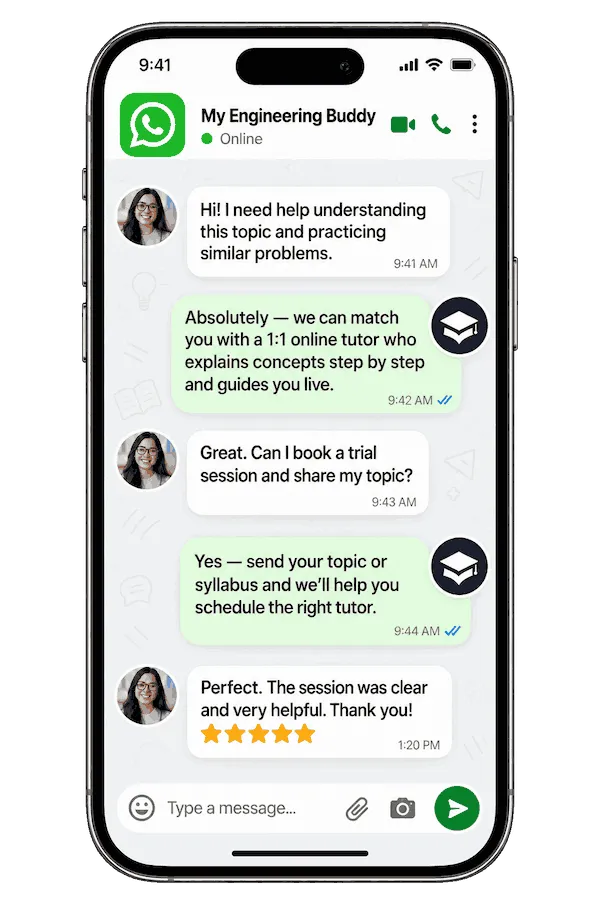
Unlike platforms where you fill out a form and wait, MEB responds in under a minute, 24/7. Tutor match takes under an hour. The $1 trial means you test before you commit. Everything runs over WhatsApp — no logins, no intake forms.
Pricing Guide
Logstash tutoring starts at $20/hr for standard coursework and introductory pipeline work. Rates reach $35–$70/hr for advanced topics — multi-pipeline architectures, Kafka integration, or production-grade ELK Stack deployments. Niche or graduate-level specialisations can reach $100/hr.
Rate factors: the complexity of your pipeline, the depth of your project requirements, your timeline, and tutor availability in your time zone.
Availability tightens during university semester-end project submissions and bootcamp deadlines. If your deadline is within three weeks, book sooner.
For students targeting roles at organisations running large-scale observability platforms — think cloud-native engineering teams at major tech companies or infrastructure roles at financial institutions — tutors with production Logstash and DevOps backgrounds are available at higher rates. Share your specific goal and MEB will match the tier to your ambition.
Start with the $1 trial — 30 minutes, no registration, no commitment. WhatsApp MEB for a quick quote.
FAQ
Is Logstash hard to learn?
The basics — input, filter, output — are straightforward. What trips people up is grok pattern syntax, understanding plugin execution order, and debugging silent failures. A tutor who can read your config file live cuts the learning curve significantly.
How many sessions do most students need?
Students with a specific stuck point — one broken pipeline or a misunderstood filter — often need 2–4 sessions. Students learning Logstash from scratch for a coursework project typically work across 8–12 sessions spread over 4–6 weeks.
Can you help with Logstash project and portfolio work?
Yes — MEB tutoring is guided learning. The tutor explains the logic, walks through the configuration approach, and helps you understand why a pipeline behaves a certain way. You build and submit the work yourself. See our Academic Integrity policy and Why MEB page for full details on what we help with and what we don’t.
Will the tutor match my exact syllabus or course setup?
Yes. Share your course outline, project brief, or the specific Logstash version and plugins your programme uses. The tutor works with your exact setup — not a generic walkthrough that doesn’t match your environment.
What happens in the first session?
The tutor reviews your current pipeline configuration, error output, and project requirements. They identify the primary gaps, set the session plan, and start working through the first problem with you. No time wasted on orientation material you already know.
Is online Logstash tutoring as effective as in-person?
For a configuration-based tool like Logstash, online is often better. The tutor sees your exact terminal output and config file in real time, annotates directly on screen, and can run test cases alongside you. There’s nothing a whiteboard in a room adds here.
Can I get Logstash help at short notice — even late at night?
Yes. MEB operates 24/7 across time zones. WhatsApp response averages under a minute. If your pipeline is broken at 11pm the night before a submission, send a message — tutors are available across US, UK, Gulf, and Australian time zones.
What’s the difference between Logstash and Filebeat — and which should I learn first?
Filebeat is a lightweight log shipper; Logstash is a full processing pipeline. Most production setups use both. If you’re new to the ELK Stack, understanding Logstash’s filter and output logic first gives you the foundation to use Filebeat and the rest of the stack correctly.
Do you offer group Logstash sessions?
No — all MEB sessions are 1:1. Group sessions dilute the diagnostic value. Your pipeline configuration is specific to your project; the session needs to be too. If you and a classmate have similar setups, book separate sessions — each will cover different issues.
What if my Logstash version is older — can you still help?
Yes. Tutors work with Logstash 6.x, 7.x, and 8.x. Share your version before the first session. Pipeline syntax and some plugin behaviours changed between major versions; the tutor will confirm which documentation and patterns apply to your specific setup.
How do I get started?
WhatsApp MEB, describe your Logstash problem or project, and you’ll be matched with a tutor — usually within the hour. First session starts with a diagnostic. Three steps: WhatsApp → matched → start your $1 trial.
Trust & Quality at My Engineering Buddy
Every MEB tutor goes through subject-specific screening before their first session. For Logstash, that means demonstrating hands-on knowledge of pipeline configuration, grok patterns, and ELK Stack integration — not just general software engineering credentials. Tutors complete a live demo evaluation and are reviewed after every session. Rated 4.8/5 across 40,000+ verified reviews on Google.
MEB provides guided learning support. All project work is produced and submitted by the student. For full details on what MEB helps with and what it doesn’t, read our Academic Integrity policy and Why MEB.
A common pattern our tutors observe is that students arrive knowing what Logstash is supposed to do — but without a clear model of how an event actually moves through a pipeline. That conceptual gap is what most of the first session fixes, and it changes everything that follows.
MEB has served 52,000+ students across the US, UK, Canada, Australia, the Gulf, and Europe since 2008, covering 2,800+ subjects. In Software Engineering, that includes Logstash alongside closely related tools — students frequently combine Apache Kafka tutoring, DevOps help, and monitoring support with their Logstash sessions. See our tutoring methodology for how MEB structures learning across technical subjects.
Explore Related Subjects
Students studying Logstash often also need support in:
Next Steps
Getting started takes one message. Here’s what to have ready:
- Your course outline or project brief, the Logstash version you’re using, and the specific problem you’re stuck on
- Your availability and time zone
- A copy of your current
logstash.confand any error output — the tutor will review it before the session starts
MEB matches you with a verified tutor — usually within 24 hours, often faster. The first session begins with a diagnostic so every minute is used on your actual problem, not background you already know.
Before your first session, have ready: your project brief or course spec, a recent pipeline attempt or config file you’ve struggled with, and your submission or exam deadline. The tutor handles the rest.
Visit www.myengineeringbuddy.com for more on how MEB works.
WhatsApp to get started or email [email protected].
Reviewed by Subject Expert
This page has been carefully reviewed and validated by our subject expert to ensure accuracy and relevance.