Hire Verified & Experienced
Zabbix Tutors
Email: [email protected]
4.8/5 40K+ session ratings collected on the MEB platform



Hire The Best Zabbix Tutor
Top Tutors, Top Grades. Without The Stress!
Your Zabbix alerts are firing but you can’t trace the root cause — and the official docs aren’t helping.
Zabbix Tutor Online
Zabbix is an open-source enterprise monitoring platform used to track servers, networks, applications, and cloud infrastructure in real time, enabling IT teams to detect failures, set threshold-based alerts, and visualise system health through configurable dashboards.
Finding a Zabbix tutor near me is harder than it sounds — most generic platforms don’t carry it. MEB has tutors who have deployed Zabbix in production environments across AWS, on-premise Linux servers, and hybrid cloud setups. Whether you’re building your first host group or debugging a broken LLD rule, a 1:1 software engineering tutor session gives you live, targeted help instead of another forum thread that’s two versions out of date.
- 1:1 online sessions tailored to your specific Zabbix version and environment
- Expert-verified tutors with hands-on deployment and configuration experience
- Flexible time zones — US, UK, Canada, Australia, Gulf covered
- Structured project support plan built after a diagnostic session
- Guided project support — we explain the logic, you configure and deploy
52,000+ students across the US, UK, Canada, Australia, and the Gulf have used MEB since 2008 — including students in Software Engineering subjects like Zabbix, Prometheus tutoring, and Datadog help.
Source: My Engineering Buddy, 2008–2025.
How Much Does a Zabbix Tutor Cost?
Most Zabbix sessions run $20–$40/hr. Specialist tutors with enterprise deployment or Zabbix certification experience charge up to $100/hr. Start with the $1 trial — 30 minutes of live 1:1 tutoring or one configuration problem explained in full.
| Level / Need | Typical Rate | What’s Included |
|---|---|---|
| Standard (most levels) | $20–$35/hr | 1:1 sessions, guided project support |
| Advanced / Specialist | $35–$100/hr | Enterprise tutor, niche depth |
| $1 Trial | $1 flat | 30 min live session or 1 config question |
Tutor availability tightens during bootcamp cohort windows and semester project deadlines — book early if you’re working to a fixed date.
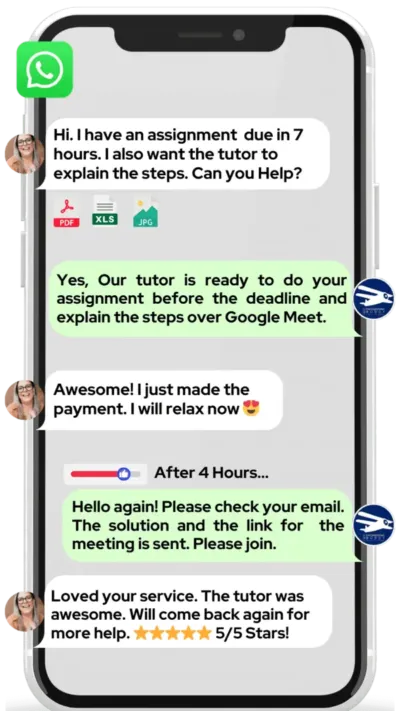
WhatsApp MEB for a quick quote — average response time under 1 minute.
Who This Zabbix Tutoring Is For
Zabbix is used by students in DevOps and infrastructure courses, IT professionals building their first monitoring stack, and engineers preparing for roles where observability is a core responsibility. If you can install Zabbix but can’t get your triggers to fire correctly, this is the session you need.
- University students in DevOps, cloud computing, or network administration modules
- IT professionals setting up Zabbix for the first time in a production environment
- Engineers troubleshooting agent connectivity, template inheritance, or LLD rules
- Students whose coursework or capstone project depends on a working monitoring setup
- Professionals with a job interview or technical assessment covering observability tools
- Students who attempted Zabbix configuration independently and hit a wall — and have a project submission deadline approaching
MEB tutors have helped students at institutions across the US, UK, Canada, Australia, and the Gulf including those progressing into DevOps roles at organisations that use Zabbix, Nagios, or Prometheus in their infrastructure stack. The $1 trial is available regardless of your current level.
1:1 Tutoring vs Self-Study vs AI vs YouTube vs Online Courses
Self-study works if your environment matches the docs — it rarely does. AI tools explain concepts but can’t SSH into your setup and tell you why your passive agent isn’t reporting. YouTube is useful for overviews of Zabbix 6.x features but stops short when your specific template macro isn’t resolving. Online courses cover installation but skip the debugging and customisation that most real projects demand. 1:1 tutoring with MEB is calibrated to your exact Zabbix version, your host configuration, and whatever broke last night — with a tutor correcting errors live on screen.
Outcomes: What You’ll Be Able To Do in Zabbix
After targeted sessions, you’ll be able to configure Zabbix agents on Linux and Windows hosts without referencing the documentation every step of the way. You’ll apply low-level discovery rules to automatically monitor dynamic infrastructure like containers and virtual machines. You’ll solve trigger dependency chains so cascading alerts don’t flood an on-call inbox. You’ll build dashboards that display the right metrics to the right team, and you’ll explain your monitoring architecture clearly in a project report or technical interview.
Based on feedback from 40,000+ sessions collected by MEB from 2022 to 2025, 58% of students improved by one full grade after approximately 20 hours of 1:1 tutoring in subjects like Zabbix. A further 23% achieved at least a half-grade improvement.
Source: MEB session feedback data, 2022–2025.
At MEB, we’ve found that the students who make the fastest progress in Zabbix aren’t the ones who read the most documentation — they’re the ones who configure something broken, get corrected in real time, and immediately try again. That cycle of attempt, feedback, and retry is what a solo learner misses entirely.
What We Cover in Zabbix (Syllabus / Topics)

Track 1: Installation, Agents & Host Configuration
- Installing Zabbix server on Ubuntu, CentOS, and Red Hat Linux
- Configuring Zabbix agent (active vs passive mode) on Linux and Windows
- Host group creation, interface setup, and template linking
- Using the Zabbix frontend: navigation, user permissions, and host management
- Zabbix proxy setup for distributed monitoring environments
- Troubleshooting agent connectivity and firewall port conflicts (10050/10051)
Textbook reference: Zabbix: Enterprise Network Monitoring Made Easy by Andrea Dalle Vacche & Stefano Kewan Lee; official Zabbix documentation (zabbix.com/documentation).
Track 2: Templates, Triggers, and Alerting
- Building and importing templates for common services (Apache, MySQL, NGINX)
- Writing trigger expressions using Zabbix trigger functions and macros
- Trigger severity levels, dependencies, and hysteresis configuration
- Setting up media types: email, Slack, PagerDuty, and custom webhooks
- Action configuration — conditions, operations, and escalation chains
- Testing and validating alert pipelines end-to-end
Textbook reference: Monitoring with Zabbix by Nathan Liefting & Brian van Baekel; official Zabbix trigger expression documentation.
Track 3: Low-Level Discovery, Dashboards & Integration
- Low-level discovery (LLD) rules: item prototypes, trigger prototypes, host prototypes
- Using built-in discovery keys vs custom discovery scripts
- Dashboard creation: widgets, dynamic labels, and graph configuration
- Zabbix API: authenticating and querying hosts, items, and events via JSON-RPC
- Integrating Zabbix with Grafana help for advanced visualisation
- Exporting data to external systems and setting up Zabbix sender
Textbook reference: Zabbix official API documentation; Zabbix Network Monitoring by Rihards Olups (Packt Publishing).
Students consistently tell us that LLD is the point where Zabbix clicks. Once you understand that LLD is just a loop that creates monitoring objects automatically, everything from container monitoring to multi-disk SMART checks starts to make sense. Most students get there in two focused sessions.
Platforms, Tools & Textbooks We Support
Zabbix runs on specific infrastructure and integrates with a defined toolchain. MEB tutors support students working across all of the following:
- Zabbix 6.x and 7.x (LTS and current releases)
- Ubuntu, CentOS, Red Hat Enterprise Linux, and Debian server environments
- Docker tutoring and containerised Zabbix deployments
- Kubernetes help environments with Zabbix agent DaemonSets
- AWS tutoring and cloud-hosted Zabbix server configurations
- Grafana, PagerDuty, Slack, and custom webhook integrations
- Zabbix API (JSON-RPC) accessed via Postman or Python scripts
What a Typical Zabbix Session Looks Like
The tutor opens by checking where you left off — usually a trigger that wasn’t evaluating correctly or an LLD rule that wasn’t generating items. From there, the session moves to your actual Zabbix environment shared via screen. The tutor uses a digital pen-pad to annotate configuration steps and data flows directly on screen while you adjust settings in the frontend. You’ll work through a specific problem — say, a passive agent that’s showing “ZBX” instead of “unknown,” or a template macro that’s not resolving at the host level. The tutor watches you make changes and corrects reasoning errors in the moment. The session closes with one concrete task: replicate a working configuration for a second host type before next time.
How MEB Tutors Help You with Zabbix (The Learning Loop)
Diagnose: The first session identifies exactly where you’re stuck. Is it the agent configuration, the trigger logic, the LLD setup, or the alerting pipeline? The tutor asks you to share your current setup and runs through it before explaining anything.
Explain: The tutor works through the problem live — annotating the data flow from agent to server to trigger to action using a digital pen-pad. No slides. No generic walkthroughs. The explanation is anchored to your specific configuration.
Practice: You make the changes or build the configuration while the tutor watches. If you’re configuring a new LLD rule, you build it from scratch during the session — not after.
Feedback: The tutor corrects errors step by step and explains exactly why a trigger expression fails or why an item key isn’t returning data. This is where most self-learners stall — they know something is wrong but not why.
Plan: At the end of each session, the tutor sets the next topic and a specific task. Progress is tracked session to session so nothing gets repeated unnecessarily.
Sessions run on Google Meet. The tutor uses a digital pen-pad or iPad with Apple Pencil for live annotation. Before your first session, share your Zabbix version, your server OS, and a screenshot or description of what’s not working. The first session covers a diagnostic run-through of your setup and resolves at least one concrete problem. Start with the $1 trial — 30 minutes of live tutoring that also serves as your diagnostic session.
Unlike Nagios or Prometheus, Zabbix ships with its own frontend, its own agent protocol, and its own discovery engine — making it one of the most self-contained monitoring platforms available, but also one where misconfiguration at any layer silently breaks everything downstream.
Source: Zabbix official documentation; My Engineering Buddy tutor notes, 2022–2025.
Try your first session for $1 — 30 minutes of live 1:1 tutoring or one homework question explained in full. No registration. No commitment. WhatsApp MEB now and get matched within the hour.
Tutor Match Criteria (How We Pick Your Tutor)
Not every tutor who knows Linux knows Zabbix. MEB matches on four specific criteria.
Subject depth: The tutor must have hands-on Zabbix experience — not just monitoring theory. MEB verifies this through a live demo evaluation before any tutor joins the platform.
Tools: Every session runs on Google Meet with a digital pen-pad or iPad and Apple Pencil. The tutor can annotate your configuration in real time.
Time zone: Matched to your region — US, UK, Gulf, Canada, or Australia — so sessions happen at hours that don’t wreck your schedule.
Goals: Whether you need to pass a university module, complete a capstone project, or get Zabbix working before a job starts, the tutor is briefed on your specific target before session one.
Unlike platforms where you fill out a form and wait, MEB responds in under a minute, 24/7. Tutor match takes under an hour. The $1 trial means you test before you commit. Everything runs over WhatsApp — no logins, no intake forms.
Pricing Guide
Zabbix tutoring runs $20–$40/hr for most levels. Graduate coursework, enterprise deployment projects, and Zabbix certification preparation with senior tutors can reach $100/hr. Rate factors include your current level, the complexity of your setup, your timeline, and tutor availability.
Availability tightens during university project submission windows and bootcamp cohort deadlines. If you have a hard deadline, book sooner rather than later.
For students targeting roles at organisations with complex monitoring stacks — financial services, telecoms, large-scale SaaS — tutors with professional infrastructure and SRE backgrounds are available at higher rates. Share your specific goal and MEB will match the tier to what you actually need.
Start with the $1 trial — 30 minutes, no registration, no commitment. WhatsApp MEB for a quick quote.
FAQ
Is Zabbix hard to learn?
Installation is manageable. The real difficulty is the trigger expression syntax, LLD rule configuration, and understanding how agent modes interact with firewall rules. Most students get stuck at these three points. A tutor gets you past them in two or three focused sessions.
How many sessions will I need?
Students with a specific project problem typically resolve it in two to four sessions. Those learning Zabbix from scratch for a university module or job role usually need eight to twelve sessions spread across four to six weeks, depending on their Linux familiarity.
Can you help with projects and portfolio work?
Yes. MEB provides guided project support — the tutor explains the configuration logic and troubleshooting steps, and you build and submit the work yourself. See our Policies page for full details on what we help with and what we don’t.
Will the tutor match my exact Zabbix version and environment?
Yes. Tutors work with Zabbix 6.x and 7.x across Ubuntu, CentOS, Red Hat, and Debian environments. Share your version and OS before the first session and the tutor comes prepared for your exact setup.
What happens in the first session?
The tutor reviews your current setup — your server install, agent config, and whatever isn’t working. One concrete problem is resolved by the end of the session. You leave with a specific task and a clear plan for the next two to three sessions.
Is online tutoring as effective as in-person for Zabbix?
For a tool like Zabbix, online is often better. Screen sharing lets the tutor see your exact configuration files and frontend state. The digital pen-pad annotation is clearer than whiteboard diagrams. Timezone flexibility means you can book when the problem is live in front of you.
Can I get Zabbix help at midnight or on weekends?
Yes. MEB operates 24/7 across all time zones. WhatsApp response time averages under a minute. If your monitoring stack breaks on a Sunday evening before a Monday project submission, a tutor is available.
What’s the difference between active and passive Zabbix agents, and which should I use?
Passive agents wait for the server to poll them — simpler to set up but dependent on server-side scheduling. Active agents push data to the server on their own schedule — better for large environments and firewalled hosts. Your tutor will walk through both and recommend the right mode for your specific infrastructure.
How does Zabbix compare to Nagios and Prometheus, and does MEB cover those too?
Zabbix has its own built-in frontend, agent protocol, and database — making it more self-contained than Nagios but more opinionated than Prometheus. MEB covers all three. See Nagios tutoring and monitoring help for related support.
What if I don’t like my assigned tutor?
Tell MEB via WhatsApp and a different tutor is matched — usually within the hour. No explanation required. The $1 trial exists precisely so you can test the fit before committing to a session block.
How do I get started?
Three steps: WhatsApp MEB, get matched with a verified Zabbix tutor (usually within an hour), and start your $1 trial — 30 minutes of live tutoring or one configuration problem explained in full. No registration, no intake form.
Do you offer group Zabbix sessions?
MEB focuses on 1:1 online Zabbix tutor sessions. All sessions are private and tailored to one student’s setup and goals. Group sessions are not offered — the personalisation of individual troubleshooting is what makes the difference.
Trust & Quality at My Engineering Buddy
Every MEB tutor goes through a subject-specific screening process: technical interview, live demo evaluation, and degree or professional credential verification. Tutors covering Zabbix are assessed on their ability to configure hosts, write trigger expressions, and debug agent issues — not just explain monitoring theory. Rated 4.8/5 across 40,000+ verified reviews on Google. Ongoing feedback after every session flags any drop in quality before it becomes a pattern.
MEB tutoring is guided learning — you understand the work, then submit it yourself. For full details on what we help with and what we don’t, read our Academic Integrity policy and Why MEB.
MEB has served 52,000+ students across the US, UK, Canada, Australia, Gulf, and Europe in 2,800+ subjects since 2008. Software Engineering subjects — including Zabbix, DevOps tutoring, and Infrastructure as Code help — are among the most requested. Tutor quality is reviewed after every session. See our tutoring methodology for how sessions are structured from diagnostic to close.
arXiv’s Computer Science section hosts active research on observability, anomaly detection, and distributed systems monitoring — the same operational domain that Zabbix practitioners work in every day.
Source: arXiv Computer Science.
A common pattern our tutors observe is that students who struggle with Zabbix have solid Linux skills but have never had to think about data collection pipelines before. The moment they understand that Zabbix is just moving numbers from a host to a database to a trigger condition, the configuration stops feeling arbitrary and starts feeling logical.
Explore Related Subjects
Students studying Zabbix often also need support in:
Next Steps
Before your first session, have ready: your Zabbix version and server OS, a screenshot or description of the configuration problem or the project brief you’re working from, and your deadline or exam date. The tutor handles the rest.
- Share your Zabbix version, current setup, and what’s broken or what you’re building
- Share your availability and time zone
- MEB matches you with a verified tutor — usually within an hour
The first session starts with a diagnostic run-through of your environment so every minute is used on the actual problem — not introductions.
Visit www.myengineeringbuddy.com for more on how MEB works.
WhatsApp to get started or email [email protected].
52,000+ Happy Students From Various Universities



How Much For Private 1:1 Tutoring & Hw Help?
Private 1:1 Tutoring and HW help Cost $20 – 35 per hour* on average.
Reviewed by Subject Expert
This page has been carefully reviewed and validated by our subject expert to ensure accuracy and relevance.