Hire Verified & Experienced
Site Reliability Engineering (SRE) Tutors
Email: [email protected]
4.8/5 40K+ session ratings collected on the MEB platform



Hire The Best Site Reliability Engineering (SRE) Tutor
Top Tutors, Top Grades. Without The Stress!
Your SRE interview is in three weeks and you still can’t explain error budgets without stumbling. That ends today.
Site Reliability Engineering (SRE) Tutor Online
Site Reliability Engineering (SRE) is a discipline that applies software engineering principles to infrastructure and operations, focusing on reliability, availability, and scalability. It equips practitioners to define SLOs, manage error budgets, automate toil, and lead incident response.
MEB offers 1:1 online tutoring and project help in 2800+ advanced subjects, including SRE. If you’ve searched for an SRE tutor near me and found nothing useful locally, that’s exactly why online 1:1 works better here — your tutor has hands-on production experience, not just slides about it. Whether you’re working through a graduate software engineering programme, preparing for an SRE role interview, or untangling a Kubernetes incident response assignment, MEB matches you with a practitioner who has been inside these systems.
- 1:1 online sessions tailored to your course syllabus or job-prep goals
- Expert-verified tutors with real production SRE experience
- Flexible time zones — US, UK, Canada, Australia, Gulf
- Structured learning plan built after a diagnostic session
- Guided project support — we explain the approach, you build and submit
52,000+ students across the US, UK, Canada, Australia, and the Gulf have used MEB since 2008 — across Software Engineering subjects including Site Reliability Engineering, DevOps tutoring, and cloud architecture help.
Source: My Engineering Buddy, 2008–2025.
How Much Does a Site Reliability Engineering (SRE) Tutor Cost?
Most SRE sessions run $20–$40/hr depending on level and topic complexity. Graduate-level SRE, production system design, and advanced Kubernetes work can reach $70–$100/hr. You can test everything with the $1 trial before committing to a rate.
| Level / Need | Typical Rate | What’s Included |
|---|---|---|
| Standard (undergrad / early career) | $20–$40/hr | 1:1 sessions, project guidance, SLO/SLI walkthroughs |
| Advanced / Graduate / Interview Prep | $40–$100/hr | Production system design, expert practitioner tutor |
| $1 Trial | $1 flat | 30 min live session or one full project question explained |
Tutor availability tightens during university exam periods and hiring cycles in Q1 and Q4. Book early if your deadline is within four weeks.
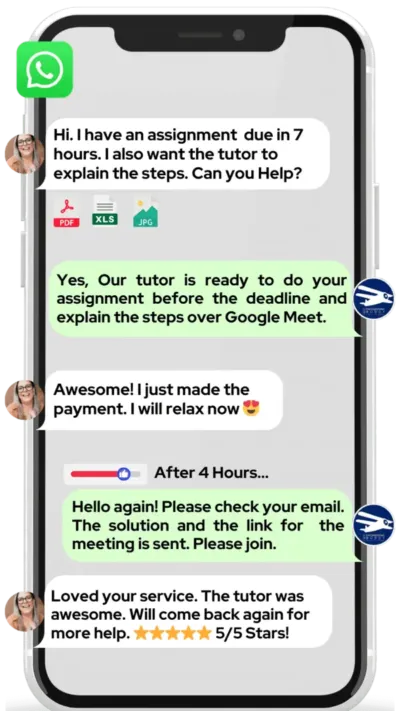
WhatsApp MEB for a quick quote — average response time under 1 minute.
Who This Site Reliability Engineering (SRE) Tutoring Is For
SRE sits at the intersection of software engineering, systems thinking, and operational culture. It’s not hard to get started — it’s hard to get good at. Most people hit a wall when theory meets a production incident or a system design interview.
- Graduate students in cloud computing, distributed systems, or software engineering programmes
- Early-career engineers preparing for SRE or platform engineering interviews at tech companies
- Engineers already in DevOps or ops roles transitioning into a formal SRE function
- Students with a university conditional offer depending on their grade in a systems or reliability module
- Professionals working through SRE certification paths who need help with Kubernetes tutoring, Terraform help, or observability tooling
- Students at universities including Georgia Tech, Carnegie Mellon, University of Toronto, University of Edinburgh, TU Delft, and UNSW who cover SRE concepts in advanced systems courses
At MEB, we’ve found that students who struggle with SRE aren’t struggling with the tools — they’re struggling to connect the why behind SLOs to the decisions they make during an incident. Once that clicks, the rest follows faster than expected.
1:1 Tutoring vs Self-Study vs AI vs YouTube vs Online Courses
Self-study works if you’re disciplined, but SRE gaps are invisible until a system breaks. AI tools give fast definitions — they can’t simulate an incident debrief or tell you why your runbook logic is wrong. YouTube is fine for overviews of Prometheus or Grafana; it stops when you need to walk through your actual alert configuration. Online courses are structured but fixed-pace, and they don’t adapt when you’re stuck on error budget policy for your specific org size. 1:1 online SRE tutoring with MEB puts a practitioner next to you in real time — reviewing your actual configs, correcting your PromQL queries, and explaining the tradeoff you just missed.
Outcomes: What You’ll Be Able To Do in Site Reliability Engineering (SRE)
After working with an MEB SRE tutor, you’ll be able to define and defend SLOs and SLIs for a realistic service, calculate error budgets and explain how they drive release decisions, analyze distributed system failure modes using structured incident review, apply monitoring and alerting logic using Prometheus and alertmanager, write runbooks that hold up under pressure, and present a capacity planning argument that accounts for traffic growth and reliability targets.
Based on feedback from 40,000+ sessions collected by MEB from 2022 to 2025, 58% of students improved by one full grade after approximately 20 hours of 1:1 tutoring in subjects like Site Reliability Engineering (SRE). A further 23% achieved at least a half-grade improvement.
Source: MEB session feedback data, 2022–2025.
Try your first session for $1 — 30 minutes of live 1:1 tutoring or one homework question explained in full. No registration. No commitment. WhatsApp MEB now and get matched within the hour.
What We Cover in Site Reliability Engineering (SRE) (Syllabus / Topics)
Track 1: Reliability Fundamentals and SLO Engineering
- SLIs, SLOs, and SLAs — definitions, hierarchy, and practical tradeoffs
- Error budget calculation and policy design
- Availability targets: 99.9% vs 99.99% — what each costs operationally
- Toil identification and reduction strategies
- Risk analysis and reliability risk registers
- CRE (Customer Reliability Engineering) concepts
Recommended texts: Site Reliability Engineering by Beyer, Jones, Petoff & Murphy (Google SRE Book); The Site Reliability Workbook by Beyer et al.
Track 2: Observability, Monitoring, and Incident Management
- Metrics, logs, and traces — the three pillars of observability
- Prometheus configuration, PromQL queries, and alertmanager rules
- Datadog tutoring — dashboards, monitors, and APM setup
- Incident command structure and on-call runbook design
- Post-incident review (PIR) / blameless postmortem facilitation
- Alert fatigue: tuning signal-to-noise in production environments
- Distributed tracing with Jaeger or Zipkin
Recommended texts: Observability Engineering by Majors, Fong-Jones & Miranda; Database Reliability Engineering by Campbell & Majors.
Track 3: Infrastructure, Automation, and Scalability
- Infrastructure as Code tutoring — Terraform, Ansible, and GitOps workflows
- Container orchestration: Kubernetes cluster management, pod autoscaling, and failure handling
- CI/CD pipeline design and reliability — Jenkins help, GitLab CI, and deployment gates
- Capacity planning models and load testing with Apache JMeter tutoring
- Scalability tutoring — horizontal vs vertical scaling, stateless design
- Chaos engineering principles (Chaos Monkey, Gremlin)
- Cloud-native reliability on AWS, GCP, and Azure — multi-region failover, managed services SLA alignment
Recommended texts: Seeking SRE edited by David Blank-Edelman; Cloud Native Patterns by Davis.

Platforms, Tools & Textbooks We Support
SRE is tool-heavy. MEB tutors work directly inside the platforms students actually use — not generic walkthroughs. Sessions can cover Prometheus and alertmanager configuration, Kubernetes cluster troubleshooting, Ansible playbook debugging, Grafana dashboard design, and Docker container reliability patterns. If your course or role uses a specific observability stack, share it before the first session and the tutor prepares accordingly.
- Prometheus + Alertmanager + Grafana
- Kubernetes (kubectl, Helm, kubeadm)
- Terraform and Ansible
- Datadog, PagerDuty, and OpsGenie
- Jenkins, GitLab CI/CD, CircleCI
- AWS CloudWatch, GCP Operations Suite, Azure Monitor
- Chaos engineering tools: Chaos Monkey, Gremlin
What a Typical Site Reliability Engineering (SRE) Session Looks Like
The tutor opens by checking the previous topic — usually whatever runbook or SLO definition you worked on last time. From there, you and the tutor work through the current problem on screen: if it’s error budget calculation, the tutor writes out the formula on a digital pen-pad and walks through your specific service’s traffic numbers. If it’s an incident review exercise, you’re walking through a timeline together, identifying where the detection lag was and why. You attempt the next step, the tutor watches and corrects in real time. The session ends with a concrete task — a PromQL query to write, a postmortem draft to complete, or a Terraform module to review — and the next topic is already agreed before you disconnect.
How MEB Tutors Help You with Site Reliability Engineering (SRE) (The Learning Loop)
Diagnose: In the first session, the tutor identifies exactly where your understanding breaks down — whether that’s the conceptual relationship between SLOs and error budgets, the mechanics of PromQL, or the logic of a Kubernetes health check. Most students arrive thinking they have one gap. The diagnostic usually surfaces two or three.
Explain: The tutor works through the problem live using a digital pen-pad or iPad with Apple Pencil, annotating your actual configs or system design diagrams. No slides. No pre-recorded walkthroughs. The explanation is built around your specific code or architecture.
Practice: You attempt the next problem while the tutor is present. For SRE, that might mean writing an alertmanager rule from scratch or explaining your capacity model out loud. The tutor doesn’t intervene until you’ve committed to an approach.
Feedback: Every error gets traced back to its root — not just “that’s wrong” but why the logic fails in a production context. If your alert threshold is wrong, the tutor shows you what it would trigger at 3am and why the on-call engineer would ignore it.
Plan: At the end of each session, you have a clear list of what to review before the next one, which topics are ready to close, and what the next session will cover. The tutor tracks this across sessions so nothing falls through.
Sessions run on Google Meet with a digital pen-pad or iPad and Apple Pencil. Before your first session, share your course syllabus or job description, a recent assignment or system design you’re stuck on, and your timeline. The first session is always a diagnostic — so every minute from session two onward is used on the right things. Start with the $1 trial — 30 minutes of live tutoring that also serves as your first diagnostic.
Students consistently tell us that SRE clicked only when someone walked them through a real incident timeline — not a textbook one. Our tutors use actual production patterns, not sanitised examples, because that’s what shows up in interviews and on-call rotations.
Tutor Match Criteria (How We Pick Your Tutor)
Not every engineer who knows SRE can teach it. Here’s what MEB looks for.
Subject depth: Tutors hold relevant experience in production SRE, platform engineering, or systems reliability — verified by a subject-specific demo session before they join the platform. Familiarity with Google’s SRE model and its variants is required.
Tools: Every tutor works over Google Meet with a digital pen-pad or iPad and Apple Pencil — essential for annotating architecture diagrams, config files, and PromQL logic in real time.
Time zone: Matched to your region — US, UK, Gulf, Canada, or Australia — so late-night sessions are available when your deadline is close.
Goals: Whether you need help with a graduate module, interview prep for a FAANG-adjacent SRE role, or ongoing system design tutoring, the tutor is matched to that specific outcome — not assigned generically.
Unlike platforms where you fill out a form and wait, MEB responds in under a minute, 24/7. Tutor match takes under an hour. The $1 trial means you test before you commit. Everything runs over WhatsApp — no logins, no intake forms.
Study Plans (Pick One That Matches Your Goal)
The tutor builds your specific sequence after the diagnostic, but here are the three most common patterns for SRE students. Catch-up (1–3 weeks): closing specific gaps before a project deadline or viva — ideal if you’re behind on SLO design or incident analysis. Exam or interview prep (4–8 weeks): structured work through reliability fundamentals, system design, and tool-specific depth. Weekly support: ongoing sessions aligned to your semester, covering each module topic as your course progresses. Bring your exam board, course outline, or job description — the tutor takes it from there.
Pricing Guide
SRE tutoring starts at $20/hr for standard undergraduate-level sessions. Graduate-level system design, interview prep for senior SRE roles, and advanced Kubernetes or observability work runs $40–$100/hr depending on tutor depth and timeline urgency.
Rate factors: course level, topic complexity (Kubernetes and distributed systems carry higher rates than introductory SLO concepts), how quickly you need sessions, and tutor availability. Q1 and Q4 are peak periods — availability tightens fast.
For students targeting senior SRE, Staff Engineer, or platform engineering roles at major tech organisations, tutors with direct production backgrounds at comparable-scale companies are available at premium rates. Share your target role and current gap, and MEB will match the tier to your ambition.
Start with the $1 trial — 30 minutes, no registration, no commitment. WhatsApp MEB for a quick quote.
A common pattern our tutors observe is that SRE candidates who fail technical interviews aren’t missing knowledge — they’re missing the ability to reason out loud about tradeoffs under time pressure. That’s exactly what 1:1 sessions fix fastest.
Source: MEB tutor observations, 2022–2025.
FAQ
Is Site Reliability Engineering (SRE) hard?
SRE is conceptually dense and tool-heavy. The hardest part isn’t learning Prometheus or Kubernetes individually — it’s understanding how reliability targets, error budgets, and operational decisions connect in a production environment. 1:1 tutoring closes that gap faster than self-directed study.
How many sessions are needed?
Most students see real progress in 6–10 sessions. Students with specific interview or project deadlines often need 4–8 targeted sessions. The tutor assesses your gaps in session one and gives you a realistic timeline based on what’s actually there.
Can you help with projects and portfolio work?
Yes. MEB provides guided learning support — the tutor explains the approach, walks through the logic, and helps you understand the design decisions. All project work is produced and submitted by you. MEB tutoring is guided learning — you understand the work, then submit it yourself. See our Academic Integrity policy and Why MEB page for full details on what we help with and what we don’t.
Will the tutor match my exact syllabus or exam board?
Yes. Share your course outline, university module guide, or job description before the first session. The tutor prepares specifically for your material — not a generic SRE curriculum. If your programme uses a specific textbook or observability stack, bring that too.
What happens in the first session?
The first session is a diagnostic. The tutor asks targeted questions about your current understanding, reviews any work you’ve shared, and maps the gaps. From there, a session plan is agreed — so every subsequent session starts with a clear purpose, not a blank slate.
Is online tutoring as effective as in-person?
For SRE, online is often better. The tutor can annotate your actual config files, architecture diagrams, and PromQL queries directly on screen. Google Meet plus a digital pen-pad or iPad replicates a whiteboard session without losing any of the back-and-forth that makes in-person effective.
Can I get SRE help at short notice — including late at night?
Yes. MEB operates 24/7 across time zones. WhatsApp response time averages under a minute. If your incident review is due tomorrow or your interview is in 48 hours, message now — tutors are matched within the hour for urgent cases.
What if I don’t connect with my assigned tutor?
Tell MEB over WhatsApp. Tutor switches are handled quickly — usually within the same day. The $1 trial exists precisely so you test the match before spending more. No awkward process, no forms to fill out.
Do you offer group SRE sessions?
No. All MEB sessions are 1:1. Group sessions dilute the diagnostic value — the tutor can’t calibrate to your specific gaps when three students have three different problems. Every session is built around one student’s actual work.
How do I find an SRE tutor if I’m not in the US?
MEB covers US, UK, Canada, Australia, the Gulf, and Europe. Tutors are matched to your time zone. Students in Dubai, London, Toronto, and Sydney all get the same 24/7 WhatsApp access and sub-one-hour match time. Location doesn’t affect availability.
What’s the difference between SRE tutoring and DevOps tutoring at MEB?
SRE focuses on reliability targets, error budgets, postmortems, and production system behaviour. DevOps tutoring at MEB covers CI/CD pipelines, deployment automation, and team workflow integration. Many students need both — the tutor clarifies the overlap in session one.
How do I get started?
Start with the $1 trial — 30 minutes of live tutoring or one project question explained in full. Three steps: WhatsApp MEB, get matched with a verified SRE tutor within the hour, then start your trial session. No registration, no commitment beyond $1.
Trust & Quality at My Engineering Buddy
Every MEB tutor goes through a subject-specific screening process: academic background check, live demo session evaluated by a senior tutor, and ongoing feedback review after every session block. For SRE, that means verifying real production experience — not just familiarity with the Google SRE book. Rated 4.8/5 across 40,000+ verified reviews on Google. Tutors are matched to your specific level, toolchain, and region — not assigned from a generic pool.
MEB provides guided learning support. All project work is produced and submitted by the student. For full details on what we help with and what we don’t, read our Academic Integrity policy and Why MEB.
MEB has served 52,000+ students since 2008 across 2,800+ subjects in the US, UK, Canada, Australia, the Gulf, and Europe. In the Software Engineering category, that includes students working on software quality assurance tutoring, software architecture help, and microservices tutoring alongside SRE. The platform runs on WhatsApp — no intake forms, no waiting rooms, no automated queues. You talk to a person within a minute.
A common pattern our tutors observe is that students who book SRE sessions three weeks before a deadline make solid progress. Students who book the night before a project submission are managing damage, not learning. Book early — the $1 trial costs nothing to start now.
Explore Related Subjects
Students studying Site Reliability Engineering (SRE) often also need support in:
- Cloud Architecture
- Infrastructure, Cloud, Server & Network IT
- Azure DevOps
- Google Cloud Platform (GCP)
- Amazon Web Services (AWS)
- GitLab CI/CD
- Software Development Life Cycle (SDLC)
Next Steps
Share your exam board, course module, or target role — and your hardest current topic. Share your availability and time zone. MEB matches you with a verified SRE tutor, usually within the hour.
Before your first session, have ready:
- Your course outline, module guide, or job description
- A recent assignment, system design, or incident review you’re stuck on
- Your exam date, project deadline, or interview window
The tutor handles the rest. First session is always a diagnostic — every minute from session two is spent on what actually needs work.
Visit www.myengineeringbuddy.com for more on how MEB works.
WhatsApp to get started or email [email protected].
52,000+ Happy Students From Various Universities



How Much For Private 1:1 Tutoring & Hw Help?
Private 1:1 Tutoring and HW help Cost $20 – 35 per hour* on average.
Reviewed by Subject Expert
This page has been carefully reviewed and validated by our subject expert to ensure accuracy and relevance.