




~1 min
Average Reply Time
~1 hour
To Be Matched With A Tutor
1 Trial
75% Find Their Tutor On The 1st Trial
$1
Your First 30 Minutes
Hire The Best Xcode Tutor
Top Tutors, Top Grades. Without The Stress!
Related Subjects
Your Xcode build compiles but the app crashes at runtime — and you’ve been staring at the same error for three hours.
Xcode Tutor Online
Xcode is Apple’s integrated development environment (IDE) for building iOS, macOS, watchOS, and tvOS applications using Swift or Objective-C, providing tools for coding, debugging, interface design, and App Store submission.
Finding a reliable Xcode tutor online means more than someone who knows Swift — it means someone who knows Interface Builder, the Simulator, Instruments for profiling, and why your provisioning profile keeps failing. MEB connects you with software engineering tutors who work in Apple development specifically. If you’ve searched for an Xcode tutor near me and found no one with real iOS project experience, MEB is the answer. Sessions are 1:1, live, and built around your actual project or coursework — not a generic curriculum.
- 1:1 online sessions tailored to your iOS or macOS project and course syllabus
- Expert-verified tutors with hands-on Xcode and Swift development experience
- Flexible time zones — US, UK, Canada, Australia, Gulf covered
- Structured learning plan built after a diagnostic session
- Guided project support — we explain the logic, you write and ship the code
52,000+ students across the US, UK, Canada, Australia, and the Gulf have used MEB since 2008 — including students in Software Engineering subjects like Xcode, iOS development, and Swift and mobile app development.
Source: My Engineering Buddy, 2008–2025.
How Much Does an Xcode Tutor Cost?
Most Xcode tutoring sessions run $20–$40/hr, depending on level and project complexity. Advanced iOS architecture, App Store submission pipelines, or graduate-level coursework can reach up to $100/hr. Not sure if it’s worth it? Try the $1 trial first — 30 minutes live or one project question explained in full, no registration needed.
| Level / Need | Typical Rate | What’s Included |
|---|---|---|
| Standard (most levels) | $20–$35/hr | 1:1 sessions, project guidance |
| Advanced / Specialist | $35–$100/hr | Expert tutor, architecture depth |
| $1 Trial | $1 flat | 30 min live session or 1 project question |
Tutor availability tightens around university project deadlines and end-of-semester capstone crunch periods. Book early if you have a fixed submission date.
WhatsApp MEB for a quick quote — average response time under 1 minute.
Who This Xcode Tutoring Is For
This isn’t for people who just opened Xcode for the first time and want a YouTube walkthrough. It’s for students and developers who are stuck on something specific — a delegate pattern that won’t fire, a Core Data stack that isn’t persisting, or a UI that breaks on iPhone 15 but not the Simulator.
- Undergraduate and graduate students taking iOS or mobile development modules
- Students with a capstone or final project submission deadline approaching fast
- Students retaking a course after a failed first attempt in app development
- Self-taught developers who need to fill gaps in their Xcode and Swift knowledge before a job or internship
- Students working through app development coursework who need guided project support, not just documentation links
- Developers moving from Android to iOS who need to re-learn tooling in Xcode specifically
Students at universities including MIT, Carnegie Mellon, UC Berkeley, Georgia Tech, University of Toronto, Imperial College London, and UNSW regularly work with MEB tutors on iOS and Xcode projects.
1:1 Tutoring vs Self-Study vs AI vs YouTube vs Online Courses
Self-study: works if you’re disciplined, but Xcode error messages are notoriously opaque and self-debugging without guidance is slow. AI tools: fast for boilerplate Swift, but can’t watch you set up a scheme incorrectly or explain why your entitlements are misconfigured. YouTube: solid for getting started, useless when your specific project breaks in a way no tutorial covers. Online courses: structured but fixed — they don’t adjust when you’re three days from a deadline with a specific crash you can’t reproduce. 1:1 tutoring with MEB: live, in your actual Xcode project, correcting the exact error in front of you.
Outcomes: What You’ll Be Able To Do in Xcode
After working with an MEB Xcode tutor, you’ll be able to build, run, and debug a functional iOS or macOS app without hitting walls every twenty minutes. You’ll know how to set up targets and schemes correctly, so your project builds cleanly across devices. You’ll be able to apply the MVC and MVVM patterns in a real Swift project — not just define them. You’ll understand how to use Instruments to profile memory usage and identify retain cycles before they crash production. You’ll be able to navigate provisioning profiles and code signing without guesswork. And you’ll be confident submitting a complete, tested build through the App Store connect pipeline or handing off a university project that compiles and runs the first time your assessor opens it.
Based on feedback from 40,000+ sessions collected by MEB from 2022 to 2025, students working 1:1 on Xcode consistently report faster project completion, fewer unresolved build errors, and clearer understanding of how the iOS development pipeline fits together. Progress varies by starting level and practice frequency.
Source: MEB session feedback data, 2022–2025.
Try your first session for $1 — 30 minutes of live 1:1 tutoring or one project question explained in full. No registration. No commitment. WhatsApp MEB now and get matched within the hour.
What We Cover in Xcode (Syllabus / Topics)

Track 1: Xcode IDE Fundamentals and Project Setup
- Creating and configuring Xcode projects, workspaces, and targets
- Understanding schemes, build configurations, and run destinations
- Using the Navigator, Editor, and Inspector panels effectively
- Managing packages with Swift Package Manager and CocoaPods
- Setting up Git version control within Xcode
- Code signing, provisioning profiles, and entitlements
- Running and configuring the iOS Simulator vs physical device testing
Core references: Apple’s Xcode Documentation (developer.apple.com), Hector Matos’ Swift by Sundell, and the IEEE’s published guidelines — see IEEE for broader software tooling context.
Track 2: Swift Development Inside Xcode
- Swift syntax, optionals, closures, and protocols in the Xcode editor
- Building UI with SwiftUI and Interface Builder / Storyboards
- Implementing MVC and MVVM architecture in iOS projects
- Core Data setup, entities, fetch requests, and persistence
- Networking with URLSession and integrating REST APIs
- Concurrency with async/await and Grand Central Dispatch (GCD)
- Unit testing and UI testing with XCTest inside Xcode
Key references: Apple’s Swift Programming Language guide, Paul Hudson’s Hacking with Swift, and Donny Wals’ Practical Core Data.
Track 3: Debugging, Profiling, and App Store Submission
- Using the Xcode debugger: breakpoints, LLDB console, and variable inspection
- Identifying and fixing EXC_BAD_ACCESS, nil unwrapping, and threading errors
- Profiling with Instruments: Time Profiler, Allocations, and Leaks tools
- Fixing retain cycles and memory leaks in ARC-managed code
- Preparing builds for TestFlight and App Store review submission
- Reading and resolving App Store Connect rejection notices
Key references: Apple’s Instruments User Guide, Apple’s App Store Review Guidelines, and Ray Wenderlich’s iOS App Distribution & Best Practices.
Platforms, Tools & Textbooks We Support
Xcode is inherently tool-specific, and MEB tutors work directly inside your environment. Sessions support Xcode 15 and 16, Swift 5.x and Swift 6, SwiftUI and UIKit, TestFlight and App Store Connect, and CocoaPods and Swift Package Manager. Tutors are also familiar with Simulator configurations across iOS versions and can help you replicate device-specific bugs in a controlled build environment.
- Xcode 15 / 16 (macOS Sonoma and Ventura)
- Swift 5.x and Swift 6
- SwiftUI and UIKit / Storyboards
- Swift Package Manager and CocoaPods
- TestFlight and App Store Connect
- Instruments (Time Profiler, Allocations, Leaks)
- XCTest and XCUITest frameworks
- Git within Xcode and GitHub integration
What a Typical Xcode Session Looks Like
The tutor opens by asking what you worked on since the last session — usually something like “did the Core Data fetch request work after we fixed the predicate?” You share your screen in Google Meet and the tutor can see your Xcode project directly. If there’s a crash, you pull up the debugger together and the tutor uses a digital pen-pad to annotate the stack trace. You work through the problem — the tutor asks questions rather than just typing the fix. By the end of the session, you’ve either resolved the issue or have a clear two-step plan. The tutor sets a specific task: “add a unit test for that fetch request before we meet again” and notes the next topic — usually concurrency or UI testing, depending on where your project is heading.
How MEB Tutors Help You with Xcode (The Learning Loop)
Diagnose: In the first session, the tutor looks at your actual project — your folder structure, your build errors, your test coverage (or lack of it). Most students arrive with either a conceptual gap (don’t really understand optionals) or a tooling gap (can’t get the simulator to reflect code changes). The tutor identifies which one is blocking you.
Explain: The tutor works through the problem live using a digital pen-pad. For something like retain cycles, they’ll draw the object graph and show exactly where the strong reference is preventing deallocation. You’re watching, asking questions, and building a mental model — not just copying a fix.
Practice: You replicate the fix or build a minimal version of the concept from scratch while the tutor watches. This is where most solo learners shortcut — they watch, think they understand, then can’t reproduce it. MEB doesn’t let that happen.
Feedback: The tutor catches errors in real time — wrong access modifier, a force-unwrap that’ll crash in edge cases, a delegate pattern that only works because of accidental retain semantics. These corrections happen before bad habits form.
Plan: Each session ends with a clear next step. Not “read the documentation” — something specific, like “add an async image loader to the feed view and we’ll profile it next session.”
Sessions run over Google Meet with screen sharing. The tutor uses a digital pen-pad or iPad with Apple Pencil to annotate code and diagrams. Before your first session, share your Xcode project (or a description of what you’re building), any error messages you’re stuck on, and your deadline. The first session is your diagnostic — and your $1 trial covers it entirely.
At MEB, we’ve found that most Xcode students aren’t stuck because Swift is hard — they’re stuck because Xcode’s tooling has a steeper learning curve than the language itself. A single session on schemes, build phases, and the debugger often unblocks weeks of confusion.
Tutor Match Criteria (How We Pick Your Tutor)
Not every iOS developer makes a good Xcode tutor. MEB matches on four specific dimensions.
Subject depth: The tutor must have shipped real iOS or macOS applications — not just completed a course. We look for hands-on Xcode experience at the level you’re working at, whether that’s an introductory mobile dev module or a graduate capstone.
Tools: Every Xcode tutor uses Google Meet with screen sharing plus a digital pen-pad or iPad and Apple Pencil for live annotation. Tutors must be comfortable sharing and navigating your project environment directly.
Time zone: Matched to your region — US, UK, Gulf, Canada, or Australia — so sessions don’t require you to be online at 3am.
Goals: Whether you need to pass a course, submit a working app, or understand iOS architecture at a deeper level, the tutor is briefed on your specific goal before session one.
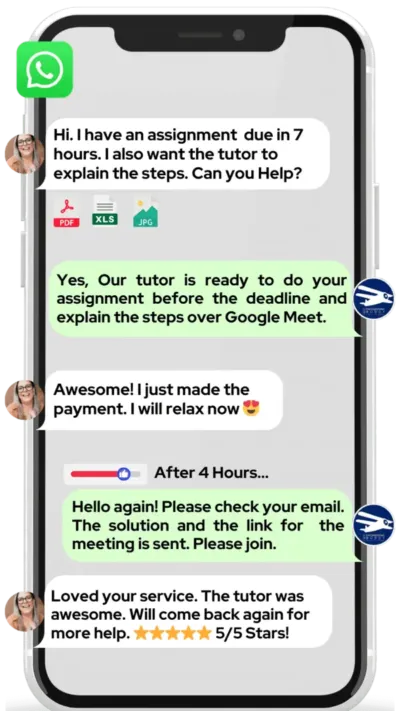
Unlike platforms where you fill out a form and wait 48 hours, MEB responds in under a minute, 24/7. Tutor match takes under an hour. The $1 trial means you test before you commit. Everything runs over WhatsApp — no logins, no intake forms.
Students consistently tell us that the tutor match is what separates MEB from other platforms. Getting matched with someone who has actually shipped an app on the App Store — not just taught from a textbook — changes the quality of every session.
Pricing Guide
Xcode tutoring starts at $20/hr for introductory iOS and mobile development modules. Graduate-level work, professional App Store submission guidance, or sessions covering advanced Instruments profiling and architecture patterns typically run $40–$100/hr depending on tutor background and session complexity.
Rate factors include: course level, project complexity, your timeline, and tutor availability. Deadlines within 72 hours are treated as urgent — rates may reflect that.
For students targeting placement at companies like Apple, Meta, or Google, or building apps intended for commercial release, MEB has tutors with professional iOS engineering backgrounds available at higher rates. Share your specific goal and MEB will match the tier to your ambition.
Start with the $1 trial — 30 minutes, no registration, no commitment. WhatsApp MEB for a quick quote.
FAQ
Is Xcode hard to learn?
Xcode itself has a steeper learning curve than most IDEs — the interface is dense, error messages aren’t always clear, and the build system has edge cases that trip up even experienced developers. Swift is relatively approachable, but the tooling takes time. Most students need 4–8 hours of guided work to feel genuinely confident navigating a real project.
How many sessions will I need?
It depends on what you’re building and where you’re starting. Students fixing specific project errors often need 2–4 sessions. Those taking a full iOS development course typically benefit from 8–15 sessions spread across a semester. Your tutor will give you an honest estimate after the first diagnostic session.
Can you help with projects and portfolio work?
Yes — MEB tutors explain the logic, walk through architecture decisions, and help you understand why the code works the way it does. You write and submit the project yourself. MEB provides guided project support. All project work is produced and submitted by the student. See our Policies page for details.
Will the tutor match my exact syllabus or exam board?
Yes. Before your first session you share your course outline, assignment brief, or project requirements. The tutor is briefed on your specific module — whether it’s a university iOS development unit, a bootcamp curriculum, or an independent Apple Developer program. Sessions follow your actual deliverables, not a generic Xcode curriculum.
What happens in the first session?
The tutor reviews what you’ve built or where you’re stuck, asks a few diagnostic questions about your background and goals, and runs through a short live exercise to calibrate your level. By the end of the first session you have a clear picture of your gaps and a session plan for closing them. The $1 trial is this first session.
Is online Xcode tutoring as effective as in-person?
For code-based subjects, online is often better — screen sharing means the tutor sees exactly what you see, in your actual project, with your actual error messages. There’s no whiteboard advantage that’s lost. Most MEB students report they prefer the online format once they’ve tried it.
SwiftUI vs UIKit — which should I learn and will the tutor cover both?
Most university courses now introduce SwiftUI first, but many production codebases and older modules still use UIKit heavily. MEB tutors cover both. If your course specifies one, the tutor focuses there. If you need to understand both for a job or internship, the tutor will map the differences clearly within your sessions.
My Xcode project builds fine on the Simulator but crashes on a real device — can a tutor help with that?
Yes, and this is one of the most common issues MEB Xcode students bring. It’s usually a code signing issue, a missing entitlement, a threading assumption that only breaks on real hardware, or an API that behaves differently outside the Simulator. The tutor diagnoses it live in your project — no guesswork from a forum thread.
Can I get Xcode help at midnight or on weekends?
Yes. MEB operates 24/7 across time zones. Tutors are available in the US, UK, Gulf, Canada, and Australia. If you have a submission deadline at 9am and realise at midnight you have a critical bug, WhatsApp MEB and a tutor can typically be matched within the hour.
What if I don’t like my assigned tutor?
Tell MEB over WhatsApp and a different tutor is matched — usually within the same day. There’s no penalty and no awkward process. The $1 trial is specifically designed so you test the match before committing to paid sessions.
How do I get started?
Three steps: WhatsApp MEB with your project or course brief, get matched with a verified Xcode tutor within the hour, and start your $1 trial — 30 minutes live or one project question explained in full. No forms. No waiting. Just WhatsApp.
Trust & Quality at My Engineering Buddy
Every MEB tutor goes through a multi-stage screening process: subject knowledge evaluation, a live demo session, and ongoing review based on student feedback. Xcode tutors must demonstrate hands-on iOS or macOS development experience — not just theoretical knowledge. Rated 4.8/5 across 40,000+ verified reviews on Google. MEB has been operating since 2008 and serves students across the US, UK, Canada, Australia, the Gulf, and Europe.
MEB provides guided learning support. All project work is produced and submitted by the student. See our Policies page for details.
MEB covers 2,800+ subjects across software engineering and adjacent technical fields. Students working on Flutter tutoring, Android help, and Swift projects sit alongside Xcode students in MEB’s platform. The methodology behind every session — diagnostic first, structured practice, explicit feedback — is documented in full at MEB’s tutoring methodology page.
Our experience across thousands of sessions shows that students who share their actual project file in the first session — not just a description of the problem — make progress roughly twice as fast. The tutor can see exactly what’s happening rather than reconstructing it from a text description.
Explore Related Subjects
Students studying Xcode often also need support in:
Next Steps
Getting started takes less than five minutes.
- Share your Xcode version, your project or assignment brief, and your deadline
- Share your availability and time zone
- MEB matches you with a verified Xcode tutor — usually within the hour
- First session starts with a diagnostic so every minute is used on your actual problem
Before your first session, have ready: your course outline or assignment brief, a screenshot or description of the error you’re stuck on, and your submission or exam date. The tutor handles the rest.
Visit www.myengineeringbuddy.com for more on how MEB works.
WhatsApp to get started or email [email protected].
52,000+ Happy Students From Various Universities



Reviewed by Subject Expert
This page has been carefully reviewed and validated by our subject expert to ensure accuracy and relevance.

