~1 min
Average Reply Time
~1 hour
To Be Matched With A Tutor
1 Trial
75% Find Their Tutor On The 1st Trial
$1
Your First 30 Minutes
Hire The Best Biological Sciences Tutor
Top Tutors, Top Grades. Without The Stress!


Related Subjects
Most students who fail their first biology practical report the same thing: they understood the theory but had never worked through a real mark scheme.
Biological Sciences Tutor Online
Biological Sciences is the study of living organisms — their structure, function, evolution, and interaction with the environment. Spanning AP, A Level, IB, and undergraduate programmes, it equips students to analyse, model, and solve problems across genetics, cell biology, ecology, and physiology.
MEB offers 1:1 online tutoring and homework help in 2,800+ advanced subjects. If you’ve been searching for a Biological Sciences tutor near me, MEB’s online sessions remove the geography problem entirely — same rigour, any time zone. Your tutor works from your exact syllabus, not a generic textbook. Students leave each session able to apply what they’ve learned, not just recognise it.
- 1:1 online sessions tailored to your AP, A Level, IB, or undergraduate course
- Expert verified tutors with subject-specific knowledge in biological sciences
- Flexible time zones — US, UK, Canada, Australia, Gulf, Europe
- Structured learning plan built after a diagnostic session
- Ethical homework and assignment guidance — you understand before you submit
52,000+ students across the US, UK, Canada, Australia, and the Gulf have used MEB since 2008 — across 2,800+ subjects, from AP Calculus to A Level Music Technology to Data Science.
Source: My Engineering Buddy, 2008–2025.
How Much Does a Biological Sciences Tutor Cost?
Most Biological Sciences tutoring sessions at MEB run $20–$40 per hour. Graduate-level or highly specialised topics — think molecular biology dissertations or advanced immunology — can reach $100/hr. Not sure where your topic falls? Start with the $1 trial: 30 minutes of live 1:1 tutoring or one full homework question explained.
| Level / Need | Typical Rate | What’s Included |
|---|---|---|
| Standard (AP, A Level, IB, early undergrad) | $20–$35/hr | 1:1 sessions, homework guidance, past paper review |
| Advanced / Graduate-level | $35–$100/hr | Expert tutor, research methods, dissertation support |
| $1 Trial | $1 flat | 30 min live session or one full homework question |
Tutor availability tightens significantly in the four weeks before major exam windows. Book early if you’re targeting a specific date.
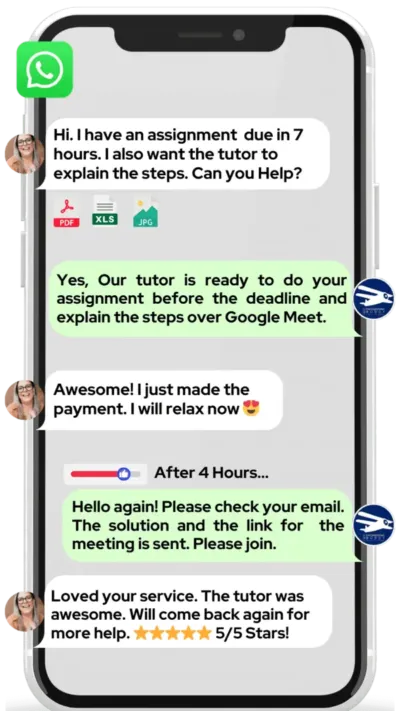
WhatsApp MEB for a quick quote — average response time under 1 minute.
Who This Biological Sciences Tutoring Is For
This is for students who are behind, stuck, or pushing for a grade their current approach isn’t delivering. It’s also for those who understand the content but keep dropping marks in ways they can’t explain.
- AP Biology students working through genetics, cell signalling, or ecology free-response questions
- A Level and IB students struggling with mark scheme language in written answers
- First and second year undergraduates at universities such as University of Toronto, University of Melbourne, University of Edinburgh, UC San Diego, or Utrecht University who need to bridge the gap from school-level to degree-level rigour
- Graduate students preparing dissertations involving experimental biology, field ecology, or molecular techniques
- Students retaking a failed first attempt at a biology module with a resit sitting in 4–8 weeks
- Parents watching a student’s confidence drop alongside their biology grades, unsure where the gaps actually are
Supporting a student through Biological Sciences? MEB works directly with parents to set up sessions, track progress, and keep coursework on schedule. WhatsApp MEB — average response time is under a minute, 24/7.
1:1 Tutoring vs Self-Study vs AI Tools
Self-study works — up to a point. The problem is that biology has a lot of content that looks familiar until you’re asked to apply it under exam conditions, and without feedback you can rehearse the wrong understanding for weeks. AI tools are fast for quick definitions or explaining a mechanism, but they cannot identify why you specifically lost marks on a genetics cross question, adapt their explanation mid-session when you’re still not following, or walk through a biological drawing assessment in real time. In Biological Sciences specifically, the ability to interpret unfamiliar experimental data — a skill examiners test heavily — requires a human who can see where your reasoning breaks down. MEB’s online sessions give you the flexibility of remote learning with a structured feedback loop calibrated to your exact exam board or course.
Outcomes: What You’ll Be Able To Do in Biological Sciences
After targeted sessions with an MEB Biological Sciences tutor, students consistently report specific, tangible shifts. You’ll be able to solve multi-step genetics problems — including dihybrid crosses and chi-squared analysis — without reverting to trial and error. You’ll analyse experimental data from unfamiliar contexts and construct conclusions that match mark scheme expectations. You’ll explain mechanisms such as the sodium-potassium pump, DNA replication, or enzyme inhibition in precise language that earns full marks. You’ll write structured essay answers in A Level or IB style, applying biological evidence rather than restating definitions. You’ll apply ecological models — including population dynamics and energy transfer — to real fieldwork or case study questions your tutor pulls from past papers.
Supporting a student through Biological Sciences? A parent CTA note appears above. See outcomes data below.
Based on feedback from 40,000+ sessions collected by MEB from 2022 to 2025, 58% of students improved by one full grade after approximately 20 hours of 1:1 tutoring in a single subject. A further 23% achieved at least a half-grade improvement.
Source: MEB session feedback data, 2022–2025.
At MEB, we’ve found that students who bring a past paper attempt to their first session — even an incomplete one — make noticeably faster progress than those who start from scratch. The errors you’ve already made are the fastest route to the marks you’re missing.
What We Cover in Biological Sciences (Syllabus / Topics)
MEB tutors cover the full range of Biological Sciences content across school-level qualifications, undergraduate programmes, and postgraduate study. Sessions are always aligned to your specific course, exam board, or syllabus.
Cell Biology, Genetics & Molecular Biology
- Cell structure and function — prokaryotic and eukaryotic comparison
- Cell division: mitosis, meiosis, and the cell cycle
- DNA structure, replication, transcription, and translation
- Mendelian and non-Mendelian inheritance patterns, including linkage and epistasis
- Gene expression, regulation, and recombinant DNA technology
- Protein structure, enzyme kinetics, and inhibition mechanisms
- Mutation types and their consequences at the molecular level
Core texts for this track include Campbell Biology (Urry et al.), Molecular Biology of the Cell (Alberts et al.), and Lewin’s Genes.
Physiology, Ecology & Evolution
- Homeostasis and control systems — thermoregulation, osmoregulation, blood glucose
- The nervous system and hormonal coordination
- Photosynthesis and cellular respiration — light-dependent and independent stages
- Population ecology: growth models, carrying capacity, predator-prey dynamics
- Ecosystems, nutrient cycling, and energy flow through trophic levels
- Natural selection, speciation, and evidence for evolution
- Conservation biology and human impact on biodiversity
Recommended texts include Biology: The Unity and Diversity of Life (Starr et al.), Ecology (Begon et al.), and Freeman’s Biological Science.
Experimental Methods & Data Analysis
- Experimental design: controls, variables, replication, and validity
- Statistical methods: chi-squared tests, t-tests, and standard deviation in biology
- Microscopy techniques and biological drawing conventions
- Field sampling methods: quadrats, transects, mark-release-recapture
- Interpreting unfamiliar data sets — graphs, tables, and experimental results
- Writing structured biology practicals and lab reports
This track draws on OpenStax Concepts of Biology (available at openstax.org) and the required practicals for AQA, OCR, Edexcel, AP, and IB Biology.
Students working on cell biology tutoring or genetics homework help will find these tracks directly relevant. For more specialised areas, MEB also provides molecular biology tutoring and ecology tutoring.

What a Typical Biological Sciences Session Looks Like
The tutor opens by checking the previous topic — say, the Calvin cycle or Hardy-Weinberg equilibrium — with two quick questions to confirm retention. From there, the session moves into the new problem: the student shares their screen or a photo of the question, and the tutor works through it using a digital pen-pad, annotating as they go. For a genetics question, the tutor might build a full cross diagram step by step, then ask the student to replicate the approach with a new variant. The student explains their reasoning out loud; the tutor identifies exactly where the logic broke down. By the end, there’s a specific practice task — three past paper questions on the same mechanism — and the next topic is logged so the following session has no setup time.
How MEB Tutors Help You with Biological Sciences (The Learning Loop)
Diagnose: In the first session, the tutor identifies which topics are genuinely understood and which are surface-level. For Biological Sciences, this usually means testing whether you can apply a concept — like enzyme specificity or gene regulation — rather than just name it.
Explain: The tutor works through problems live using a digital pen-pad. Diagrams, mark schemes, and annotated past paper answers are built in real time — not shown as slides.
Practice: The student attempts a parallel question with the tutor present. No looking at notes. The tutor watches for hesitation points — those are the actual gaps.
Feedback: Every wrong step gets corrected with a reason. Not “that’s incorrect” but “here’s why the mark scheme requires you to say ‘complementary base pairing’ rather than ‘matching bases’ — and here’s the mark you’d lose if you don’t.”
Plan: After each session, the tutor notes what’s been consolidated, what needs another pass, and what’s coming next. Students don’t have to manage their own revision sequence.
Sessions run on Google Meet. The tutor uses a digital pen-pad or iPad with Apple Pencil to annotate diagrams and work through calculations in real time. Before your first session, send over your syllabus or exam board, any past paper you’ve attempted, and your exam date or deadline. The first session covers a diagnostic and at least one full topic. Start with the $1 trial — 30 minutes of live tutoring that also serves as your first diagnostic.
Students consistently tell us that the moment things click in Biological Sciences isn’t when they read the answer — it’s when they’ve explained the mechanism back to the tutor in their own words and realised they actually knew it. That moment happens faster than most students expect.
Tutor Match Criteria (How We Pick Your Tutor)
Not every biology tutor fits every student. MEB matches on six criteria.
Subject depth: The tutor must know your specific level — AP Biology, AQA A Level, IB HL, or undergraduate year two — not just biology in general. Syllabus familiarity matters for mark scheme language.
Tools: All sessions use Google Meet. The tutor uses a digital pen-pad or iPad with Apple Pencil for annotating diagrams, which is non-negotiable for a subject this diagram-heavy.
Time zone: MEB covers all major time zones — New York, Los Angeles, Chicago, London, Dubai, Toronto, Sydney, Melbourne — including evenings and weekends.
Learning style: Calibrated from the first session. Some students need worked examples first; others need to attempt before they’ll engage with an explanation. The tutor adjusts.
Communication: Clear English, pitched to the student’s level. No unnecessary jargon unless the student is already operating at that register.
Goals: Exam score, assignment completion, conceptual understanding, dissertation support — the match reflects what you’re actually trying to achieve.
Unlike platforms where you fill out a form and wait, MEB responds in under a minute, 24/7. Tutor match takes under an hour. The $1 trial means you test before you commit. Everything runs over WhatsApp — no logins, no intake forms.
Study Plans (Pick One That Matches Your Goal)
Once the diagnostic is done, the tutor proposes a session sequence. For a student three weeks from a resit, that means a triage plan — highest-yield topics first, past paper drills from week two. For an undergraduate with a semester of lectures to consolidate, it means weekly sessions aligned to the module calendar. For a student eight weeks out from A Level exams, it’s structured topic-by-topic revision with practice paper marking built in. The tutor handles the sequencing; you handle the sessions.
Pricing Guide
Standard Biological Sciences tutoring runs $20–$40 per hour. Graduate and research-level support — dissertation methodology, advanced molecular biology, experimental design review — goes up to $100/hr depending on tutor expertise and topic specificity.
Rate factors include your level, the topic’s complexity, how quickly you need to start, and tutor availability. Availability is tightest in April–May and October–November during major exam windows.
For students targeting medical school admission, competitive biology programmes at universities such as Johns Hopkins, Imperial College London, or University of British Columbia, tutors with active research or clinical backgrounds are available at higher rates. Share your specific goal and MEB will match the tier to your ambition.
Start with the $1 trial — 30 minutes, no registration, no commitment. WhatsApp MEB for a quick quote.
MEB has been running since 2008. In that time, the tutors have worked through every major syllabus revision — AQA, OCR, Edexcel, AP, IB — and know exactly where each one catches students out.
Source: My Engineering Buddy, 2008–2025.
FAQ
Is Biological Sciences hard?
It depends on which component. Content volume is high — most students underestimate how much precise language the mark scheme demands. Genetics and data interpretation questions trip up even well-prepared students. The difficulty is manageable with structured, topic-by-topic work rather than passive re-reading.
How many sessions do I need?
Most students see a clear difference within four to six sessions on a specific topic. A full exam preparation programme typically runs 12–20 hours across a subject. The first diagnostic session gives the tutor enough information to propose a realistic session count for your goal.
Can you help with homework and assignments?
Yes. MEB tutors explain the underlying biology so you can complete and submit the work yourself. MEB tutoring is guided learning — you understand the work, then submit it yourself. For full details on what we help with and what we don’t, read our Academic Integrity policy and Why MEB.
Will the tutor match my exact syllabus or exam board?
Yes. MEB matches tutors by specific exam board — AQA, OCR A, Edexcel, Cambridge International, AP Biology, IB Biology HL or SL. For undergraduate students, the tutor works from your module outline or lecture slides. Generic biology tutoring is not how MEB operates.
What happens in the first session?
The tutor runs a short diagnostic — usually two or three targeted questions — to identify actual gaps versus topics that just feel uncertain. From there, the session moves into live problem-solving on the highest-priority area. No time is spent on admin or introductions beyond what’s necessary.
Is online tutoring as effective as in-person?
For Biological Sciences, yes — sometimes more so. Digital pen-pad annotation is at least as clear as a whiteboard, screen sharing lets the tutor work through past papers in real time, and students in multiple studies report comparable or higher engagement in 1:1 online sessions versus in-person equivalents.
Can I get Biological Sciences help at midnight or over a weekend?
Yes. MEB operates 24/7. Tutors are available across time zones, which means late-night sessions in the US, early morning in Australia, and weekend slots across the UK and Gulf are all bookable. WhatsApp MEB any time — response is typically under a minute.
What if I don’t get on with my assigned tutor?
Request a switch. No forms, no delay. MEB will match you with a different tutor — usually within the hour. The $1 trial exists partly for this reason: you find out quickly whether the match works before committing to a longer block of sessions.
Do you offer group Biological Sciences sessions?
No. MEB is 1:1 only. Group sessions slow down the diagnostic process and mean the tutor can’t adapt to your specific errors in real time. Everything at MEB is built around one student and one tutor per session.
How do I get started?
Three steps: WhatsApp MEB with your exam board and the topic giving you the most trouble, get matched with a verified tutor within the hour, then start your $1 trial — 30 minutes of live tutoring or one full homework question explained from start to finish.
Trust & Quality at My Engineering Buddy
Every MEB tutor goes through subject-specific screening before taking a session. That means a live demo evaluation — not just a CV review — followed by ongoing assessment based on student feedback. Tutors hold degrees in biological sciences or a directly related field, and many have professional or research backgrounds in areas such as molecular biology, ecology, or clinical science. Rated 4.8/5 across 40,000+ verified reviews on Google.
MEB tutoring is guided learning — you understand the work, then submit it yourself. For full details on what we help with and what we don’t, read our Academic Integrity policy. We guide; you submit your own work.
MEB has served 52,000+ students across the US, UK, Canada, Australia, Gulf, and Europe in 2,800+ subjects since 2008. Students working through human biology tutoring, microbiology homework help, or evolutionary biology tutoring are all supported on the same platform with the same tutor vetting standards. See how MEB tutors are trained and reviewed for more on the methodology behind every session.
MEB tutors are matched by exam board, not just subject. An AQA A Level Biology student and an AP Biology student have different mark scheme requirements — both get a tutor who knows the difference.
Source: My Engineering Buddy, 2008–2025.
A common pattern our tutors observe is that students arriving for their first session have been studying from a textbook that doesn’t match their actual exam board. Twenty minutes into the diagnostic, they realise half their revision has been preparing for questions their paper won’t ask.
Explore Related Subjects
Students studying Biological Sciences often also need support in:
Next Steps
Here’s what to have ready before your first session:
- Your exam board and syllabus, or your course outline and module list
- A recent past paper attempt or a homework question you struggled with
- Your exam date, resit date, or assignment deadline
Share your availability and time zone. MEB matches you with a verified Biological Sciences tutor — usually within 24 hours, often within the hour. The first session starts with a diagnostic so every minute counts from the start.
Visit www.myengineeringbuddy.com for more on how the MEB process works, from first session to exam day.
WhatsApp to get started or email [email protected].
52,000+ Happy Students From Various Universities





Reviewed by Subject Expert
This page has been carefully reviewed and validated by our subject expert to ensure accuracy and relevance.