Hire Verified & Experienced
Cost Analysis Tutors
4.8/5 40K+ session ratings collected on the MEB platform



Hire The Best Cost Analysis Tutor
Top Tutors, Top Grades. Without The Stress!
52,000+ Happy Students From Various Universities



How Much For Private 1:1 Tutoring & Hw Help?
Private 1:1 Tutoring and HW help Cost $20 – 35 per hour* on average.
Cost Analysis grades don’t fix themselves — and most students don’t realize how many marks they’re leaving on fixed vs variable cost questions alone.
Cost Analysis Tutor Online
Cost Analysis is the systematic examination of cost structures — fixed, variable, direct, indirect, marginal, and opportunity costs — to support business decisions, budgeting, and financial planning across undergraduate and graduate finance programmes.
MEB offers 1:1 online tutoring and homework help in 2,800+ advanced subjects, including a full range of Finance tutoring at every level. If you’ve been searching for a Cost Analysis tutor near me, you don’t need local — you need the right tutor on a screen, available in your time zone, aligned to your exact syllabus. MEB has delivered that since 2008.
- 1:1 online sessions tailored to your course outline or university syllabus
- Expert-verified tutors with subject-specific knowledge in cost accounting and financial analysis
- Flexible time zones — US, UK, Canada, Australia, Gulf
- Structured learning plan built after a diagnostic session
- Ethical homework and assignment guidance — you understand the work before you submit
52,000+ students across the US, UK, Canada, Australia, and the Gulf have used MEB since 2008 — including students in Finance subjects like Cost Analysis, Capital Budgeting, and Financial Economics.
Source: My Engineering Buddy, 2008–2025.
How Much Does a Cost Analysis Tutor Cost?
Most Cost Analysis tutoring sessions run $20–$40/hr. Graduate-level or specialist modules — activity-based costing, lifecycle cost analysis, or cost-benefit modelling for policy — can reach up to $100/hr. New students can start with the $1 trial: 30 minutes of live tutoring or one full homework question explained.
| Level / Need | Typical Rate | What’s Included |
|---|---|---|
| Standard (most undergrad levels) | $20–$35/hr | 1:1 sessions, homework guidance |
| Advanced / Graduate / Specialist | $35–$100/hr | Expert tutor, niche depth, research support |
| $1 Trial | $1 flat | 30 min live session or 1 homework question |
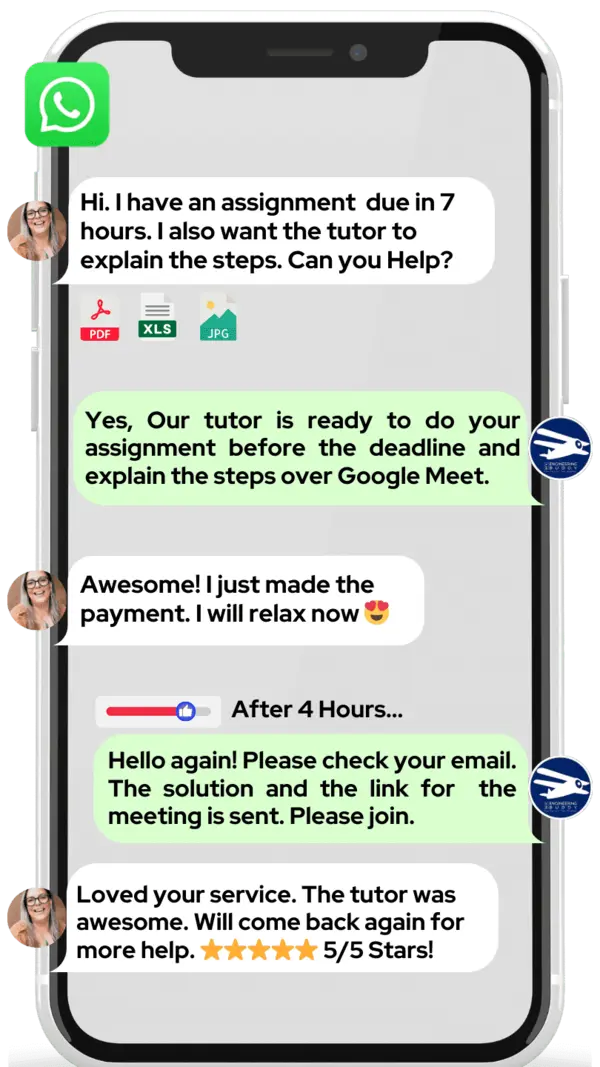
Tutor availability tightens significantly around semester-end and final exam periods. WhatsApp MEB for a quick quote — average response time under 1 minute.
Who This Cost Analysis Tutoring Is For
Cost Analysis sits at the intersection of accounting logic and financial decision-making. Most students hit a wall not because they can’t do the maths, but because they can’t connect the cost framework to the decision being made.
- Undergraduate business and finance students struggling with fixed vs variable cost classification and contribution margin analysis
- MBA students working through cost-volume-profit models or activity-based costing assignments
- Students retaking after a failed first attempt who need to close specific gaps before the resit
- Students with a university conditional offer depending on this grade — every mark matters
- Working professionals studying part-time for a finance certification that includes cost analysis modules
- Parents watching a student’s confidence drop alongside their Cost Analysis grades
MEB tutors have supported students at universities across the US, UK, Canada, and Australia — including programmes at institutions like NYU Stern, LSE, University of Toronto, University of Melbourne, and Warwick Business School.
At MEB, we’ve found that Cost Analysis students who struggle with break-even and marginal cost questions almost always share the same root problem: they’re applying formulas without understanding what each cost component actually represents in a real business context. One session fixing that foundation changes everything downstream.
1:1 Tutoring vs Self-Study vs AI vs YouTube vs Online Courses
Self-study works if you’re disciplined — but Cost Analysis has too many interconnected frameworks for passive reading to hold. AI tools explain individual formulas fast but can’t diagnose why your absorption costing answers keep coming out wrong. YouTube covers break-even well but stops the moment you need to apply it to a specific case study. Online courses move at a fixed pace with no adaptation. With MEB, a live tutor calibrates every session to your exact Cost Analysis module, fixes errors the moment they happen, and builds the logic before the formula.
Outcomes: What You’ll Be Able To Do in Cost Analysis
After consistent 1:1 sessions, students can solve cost-volume-profit problems under exam conditions without needing to back-track through formulas. They can analyze cost behaviour across fixed, variable, stepped-fixed, and semi-variable categories with confidence. Students learn to apply activity-based costing to real case scenarios, not just reproduce a template. They can model break-even scenarios and interpret margin of safety figures in a business context. They can explain variance analysis — price, usage, efficiency — clearly enough to write a coherent exam answer or present findings in a case report.
Based on feedback from 40,000+ sessions collected by MEB from 2022 to 2025, 58% of students improved by one full grade after approximately 20 hours of 1:1 tutoring in subjects like Cost Analysis. A further 23% achieved at least a half-grade improvement.
Source: MEB session feedback data, 2022–2025.
MEB doesn’t guarantee outcomes. But 20 hours of targeted 1:1 work closes a lot of ground.
Supporting a student through Cost Analysis? MEB works directly with parents to set up sessions, track progress, and keep coursework on schedule. WhatsApp MEB — average response time is under a minute, 24/7.
What We Cover in Cost Analysis (Syllabus / Topics)

Cost Concepts and Classification
- Fixed, variable, semi-variable, and stepped-fixed costs
- Direct vs indirect costs — allocation and apportionment
- Product costs vs period costs
- Marginal cost vs absorption cost approaches
- Opportunity cost and sunk cost in decision-making
- Relevant vs irrelevant costs for short-run decisions
Core texts include Cost Accounting: A Managerial Emphasis by Horngren, Datar & Rajan and Management Accounting by Drury.
Cost-Volume-Profit Analysis and Break-Even
- Contribution margin — per unit and as a ratio
- Break-even point calculation — units and revenue
- Margin of safety — absolute and percentage
- Target profit analysis and sensitivity testing
- Multi-product CVP with sales mix assumptions
- Operating leverage and its effect on risk
Supported by Managerial Accounting by Garrison, Noreen & Brewer and Horngren’s Financial & Managerial Accounting.
Activity-Based Costing and Overhead Analysis
- Traditional overhead absorption vs ABC methodology
- Cost pools and cost drivers — identification and application
- Over- and under-absorption of overheads
- ABC in service sector contexts
- Variance analysis — material, labour, overhead (price, usage, efficiency)
- Standard costing and its limitations in modern environments
Key references: Advanced Management Accounting by Kaplan & Atkinson and relevant CIMA/ACCA study texts for professional-level modules.
Students consistently tell us that activity-based costing clicks fastest when they trace a single product all the way through the cost pool and driver logic before touching the formula. Tutors at MEB build that trace in the first session — everything after that is application.
What a Typical Cost Analysis Session Looks Like
The tutor opens by reviewing the previous session’s topic — usually variance analysis or CVP — checking whether the practice problems set last time exposed any remaining gaps. From there, student and tutor work through two or three problems on screen: the tutor might take a contribution margin scenario and build it step-by-step using a digital pen-pad, narrating the logic at each stage. Then the student replicates the approach on a new problem while the tutor watches and corrects in real time. Common sticking points — like how to handle semi-variable costs in a break-even model, or when absorption costing produces a different profit figure than marginal costing and why — get addressed as they appear, not at the end. The session closes with a specific practice task set for before the next meeting, and the next topic logged.
How MEB Tutors Help You with Cost Analysis (The Learning Loop)
Diagnose: In the first session, the tutor identifies exactly where the student’s understanding breaks down — whether that’s cost classification, the mechanics of ABC, or interpreting variance reports. This isn’t a questionnaire. It’s a worked problem with the tutor watching how you think.
Explain: The tutor works live examples using a digital pen-pad or iPad with Apple Pencil, building the logic layer by layer. No slides. No pre-recorded video. The explanation adapts to your actual confusion, not a predicted one.
Practice: You attempt the next problem with the tutor present. Not after the session — during it. That’s where the real gap between understanding and applying gets closed.
Feedback: The tutor shows you exactly where your working went wrong and why. In Cost Analysis, this often comes down to a wrong cost classification early in a problem that cascades through the answer. Catching it at the source is the whole point.
Plan: Each session ends with a specific task and a clear sequence for the next two or three topics. You’re not guessing what to study next.
Sessions run over Google Meet. The tutor uses a digital pen-pad or iPad + Apple Pencil. Before your first session, share your course outline or module guide, a recent assignment or past paper you struggled with, and your exam or submission date. The first session serves as a diagnostic, so every subsequent minute is used on the right material. Start with the $1 trial — 30 minutes of live tutoring that also serves as your first diagnostic.
A common pattern MEB tutors observe is that students who can recite the absorption costing formula still lose marks consistently — because they haven’t been asked to explain when to use it versus marginal costing, and what the profit difference actually means for the business.
Source: MEB tutor observation, 2008–2025.
Tutor Match Criteria (How We Pick Your Tutor)
MEB doesn’t assign the next available tutor. Match is based on four things.
Subject depth: The tutor must have demonstrable expertise at your specific level — first-year undergraduate CVP, MBA-level strategic cost management, or professional certification modules (CIMA, ACCA, CPA) all require different knowledge depth.
Tools: Every tutor uses Google Meet with a digital pen-pad or iPad + Apple Pencil. No exceptions — Cost Analysis requires working through problems visually, step by step.
Time zone: Matched to your region — US, UK, Gulf, Canada, or Australia. Sessions happen when you need them, not when a tutor happens to be awake.
Goals: Whether you’re targeting a specific exam grade, closing gaps before a resit, or working through weekly assignments, the tutor is matched to that objective — not to a generic “finance” category.
Unlike platforms where you fill out a form and wait, MEB responds in under a minute, 24/7. Tutor match takes under an hour. The $1 trial means you test before you commit. Everything runs over WhatsApp — no logins, no intake forms.
Study Plans (Pick One That Matches Your Goal)
Catch-up (1–3 weeks): students behind on cost classification, CVP, or overhead analysis with an imminent deadline. Exam prep (4–8 weeks): structured work through all Cost Analysis topics in syllabus order, with past paper practice built in from week three. Weekly support: ongoing sessions aligned to your module schedule, covering each topic as it appears on the course. The tutor builds the specific sequence after the diagnostic — not before it, because the gaps are never where students expect them to be.
Pricing Guide
Standard Cost Analysis tutoring runs $20–$40/hr for undergraduate and most postgraduate modules. Specialist or niche work — lifecycle cost analysis, public sector cost-benefit models, or professional certification prep (CIMA, ACCA, CPA) — can reach up to $100/hr depending on tutor expertise and timeline.
Rate factors include: course level, topic complexity, how close the exam is, and tutor availability. Availability drops fast during semester-end periods — booking early makes a real difference.
For students targeting programmes at top business schools or professional finance credentials, tutors with industry cost management or audit backgrounds are available at higher rates. Share your specific goal and MEB matches the tier to what you’re actually trying to achieve.
Start with the $1 trial — 30 minutes, no registration, no commitment. WhatsApp MEB for a quick quote.
FAQ
Is Cost Analysis hard?
It’s not inherently difficult, but it has more interconnected frameworks than most finance modules. Students who struggle usually hit trouble at cost classification or CVP — those gaps compound quickly. One or two targeted sessions fix most of it.
How many sessions are needed to improve in Cost Analysis?
Most students see clear improvement within 4–6 sessions. Closing all major gaps across CVP, ABC, and variance analysis typically takes 10–15 hours. Students with a resit in 2–3 weeks often work more intensively over fewer, longer sessions.
Can you help with Cost Analysis homework and assignments?
Yes — MEB tutoring is guided learning. The tutor explains the method, works through the logic with you, and you complete and submit the work yourself. See our Academic Integrity policy and Why MEB page for full details on what we help with and what we don’t.
Will the tutor match my exact syllabus or exam board?
Yes. MEB tutors are matched to your specific module, exam board, or qualification — whether that’s a university course outline, CIMA/ACCA paper, CPA exam unit, or MBA programme. Share the syllabus or course guide and the tutor aligns to it from session one.
What happens in the first Cost Analysis session?
It’s a diagnostic. The tutor works through problems with you to pinpoint exactly where understanding breaks down — cost classification, break-even logic, overhead absorption, or variance analysis. From that point, every session has a specific focus and purpose.
Is online Cost Analysis tutoring as effective as in-person?
For a calculation-heavy subject like Cost Analysis, yes — often more so. The digital pen-pad setup lets tutors write out cost tables, CVP graphs, and absorption schedules in real time. Students frequently say it’s clearer than a whiteboard because the tutor can annotate directly over their own working.
Can I get Cost Analysis help at midnight or on weekends?
Yes. MEB tutors are available across time zones, including late evenings and weekends. If you’re in the US, Gulf, or Australia and need a session outside standard office hours, WhatsApp MEB and a match is arranged within the hour in most cases.
What if I don’t get on with my assigned Cost Analysis tutor?
Request a swap. It happens — a tutor’s explanation style doesn’t always match how a student processes information. MEB reassigns without friction. The priority is that the student makes progress, not that the first match sticks.
What’s the difference between Cost Analysis and Cost Accounting — and does MEB cover both?
Cost Analysis focuses on using cost data to support decisions — pricing, make-or-buy, break-even. Cost Accounting is the recording and classification system that generates that data. Many university modules blend both. MEB covers quantitative analysis tutoring and the full cost-side curriculum — share your module outline and the tutor confirms coverage in the first session.
Does Cost Analysis tutoring help with MBA-level strategic cost management?
Yes. MBA-level Cost Analysis often extends into activity-based management, target costing, lifecycle analysis, and cost driver strategy. MEB tutors with postgraduate finance or management accounting backgrounds handle this level. Use Business Strategy tutoring alongside Cost Analysis if your MBA module integrates both.
How do I get started with a Cost Analysis tutor?
Three steps: WhatsApp MEB, share your module or exam details, and start the $1 trial — 30 minutes of live tutoring or one full question explained. Tutor match happens within the hour. No registration, no commitment beyond the first dollar.
Trust & Quality at My Engineering Buddy
Every MEB tutor goes through subject-specific screening — not just a general interview. That means a live demo session evaluated by an experienced MEB assessor, verification of academic credentials and relevant professional background, and ongoing review based on student feedback after every session. Rated 4.8/5 across 40,000+ verified reviews on Google. For Investment Analysis tutoring and Cost Analysis alike, the vetting process is the same: the tutor has to prove subject depth before they meet a student.
MEB tutoring is guided learning — you understand the work, then submit it yourself. For full details on what we help with and what we don’t, read our Academic Integrity policy and Why MEB.
MEB has served 52,000+ students across the US, UK, Canada, Australia, the Gulf, and Europe in 2,800+ subjects since 2008. In Finance, that covers everything from Cost Analysis and CAPM tutoring to Portfolio Management tutoring and beyond. The MIT OpenCourseWare microeconomics resource at MIT OpenCourseWare reflects the rigour of quantitative finance and cost reasoning at the level MEB tutors are expected to operate.
Explore Related Subjects
Students studying Cost Analysis often also need support in:
- Business Valuation, Corporate Restructuring & Insolvency
- Derivatives Pricing
- Fixed Income Securities
- International Financial Management
- Mergers & Acquisitions (M&A)
- Performance Measurement
- Securities Analysis
- Valuation
Next Steps
Before your first session, have ready: your exam board and syllabus or course outline, a recent past paper attempt or assignment you struggled with, and your exam or submission deadline. The tutor handles the rest.
- Share your module, exam board, and hardest topic so far
- Share your availability and time zone
- MEB matches you with a verified Cost Analysis tutor — usually within the hour
The first session starts with a diagnostic so no time is wasted on topics you’ve already mastered.
Visit www.myengineeringbuddy.com for more on how MEB works.
WhatsApp to get started or email meb@myengineeringbuddy.com.
Reviewed by Subject Expert
This page has been carefully reviewed and validated by our subject expert to ensure accuracy and relevance.