

Hire Verified & Experienced
Smart Contracts Tutors
4.8/5 40K+ session ratings collected on the MEB platform



Hire The Best Smart Contracts Tutor
Top Tutors, Top Grades. Without The Stress!

52,000+ Happy Students From Various Universities



How Much For Private 1:1 Tutoring & Hw Help?
Private 1:1 Tutoring and HW help Cost $20 – 35 per hour* on average.
Most students who struggle with Smart Contracts don’t have a knowledge problem. They have a feedback problem — no one has walked them through a failed deployment or a broken escrow condition line by line.
Smart Contracts Tutor Online
Smart contracts are self-executing programs stored on a blockchain that automatically enforce the terms of an agreement when predefined conditions are met, removing the need for intermediaries in financial, legal, and commercial transactions.
MEB provides 1:1 online tutoring and homework help in 2800+ advanced subjects — including Smart Contracts. Whether you’re a graduate student working through Solidity syntax, a finance professional studying financial technology (FinTech), or enrolled in a broader Finance programme that covers blockchain and contract architecture, finding a Smart Contracts tutor near me who actually knows the subject is harder than it should be. MEB fixes that. One outcome you can reasonably expect: clearer code logic, fewer runtime errors, and a tutor who catches your conceptual gaps before they cost you marks or a failed deployment.
- 1:1 online sessions tailored to your course, exam board, or project brief
- Expert-verified tutors with subject-specific knowledge in blockchain, Solidity, and contract law
- Flexible time zones — US, UK, Canada, Australia, Gulf
- Structured learning plan built after a diagnostic session
- Ethical homework and assignment guidance — you understand the work before you submit
52,000+ students across the US, UK, Canada, Australia, and the Gulf have used MEB since 2008 — including students in Finance subjects like Smart Contracts, Cryptocurrency, and Financial Derivatives.
Source: My Engineering Buddy, 2008–2025.
How Much Does a Smart Contracts Tutor Cost?
Most Smart Contracts sessions run $20–$40/hr depending on level and topic complexity. Graduate-level or highly specialised work — such as cross-chain contract deployment or DeFi protocol auditing — can reach $70–$100/hr. New students can start with the $1 trial: 30 minutes of live 1:1 tutoring or one homework question explained in full.
| Level / Need | Typical Rate | What’s Included |
|---|---|---|
| Standard (most levels) | $20–$40/hr | 1:1 sessions, homework guidance |
| Advanced / Specialist | $40–$100/hr | Expert tutor, DeFi/audit depth |
| $1 Trial | $1 flat | 30 min live session or 1 homework question |
Tutor availability tightens around semester end dates and certification exam windows. Book early if you’re working to a deadline.
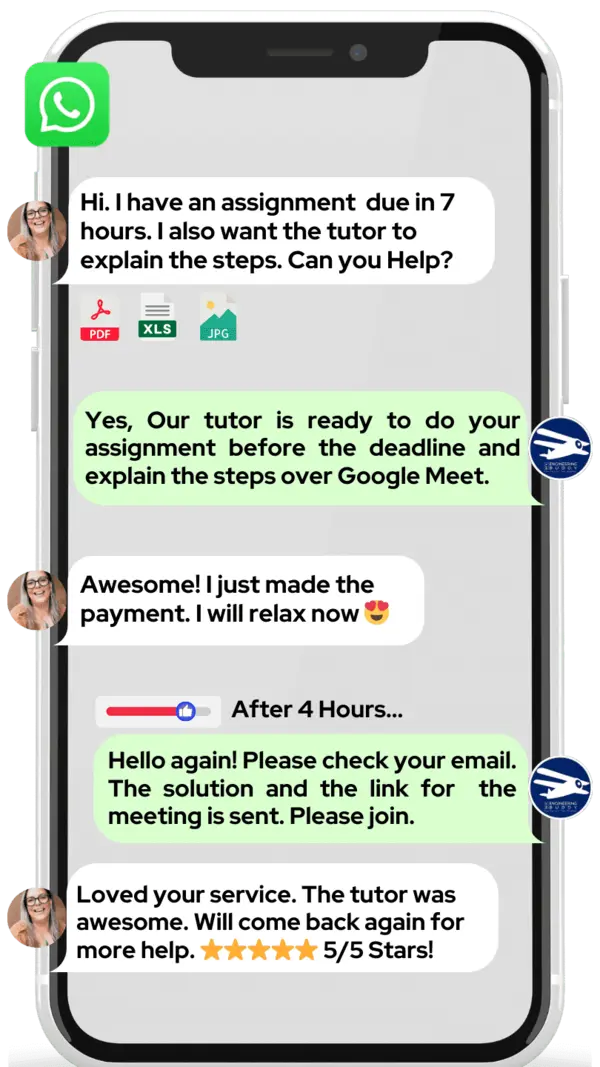
WhatsApp MEB for a quick quote — average response time under 1 minute.
Who This Smart Contracts Tutoring Is For
Smart Contracts sits at the intersection of computer science, finance, and law. Students arrive from all three directions — and all three can hit walls quickly when theory meets actual deployment or exam pressure.
- Undergraduate and graduate students taking blockchain, FinTech, or decentralised finance modules
- Finance and law students whose programmes now include smart contract architecture or regulatory frameworks
- Students retaking after a failed first attempt at a blockchain certification or programming assessment
- Students with a university conditional offer depending on a grade in a FinTech or distributed ledger course
- Professionals working toward certifications in blockchain development or digital asset compliance
- Parents watching a child’s confidence drop alongside their grades in a computing or finance programme
Students from programmes at institutions like MIT, Imperial College London, University of Toronto, ETH Zürich, NYU Stern, and the London School of Economics regularly work with MEB tutors on blockchain-adjacent coursework.
At MEB, we’ve found that Smart Contracts students who struggle aren’t usually confused about what a blockchain is. The breakdown almost always happens at the same place: writing a contract that compiles cleanly but doesn’t behave as intended under real conditions. That gap between syntax and logic is exactly where a live tutor earns their value.
1:1 Tutoring vs Self-Study vs AI vs YouTube vs Online Courses
Self-study works if you’re disciplined, but Smart Contracts has too many “it compiled, so why did it fail?” moments that need a second pair of eyes. AI tools answer fast but can’t trace your exact logical error through a Solidity function live. YouTube covers ERC-20 basics well — it stops when your specific escrow condition breaks. Online courses give structure at a fixed pace with no adjustment for what you already know. With 1:1 tutoring from MEB, the session is calibrated to your exact course, your specific error, and the exam or deadline you’re actually working toward.
Outcomes: What You’ll Be Able To Do in Smart Contracts
After working with a Smart Contracts tutor from MEB, you’ll be able to write and deploy Solidity contracts that behave correctly under edge-case conditions, not just in the happy path. You’ll analyze token economics and identify where a DeFi protocol is exposed to reentrancy attacks or gas inefficiency. You’ll explain the legal enforceability of on-chain agreements in regulated jurisdictions — a question that appears consistently in finance and law coursework. You’ll apply formal verification thinking to spot logical gaps before they reach deployment. You’ll present smart contract architecture to non-technical stakeholders using diagrams your tutor will help you build.
Based on feedback from 40,000+ sessions collected by MEB from 2022 to 2025, 58% of students improved by one full grade after approximately 20 hours of 1:1 tutoring in subjects like Smart Contracts. A further 23% achieved at least a half-grade improvement.
Source: MEB session feedback data, 2022–2025.
Try your first session for $1 — 30 minutes of live 1:1 tutoring or one homework question explained in full. No registration. No commitment. WhatsApp MEB now and get matched within the hour.
What We Cover in Smart Contracts (Syllabus / Topics)

Track 1: Solidity Programming and Contract Development
- Solidity syntax: data types, functions, modifiers, and visibility
- Contract lifecycle: deployment, state changes, and self-destruct
- Events, mappings, and structs for on-chain data management
- Inheritance, interfaces, and abstract contracts
- Gas optimisation strategies and common cost traps
- Testing with Hardhat and Truffle; local blockchain environments
- Common vulnerabilities: reentrancy, integer overflow, front-running
Core texts: Mastering Ethereum by Andreas Antonopoulos & Gavin Wood; Solidity Programming Essentials by Ritesh Modi; official Deloitte Insights blockchain practitioner reports for applied context.
Track 2: DeFi Protocols and Token Standards
- ERC-20, ERC-721, and ERC-1155 token standards and use cases
- Decentralised exchanges (DEX): automated market maker (AMM) logic
- Lending protocols: collateralisation, liquidation triggers, interest rate models
- Yield farming, liquidity pools, and impermanent loss mechanics
- Cross-chain bridges and interoperability risks
- Flash loans: structure, legitimate use, and exploit vectors
Supporting texts: The Infinite Machine by Camila Russo; How to DeFi by CoinGecko team. Supplement with derivatives pricing tutoring for protocol economics.
Track 3: Legal, Regulatory, and Financial Frameworks
- Legal validity and enforceability of smart contracts across jurisdictions
- Regulatory landscape: EU MiCA, UK FCA guidance, SEC positions on digital assets
- Smart contracts in financial instruments: bonds, derivatives, trade settlement
- Consumer protection, dispute resolution, and oracle dependency risks
- AML and KYC obligations in decentralised environments
- Contract auditing standards and liability frameworks
Core texts: Blockchain and the Law by Primavera De Filippi & Aaron Wright; relevant course readers from FinTech law modules. Students also often need credit risk tutoring alongside regulatory smart contract content.
What a Typical Smart Contracts Session Looks Like
The tutor opens by checking what happened since the last session — usually a Solidity function the student attempted or a DeFi concept from the assigned reading that didn’t land. They’ll pull up the student’s code or the problem set on screen. If there’s a bug, they work through it function by function using a digital pen-pad to annotate the logic flow rather than just pointing at lines. The student is asked to explain what each modifier or mapping is doing before the tutor corrects anything — this catches surface-level memorisation fast. Once the core concept clicks, the student attempts a parallel problem while the tutor watches. Session closes with one concrete task: rewrite the vulnerable function, or draft the legal argument for why a specific oracle dependency creates enforceability risk. Next session’s starting point is written down before the call ends.
How MEB Tutors Help You with Smart Contracts (The Learning Loop)
Diagnose: In the first session, the tutor identifies exactly where the breakdown is — whether it’s Solidity syntax, EVM execution logic, DeFi protocol mechanics, or the legal/regulatory layer. Most students arrive thinking they have one problem. The diagnostic usually finds two.
Explain: The tutor works through a live example on screen using a digital pen-pad — annotating contract code, drawing state diagrams, or mapping regulatory obligations to specific contract clauses. No pre-recorded slides. The explanation is built around the student’s exact confusion.
Practice: The student attempts the next problem with the tutor present. For Smart Contracts, this might mean writing a new Solidity function from scratch, tracing a reentrancy attack through call stack diagrams, or drafting a legal analysis of an on-chain agreement’s enforceability.
Feedback: The tutor goes through errors step by step — not just what’s wrong but why it costs marks or causes a failed deployment. Gas inefficiency, missing require() statements, and incorrect modifier ordering are named precisely, not described vaguely.
Plan: Before the session ends, the tutor maps the next topic and sets a specific task to complete before the next call. Progress check-ins keep the plan honest.
Sessions run on Google Meet. The tutor uses a digital pen-pad or iPad with Apple Pencil to annotate live. Before your first session, share your course outline or exam specification, any code you’ve already written, and your deadline. Start with the $1 trial — 30 minutes of live tutoring that also serves as your first diagnostic. Whether you need a quick catch-up before an end-of-semester submission or structured revision over six weeks, the tutor maps the session plan after that first session.
Students consistently tell us that the moment things shift in Smart Contracts is when they stop thinking of a contract as code and start thinking of it as a binding legal object that executes automatically — no appeal, no amendment. That reframe changes how they write and audit every function.
Source: My Engineering Buddy tutor team, 2022–2025.
Tutor Match Criteria (How We Pick Your Tutor)
Not every blockchain developer can teach Smart Contracts at a graduate law or finance level. Here’s what MEB checks before a match is made.
Subject depth: The tutor must demonstrate working knowledge at your specific level — whether that’s undergraduate FinTech, a blockchain certification, or a law school module on digital asset regulation. Exam board and syllabus fit are verified before matching.
Tools: Every tutor uses Google Meet with a digital pen-pad or iPad and Apple Pencil for live annotation — essential for tracing contract logic and EVM execution flow.
Time zone: Matched to your region — US, UK, Gulf, Canada, or Australia. No scheduling across a 12-hour gap.
Goals: Tutor is briefed on whether you need exam-score improvement, conceptual depth for a dissertation, homework completion support, or career-facing certification prep. The match reflects your actual objective, not a generic one.
Unlike platforms where you fill out a form and wait, MEB responds in under a minute, 24/7. Tutor match takes under an hour. The $1 trial means you test before you commit. Everything runs over WhatsApp — no logins, no intake forms.
Pricing Guide
Smart Contracts tutoring runs $20–$40/hr for most undergraduate and graduate-level coursework. Niche or senior-level topics — protocol auditing, cross-chain legal compliance, DeFi risk modelling — can reach $100/hr. Rate factors include course level, topic complexity, your timeline, and tutor availability.
Availability tightens around semester deadlines and blockchain certification exam windows. If you’re working to a date, don’t leave the match to the last week.
For students targeting roles at top-tier asset managers, digital asset firms, or regulatory bodies, MEB has tutors with professional backgrounds in blockchain development, financial law, and DeFi product management available at higher rates — share your specific goal and MEB will match the right tier.
Start with the $1 trial — 30 minutes, no registration, no commitment. WhatsApp MEB for a quick quote.
A common pattern our tutors observe is that students who delay booking until the week before a submission rarely recover from every gap. The students who do best book early, use the $1 trial session as a diagnostic, and then run 2–3 sessions per week in the four weeks before the deadline. The plan is made in session one.
FAQ
Is Smart Contracts a hard subject?
It’s conceptually demanding because it combines programming logic, blockchain architecture, and legal/financial reasoning in one place. Most students find one of those three areas solid and the other two unfamiliar. A tutor narrows the work to your specific gaps rather than covering all three from scratch.
How many sessions will I need?
Students with a specific exam or submission in 4–6 weeks typically run 8–12 sessions. Those seeking deeper understanding across the full subject — code, DeFi, and legal frameworks — usually work over a semester. The diagnostic session in your $1 trial shapes the plan.
Can you help with homework and assignments?
Yes. MEB tutoring is guided learning — you understand the work, then submit it yourself. Tutors explain contract logic, walk through problem sets, and help you structure legal or analytical arguments. See our Academic Integrity policy and Why MEB page for full details on what we help with and what we don’t.
Will the tutor match my exact syllabus or exam board?
Yes. Share your course outline, university, and module name when you first message. MEB matches tutors who have taught or studied at that level — not generic blockchain instructors who’ve never seen an academic assessment rubric for this subject.
What happens in the first session?
The tutor runs a diagnostic — asking you to explain a concept or walk through a piece of code you’ve already seen. This reveals exactly where understanding breaks down. The rest of the session addresses the most urgent gap, and a session plan is set before the call ends.
Is online tutoring as effective as in-person for Smart Contracts?
For this subject, often more so. Contract code is shared on screen, annotated live, and debugged collaboratively in real time. The digital pen-pad makes logic tracing clearer than a whiteboard. Students in the US, UK, Gulf, and Canada consistently report sessions that feel more focused than any in-person option they’d found locally.
Can I get Smart Contracts help at midnight or over a weekend?
Yes. MEB operates 24/7. Tutors are available across time zones — if you’re in the Gulf finishing an assignment at 11pm or in Toronto reviewing code on a Sunday, WhatsApp MEB and you’ll get a response in under a minute.
What if I don’t click with my assigned tutor?
Tell MEB immediately via WhatsApp. A replacement match happens within hours. The $1 trial is specifically designed so you can test the fit before committing to a paid block of sessions. No awkward cancellation process.
Do you cover smart contract auditing and security?
Yes. Reentrancy attacks, integer overflow, access control errors, and oracle manipulation are all covered under the security track. If your course includes audit methodology or you’re preparing for a security-focused role, tell MEB at the outset so the tutor match reflects that.
What’s the difference between a smart contract and a regular digital contract?
A smart contract executes automatically when coded conditions are met — no human intermediary triggers it, and no one can stop it mid-execution on an immutable chain. A regular digital contract is a document signed electronically but enforced through conventional legal channels. This distinction comes up in law and finance assessments regularly.
How do I get started?
Message MEB on WhatsApp with your subject, course level, and deadline. You’ll be matched with a verified tutor, usually within the hour. Your first session is the $1 trial: 30 minutes of live tutoring or one homework question explained step by step. No registration required.
Trust & Quality at My Engineering Buddy
Every MEB Smart Contracts tutor goes through subject-specific vetting — not a generic onboarding form. That means demonstrating working knowledge of Solidity, DeFi protocol mechanics, or the legal/regulatory layer depending on what they’re matched to teach. Tutors complete a live demo evaluation before their first student session, and ongoing session feedback is reviewed. Rated 4.8/5 across 40,000+ verified reviews on Google. MEB has been running since 2008 — long enough to have placed tutors across every major blockchain education cohort that has emerged since Ethereum’s launch.
MEB tutoring is guided learning — you understand the work, then submit it yourself. For full details on what we help with and what we don’t, read our Academic Integrity policy and Why MEB.
MEB serves students in the US, UK, Canada, Australia, Gulf, and across Europe in 2,800+ subjects since 2008. The Finance category — which includes Smart Contracts alongside subjects like investment banking tutoring and quantitative finance help — is one of the most active on the platform. Students working across blockchain, digital asset law, and decentralised finance protocols regularly combine Smart Contracts sessions with portfolio management tutoring as their programmes expand into asset allocation and risk.
Our experience across thousands of sessions shows that Smart Contracts students who spend the first session on code alone often miss the bigger picture — the legal and financial context that examiners test. The tutors who cover all three layers consistently produce better outcomes than those who treat it as a pure programming module.
Source: My Engineering Buddy tutor team, 2022–2025.
Explore Related Subjects
Students studying Smart Contracts often also need support in:
- Alternative Investments
- Asset Management
- Capital Budgeting
- Financial Economics
- Futures and Options
- Securities Analysis
- Private Equity
Next Steps
Here’s what to do right now:
- Share your exam board or course outline, your hardest topic (Solidity, DeFi mechanics, or legal frameworks), and your current deadline
- Share your time zone and weekly availability
- MEB matches you with a verified Smart Contracts tutor — usually within 24 hours, often within the hour
- Your first session opens with a diagnostic so every minute of paid time is used on what actually needs work
Before your first session, have ready:
- Your course outline, module guide, or exam specification
- A recent piece of code, past paper attempt, or assignment you struggled with
- Your exam date or submission deadline — the tutor handles the rest
Visit www.myengineeringbuddy.com for more on how MEB works.
WhatsApp to get started or email meb@myengineeringbuddy.com.
Reviewed by Subject Expert
This page has been carefully reviewed and validated by our subject expert to ensure accuracy and relevance.

