Hire Verified & Experienced
Boolean Algebra Tutors
4.8/5 40K+ session ratings collected on the MEB platform



Hire The Best Boolean Algebra Tutor
Top Tutors, Top Grades. Without The Stress!
52,000+ Happy Students From Various Universities



How Much For Private 1:1 Tutoring & Hw Help?
Private 1:1 Tutoring and HW help Cost $20 – 35 per hour* on average.
Most students don’t fail Boolean Algebra because it’s impossible — they fail because nobody showed them why XOR isn’t the same as OR in a truth table at 11pm before a lab.
Boolean Algebra Tutor Online
Boolean Algebra is a branch of algebra where variables take only two values — true or false (1 or 0). It underpins digital logic design, computer architecture, and circuit analysis, equipping students to simplify logic expressions, design gates, and reason about computational systems with precision.
If you’ve searched for a Boolean Algebra tutor near me, MEB offers 1:1 online tutoring and homework help across 2,800+ advanced subjects. A verified ring theory tutor or Boolean Algebra specialist is matched to your exact course — not just someone who once studied discrete maths. Most students see clearer problem-solving from their first session.
- 1:1 online sessions tailored to your syllabus and exam board
- Expert, verified tutors with subject-specific knowledge in digital logic and Boolean methods
- Flexible scheduling across US, UK, Canada, Australia, and Gulf time zones
- Structured learning plan built after a diagnostic session
- Ethical homework and assignment guidance — you understand the work before you submit it
52,000+ students across the US, UK, Canada, Australia, and the Gulf have used MEB since 2008 — across 2,800+ subjects, from AP Calculus to A Level Music Technology to Data Science.
Source: My Engineering Buddy, 2008–2025.
How Much Does a Boolean Algebra Tutor Cost?
Most Boolean Algebra tutoring sessions run $20–$40/hr depending on the level and topic complexity. If you’re at graduate level or working through advanced Karnaugh mapping and minimisation theory, specialist rates go up to $100/hr. Start with the $1 trial — 30 minutes of live 1:1 tutoring, no registration required.
| Level / Need | Typical Rate | What’s Included |
|---|---|---|
| Standard (most undergraduate levels) | $20–$35/hr | 1:1 sessions, homework guidance, truth tables, logic gates |
| Advanced / Specialist | $35–$100/hr | Graduate-level topics, VLSI logic, minimisation theory |
| $1 Trial | $1 flat | 30 min live session or one full homework question explained |
Tutor availability tightens significantly during end-of-semester exam periods, particularly November–December and April–May. Book early if you’re working to a deadline.
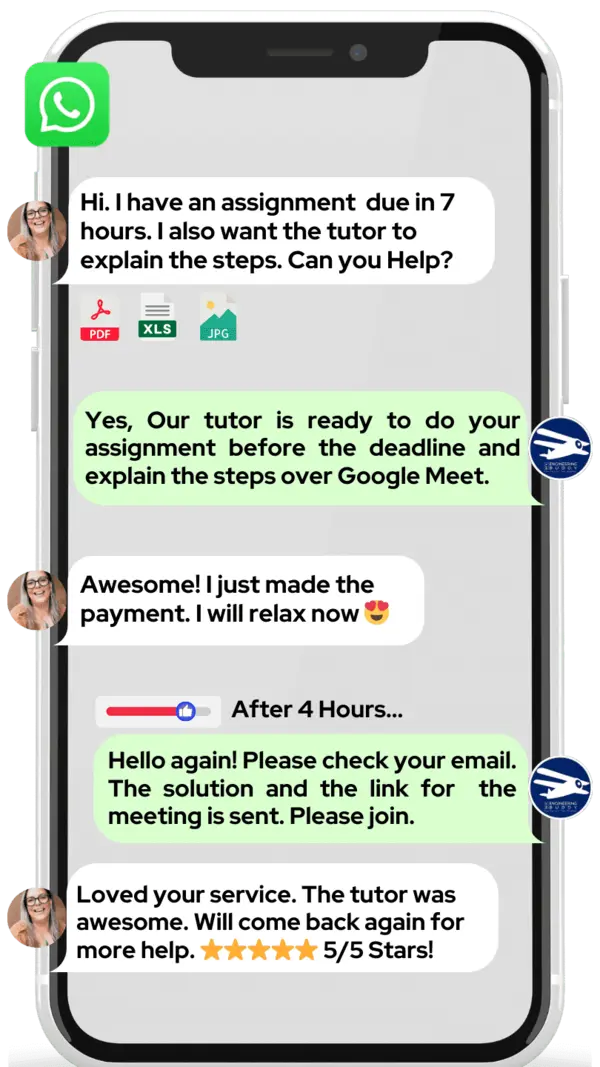
WhatsApp MEB for a quick quote — average response time under 1 minute.
Who This Boolean Algebra Tutoring Is For
Boolean Algebra sits inside computer science, electrical engineering, and discrete mathematics programmes — and the gap between “I’ve read the slides” and “I can actually simplify this expression correctly” is wider than most students expect. MEB works with students at every stage.
- First and second year undergraduates in computer science, electrical engineering, or mathematics hitting truth tables and logic gate design for the first time
- Students retaking a discrete mathematics or digital logic module after a failed first attempt who need to close specific gaps fast
- Students with a conditional university offer depending on their A Level or AP Computer Science grade, where Boolean reasoning is a tested component
- Graduate students working through formal logic, switching theory, or hardware description language coursework
- Students needing help with Boolean Algebra homework — Karnaugh maps, De Morgan’s theorem, expression simplification, and circuit analysis
- Parents supporting a child working through A Level Computer Science or AP CS content who need a structured tutor, not a YouTube playlist
Students have come to MEB from programmes at MIT, Carnegie Mellon, Imperial College London, the University of Toronto, UNSW Sydney, TU Delft, and ETH Zurich — among many others.
1:1 Tutoring vs Self-Study vs AI Tools
Self-study works for some students — but Boolean Algebra has a specific problem: it’s easy to apply a law incorrectly and still get a result that looks plausible. Without feedback, you can repeat the same error across an entire problem set and not realise it until an exam. AI tools are fast at generating explanations, but they cannot watch you work through a Karnaugh map in real time, catch where your grouping logic went wrong, or adapt the next example to the exact mistake you just made. For a subject where one misapplied identity — say, treating absorption incorrectly — can cascade through four steps, live annotation matters. MEB gives you the flexibility of online sessions with a structured feedback loop calibrated to your exact course and exam board.
Outcomes: What You’ll Be Able To Do in Boolean Algebra
After working with a Boolean Algebra tutor at MEB, you’ll be able to simplify complex Boolean expressions using laws such as De Morgan’s, absorption, and distributivity without second-guessing each step. You’ll be able to model combinational logic circuits, translate between truth tables, logic gate diagrams, and algebraic expressions with confidence. You’ll be able to apply Karnaugh map minimisation to four-variable problems and explain why a given simplification is correct — not just that it is. You’ll be able to analyse switching circuits and write correct sum-of-products and product-of-sums forms for a given function. You’ll be able to present these solutions in the format your exam board or course instructor expects, with working clearly laid out.
Supporting a student through Boolean Algebra? MEB works directly with parents to set up sessions, track progress, and keep coursework on schedule. WhatsApp MEB — average response time is under a minute, 24/7.
Based on feedback from 40,000+ sessions collected by MEB from 2022 to 2025, 58% of students improved by one full grade after approximately 20 hours of 1:1 tutoring in a single subject. A further 23% achieved at least a half-grade improvement.
Source: MEB session feedback data, 2022–2025. Not a guarantee. Individual results vary.
What We Cover in Boolean Algebra (Syllabus / Topics)

Foundations and Logic Laws
- Boolean variables, constants, and the two-valued system (0 and 1)
- Basic operations: AND, OR, NOT — definitions and truth tables
- Fundamental laws: identity, null, idempotent, complement, and involution
- Commutative, associative, and distributive laws with worked proofs
- De Morgan’s theorems — statement, proof, and application to circuit simplification
- Absorption and consensus theorems
- Duality principle and its role in deriving new identities
Useful references for this track: Rosen’s Discrete Mathematics and Its Applications, Mano and Ciletti’s Digital Design, and Whitesitt’s Boolean Algebra and Its Applications.
Expression Simplification and Karnaugh Maps
- Canonical forms: sum of minterms (SOM) and product of maxterms (POM)
- Sum-of-products (SOP) and product-of-sums (POS) — construction and conversion
- Two-, three-, and four-variable Karnaugh maps — grouping and prime implicants
- Don’t-care conditions and how they affect minimisation
- Quine-McCluskey method for larger variable sets
- Comparing algebraic and map-based minimisation — when each is faster
References: Mano and Ciletti’s Digital Design, Wakerly’s Digital Design: Principles and Practices, and Tocci’s Digital Systems.
Logic Gates, Circuits, and Applications
- Gate-level implementation of Boolean functions: AND, OR, NOT, NAND, NOR, XOR, XNOR
- Universal gates — why NAND and NOR alone can implement any function
- Combinational circuit analysis: deriving Boolean expressions from schematics
- Combinational circuit design: from truth table to minimised gate circuit
- Adders, multiplexers, and decoders as Boolean Algebra applications
- Introduction to sequential logic and how Boolean Algebra underpins flip-flop design
References: Floyd’s Digital Fundamentals, Harris and Harris’s Digital Design and Computer Architecture, and Mano and Ciletti’s Digital Design.
At MEB, we’ve found that students who struggle with Karnaugh maps almost always have a gap one step earlier — they haven’t fully internalised the minterm notation. Fix that first, and the maps resolve quickly. Tutors are trained to spot this pattern in the first session.
What a Typical Boolean Algebra Session Looks Like
The tutor opens by checking the previous session’s practice task — usually a set of simplification problems using absorption or De Morgan’s theorems. If anything was done incorrectly, that’s addressed in the first five minutes before moving forward. Then the student and tutor work through two or three new problems on screen: today’s focus might be four-variable Karnaugh map minimisation with don’t-care conditions. The tutor uses a digital pen-pad to annotate the K-map live, walking through prime implicant selection step by step. The student then attempts a similar problem while the tutor watches, catching grouping errors in real time rather than after the fact. The session closes with a specific practice task — say, converting a given truth table into minimised SOP form — and the next topic is noted so the student can look over it before the following session.
How MEB Tutors Help You with Boolean Algebra (The Learning Loop)
Diagnose: In the first session, the tutor works through a short diagnostic — typically a truth table construction and a basic simplification problem. This identifies whether the gap is in the laws themselves, in notation, or in the process of moving between representations.
Explain: The tutor works through a fully annotated example using a digital pen-pad — showing each law applied, each step justified. No shortcuts. Students who’ve only seen worked answers in a textbook often say this is the first time they’ve understood why a step is valid, not just that it is.
Practice: The student attempts a parallel problem with the tutor present. This is where the real learning happens — the tutor can see exactly where hesitation or error enters the process.
Feedback: Every error is corrected at the step where it occurred, not at the end. The tutor explains which law was misapplied, what the correct application looks like, and — critically — why that error is common. Students stop making the same mistake twice.
Plan: At the end of each session, the tutor notes the next topic, sets a specific practice task, and flags anything to review before the next meeting. The plan shifts as the student improves.
Sessions run over Google Meet with a digital pen-pad or iPad and Apple Pencil for live annotation. Before your first session, share your course outline or syllabus, a recent homework attempt or past paper question you couldn’t finish, and your exam or assignment deadline. The tutor handles the rest. Start with the $1 trial — 30 minutes of live tutoring that also serves as your first diagnostic.
Whether you need a quick catch-up before an exam, structured revision over 4–8 weeks, or ongoing weekly support through the semester, the tutor maps the session plan after the first diagnostic.
Students consistently tell us that the moment Boolean Algebra clicks isn’t when they see a new law — it’s when they catch their own mistake mid-problem and correct it without prompting. That’s what the practice-and-feedback loop is built to produce.
Tutor Match Criteria (How We Pick Your Tutor)
MEB doesn’t assign the next available tutor. The match is deliberate.
Subject depth: Tutors are matched on the specific level and strand — whether you’re working through A Level CS Boolean logic, a first-year discrete mathematics module, or graduate-level switching theory. Syllabus fit is checked before assignment.
Tools: All Boolean Algebra sessions use Google Meet with a digital pen-pad or iPad and Apple Pencil for live annotation of truth tables, K-maps, and circuit diagrams. No static PDFs passed back and forth.
Time zone: MEB covers New York, Los Angeles, Chicago, London, Dubai, Toronto, Sydney, Melbourne, and all major US, UK, Gulf, Canadian, Australian, and European time zones — evenings and weekends included.
Learning style: Calibrated from the first session. Some students need slower, law-by-law progression. Others need to be pushed to attempt problems before explanations. The tutor adjusts.
Communication: Clear, precise English adapted to the student’s level. Graduate students get different framing than first-year undergraduates.
Goals: The match accounts for whether the goal is exam performance, homework completion, conceptual understanding, or research-level depth in formal logic.
Unlike platforms where you fill out a form and wait, MEB responds in under a minute, 24/7. Tutor match takes under an hour. The $1 trial means you test before you commit. Everything runs over WhatsApp — no logins, no intake forms.
Study Plans (Pick One That Matches Your Goal)
For students with an upcoming exam or coursework deadline, the tutor builds a specific session sequence after the diagnostic. A catch-up plan (1–3 weeks) focuses on the highest-weight gaps first — usually Karnaugh map minimisation and De Morgan’s application. An exam prep plan (4–8 weeks) works through all major topics systematically, with past paper practice built in from week two. Weekly ongoing support aligns sessions to your semester schedule and coursework submission dates. The tutor sets the sequence — you just need to show up and do the work.
Pricing Guide
Boolean Algebra tutoring starts at $20/hr for most undergraduate-level work. Rates rise to $35–$70/hr for graduate-level topics such as switching theory, formal logic, or VLSI-related Boolean minimisation. Niche or highly specialised requests reach up to $100/hr. The rate depends on the level, topic complexity, timeline urgency, and tutor availability.
Availability tightens in April–May and November–December. If your exam is within four weeks, book immediately.
For students targeting graduate programmes at research universities, MEB can match tutors with formal logic or computer architecture research backgrounds — share your specific goal and MEB will match the tier to what you actually need.
Start with the $1 trial — 30 minutes, no registration, no commitment. WhatsApp MEB for a quick quote.
Try your first session for $1 — 30 minutes of live 1:1 tutoring or one homework question explained in full. No registration. No commitment. WhatsApp MEB now and get matched within the hour.
FAQ
Is Boolean Algebra hard?
Boolean Algebra is systematic, not intuitive. Most students find the laws straightforward individually but struggle to choose which law to apply and in what order during simplification. A tutor who can watch you work and intervene at the right moment closes that gap faster than any textbook.
How many sessions are needed to get through Boolean Algebra?
Students with one specific gap — say, Karnaugh map minimisation — typically need 3–6 sessions. Students building from the foundations of logic laws through to circuit design generally need 10–15 sessions across 4–8 weeks. The diagnostic session clarifies this early.
Can you help with Boolean Algebra homework and assignments?
Yes. MEB tutors explain the method, work through the approach with you, and make sure you can complete the problem yourself. You do the work and submit it.
MEB tutoring is guided learning — you understand the work, then submit it yourself. For full details on what we help with and what we don’t, read our Academic Integrity policy and Why MEB.
Will the tutor match my exact syllabus or exam board?
Yes. MEB checks your course outline, exam board, or module description before the match. Boolean Algebra content varies across A Level Computer Science, AP CS, IEEE-standard engineering programmes, and university discrete maths modules — the tutor assigned knows the difference.
What happens in the first session?
The tutor runs a short diagnostic — usually a truth table and a simplification problem. This identifies exactly where your understanding breaks down. The rest of the session addresses the most pressing gap, and the tutor sets a practice task before the next meeting.
Is online Boolean Algebra tutoring as effective as in-person?
For a subject worked almost entirely on paper and whiteboards, a digital pen-pad over Google Meet replicates the in-person experience closely. Students who’ve had both consistently report no meaningful difference in outcome — and online sessions remove the commute and scheduling friction.
Can I get Boolean Algebra help at midnight or on a weekend?
Yes. MEB operates 24/7, and tutors are available across multiple time zones. If you have a submission due at 9am and need to work through a circuit minimisation problem at midnight, message on WhatsApp — median response time is under a minute.
What if I don’t like my assigned Boolean Algebra tutor?
Tell MEB on WhatsApp and a different tutor will be matched — usually within the hour. No explanation required. The $1 trial exists precisely so you can test the match before committing to a full session block.
Do you cover Boolean Algebra for computer engineering as well as computer science?
Yes. The content overlaps significantly — logic gate design, Karnaugh minimisation, and switching circuits appear in both disciplines. The tutor is matched to your specific programme, so the framing aligns with whether your course emphasises hardware implementation or formal computational logic.
How do I get started?
Start with the $1 trial — 30 minutes of live tutoring or one full homework question explained. Three steps: WhatsApp MEB, get matched with a verified Boolean Algebra tutor within the hour, then start your trial session. No forms, no registration.
Trust & Quality at My Engineering Buddy
Every MEB tutor goes through subject-specific vetting — not a generic interview. Candidates are evaluated on Boolean Algebra content knowledge directly, complete a live demo session assessed by a senior tutor, and are reviewed continuously based on student feedback. Tutors hold degrees in computer science, electrical engineering, mathematics, or related fields, and many have professional or research experience in digital design and formal logic. Rated 4.8/5 across 40,000+ verified reviews on Google.
MEB tutoring is guided learning — you understand the work, then submit it yourself. For full details on what we help with and what we don’t, read our Academic Integrity policy and Why MEB.
MEB has served 52,000+ students in 2,800+ subjects across the US, UK, Canada, Australia, the Gulf, and Europe since 2008. Students who need support beyond Boolean Algebra often also need ring theory tutoring, commutative algebra help, or 1:1 universal algebra tutoring. Read more about how sessions are structured at MEB’s tutoring methodology page.
MEB has been matching students with verified subject specialists since 2008. The platform covers 2,800+ subjects — from Boolean Algebra and digital logic to representation theory and homological algebra — with tutors available across every major time zone.
Source: My Engineering Buddy, 2008–2025.
Explore Related Subjects
Students studying Boolean Algebra often also need support in:
- Commutative Algebra
- Homological Algebra
- Lie Algebra
- Representation Theory
- Ring of Fractions
- Universal Algebra
Next Steps
Getting started takes less than two minutes.
- Share your exam board or course outline, your hardest topic right now, and your exam or submission date
- Share your availability and time zone
- MEB matches you with a verified Boolean Algebra tutor — usually within an hour, always within 24 hours
- Your first session opens with a diagnostic so every minute is spent on what actually matters
Before your first session, have ready: your exam board and syllabus (or course outline), a recent past paper attempt or homework question you got stuck on, and your exam or deadline date. The tutor handles the rest.
Visit www.myengineeringbuddy.com for more on the MEB process, or get in touch directly.
WhatsApp to get started or email meb@myengineeringbuddy.com.
Reviewed by Subject Expert
This page has been carefully reviewed and validated by our subject expert to ensure accuracy and relevance.