




~1 min
Average Reply Time
~1 hour
To Be Matched With A Tutor
1 Trial
75% Find Their Tutor On The 1st Trial
$1
Your First 30 Minutes
Hire The Best Fortran Programming Tutor
Top Tutors, Top Grades. Without The Stress!
Related Subjects
Fortran still failing to compile — and your deadline is 48 hours away? That’s where most students message us.
Fortran Programming Tutor Online
Fortran (Formula Translation) is a compiled, statically typed programming language built for numerical and scientific computation. Used in high-performance computing, climate modelling, and aerospace simulation, it equips students with skills in array operations, subroutines, and efficient numerical algorithms.
If you’re searching for a Fortran Programming tutor near me, MEB connects you with a verified specialist — live, 1:1, and online. Our computer programming tutoring covers the full breadth of languages used in engineering and science degrees, with Fortran sessions tailored to your exact course module, compiler environment, and assignment type. Tutors work with students across US, UK, Canada, Australia, and the Gulf. Most students start seeing fewer compile errors and cleaner logic within three to four sessions.
- 1:1 online sessions aligned to your university module or research programme
- Expert tutors with active scientific computing or HPC backgrounds
- Flexible scheduling across US, UK, Canada, Australia, and Gulf time zones
- Structured learning plan built after a diagnostic session
- Ethical homework and assignment guidance — you understand the work, then submit it yourself
52,000+ students across the US, UK, Canada, Australia, and the Gulf have used MEB since 2008 — including students in computer programming subjects like Fortran, C++ programming, and Julia programming.
Source: My Engineering Buddy, 2008–2025.
How Much Does a Fortran Programming Tutor Cost?
Rates run $20–$40/hr for most undergraduate and graduate Fortran modules. Specialist HPC or legacy codebase work goes up to $100/hr depending on tutor depth. The $1 trial gives you 30 minutes of live 1:1 tutoring or one full homework question explained — no registration required.
| Level / Need | Typical Rate | What’s Included |
|---|---|---|
| Standard (undergrad modules) | $20–$40/hr | 1:1 sessions, homework guidance |
| Advanced / HPC / Research | $40–$100/hr | Expert tutor, legacy code, MPI/OpenMP |
| $1 Trial | $1 flat | 30 min live session or 1 homework question |
Tutor availability tightens at end-of-semester deadlines and during summer research programme crunch periods. Book early if your submission is within three weeks.
WhatsApp MEB for a quick quote — average response time under 1 minute.
Who This Fortran Programming Tutoring Is For
Fortran is rarely taught with the depth it demands. Most students come to MEB after staring at a segmentation fault for two hours or realising their DO loop logic is producing results that are plausible but wrong — and they can’t tell why.
- Undergraduate engineering and physics students whose course requires Fortran 90/95 or modern Fortran 2003/2008
- Graduate students and PhD researchers using Fortran in climate models, finite element solvers, or computational fluid dynamics
- Students retaking a numerical methods or scientific computing module after a failed first attempt
- Students with a final project or dissertation submission deadline approaching and unresolved bugs in their codebase
- Researchers handed a legacy Fortran 77 codebase with no documentation and no one to ask
- Parents supporting an engineering undergraduate whose grades dropped when the programming component started
Students from universities across the US, UK, Canada, and Australia — including those studying at institutions where courses use Fortran alongside Python or MATLAB — work with MEB tutors to close gaps fast. If you’re targeting a research programme or graduate school place that depends on computational competence, this matters.
1:1 Tutoring vs Self-Study vs AI vs YouTube vs Online Courses
Self-study works if you’re disciplined — but Fortran’s syntax rules and pointer behaviour punish guesswork silently. AI tools explain concepts quickly but can’t watch you misread an array index in real time. YouTube covers the basics well; it stops when you’re three levels deep in a DO CONCURRENT loop error. Online courses are structured but fixed-pace — no one pauses for your specific compiler complaint. 1:1 tutoring with MEB is live, calibrated to your exact module and compiler setup, and corrects your logic errors in the moment — not after you’ve submitted.
Outcomes: What You’ll Be Able To Do in Fortran Programming
After working with a Fortran Programming tutor through MEB, you’ll be able to write and debug modular Fortran 90/95 or modern Fortran 2008 programs with confidence. You’ll apply array operations, ALLOCATABLE arrays, and derived data types to solve real numerical problems. Students learn to analyse DO loop structures and fix off-by-one indexing errors without guessing. You’ll model physical systems using subroutines and modules, and explain your code logic clearly — which matters in viva assessments and research group presentations. For students in HPC environments, you’ll understand how to structure code for parallelisation using OpenMP or MPI basics.
Based on feedback from 40,000+ sessions collected by MEB from 2022 to 2025, 58% of students improved by one full grade after approximately 20 hours of 1:1 tutoring in subjects like Fortran Programming. A further 23% achieved at least a half-grade improvement.
Source: MEB session feedback data, 2022–2025.

What We Cover in Fortran Programming (Syllabus / Topics)
Core Language Fundamentals
- Program structure: PROGRAM, IMPLICIT NONE, variable declarations
- Data types: INTEGER, REAL, DOUBLE PRECISION, COMPLEX, LOGICAL, CHARACTER
- Control flow: IF-THEN-ELSE, SELECT CASE, DO loops, CYCLE, EXIT
- Input/output: READ, WRITE, FORMAT statements, file handling
- Intrinsic functions: ABS, SQRT, SIN, COS, MOD, and array intrinsics
- Subprograms: SUBROUTINE vs FUNCTION, argument passing, INTENT attributes
Recommended references: Fortran 95/2003 for Scientists and Engineers by Chapman; Introduction to Programming with Fortran by Chivers and Sleightholme.
Modern Fortran and Numerical Methods
- Modules and USE association for reusable code structure
- ALLOCATABLE arrays and dynamic memory management
- Derived types (structures) and type-bound procedures
- Numerical methods: root finding, numerical integration, ODE solvers
- Matrix operations and linear algebra routines interfacing with LAPACK/BLAS
- Precision management: KIND parameters and avoiding floating-point errors
- Pointers and target attributes — when and why to use them
Recommended references: Modern Fortran Explained by Metcalf, Reid, and Cohen; Numerical Recipes in Fortran by Press et al. External reference: NIST Engineering Laboratory publishes standards and benchmarks relevant to numerical computing in Fortran environments.
High-Performance and Legacy Fortran
- Fortran 77 syntax: COMMON blocks, EQUIVALENCE, fixed-format source
- Migrating legacy Fortran 77 code to modern Fortran 90/95/2008
- OpenMP directives for shared-memory parallelisation
- MPI basics for distributed computing with Fortran
- Compiler options: gfortran, Intel ifort, performance flags
- Profiling and debugging: gdb, Valgrind, and compiler warnings
Recommended references: Using OpenMP with Fortran (OpenMP ARB documentation); Parallel Programming in Fortran 95 using OpenMP by Hermanns.
At MEB, we’ve found that Fortran students who struggle most are usually not struggling with mathematics — they’re tripped up by implicit typing rules, COMMON block side effects, or mismatched array dimensions. Fixing the code habit fixes the grade.
Platforms, Tools & Textbooks We Support
Fortran tutoring at MEB is hands-on. Tutors work directly with the tools your course uses — no generic advice, no workarounds.
- Compilers: gfortran (GCC), Intel ifort, NAG Fortran Compiler
- IDEs and editors: VS Code with Fortran extensions, Gedit, Vim, Emacs, Code::Blocks
- Debugging tools: gdb, Valgrind, compiler diagnostic flags (-Wall, -fcheck=all)
- HPC environments: Linux terminal, SSH access, SLURM job scheduling basics
- Libraries: LAPACK, BLAS, FFTW for spectral methods
- Version control: Git for managing Fortran project submissions
What a Typical Fortran Programming Session Looks Like
The tutor opens by checking the previous session’s task — usually a subroutine written by the student using INTENT(IN) and INTENT(OUT) arguments correctly. The student shares their screen or pastes their current code into the shared workspace. They work through the problem together: if the DO loop is producing incorrect output at the boundary, the tutor annotates the logic live using a digital pen-pad, showing exactly where the index goes out of bounds and why the compiler didn’t catch it. The student then rewrites the corrected section and explains their reasoning aloud — this is where understanding sticks. By the end, the tutor sets a short coding task: write a MODULE containing two functions and test them with a driver program. Next session’s topic is noted — usually array slicing or file I/O, depending on the module schedule.
How MEB Tutors Help You with Fortran Programming (The Learning Loop)
Diagnose: In the first session, the tutor identifies whether the student’s core issues are syntactic (misusing FORMAT, confusing REAL and DOUBLE PRECISION), structural (not using modules, writing everything in PROGRAM), or conceptual (not understanding how arrays are stored in memory). This takes 10–15 minutes and shapes every session that follows.
Explain: The tutor works through a live example on screen — annotating code with a digital pen-pad, stepping through execution line by line, and showing why a given construct behaves the way it does. No slides. No pre-recorded video. Live code, live annotation.
Practice: The student attempts a similar problem while the tutor watches. This is where real learning happens — errors caught immediately, not after submission.
Feedback: The tutor explains each error: not just what’s wrong but why marks would be lost in an exam or assessment, and what a correct version looks like. This builds pattern recognition, not dependency.
Plan: Each session closes with a clear next topic, a specific coding task, and an honest progress check. If the student is behind on their module timeline, the tutor flags it and adjusts the sequence.
Sessions run over Google Meet with a digital pen-pad or iPad and Apple Pencil. Before the first session, share your course module guide or assessment brief, a piece of code you’re stuck on, and your deadline date. The first session covers the diagnostic and starts working on your most urgent problem immediately. Start with the $1 trial — 30 minutes of live tutoring that also serves as your first diagnostic.
Students consistently tell us that the moment things click in Fortran is when they stop thinking of it as “old C” and start reading it as a language built around arrays and numerical precision. That reframe usually takes one session to land.
Tutor Match Criteria (How We Pick Your Tutor)
MEB doesn’t assign whoever is available. Every Fortran tutor is matched on four criteria.
Subject depth: The tutor must have hands-on experience with the specific Fortran standard your course uses — Fortran 77, 90/95, or modern Fortran 2003/2008 — and with your module’s application area (numerical methods, HPC, simulation, legacy migration).
Tools: All tutors use Google Meet with a digital pen-pad or iPad and Apple Pencil for live code annotation. No whiteboard-only tutors.
Time zone: Matched to your region — US, UK, Gulf, Canada, or Australia — so sessions run at hours that don’t wreck your sleep or lecture schedule.
Goals: Whether you need to pass a single module, debug a research codebase, or understand parallel computing fundamentals, the tutor is selected for that specific goal.
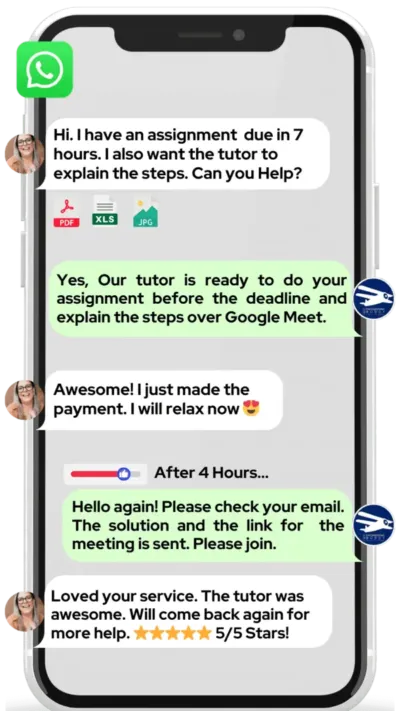
Unlike platforms where you fill out a form and wait, MEB responds in under a minute, 24/7. Tutor match takes under an hour. The $1 trial means you test before you commit. Everything runs over WhatsApp — no logins, no intake forms.
Study Plans (Pick One That Matches Your Goal)
Fortran students fall into three clear patterns. A catch-up plan (1–3 weeks) suits students behind on a module, with targeted sessions on the specific topics causing compile errors or failed test cases. An exam or project prep plan (4–8 weeks) works through numerical methods topics systematically, with weekly coding tasks that mirror assessment style. Ongoing weekly support runs parallel to the semester, keeping pace with lecture content and flagging problems before they compound. After the first diagnostic session, the tutor maps the exact sequence — nothing is decided in advance of knowing where you actually are.
Pricing Guide
Fortran Programming tutoring starts at $20/hr for standard undergraduate modules. Graduate-level numerical methods, HPC work, or legacy codebase support runs $40–$100/hr depending on tutor depth and timeline urgency. Rate factors include the Fortran standard being used, the complexity of the application domain, how quickly you need to close the gap, and tutor availability at your preferred hours.
Availability tightens sharply at end-of-semester submission windows — particularly in May and December for US and UK universities.
For students targeting research programmes or graduate placements where computational Fortran is a core requirement, tutors with active HPC or scientific computing backgrounds are available at higher rates — share your specific goal and MEB will match you to the right tier.
Start with the $1 trial — 30 minutes, no registration, no commitment. WhatsApp MEB for a quick quote.
MEB has supported students in Assembly language programming, COBOL programming, and Fortran — languages that university courses still require and that most modern tutoring platforms don’t cover seriously.
Source: My Engineering Buddy, 2008–2025.
FAQ
Is Fortran Programming hard to learn?
Fortran is not conceptually harder than C or Python — but its syntax rules, implicit typing defaults, and memory layout conventions for arrays trip up students who approach it like a modern language. Most gaps close quickly with guided practice on the right concepts.
How many sessions will I need?
Most students working on a specific module or assignment need 4–8 sessions. Students with broader gaps — or those dealing with a legacy Fortran 77 codebase — typically work over 10–15 sessions. The first diagnostic session clarifies the realistic timeline for your specific situation.
Can you help with homework and assignments?
MEB tutoring is guided learning — you understand the work, then submit it yourself. The tutor explains the logic, walks through similar examples, and helps you debug your own code. See our Academic Integrity policy and Why MEB page for full details on what we help with and what we don’t.
Will the tutor match my exact syllabus or exam board?
Yes. MEB tutors are matched to your specific module, Fortran standard (77, 90, 95, 2003, or 2008), and application area. Share your course guide or assignment brief before the first session and the tutor arrives prepared — not guessing.
What happens in the first session?
The tutor runs a short diagnostic — reviewing your current code, asking targeted questions, and identifying whether your issues are syntactic, structural, or conceptual. The remaining time starts working on your most pressing problem. Nothing is wasted on topics you already know.
Is online Fortran tutoring as effective as in-person?
For a language like Fortran, screen-sharing with live code annotation is often more effective than sitting beside someone. The tutor sees your exact compiler output, annotates your code in real time, and the session recording (if enabled) is yours to review before the next task.
Can I get Fortran help at midnight or on a weekend?
Yes. MEB operates 24/7. Tutors span multiple time zones, so late-night sessions for US students and weekend slots for Gulf or Australian students are available. WhatsApp MEB at any hour — response time is typically under a minute.
What is the difference between Fortran 77 and modern Fortran — and does it matter which one I learn?
It matters significantly. Fortran 77 uses fixed-format source, COMMON blocks, and has no modules or dynamic memory. Modern Fortran (90/95/2008) is free-format, supports modules, allocatable arrays, and object-oriented features. Most university courses use modern Fortran; legacy codebases in research still rely on Fortran 77. MEB tutors cover both and can help you migrate between them.
Do you offer group Fortran sessions?
No. MEB is 1:1 only. Group sessions dilute the feedback loop that makes tutoring work — the tutor needs to see your specific errors, not a composite of five students’ mistakes. Every session is built around your code, your compiler output, your deadline.
Can MEB tutors help with Fortran used in climate modelling or finite element analysis codes?
Yes. MEB has tutors with backgrounds in scientific computing, climate simulation, and numerical methods who work in Fortran professionally. Share your specific codebase context or research domain when you message and MEB will match you with a tutor who knows that application area — not a generalist.
How do I get started?
Three steps: WhatsApp MEB, get matched with a verified Fortran tutor — usually within the hour — and start your $1 trial. The trial is 30 minutes of live 1:1 tutoring or one complete homework question explained. No registration. No commitment upfront.
How do I find a Fortran Programming tutor in my city?
MEB is fully online — which means location doesn’t limit your options. A student in Toronto, Dubai, or Sydney gets access to the same tutor pool. If you’ve searched for a Fortran tutor in your city and found nothing serious, online is the better answer anyway for a specialist language like this.
Trust & Quality at My Engineering Buddy
Every MEB tutor goes through subject-specific screening before their first session. For Fortran, that means demonstrating working knowledge of the Fortran standard they’ll be teaching, passing a live code review, and completing a demo session evaluated by MEB. Ongoing session feedback from students drives a continuous review process — tutors who underperform are removed. Rated 4.8/5 across 40,000+ verified reviews on Google. MEB has been operating since 2008 and has served 52,000+ students across more than 2,800 subjects.
MEB tutoring is guided learning — you understand the work, then submit it yourself. For full details on what we help with and what we don’t, read our Academic Integrity policy and Why MEB.
MEB covers the full range of computer programming subjects — from Fortran and C programming tutoring to Python help — serving students in the US, UK, Canada, Australia, Gulf, and Europe. Whether you’re in an engineering faculty, a computational science programme, or a physics department that still runs Fortran modules, MEB has tutors who have been inside that course structure before. See our tutoring methodology for details on how sessions are structured and quality is maintained.
Our experience across thousands of sessions shows that Fortran students who share their exact compiler error — the full terminal output, not a paraphrase — cut diagnostic time in half. Paste it into WhatsApp before the session starts.
Explore Related Subjects
Students studying Fortran Programming often also need support in:
- Haskell programming
- Rust programming
- Scala programming
- Perl programming
- Lisp programming
- Shell scripting programming
- Prolog programming
Next Steps
Ready to start? Here’s what to do:
- Share your module name, the Fortran standard your course uses, and the specific topic or error you’re stuck on
- Share your time zone and availability — tutors span US, UK, Gulf, Canada, and Australia
- MEB matches you with a verified Fortran tutor — usually within the hour
- Your first session starts with a diagnostic so every minute is spent on what actually needs fixing
Before your first session, have ready: your course module guide or assignment brief, the code you’re currently working on (with compiler output if there are errors), and your submission or exam date. The tutor handles the rest.
Visit www.myengineeringbuddy.com for more on how MEB works.
Try your first session for $1 — 30 minutes of live 1:1 tutoring or one homework question explained in full. No registration. No commitment. WhatsApp MEB now and get matched within the hour.
WhatsApp to get started or email [email protected].
52,000+ Happy Students From Various Universities




Reviewed by Subject Expert
This page has been carefully reviewed and validated by our subject expert to ensure accuracy and relevance.
