Hire Verified & Experienced
International Relations Tutors
Email: [email protected]
4.8/5 40K+ session ratings collected on the MEB platform



Hire The Best International Relations Tutor
Top Tutors, Top Grades. Without The Stress!

Most students hit a wall in International Relations when theory stops making sense and current events feel disconnected from everything they’ve read. A good tutor fixes that fast.
International Relations Tutor Online
International Relations is the academic study of political, economic, and diplomatic interactions between states, international organisations, and non-state actors — equipping students to analyse conflict, cooperation, trade, and global governance across competing theoretical frameworks.
MEB offers 1:1 online tutoring and homework help in 2800+ advanced subjects, including International Relations at every level — IB, A Level, AP, undergraduate, and postgraduate. If you’ve searched for an International Relations tutor near me, MEB’s online model covers the same ground without the commute. Our political science tutoring network includes specialists in IR theory, foreign policy, international law, and geopolitics — matched to your exact course and exam board.
- 1:1 online sessions tailored to your syllabus — IB Global Politics, A Level Politics, AP Comparative Government, or university modules
- Expert-verified tutors with subject-specific knowledge in IR theory, international law, and global governance
- Flexible time zones — US, UK, Canada, Australia, Gulf
- Structured learning plan built after a diagnostic session
- Ethical homework and assignment guidance — you understand the work, then submit it yourself
52,000+ students across the US, UK, Canada, Australia, and the Gulf have used MEB since 2008 — including students in Political Science subjects like International Relations, Comparative International Politics, and Foreign Policy.
Source: My Engineering Buddy, 2008–2025.
How Much Does an International Relations Tutor Cost?
Most International Relations tutoring sessions run $20–$40/hr. Graduate-level or specialist IR topics — think international security theory, IPE, or thesis support — can reach up to $100/hr. Not sure yet? The $1 trial gets you 30 minutes of live 1:1 tutoring or a full explanation of one homework question before you commit to anything.
| Level / Need | Typical Rate | What’s Included |
|---|---|---|
| Standard (IB, A Level, AP, undergrad) | $20–$40/hr | 1:1 sessions, homework guidance, exam prep |
| Advanced / Specialist (postgrad, thesis, IR law) | $40–$100/hr | Expert tutor, niche depth, research support |
| $1 Trial | $1 flat | 30 min live session or 1 homework question explained |
Tutor availability tightens sharply during May exam windows and semester-end periods. Book early if your deadline is within six weeks.
WhatsApp MEB for a quick quote — average response time under 1 minute.
Who This International Relations Tutoring Is For
IR covers a wide band of learners — from a first-year undergraduate trying to tell Realism from Liberalism, to a PhD student structuring a dissertation on multilateral treaty failure. If the theory feels abstract or the essay feedback keeps saying “lacks analytical depth,” that’s exactly what a 1:1 IR tutor addresses.
- IB, A Level, and AP students preparing for paper-based exams in global politics or comparative government
- Undergraduate students stuck on IR theory modules — Waltz, Wendt, Morgenthau, constructivism
- Graduate and postgraduate students needing research support in international security, IPE, or human rights law
- Students with a university conditional offer depending on this grade — one grade matters here
- Students 4–6 weeks from exams with significant gaps still to close in essay technique or case study application
- Parents watching a child’s confidence drop alongside their Politics grade
Students at universities including Georgetown, LSE, King’s College London, Sciences Po, ANU, McGill, and NYU have used MEB for IR support at both undergraduate and postgraduate level.
At MEB, we’ve found that IR students who struggle most aren’t confused by the facts — they’re unsure how to apply theory as an analytical lens. The first session usually closes that gap faster than a student expects.
1:1 Tutoring vs Self-Study vs AI vs YouTube vs Online Courses
Self-study works if you’re disciplined, but IR essay feedback doesn’t come from a textbook. AI tools explain concepts quickly but can’t tell you why your argument about NATO expansion misses the Realist logic. YouTube covers IR theory well at a survey level — it stops short when you need to apply it to a specific exam question. Online courses are structured but fixed-pace, with no one checking whether your case study analysis actually holds up. With MEB, a tutor reads your draft, spots the analytical gap, and corrects it live — calibrated to your exact IR syllabus and exam board.
Outcomes: What You’ll Be Able To Do in International Relations
After working with an MEB International Relations tutor, you’ll be able to apply Realist, Liberal, and Constructivist frameworks to real-world conflicts without conflating them. You’ll analyse foreign policy decisions using case studies your exam board actually tests — the 2003 Iraq War, the Ukraine conflict, the Paris Agreement. You’ll write structured IR essays that make a clear argument, use theory as evidence, and engage with counter-positions. You’ll explain the role of institutions like the UN, WTO, and NATO with enough precision to score at the top band.
Supporting a student through International Relations? MEB works directly with parents to set up sessions, track progress, and keep coursework on schedule. WhatsApp MEB — average response time is under a minute, 24/7.
Based on feedback from 40,000+ sessions collected by MEB from 2022 to 2025, 58% of students improved by one full grade after approximately 20 hours of 1:1 tutoring in subjects like International Relations. A further 23% achieved at least a half-grade improvement.
Source: MEB session feedback data, 2022–2025.
What We Cover in International Relations (Syllabus / Topics)

IR Theory and Core Frameworks
- Realism and Neo-Realism — Morgenthau, Waltz, structural power
- Liberalism and Neo-Liberal Institutionalism — Kant, Keohane, interdependence
- Constructivism — Wendt, identity, norms, and state behaviour
- Critical theories — Marxism, feminism, post-colonialism in IR
- The English School — Bull, international society, world order
- Theory application to case studies — when to use which lens
Core texts: Baylis, Smith & Owens The Globalization of World Politics; Dunne, Kurki & Smith International Relations Theories; Jackson & Sørensen Introduction to International Relations.
International Security, Conflict, and Foreign Policy
- State and non-state actors in armed conflict
- Nuclear deterrence, arms control, and proliferation
- Humanitarian intervention and the Responsibility to Protect (R2P)
- Terrorism, insurgency, and asymmetric warfare
- Foreign policy analysis — decision-making models, domestic factors, leadership
- Case studies: Ukraine-Russia, Middle East, South China Sea
Core texts: Baylis & Wirtz Strategy in the Contemporary World; Burchill et al. Theories of International Relations; Freedman Strategy: A History.
Global Governance, International Law, and Political Economy
- The UN system — Security Council, General Assembly, reform debates
- International law — sovereignty, treaties, the European Journal of International Law documents key debates on jurisdiction and state responsibility
- Trade regimes — WTO, regional trade agreements, protectionism
- International political economy — dependency theory, globalisation, financial crises
- Climate governance — Paris Agreement, IPCC, state compliance
- Human rights frameworks — UDHR, ICC, enforcement gaps
Core texts: Held & McGrew Globalization/Anti-Globalization; Gilpin The Political Economy of International Relations; Shaw International Law.
What a Typical International Relations Session Looks Like
The tutor opens by checking the previous topic — say, your essay on whether NATO expansion caused the Ukraine conflict. They’ll read your draft argument or hear your explanation, then identify exactly where the Realist logic breaks down or where you’ve confused a normative claim with an analytical one. From there, you work through the specific IR theory together on screen — the tutor writing annotations in real time with a digital pen-pad while you articulate the reasoning. You re-draft the argument or re-apply the framework to a new case study. The session closes with a concrete task: one timed paragraph using a set case, or a reading from your syllabus to annotate before next time.
How MEB Tutors Help You with International Relations (The Learning Loop)
Diagnose: In the first session, the tutor identifies which IR theories you’re conflating, which exam components are weakest — essay structure, case study selection, or source evaluation — and how much time remains before your deadline.
Explain: The tutor works through a live example on Google Meet using a digital pen-pad or iPad and Apple Pencil — annotating your essay draft, mapping a theory’s assumptions, or tracing a foreign policy decision through a specific analytical lens.
Practice: You attempt a timed paragraph, case study application, or source analysis while the tutor watches. No waiting until next week to find out you got it wrong.
Feedback: The tutor goes step by step through where marks were lost — not just “needs more analysis” but specifically which claim needed theoretical grounding and which case study was too thin.
Plan: After each session, the tutor sets the next topic, flags the exam components that need most work, and keeps the progression on track relative to your deadline.
Sessions run on Google Meet. Before your first session, have your syllabus or course outline, a recent essay or homework attempt, and your exam date ready — the tutor structures everything around that. Start with the $1 trial — 30 minutes of live tutoring that also serves as your first diagnostic.
Students consistently tell us that the moment IR clicks is when they stop memorising what Realism says and start using it to predict a state’s behaviour. That shift — from recall to application — is what 1:1 tutoring accelerates more than anything else.
Tutor Match Criteria (How We Pick Your Tutor)
Not every IR tutor fits every student. Here’s what MEB verifies before the match.
Subject depth: Tutors are matched by level — IB, A Level, AP, undergraduate, or postgraduate — and by specific IR sub-field: theory, security studies, IPE, international law, or foreign policy analysis.
Tools: All tutors use Google Meet with a digital pen-pad or iPad and Apple Pencil. No whiteboard links, no third-party apps to install.
Time zone: Matched to your region — US East/West, UK, Gulf, Canada, Australia — so sessions happen when you’re actually awake.
Goals: Exam score improvement, essay technique, conceptual depth for dissertation work, or weekly homework support. The match depends on what you actually need, not a generic profile.
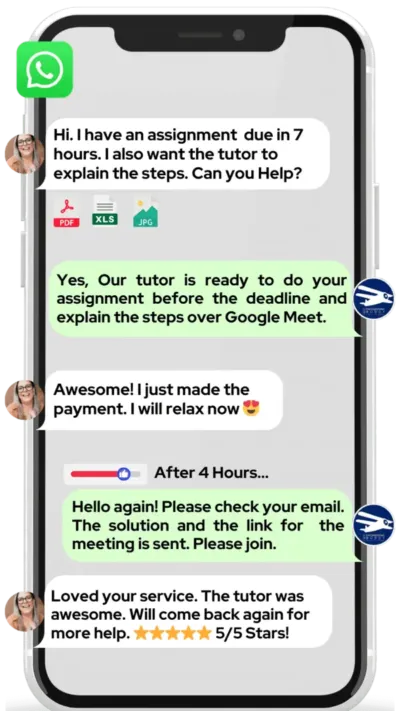
Unlike platforms where you fill out a form and wait, MEB responds in under a minute, 24/7. Tutor match takes under an hour. The $1 trial means you test before you commit. Everything runs over WhatsApp — no logins, no intake forms.
Study Plans (Pick One That Matches Your Goal)
After a diagnostic session, your tutor builds the sequence. The three common structures: Catch-up (1–3 weeks) — rapid triage of the biggest gaps before an exam, prioritising the highest-value IR topics and essay components; Exam prep (4–8 weeks) — structured revision tied to your specific exam date, working through all paper components in order; Weekly support — ongoing sessions aligned to your semester deadlines and coursework submissions. The tutor adapts the plan as topics shift.
Pricing Guide
International Relations tutoring starts at $20/hr for standard IB, A Level, AP, and undergraduate modules. Postgraduate, dissertation, and specialist international law or security studies support runs $40–$100/hr depending on tutor background and topic depth.
Rate factors include your level, the specific IR sub-field, how close your deadline is, and tutor availability. Rates at the higher end reflect tutors with professional research or policy backgrounds.
For students targeting top IR programmes at LSE, Georgetown, Sciences Po, or Oxford, tutors with academic research and policy advisory backgrounds are available at higher rates — share your specific goal and MEB will match the tier to your ambition.
Availability tightens sharply in May and at semester end. Start with the $1 trial — 30 minutes, no registration, no commitment. WhatsApp MEB for a quick quote.
18 years. 52,000+ students. 2,800+ subjects. MEB has been matching students with expert tutors since 2008 — across IR, geopolitics, political economy, and the full range of Political Science disciplines.
Source: My Engineering Buddy, 2008–2025.
Try your first session for $1 — 30 minutes of live 1:1 tutoring or one homework question explained in full. No registration. No commitment. WhatsApp MEB now and get matched within the hour.
FAQ
Is International Relations hard?
IR is conceptually demanding. The difficulty isn’t memorising facts — it’s applying competing theories to the same event and building an argument that holds up analytically. Essay technique and theoretical precision are where most students lose marks.
How many sessions are needed?
For a focused exam prep block, most students see clear improvement after 8–12 sessions. Students with wider gaps or dissertation support needs typically work over a full semester. The diagnostic session sets the realistic target.
Can you help with homework and assignments?
MEB tutoring is guided learning — you understand the work, then submit it yourself. The tutor explains the framework, reviews your argument, and points out where reasoning needs strengthening. See our Academic Integrity policy and Why MEB page for full details on what we help with and what we don’t.
Will the tutor match my exact syllabus or exam board?
Yes. MEB tutors are matched by specific qualification — IB Global Politics, A Level Politics (AQA, Edexcel, OCR), AP Comparative Government and Politics, or your specific university module. Tell MEB your board and course name when you get in touch.
What happens in the first session?
The tutor runs a short diagnostic — checks which IR theories you can apply confidently, where your essay structure breaks down, and what your exam or deadline date is. From there, the session plan is built around your actual gaps, not a generic IR syllabus.
Is online tutoring as effective as in-person?
For IR specifically, yes — most of the work is text-based: reading, writing, and argument construction. The digital pen-pad replicates the annotation and feedback loop of in-person sessions without requiring travel or fixed location.
What’s the difference between Realism and Liberalism in IR, and why does it keep coming up in essays?
Realism treats states as self-interested actors in an anarchic system; Liberalism emphasises institutions, interdependence, and cooperation as genuine constraints on conflict. Exam questions in IR almost always require you to apply one or compare both — your tutor will drill the distinction until it’s automatic.
Can I get help with an IR dissertation or research paper at postgraduate level?
Yes. MEB has tutors with research backgrounds in international security, IPE, international law, and foreign policy analysis. Support includes argument structuring, literature review framing, theoretical framework selection, and draft feedback — at Masters and PhD level.
Can I get International Relations tutoring at midnight or on weekends?
MEB operates 24/7 across time zones. Students in the Gulf, Australia, and the US West Coast regularly book late-evening or weekend sessions. WhatsApp MEB at any hour and you’ll get a response within minutes.
How do I find an International Relations tutor in my city?
MEB is fully online — no city-based matching needed. Sessions run on Google Meet from wherever you are. Students across New York, London, Dubai, Toronto, Sydney, and Amsterdam use MEB without any location constraint.
Do you cover IR theory for specific exam boards like IB or A Level Edexcel?
Yes. IB Global Politics and A Level Politics (Edexcel, AQA, OCR) each have specific case study requirements and essay formats. Tutors are matched to your board’s exact specification — not a generic IR overview.
How do I get started?
Start with the $1 trial: 30 minutes of live 1:1 tutoring or one homework question explained in full. Three steps: WhatsApp MEB with your subject and level, get matched with an IR tutor within the hour, run your first session. No registration required.
Trust & Quality at My Engineering Buddy
Every MEB tutor goes through subject-specific screening before taking a session. That includes a live demo evaluation, credential check, and ongoing review based on student feedback after each session. IR tutors are assessed on theoretical knowledge, essay feedback quality, and exam board familiarity — not just general teaching ability. Rated 4.8/5 across 40,000+ verified reviews on Google.
MEB tutoring is guided learning — you understand the work, then submit it yourself. For full details on what we help with and what we don’t, read our Academic Integrity policy and Why MEB.
MEB has been serving students across the US, UK, Canada, Australia, Gulf, and Europe in 2,800+ subjects since 2008. Political Science and its adjacent fields — including geopolitics tutoring, peace and conflict studies help, and public policy tutoring — are among our most active subject areas. If you need online International Relations tutor support, MEB has the depth to match your level and syllabus.
MEB covers the full Political Science spectrum — from IR theory and global governance to UK government and politics help and public law tutoring. One platform, verified tutors, every level.
Source: My Engineering Buddy, 2008–2025.
A common pattern our tutors observe is that IR students write long essays but score in the middle band — not because they lack knowledge, but because they never learned to make a falsifiable claim and defend it theoretically. That’s a teachable skill, and it usually improves within three sessions.
Explore Related Subjects
Students studying International Relations often also need support in:
Next Steps
Here’s what to do before your first session:
- Have your exam board and syllabus (or course outline) ready — IB, A Level, AP, or your university module code
- Bring a recent past paper attempt, essay draft, or homework question you struggled with
- Share your exam or submission deadline — the tutor builds the session plan around it
MEB matches you with a verified IR tutor — usually within 24 hours. The first session starts with a diagnostic so every minute is used well. Share your availability and time zone when you get in touch.
Visit www.myengineeringbuddy.com for more on how MEB works.
WhatsApp to get started or email [email protected].
52,000+ Happy Students From Various Universities



How Much For Private 1:1 Tutoring & Hw Help?
Private 1:1 Tutoring and HW help Cost $20 – 35 per hour* on average.
Reviewed by Subject Expert
This page has been carefully reviewed and validated by our subject expert to ensure accuracy and relevance.