Contact MEB Today To Get The Best
MCAT Biological and Biochemical Foundations of Living Systems Tutoring Online
Email: [email protected]



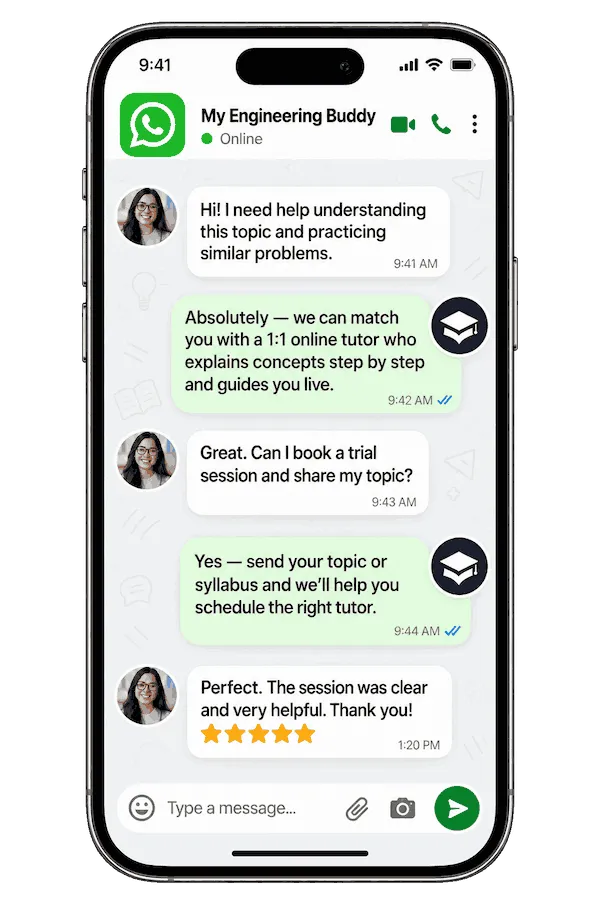
~1 min
Average Reply Time
~1 hour
To Be Matched With A Tutor
30 Min Trial
75% Find Their Tutor On The 1st Trial
$20-35+/hr
Premium Yet Affordable Learning
Most students who struggle with MCAT Bio/Biochem don’t lack intelligence — they lack a tutor who can connect enzyme kinetics to passage reasoning in real time.
MCAT Biological and Biochemical Foundations of Living Systems Tutor Online
The MCAT Biological and Biochemical Foundations of Living Systems section tests molecular biology, biochemistry, and cell biology, assessed by the AAMC on a 118–132 scaled score. It equips students to reason through science-dense passages and apply biological principles to medical contexts.
MEB offers 1:1 online tutoring and homework help in 2800+ advanced subjects — including dedicated MCAT tutoring across all four sections. If you’ve searched for a MCAT Biological and Biochemical Foundations of Living Systems tutor near me, working 1:1 online with a subject-specific expert is the most direct route to closing your score gap before test day. Tutors are matched to your exact weak areas — whether that’s amino acid biochemistry, gene expression, or passage-based reasoning under timed conditions.
- 1:1 online sessions tailored to the AAMC MCAT syllabus and your specific gap areas
- Expert-verified tutors with strong Biological and Biochemical Foundations scores and science backgrounds
- Flexible time zones — US, UK, Canada, Australia, Gulf
- Structured learning plan built after a diagnostic session
- Ethical homework and assignment guidance — you understand the work, then submit it yourself
52,000+ students across the US, UK, Canada, Australia, and the Gulf have used MEB since 2008 — including students preparing for the MCAT across subjects like MCAT Biological and Biochemical Foundations of Living Systems, MCAT Chemical and Physical Foundations, and MCAT Psychological, Social, and Biological Foundations of Behavior.
Source: My Engineering Buddy, 2008–2025.
How Much Does a MCAT Biological and Biochemical Foundations of Living Systems Tutor Cost?
Rates start at $20–$40/hr for most levels. Advanced or graduate-calibre MCAT tutors with research or medical school backgrounds run up to $100/hr. The $1 trial gets you 30 minutes of live 1:1 tutoring — no registration required.
| Level / Need | Typical Rate | What’s Included |
|---|---|---|
| Standard MCAT prep | $20–$40/hr | 1:1 sessions, passage practice, concept review |
| Advanced / Specialist | $40–$100/hr | Expert tutor, biochem depth, score strategy |
| $1 Trial | $1 flat | 30 min live session or one question fully explained |
Tutor availability tightens sharply in the eight weeks before major MCAT test windows — January, March, May, July, and September. Book early.
WhatsApp MEB for a quick quote — average response time under 1 minute.
Who This MCAT Biological and Biochemical Foundations of Living Systems Tutoring Is For
This section is one of the two longest on the MCAT and covers everything from DNA replication to enzyme inhibition to cellular respiration. Students who struggle here usually aren’t missing facts — they’re missing the ability to apply those facts inside a dense, unfamiliar passage in under 90 seconds.
- Undergraduates in pre-med programmes at universities such as Johns Hopkins, University of Michigan, UCLA, University of Toronto, and King’s College London
- Students retaking after a failed first attempt who scored below 124 on this section
- Students 4–6 weeks from their test date with significant gaps still to close in biochemistry or molecular biology
- Students with a medical school conditional offer that depends on a specific total MCAT score
- Students who have completed their prerequisite biology and chemistry courses but can’t translate that knowledge into timed MCAT passages
- Parents supporting a child through the medical school application cycle and looking for structured, accountable prep
Start the $1 trial — it doubles as your first diagnostic and costs nothing to test.
1:1 Tutoring vs Self-Study vs AI vs YouTube vs Online Courses
Self-study works if you’re disciplined, but the MCAT Bio/Biochem section punishes isolated memorisation — no feedback loop catches the pattern errors that cost you points. AI tools explain concepts quickly but can’t watch you misread a passage stem and correct it on the spot. YouTube covers photosynthesis clearly; it stops when you’re stuck on a tricky inhibition kinetics question. Online courses move at a fixed pace, regardless of whether you’ve actually absorbed the biochemistry. 1:1 tutoring with MEB is live, calibrated to your exact AAMC content gaps, and corrects reasoning errors the moment they happen — which is exactly what the Biological and Biochemical Foundations section demands.
Outcomes: What You’ll Be Able To Do in MCAT Biological and Biochemical Foundations of Living Systems
After consistent 1:1 sessions, you’ll be able to analyze enzyme kinetics graphs and correctly identify competitive versus non-competitive inhibition under timed conditions. You’ll solve passage-based questions on DNA replication, transcription, and translation without needing to re-read background material twice. You’ll apply your knowledge of the citric acid cycle and oxidative phosphorylation to experimental data you’ve never seen before. You’ll explain membrane transport mechanisms and their relevance to drug delivery scenarios — exactly the kind of applied reasoning the AAMC tests. You’ll present your biochemical reasoning clearly in free-response MCAT practice, with the logic tight enough to hold under exam pressure.
Based on feedback from 40,000+ sessions collected by MEB from 2022 to 2025, 58% of students improved their MCAT Biological and Biochemical Foundations of Living Systems score by 5–8 points after approximately 20 hours of 1:1 tutoring — a margin that regularly shifts an application from waitlisted to accepted.
Source: MEB session feedback data, 2022–2025.
Try your first session for $1 — 30 minutes of live 1:1 tutoring or one homework question explained in full. No registration. No commitment. WhatsApp MEB now and get matched within the hour.
What We Cover in MCAT Biological and Biochemical Foundations of Living Systems (Syllabus / Topics)
The AAMC organises this section into three foundational concepts. MEB tutors work to each one specifically, not generically.
Foundational Concept 1: Biomolecules and Their Functions
- Amino acid structure, properties, and the 20 standard amino acids (side chains, pKa values)
- Protein structure — primary through quaternary — and folding mechanisms
- Enzyme kinetics: Michaelis-Menten, Vmax, Km, inhibition types
- Carbohydrates: monosaccharides, disaccharides, glycosidic bonds, polysaccharides
- Lipids: fatty acids, phospholipids, triglycerides, steroids
- Nucleic acids: DNA and RNA structure, Watson-Crick base pairing
- Vitamins and cofactors as enzyme helpers
Core texts: Biochemistry by Berg, Tymoczko & Stryer; MCAT Biochemistry Review by Kaplan.
Foundational Concept 2: Cells and Their Processes
- Prokaryotic vs eukaryotic cell structure and function
- Cellular respiration: glycolysis, pyruvate decarboxylation, citric acid cycle, oxidative phosphorylation
- Fermentation and anaerobic pathways
- Photosynthesis: light-dependent and light-independent reactions
- Cell membrane structure and transport mechanisms (passive, active, facilitated)
- Cell signalling: receptor types, second messengers, signal cascades
- Mitosis and meiosis — phases, checkpoints, and errors
Core texts: Molecular Biology of the Cell by Alberts et al.; MCAT Biology Review by Kaplan.
Foundational Concept 3: Molecular Biology and Genetics
- DNA replication: enzymes, primers, leading and lagging strand synthesis
- Transcription and translation: regulation, post-translational modification
- Gene regulation: operons, enhancers, epigenetics
- Mendelian genetics and inheritance patterns
- Mutations: types, causes, repair mechanisms
- Recombinant DNA techniques: PCR, gel electrophoresis, cloning
- Evolution: natural selection, Hardy-Weinberg equilibrium, speciation
Core texts: Genetics: From Genes to Genomes by Hartwell et al.; MCAT Genetics & Evolution by Princeton Review.
The AAMC Biological and Biochemical Foundations section is scored on a 118–132 scale. Below is the current breakdown of content categories by approximate passage weighting.
| Content Category | Approximate Weighting | Key Topics |
|---|---|---|
| Biomolecules (FC1) | ~25% | Proteins, enzymes, lipids, nucleic acids |
| Cells and Processes (FC2) | ~25% | Metabolism, transport, signalling, division |
| Molecular Biology & Genetics (FC3) | ~25% | DNA, gene expression, heredity, evolution |
| Research Methods & Statistics | ~25% | Experimental design, data interpretation |
Source: AAMC MCAT content specifications (subject to periodic review).

At MEB, we’ve found that students who score below 125 on this section almost always have the same problem: they know the content in isolation but fall apart when it’s buried inside a six-paragraph experimental passage. Fixing that is a specific skill — and it’s teachable in a few focused sessions.
What a Typical MCAT Biological and Biochemical Foundations of Living Systems Session Looks Like
The tutor opens by checking your previous topic — say, enzyme kinetics from your last session — and asks you to walk through a Michaelis-Menten graph cold, before any instruction. That surfaces exactly where the gap still lives. From there, you and the tutor work through a full AAMC-style passage on the screen together: the tutor uses a digital pen-pad to annotate the passage in real time, marking the experimental variables and the question type before you even look at the answer choices. You attempt the questions with the tutor watching your reasoning, not just your answer. Errors get corrected at the step where they happen, not after the fact. The session closes with two or three timed practice questions set for you to complete independently before the next session — and the next topic is logged so neither session wastes time deciding what to cover.
How MEB Tutors Help You with MCAT Biological and Biochemical Foundations of Living Systems (The Learning Loop)
Diagnose: In the first session, the tutor runs a short diagnostic — usually one timed passage plus five discrete questions — to identify whether your gaps are content-based (you don’t know the biochemistry), reasoning-based (you misread what the question is actually asking), or time-based (you know it but can’t execute under pressure). Most students have all three. Most students don’t know that.
Explain: The tutor works through a representative problem live, using a digital pen-pad to show the reasoning process step by step — not just the answer. For the Biological and Biochemical Foundations section, that usually means annotating a passage before touching the questions, then eliminating answers using content logic rather than guessing.
Practice: You attempt similar problems with the tutor present. No looking things up mid-attempt. The goal is simulating test conditions while still having expert feedback available when you get stuck.
Feedback: The tutor identifies not just that you got the answer wrong but which step in your reasoning broke down. On a biochemistry question about allosteric regulation, for instance, the error is usually conceptual — not a calculation mistake. The correction targets that specific moment.
Plan: Each session ends with a clear statement of what you’re working on next, how many practice passages to complete independently before the next session, and where you currently sit relative to your score target. Nothing vague. Nothing left open.
Sessions run over Google Meet. Tutors use a digital pen-pad or iPad with Apple Pencil — you’ll see the work drawn out in real time, not typed in a chat box. Before your first session, have your AAMC account ready, your most recent full-length practice test score, and a list of the topics where you lost the most points. Start with the $1 trial — 30 minutes of live tutoring that also serves as your first diagnostic.
Students consistently tell us that the biggest shift in their MCAT Bio/Biochem prep happens not when they learn new content — but when a tutor watches them work through a passage live and shows them the three reasoning steps they’ve been skipping every single time.
Source: MEB tutor and student feedback, 2022–2025.
Tutor Match Criteria (How We Pick Your Tutor)
Not every strong biologist is the right tutor for MCAT prep. MEB matches on four criteria.
Subject depth: Tutors are selected for demonstrated strength in MCAT-specific content — not just undergraduate biology. Tutors who have sat the MCAT and scored in the 90th percentile or above on this section are prioritised for students targeting 128+.
Tools: Every tutor works on Google Meet with a digital pen-pad or iPad and Apple Pencil. Passage annotation in real time is non-negotiable for this section.
Time zone: Matched to your region — US, UK, Canada, Australia, Gulf. No compromising your sleep for an 11pm session unless that’s your preference.
Goals: Tutors are briefed on your score target, your test date, and your specific weak content areas before session one. The first session is not a getting-to-know-you conversation. It’s a diagnostic.
Unlike platforms where you fill out a form and wait, MEB responds in under a minute, 24/7. Tutor match takes under an hour. The $1 trial means you test before you commit. Everything runs over WhatsApp — no logins, no intake forms.
Study Plans (Pick One That Matches Your Goal)
After the diagnostic, your tutor builds the specific sequence. Three common patterns: a catch-up plan (1–3 weeks) for students with a test booked and a clear content gap — sessions go daily or every other day, focused on the highest-yield topics. An exam prep plan (4–8 weeks) for students building full section mastery — structured by foundational concept, with weekly full-length practice passages reviewed in session. And weekly support for students doing ongoing pre-med coursework who want regular MCAT biology tutoring and reinforcement alongside their university modules. The tutor adapts the plan as your score improves.
Pricing Guide
Most MCAT Biological and Biochemical Foundations tutoring runs $20–$40/hr. Tutors with medical school research backgrounds or 99th-percentile MCAT scores are available at $60–$100/hr — worth considering if you’re targeting 129–132 on this section, where every point is competitive.
Rate factors include your current score gap, the complexity of the content areas you need to cover, how close your test date is, and tutor availability in your time zone. Rates tighten in the eight weeks before major MCAT test windows — January, March, May, July, and September.
For students targeting top US medical school programmes, tutors with strong research science or clinical backgrounds are available at higher rates — share your target score and test date, and MEB will match the tier to your ambition.
Start with the $1 trial — 30 minutes, no registration, no commitment. WhatsApp MEB for a quick quote.
A common pattern our tutors observe is students arriving with 12 weeks of self-study behind them and a practice score that hasn’t moved in a month. The content isn’t the problem — the passage approach is. Two or three targeted sessions often shift more than four more weeks of solo review.
FAQ
Is MCAT Biological and Biochemical Foundations of Living Systems hard?
It’s one of the more demanding sections on the MCAT — not because the individual concepts are impossible, but because the exam tests your ability to apply biology and biochemistry to novel experimental passages under a tight time limit. Students with strong pre-med coursework still often need specific passage-strategy coaching to score above 127.
How many sessions are needed to improve my score?
Most students see measurable improvement within 8–12 hours of focused 1:1 work. Reaching a target score of 128+ from a starting point of 123–124 typically takes 20–30 hours spread over six to ten weeks, depending on how well your foundational coursework is already established.
Can you help with MCAT homework and assignments?
MEB tutoring is guided learning — you understand the work, then submit it yourself. Tutors work through practice passages, problem sets, and content reviews with you — not in place of you. See our Academic Integrity policy and Why MEB page for full details on what we help with and what we don’t.
Will the tutor match my exact MCAT syllabus and AAMC content specifications?
Yes. MEB tutors for this section work from the AAMC’s official content outline — the same document MCAT questions are written from. Sessions are mapped to foundational concepts 1, 2, and 3 and calibrated to your specific gaps, not a generic biology curriculum.
What happens in the first session?
The tutor runs a short diagnostic — one timed passage plus a set of discrete questions — to establish your current content and reasoning baseline. From there, the session plan is built around your actual weak areas. Nothing is assumed. The first session is diagnostic and instructional at the same time.
Is online MCAT tutoring as effective as in-person?
For passage-based MCAT prep, online tutoring has a practical edge — the tutor can annotate passages directly on screen in real time, share AAMC practice materials instantly, and record worked examples for you to review before your next session. Most MEB students preparing for this section prefer the online format.
What is the difference between the 59-question Biological and Biochemical Foundations section and the other MCAT science sections?
This section focuses on biology, biochemistry, and organic chemistry as they apply to living systems — unlike the Chemical and Physical Foundations section, which weights physics and general chemistry more heavily. The passage content here tends to be experiment-dense with cellular and molecular biology data, requiring different annotation strategies than the chemistry-focused section.
How do I prepare if I haven’t taken biochemistry as a standalone university course?
It’s a real gap. The MCAT assumes biochemistry at a full-semester university level — enzyme kinetics, metabolic pathways, protein structure. MEB tutors regularly work with students who’ve only completed introductory biology and chemistry, building the missing biochemistry foundation while simultaneously developing passage-reading skills. It takes more time — plan for at least 25–30 hours of tutoring if this applies to you.
Can I get MCAT Biological and Biochemical Foundations help at midnight?
Yes. MEB operates across US, UK, Gulf, Canada, and Australian time zones. WhatsApp MEB at any hour and you’ll reach a human — not a chatbot. Tutor matching typically happens within the hour regardless of when you contact us.
What if I don’t like my assigned tutor?
Say so. MEB rematch requests are handled over WhatsApp and a new tutor is lined up within 24 hours. No forms, no friction. The $1 trial exists specifically so you can test the fit before you book more sessions.
Do you offer group MCAT Biological and Biochemical Foundations sessions?
MEB’s model is 1:1 only. Group sessions dilute the diagnostic precision that makes the learning loop work for a section as gap-specific as this one. If you’re studying alongside a friend, both of you can book independently and compare progress — but each session is private and tutor-focused on that individual student’s gaps.
How do I get started?
Three steps: WhatsApp MEB with your test date, current practice score, and the topics you’re weakest on. MEB matches you with a verified tutor — usually within the hour. Your first session is the $1 trial — 30 minutes live, one question fully explained, no registration.
Trust & Quality at My Engineering Buddy
Every MEB tutor goes through subject-specific vetting — not a general science screen. For the Biological and Biochemical Foundations section, that means tutors must demonstrate deep knowledge of AAMC-tested biochemistry and molecular biology, complete a live demo session review, and hold relevant degrees in biological sciences, medicine, or biochemistry. Rated 4.8/5 across 40,000+ verified reviews on Google. Ongoing session feedback is reviewed to flag any tutor whose students aren’t progressing — a process that has been running since 2008.
MEB tutoring is guided learning — you understand the work, then submit it yourself. For full details on what we help with and what we don’t, read our Academic Integrity policy and Why MEB.
MEB has served 52,000+ students across the US, UK, Canada, Australia, the Gulf, and Europe since 2008 — across 2,800+ subjects. Within the MCAT category, that includes students working on MCAT chemistry tutoring, MCAT physics tutoring, and the full range of MCAT Critical Analysis and Reasoning Skills help. The MEB tutoring methodology is built around the same diagnostic-first, feedback-loop approach across all subjects.
Explore Related Subjects
Students studying MCAT Biological and Biochemical Foundations of Living Systems often also need support in:
Next Steps
Ready to start? Here’s what to do:
- Share your MCAT test date, your most recent practice score on this section, and the topics where you lost the most points
- Share your availability and time zone — MEB matches across US, UK, Canada, Australia, and Gulf
- MEB matches you with a verified tutor — usually within 24 hours, often within the hour
- Your first session starts with a diagnostic so every minute is used on the right content
Before your first session, have ready:
- Your AAMC account login and most recent full-length practice test results
- A recent practice passage or discrete question set you found difficult
- Your test date and your target score — the tutor builds the plan from there
Visit www.myengineeringbuddy.com for more on how MEB works.
WhatsApp to get started or email [email protected].
Reviewed by Subject Expert
This page has been carefully reviewed and validated by our subject expert to ensure accuracy and relevance.