

Hire Verified & Experienced
Postman Tutors
Email: [email protected]
4.8/5 40K+ session ratings collected on the MEB platform



Hire The Best Postman Tutor
Top Tutors, Top Grades. Without The Stress!
Your API calls keep failing and the error messages tell you nothing useful. A Postman tutor fixes that faster than a Stack Overflow thread.
Postman Tutor Online
Postman is an API platform used to build, test, and document HTTP requests. It supports REST, SOAP, and GraphQL workflows, enabling developers and QA engineers to send requests, inspect responses, write test scripts, and automate API collections.
MEB offers 1:1 online tutoring and project help in Postman and across 2,800+ advanced subjects — part of a broader software engineering tutoring curriculum. Whether you’re stuck on environment variables, chained requests, or Newman CLI automation, a Postman tutor near me who works live on your screen is the fastest way through. Sessions run on Google Meet with a digital pen-pad — no generic video course, no waiting days for a forum reply.
- 1:1 online sessions tailored to your course, project brief, or certification goal
- Expert verified tutors with hands-on API development and QA backgrounds
- Flexible time zones — US, UK, Canada, Australia, Gulf covered
- Structured project plan built after a diagnostic session
- Guided project support — we explain the logic, you build and submit the work
52,000+ students across the US, UK, Canada, Australia, and the Gulf have used MEB since 2008 — including students in Software Engineering subjects like Postman, software testing, and API-adjacent tools like Selenium.
Source: My Engineering Buddy, 2008–2025.
How Much Does a Postman Tutor Cost?
Most Postman sessions run $20–$40/hr. Graduate-level or advanced API automation work with specialist tutors goes up to $100/hr. Not sure which tier you need? Start with the $1 trial — 30 minutes live or one full project question explained — before committing to anything.
| Level / Need | Typical Rate | What’s Included |
|---|---|---|
| Standard (undergrad / bootcamp) | $20–$35/hr | 1:1 sessions, project guidance, test script help |
| Advanced / Specialist (API automation, CI/CD) | $35–$70/hr | Expert tutor, Newman pipelines, complex auth flows |
| $1 Trial | $1 flat | 30 min live session or one project question fully explained |
Tutor availability tightens around end-of-semester project deadlines and sprint review weeks. Book early if your submission date is within three weeks.
WhatsApp MEB for a quick quote — average response time under 1 minute.
Who This Postman Tutoring Is For
Most students who come to MEB for Postman help are not beginners who don’t know what an API is. They know the basics. They’re stuck on something specific — and stuck hard.
- Undergrad and postgrad students in computer science, software engineering, or IT who need Postman for a graded project or lab
- Bootcamp students racing toward a portfolio deadline with a broken test collection
- Developers and QA engineers preparing for a role or technical interview that requires API testing competency
- Students retaking a module after a failed submission where the API component didn’t work
- Students in courses at institutions like Carnegie Mellon, University of Toronto, UNSW, Imperial College London, or TU Delft where API testing is assessed as part of software engineering coursework
- Anyone who has spent three hours reading Postman docs and is still getting a 401 Unauthorized response
A private Postman tutor works through your actual collection — not a generic demo. That’s the difference.
1:1 Tutoring vs Self-Study vs AI vs YouTube vs Online Courses
Self-study works if you’re disciplined and the error is straightforward — most aren’t. AI tools explain Postman concepts quickly but can’t watch you misconfigure an OAuth2 flow in real time and catch it. YouTube is good for walkthroughs of basic GET requests; it stops being useful the moment your specific environment or auth setup diverges. Online courses cover the tool systematically but at a fixed pace with no feedback on your actual project. 1:1 tutoring with MEB is live, uses your real collection and your real API, and corrects mistakes the moment they happen — not after you’ve spent two hours going in the wrong direction.
Outcomes: What You’ll Be Able To Do in Postman
After working with an online Postman tutor from MEB, you’ll be able to send and debug REST, SOAP, and GraphQL requests without second-guessing every parameter. You’ll write and run JavaScript-based test scripts that validate status codes, response schemas, and data values automatically. You’ll apply environment and global variables to manage credentials and base URLs across dev, staging, and production. You’ll chain requests using data from earlier responses, and you’ll run full collections via Newman in a CI/CD pipeline — whether that’s Jenkins, GitLab CI/CD, or a similar tool.
Try your first session for $1 — 30 minutes of live 1:1 tutoring or one project question explained in full. No registration. No commitment. WhatsApp MEB now and get matched within the hour.
Based on feedback from 40,000+ sessions collected by MEB from 2022 to 2025, students working 1:1 on Postman consistently report faster debugging of API errors, greater confidence writing test scripts, and noticeably quicker progress than self-directed practice alone. Progress varies by starting level and project complexity.
Source: MEB session feedback data, 2022–2025.
What We Cover in Postman (Topics)

Core API Testing and Request Management
- Sending GET, POST, PUT, PATCH, and DELETE requests with correct headers and body formats
- Configuring query parameters, path variables, and request body (raw JSON, form-data, x-www-form-urlencoded)
- Reading and interpreting response codes, headers, and JSON/XML payloads
- Managing environments, global variables, and collection variables for multi-stage workflows
- Using the Pre-request Script tab to set dynamic data before a request fires
- Debugging with the Postman Console — reading network logs and identifying where a request breaks
Recommended references: Postman Official Documentation (postman.com/docs); Exploring APIs: The Postman Approach by Tom Johnson.
Test Scripting and Automation
- Writing JavaScript test scripts in the Tests tab using pm.test() and pm.expect()
- Validating response status codes, response time thresholds, and JSON schema structure
- Chaining requests — passing response values (tokens, IDs) as variables into subsequent calls
- Data-driven testing with CSV and JSON data files using the Collection Runner
- Running collections with Newman CLI — flags, reporters (JSON, HTML, JUnit), and exit codes
- Integrating Newman into Azure DevOps or CI pipelines for automated regression runs
Recommended references: Postman JavaScript Reference (official docs); API Testing and Development with Postman by Dave Westerveld (Packt, 2021).
Authentication, Security, and API Documentation
- Configuring API Key, Basic Auth, Bearer Token, OAuth 2.0, and Digest Auth in Postman
- Handling token refresh flows and storing tokens as collection variables automatically
- Using Postman Mock Servers to simulate API responses before a backend is ready
- Writing and publishing API documentation directly from a Postman collection
- Understanding OWASP API security risks and how to probe for common misconfigurations in a test environment
Recommended references: The Web Application Hacker’s Handbook by Stuttard & Pinto; ACM Digital Library for peer-reviewed API security research.
What a Typical Postman Session Looks Like
The tutor opens by checking where you got stuck last time — usually a specific request that returned an unexpected response or a test script that threw a reference error. You share your screen over Google Meet and open your actual Postman collection. The tutor watches you attempt the next step, catches the problem live — maybe a malformed JSON body, a missing Authorization header, or an environment variable that isn’t scoping correctly — and explains exactly why the error occurred before showing you how to fix it. You replicate the fix yourself. The tutor then sets a concrete task: write three test assertions on the endpoint you just fixed, run them with Newman, and note what the exit code means. Next session’s topic is noted before you close.
How MEB Tutors Help You with Postman (The Learning Loop)
Diagnose: In the first session, the tutor asks you to open your current collection and attempt a request. Within ten minutes they know exactly where your understanding breaks down — whether that’s variable scoping, auth configuration, or test logic.
Explain: The tutor works through the problem on a shared screen using a digital pen-pad to annotate the request flow. They don’t just fix it — they show you the mental model behind why it works.
Practice: You attempt the next request or script yourself, with the tutor watching. Errors get caught immediately, not hours later when you’re working alone.
Feedback: Every mistake gets a specific explanation — why that status code appeared, what that error message in the console actually means, and which part of your script logic caused it.
Plan: At the end of each session, the tutor maps the next topic — usually one concrete skill like chaining requests or configuring OAuth 2.0 — and sets a practice task you can complete before the next meeting.
Sessions run on Google Meet. The tutor uses a digital pen-pad or iPad with Apple Pencil to annotate request flows and response structures. Before your first session, share your project brief or course spec, one example of a request you’ve tried and failed, and your deadline. The first session serves as your diagnostic and your first real progress block. Whether you need a quick catch-up before a submission, a structured block over four to eight weeks, or ongoing weekly support through the semester, the tutor builds the session plan after that first diagnostic.
Start with the $1 trial — 30 minutes of live tutoring that also acts as your first diagnostic session.
At MEB, we’ve found that Postman errors almost never exist in isolation. A student who can’t get their OAuth 2.0 token to persist usually has a gap in how collection variables scope across requests — and fixing that one concept unblocks three other problems they hadn’t named yet.
Tutor Match Criteria (How We Pick Your Tutor)
Not every developer who knows Postman is the right fit for your specific problem. Here’s what MEB looks at.
Subject depth: The tutor must have hands-on experience with the specific area you need — REST API testing, GraphQL, Newman automation, or security-focused API work. General programming experience is not enough.
Tools: All Postman tutors work on Google Meet with a digital pen-pad or iPad and Apple Pencil. They can annotate request flows, script logic, and environment structures directly on screen.
Time zone: Matched to your region — US, UK, Canada, Australia, Gulf. No booking a 3am session because the tutor is in a conflicting time zone.
Goals: Exam-adjacent project work, portfolio build, job interview prep, or ongoing coursework support — the tutor’s background is matched to your actual objective, not just the tool name.
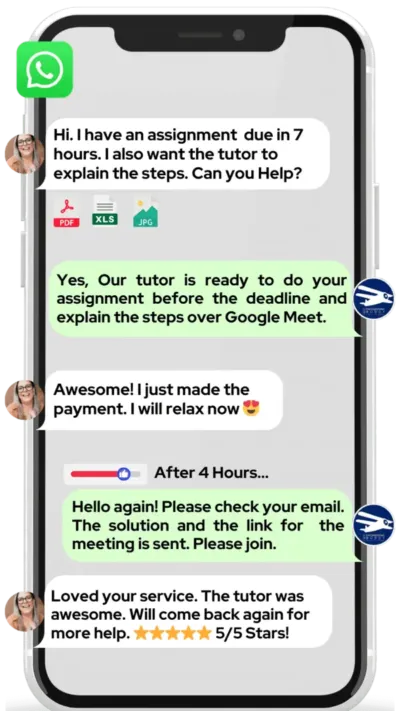
Unlike platforms where you fill out a form and wait, MEB responds in under a minute, 24/7. Tutor match takes under an hour. The $1 trial means you test before you commit. Everything runs over WhatsApp — no logins, no intake forms.
Students consistently tell us that the tutor match is where MEB is different. Getting someone who has actually debugged Newman pipeline failures in a production CI environment — not just someone who passed a Postman certification — changes the quality of every session.
Pricing Guide
Postman tutoring runs $20–$40/hr for most undergraduate and bootcamp-level work. Advanced API automation, CI/CD pipeline integration, and security-focused sessions with specialist tutors go up to $100/hr. Rate factors include the complexity of your project, your deadline, tutor availability, and the depth of knowledge required.
Availability tightens during end-of-semester project weeks and before major bootcamp cohort deadlines. If your submission is within two weeks, book now.
For students targeting roles at competitive tech firms or building a portfolio for senior QA or backend engineering positions, tutors with professional API development backgrounds are available at higher rates — share your specific goal and MEB will match the tier to your ambition.
Start with the $1 trial — 30 minutes, no registration, no commitment. WhatsApp MEB for a quick quote.
MEB has served 52,000+ students since 2008 across software engineering, QA, and developer tooling subjects — with tutors active across every major time zone, seven days a week.
Source: My Engineering Buddy, 2008–2025.
FAQ
Is Postman hard to learn?
The basics — sending GET and POST requests — take an hour. The hard parts are environment variable scoping, chained requests, JavaScript test scripts, and Newman CI integration. Most students hit a wall at one of those four points and need targeted help to move through it.
How many sessions are needed?
Students with a specific blocked concept — a broken auth flow or a failing test script — often resolve it in one to three sessions. A full project build covering requests, test automation, and Newman integration typically takes six to ten sessions depending on starting level and project scope.
Can you help with projects and portfolio work?
Yes. MEB tutors work through your actual Postman collection — explaining how each request, script, and environment setting should be structured so you understand and build it yourself. MEB provides guided learning support. All project work is produced and submitted by the student. See our Policies page for details.
Will the tutor match my exact syllabus or project brief?
Yes. Share your course spec, project rubric, or job description before the first session. The tutor reads it and structures the session around your exact requirements — not a generic Postman curriculum.
What happens in the first session?
The tutor asks you to open your current collection and attempt something live. Within the first ten to fifteen minutes, they identify your exact gap. The rest of the session addresses that gap directly and sets a concrete practice task for before the next meeting.
Are online Postman sessions as effective as in-person?
For a tool-based subject like Postman, online is arguably better. Everything happens on screen anyway. Screen sharing over Google Meet with digital annotation gives the tutor a clearer view of your actual work than sitting beside you at a desk would.
What is the difference between Postman and Newman, and do you cover both?
Postman is the GUI tool for building and running API requests interactively. Newman is the command-line runner that executes Postman collections in scripts and CI/CD pipelines. MEB tutors cover both — including how to configure Newman flags, output reporters, and integrate runs into Jenkins or GitLab CI.
Can I use Postman for GraphQL and SOAP, or only REST APIs?
Postman supports REST, GraphQL, SOAP, and WebSocket requests. The setup differs for each — GraphQL requires a specific body structure and schema introspection; SOAP uses XML envelopes. MEB tutors cover all three formats, matched to whichever your course or project requires.
Can I get Postman help at midnight or on weekends?
Yes. MEB operates 24/7. Tutors are active across US, UK, Gulf, and Australian time zones. WhatsApp MEB at any hour — the average response time is under one minute, including late nights before submission deadlines.
What if I don’t like my assigned tutor?
Tell MEB via WhatsApp and a new match is arranged — usually within the hour. The $1 trial exists precisely so you test the fit before spending more. No paperwork, no delay.
Do you offer help for the Postman Student Expert or API Fundamentals certification?
Yes. MEB tutors are familiar with the Postman Student Expert program and the API Fundamentals Student Expert badge requirements. Sessions can be structured around the specific collection tasks and quiz components required to complete the certification.
How do I get started?
Three steps: WhatsApp MEB with your project brief or the specific problem you’re stuck on, get matched to a tutor — usually within the hour — then start the $1 trial. Thirty minutes live or one project question fully explained before you decide anything further.
Trust & Quality at My Engineering Buddy
Every MEB Postman tutor goes through subject-specific vetting — not a general software test. They demonstrate live Postman competency during a demo evaluation: sending requests, writing test scripts, and running a Newman collection in a CI context. Ongoing session feedback is reviewed regularly. Rated 4.8/5 across 40,000+ verified reviews on Google.
MEB provides guided learning support. All project work is produced and submitted by the student. For full details on what we help with and what we don’t, read our Academic Integrity policy and Why MEB.
MEB has been running since 2008 and serves students in the US, UK, Canada, Australia, the Gulf, and Europe across 2,800+ subjects. Software Engineering is one of MEB’s strongest subject areas — tutors cover not just Postman but the full toolchain around it, including Docker tutoring, Kubernetes help, and test automation support. If your course spans multiple tools, one tutor or a coordinated pair can cover the full scope.
MEB tutors for Postman come from active software engineering and QA backgrounds — not just certification holders. They’ve debugged the same 401 errors and Newman pipeline failures your students are stuck on right now.
Source: My Engineering Buddy, 2008–2025.
A common pattern our tutors observe is that students who struggle with Postman aren’t confused about APIs — they’re confused about state. Knowing that each request in a chained collection can both read from and write to shared variables is the insight that unlocks the rest of the tool.
Explore Related Subjects
Students studying Postman often also need support in:
Next Steps
Here’s what to do right now:
- Share the specific request, collection, or script that isn’t working — or paste your project brief
- Tell MEB your time zone and when you’re available this week
- Get matched to a verified Postman tutor — usually within 24 hours, often within the hour
- First session starts with a diagnostic so every minute is spent on what actually matters
Before your first session, have ready: your course outline or project brief, a copy of the collection or request that’s breaking, and your deadline date. The tutor handles the rest.
Visit www.myengineeringbuddy.com for more on how MEB works.
WhatsApp to get started or email [email protected].
52,000+ Happy Students From Various Universities






How Much For Private 1:1 Tutoring & Hw Help?
Private 1:1 Tutoring and HW help Cost $20 – 35 per hour* on average.
Reviewed by Subject Expert
This page has been carefully reviewed and validated by our subject expert to ensure accuracy and relevance.
