~1 min
Average Reply Time
~1 hour
To Be Matched With A Tutor
30 Min Trial
75% Find Their Tutor On The 1st Trial
$20-35+/hr
Premium Yet Affordable Learning
Your Lambda function works locally but breaks in production — and the AWS docs aren’t helping.
Serverless Tutor Online
Serverless computing is a cloud-execution model where developers run backend code without managing servers. Functions trigger on demand via AWS Lambda, Azure Functions, or Google Cloud Functions, and scale automatically based on traffic and workload.
MEB offers 1:1 online tutoring and project help in 2800+ advanced subjects — including Serverless, as part of our broader software engineering tutoring coverage. If you’re searching for a Serverless tutor near me, online sessions with MEB give you the same live interaction, with verified tutors available across US, UK, Canada, Australia, and Gulf time zones. You get a tutor who knows your specific stack — AWS Lambda, Azure Functions, or Google Cloud Functions — and works through your exact project gaps in real time.
- 1:1 online sessions tailored to your course, project brief, or cloud platform
- Expert-verified tutors with hands-on serverless deployment experience
- Flexible time zones — US, UK, Canada, Australia, Gulf
- Structured learning plan built after a diagnostic session
- Guided project support — we explain the architecture, you build and submit
52,000+ students across the US, UK, Canada, Australia, and the Gulf have used MEB since 2008 — including students in Software Engineering subjects like Serverless, cloud architecture, and microservices.
Source: My Engineering Buddy, 2008–2025.
How Much Does a Serverless Tutor Cost?
Most Serverless tutoring sessions run $20–$40/hr. Niche or advanced work — multi-cloud architectures, event-driven system design, or graduate-level distributed systems — can reach $60–$100/hr. Start with the $1 trial: 30 minutes of live 1:1 tutoring or one project problem explained in full.
| Level / Need | Typical Rate | What’s Included |
|---|---|---|
| Standard (undergrad / bootcamp) | $20–$35/hr | 1:1 sessions, project guidance |
| Advanced / Specialist | $35–$100/hr | Expert tutor, multi-cloud depth |
| $1 Trial | $1 flat | 30 min live session or 1 project Q |
Tutor availability tightens around university project deadlines and semester ends. Book early if your submission date is within four weeks.
WhatsApp MEB for a quick quote — average response time under 1 minute.
Who This Serverless Tutoring Is For
This is for developers and students who can write functions but can’t get the deployment, permissions, or event triggers working right. Also for those who understand the concept but freeze when asked to design a full event-driven system from scratch.
- Undergraduate and graduate CS students with a cloud computing or distributed systems module
- Bootcamp graduates moving into backend or DevOps roles and hitting serverless for the first time
- Students with a project submission deadline approaching and cold-start latency or IAM permission errors they can’t resolve
- Developers preparing for AWS Certified Developer or Solutions Architect exams who need serverless architecture depth
- Students who failed a cloud computing assignment and need to resubmit within days
- Engineering students at institutions like MIT, Georgia Tech, Carnegie Mellon, University of Toronto, Imperial College London, or TU Delft where serverless features in advanced systems courses
- Project support with guided explanation — you build and deploy the solution yourself
Try the $1 trial before committing — 30 minutes is enough to know whether the tutor understands your exact stack and use case.
1:1 Tutoring vs Self-Study vs AI vs YouTube vs Online Courses
Self-study works if you’re disciplined, but Serverless error messages are notoriously cryptic without someone who’s seen them before. AI tools give fast answers but can’t watch you misconfigure an API Gateway trigger and catch it live. YouTube covers FaaS concepts well but stops short when your specific Lambda timeout or VPC routing issue surfaces. Online courses like those on Coursera or Pluralsight are structured but run at a fixed pace with no one debugging your actual project. 1:1 Serverless tutoring with MEB is live, calibrated to your exact platform and course, and corrects your configuration logic in the moment — not after you’ve spent three hours on Stack Overflow.
Outcomes: What You’ll Be Able To Do in Serverless
After working with an online Serverless tutor from MEB, you’ll be able to design and deploy event-driven functions on AWS Lambda, Azure Functions, or Google Cloud Functions without hand-holding. You’ll analyze cold-start latency issues and apply concurrency controls that actually fix them. You’ll apply IAM permission structures correctly so your functions can access S3, DynamoDB, or SQS without over-privileging. You’ll explain the trade-offs between serverless and containerized approaches in a system design interview or viva. You’ll write Infrastructure-as-Code with tools like Terraform or the Serverless Framework to make your deployments repeatable and reviewable.
Based on feedback from 40,000+ sessions collected by MEB from 2022 to 2025, 58% of students improved by one full grade after approximately 20 hours of 1:1 tutoring in subjects like Serverless. A further 23% achieved at least a half-grade improvement.
Source: MEB session feedback data, 2022–2025.

What We Cover in Serverless (Syllabus / Topics)
Track 1: Core Serverless Concepts and FaaS Platforms
- Function-as-a-Service (FaaS) model vs traditional server and container models
- AWS Lambda — triggers, execution roles, layers, and runtime environments
- Azure Functions — bindings, durable functions, and consumption plan configuration
- Google Cloud Functions — HTTP triggers, Pub/Sub integration, and deployment targets
- Cold starts: causes, measurement, and mitigation strategies (provisioned concurrency, keep-warm patterns)
- Stateless function design and external state management with DynamoDB, Redis, or S3
- Vendor lock-in trade-offs and multi-cloud portability strategies
Recommended references: AWS Lambda in Action by Poccia (Manning, 2016); Serverless Architectures on AWS by Sbarski (Manning, 2017); official AWS Lambda Developer Guide.
Track 2: Event-Driven Architecture and Integrations
- Event sources: API Gateway, S3, SQS, SNS, DynamoDB Streams, EventBridge
- Designing asynchronous pipelines with message queues and event buses
- Error handling: dead-letter queues, retry logic, and idempotency patterns
- API Gateway configuration — route mapping, authorizers, CORS, throttling
- Connecting Apache Kafka or Amazon Web Services event streams to Lambda consumers
- Step Functions and orchestration patterns for multi-step workflows
Recommended references: Building Serverless Applications with Google Cloud Run by Geewax (O’Reilly, 2021); AWS EventBridge documentation; Designing Distributed Systems by Burns (O’Reilly, 2018).
Track 3: Deployment, Infrastructure-as-Code, and Observability
- Serverless Framework and AWS SAM — project structure, packaging, and deployment pipelines
- Infrastructure-as-Code for serverless: Terraform modules vs native IaC tools
- CI/CD pipelines for serverless using GitHub Actions, GitLab CI/CD, or CircleCI
- CloudWatch Logs, X-Ray tracing, and distributed observability for FaaS
- Security: least-privilege IAM, secrets management with Parameter Store or Secrets Manager
- Cost optimization: memory allocation tuning, timeout configuration, reserved vs on-demand concurrency
Recommended references: Infrastructure as Code by Morris (O’Reilly, 2nd ed., 2021); AWS Well-Architected Framework (Serverless Lens); Observability Engineering by Majors et al. (O’Reilly, 2022).
At MEB, we’ve found that most Serverless students hit the same wall: their function logic is sound, but they’ve misconfigured the trigger, the IAM role, or the timeout — and they don’t know which of the three is failing. One session focused on reading CloudWatch logs properly usually breaks the logjam.
Platforms, Tools & Textbooks We Support
Serverless work lives across multiple platforms and CLI tools. MEB tutors are comfortable working through your specific setup, whether that’s a university cloud account, a personal AWS free-tier account, or an enterprise sandbox environment.
- AWS Lambda, API Gateway, SAM CLI, EventBridge, Step Functions
- Azure Functions, Azure Logic Apps, Azure DevOps pipelines
- Google Cloud Functions, Cloud Run, Pub/Sub
- Serverless Framework (serverless.yml configurations)
- Terraform and AWS CDK for infrastructure provisioning
- Datadog, CloudWatch, and Prometheus for monitoring and observability
- Docker for local Lambda emulation and container-based function packaging
- Postman and curl for API Gateway endpoint testing
What a Typical Serverless Session Looks Like
The tutor opens by checking the previous session’s task — usually a deployed function or a Serverless Framework config you were meant to fix. From there, you share your screen and walk through the current problem together: a broken event trigger, a permissions error in the CloudWatch logs, or a Step Functions workflow that’s failing at one specific state. The tutor uses a digital pen-pad to annotate the architecture diagram or highlight the exact line in your YAML where the configuration is wrong. You fix it live, redeploy, and explain back what changed and why. The session closes with one concrete task — instrument your function with X-Ray tracing, or refactor the handler to be idempotent — and a note on what the next session will cover.
How MEB Tutors Help You with Serverless (The Learning Loop)
Diagnose: The first session identifies where you actually are — not where you think you are. A tutor will ask you to walk through a deployed function and explain every configuration decision. Within 20 minutes, the real gaps are clear: often it’s IAM, event source mapping, or cold-start behaviour rather than the function code itself.
Explain: The tutor works through a live example on your cloud account using a digital pen-pad to mark up architecture diagrams and trace execution flow. No slides, no generic demos — your actual project, your actual error output.
Practice: You attempt the next step with the tutor watching. Deploy the function. Configure the trigger. Set up the dead-letter queue. The tutor stays quiet until you’re stuck — then asks a question rather than giving the answer.
Feedback: Every wrong turn gets an explanation of why it went wrong at that specific step, not just what the correct answer is. This is what separates a tutor from documentation.
Plan: At the end of each session, the tutor sets the next topic and a specific task to complete before you meet again. No vague “keep practising” — a named function to build, a service to integrate, or a concept to be able to explain without notes.
Sessions run on Google Meet. Tutors use a digital pen-pad or iPad with Apple Pencil for live annotation. Before your first session, share your project brief or assignment spec, a description of the error you’re stuck on, and your cloud platform. The first session runs a short diagnostic, then gets straight into the problem.
Start with the $1 trial — 30 minutes of live tutoring that also serves as your first diagnostic.
Try your first session for $1 — 30 minutes of live 1:1 tutoring or one project problem explained in full. No registration. No commitment. WhatsApp MEB now and get matched within the hour.
Tutor Match Criteria (How We Pick Your Tutor)
Not every cloud developer makes a good Serverless tutor. MEB matches on specifics, not just general familiarity.
Subject depth: Tutors are matched on platform (AWS, Azure, GCP), toolchain (Serverless Framework, SAM, CDK), and the level of the work — bootcamp project, undergraduate module, or production system design.
Tools: All tutors use Google Meet plus a digital pen-pad or iPad with Apple Pencil so architecture diagrams and YAML configs can be annotated live.
Time zone: Matched to your region — US, UK, Gulf, Canada, or Australia. Late-night sessions available.
Goals: Whether you need a project debugged, a conceptual gap closed before a viva, or exam prep for an AWS certification, the tutor is matched to that specific goal.
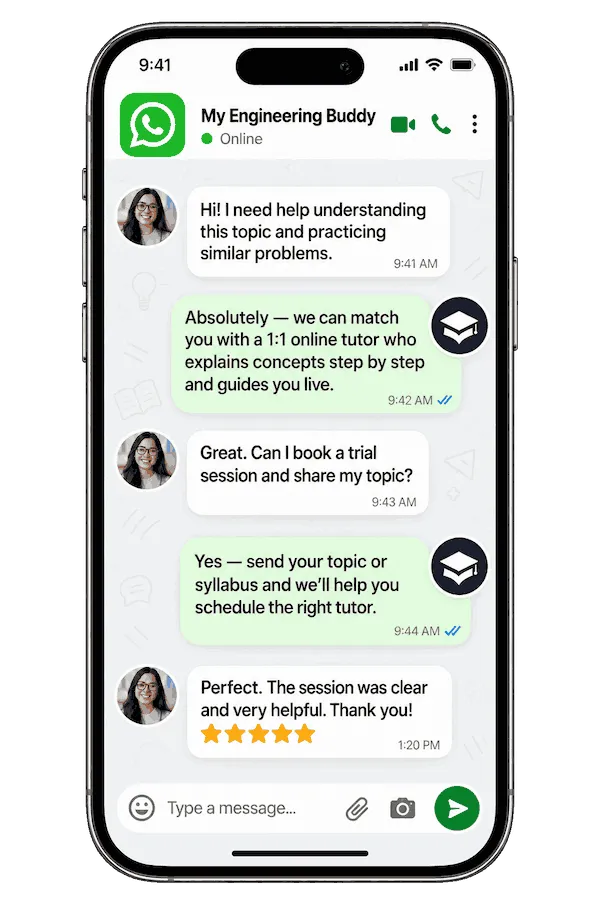
Unlike platforms where you fill out a form and wait, MEB responds in under a minute, 24/7. Tutor match takes under an hour. The $1 trial means you test before you commit. Everything runs over WhatsApp — no logins, no intake forms.
Students consistently tell us that the biggest surprise with MEB is how quickly the tutor identifies the actual problem — not the symptom. In Serverless, the symptom is usually a 502 or a timeout. The cause is usually one misconfigured permission or a missing environment variable three layers up.
Pricing Guide
Standard Serverless tutoring runs $20–$40/hr. Graduate-level distributed systems design, multi-cloud architecture work, or AWS certification prep with an industry-experienced tutor can reach $100/hr. Rate depends on the complexity of your use case, your timeline, and tutor availability.
Availability shrinks fast in the weeks before university project submission deadlines and semester ends. If your deadline is within three weeks, book now.
For students targeting roles at cloud-native companies or aiming for AWS Solutions Architect Professional or Certified Developer certifications, MEB has tutors with real industry backgrounds in serverless at scale — share your specific goal and MEB will match the tier to your ambition.
Start with the $1 trial — 30 minutes, no registration, no commitment. WhatsApp MEB for a quick quote.
FAQ
Is Serverless hard to learn?
The concept is straightforward. The difficulty is in the details: IAM permissions, event source configuration, cold-start behaviour, and debugging with limited local tooling. Most students get stuck not on the code but on the cloud plumbing around it. A tutor cuts through that quickly.
How many sessions will I need?
For a specific project problem — usually 2–4 sessions. For conceptual depth across AWS Lambda, event-driven design, and deployment pipelines, most students need 8–15 hours spread over 4–6 weeks. The $1 trial diagnostic session gives you a clearer estimate.
Can you help with Serverless projects and portfolio work?
Yes. MEB tutoring is guided learning — the tutor explains the architecture, walks through the configuration logic, and helps you understand why each decision is made. You build and deploy the solution yourself. See our Policies page for full details on what we help with.
Will the tutor match my exact platform and exam board?
Yes. Share your platform (AWS, Azure, or GCP), your framework (Serverless Framework, SAM, CDK), and your course or certification context during matching. MEB will confirm the tutor knows your specific stack before the first session begins.
What happens in the first session?
The tutor runs a short diagnostic: you walk through your current project or the concept you’re stuck on, and explain your setup. Within the first 20 minutes the tutor has identified the real gaps. The rest of the session is working through the most pressing problem live.
Is online Serverless tutoring as effective as in-person?
For technical subjects like Serverless, online is often better. Screen-sharing your cloud console, live annotation of your architecture diagram, and real-time debugging of your deployed function are all things a physical whiteboard can’t replicate. Google Meet plus a digital pen-pad works well.
Can I get Serverless help at midnight?
Yes. MEB operates 24/7 across all time zones. WhatsApp MEB at any hour — average response time is under a minute. This matters when your project deadline is 6am and your Lambda function stopped working at 11pm.
What if I don’t like my assigned tutor?
Tell MEB via WhatsApp and a new tutor is matched, usually within the hour. You’re never locked to a specific tutor. The $1 trial exists precisely so you can test the match before committing to a paid block.
Do you cover the Serverless Framework specifically, or just AWS Lambda?
Both. MEB tutors cover AWS Lambda directly and the Serverless Framework (serverless.yml, plugins, stages, and deployment pipelines). If your course or project uses SAM, CDK, or Azure Functions instead, confirm during matching and MEB will assign accordingly.
What’s the difference between serverless and containers — and do I need to know both?
Serverless functions handle discrete, event-triggered tasks without managing runtime infrastructure. Containers give you more control over environment and are better for long-running processes. Many cloud architecture courses and DevOps roles expect you to know both and articulate the trade-offs clearly.
How do I get started with MEB for Serverless tutoring?
Start with the $1 trial — 30 minutes live or one project question explained in full. Three steps: WhatsApp MEB with your platform and the problem you’re stuck on, get matched to a verified tutor within the hour, and start your trial session. No registration, no forms.
Can MEB help me prepare for AWS Lambda or serverless questions in a technical interview?
Yes. MEB tutors run mock technical interviews covering serverless architecture questions, cold-start explanations, event-driven design trade-offs, and system design scenarios involving Lambda. If you have a specific company’s interview format in mind, share it during matching and the tutor will tailor the prep accordingly.
arXiv’s computer science preprint archive documents the rapid growth of serverless and FaaS research — over 400 papers on serverless computing published between 2018 and 2023, reflecting how fast this area is moving in both academia and industry.
Source: arXiv — Computer Science
Trust & Quality at My Engineering Buddy
MEB tutors go through subject-specific vetting — not a generic screening. Every tutor completes a live demo session evaluated on explanation quality, technical accuracy, and ability to adapt to a student’s current level. Tutors hold degrees or hold professional experience in their subject area. Rated 4.8/5 across 40,000+ verified reviews on Google. For Serverless specifically, MEB matches tutors who have deployed production serverless systems, not just those who’ve read the AWS docs.
MEB provides guided learning support. All project work is produced and submitted by the student. See our Policies page for details.
MEB has served 52,000+ students across the US, UK, Canada, Australia, Gulf, and Europe in 2,800+ subjects since 2008. Within Software Engineering, that includes students working on Kubernetes tutoring, system design help, and cloud architecture — alongside Serverless. The platform has been running long enough to know which topics trip students up at which stage, and how to fix it without wasting sessions. Learn more about how MEB selects and evaluates tutors at our tutoring methodology page.
A common pattern our tutors observe is that Serverless students who’ve been self-studying for weeks arrive knowing the theory but having never successfully deployed a function end-to-end. The first session gets them to a working deployment — and that single win changes how they engage with everything that follows.
Explore Related Subjects
Students studying Serverless often also need support in:
- Amazon Web Services (AWS)
- Azure DevOps
- Google Cloud Platform (GCP)
- Microservices
- Site Reliability Engineering (SRE)
- Jenkins
- Monitoring
- Scalability
Next Steps
Before your first session, have ready: your cloud platform (AWS, Azure, or GCP), your project brief or assignment spec, a recent error message or failed deployment you’ve been stuck on, and your submission or exam date. The tutor handles the rest.
- Share your platform, hardest component, and current timeline via WhatsApp
- Share your availability and time zone — MEB matches across US, UK, Gulf, Canada, and Australia
- MEB matches you with a verified Serverless tutor — usually within 24 hours, often within the hour
- First session starts with a diagnostic so every minute is used well
Visit www.myengineeringbuddy.com for more on how MEB works.
WhatsApp to get started or email [email protected].
Reviewed by Subject Expert
This page has been carefully reviewed and validated by our subject expert to ensure accuracy and relevance.