


Hire The Best ESP 32 Tutor
Top Tutors, Top Grades. Without The Stress!
52,000+ Happy Students From Various Universities



How Much For Private 1:1 Tutoring & Hw Help?
Private 1:1 Tutoring and HW help Cost $20 – 35 per hour* on average.
Debugging your ESP32 firmware at 11 pm with a project deadline in 12 hours is not a learning strategy.
ESP 32 Tutor Online
The ESP32 is a dual-core, low-power microcontroller by Espressif Systems with integrated Wi-Fi and Bluetooth, used in IoT, embedded systems, and wireless prototyping. It supports programming in C/C++ via Arduino IDE and ESP-IDF, equipping students to build connected hardware applications.
If you’ve searched for an ESP 32 tutor near me, you already know the problem: most generic tutoring platforms don’t carry anyone who has actually written interrupt service routines or configured an RTOS task on this chip. MEB’s mechatronics tutoring network includes engineers who work with the ESP32 in real projects — Wi-Fi provisioning, sensor fusion, BLE advertising, power management, and more. One session can close a gap that hours of forum-scrolling didn’t.
- 1:1 online sessions tailored to your specific course, project brief, or exam board
- Expert-verified tutors with hands-on embedded systems and IoT backgrounds
- Flexible time zones — US, UK, Canada, Australia, Gulf covered
- Structured learning plan built after a first diagnostic session
- Guided project support — we explain the logic, you write and submit the code
52,000+ students across the US, UK, Canada, Australia, and the Gulf have used MEB since 2008 — including students in Mechatronics subjects like ESP32, Arduino Uno, and Raspberry Pi.
Source: My Engineering Buddy, 2008–2025.
How Much Does an ESP 32 Tutor Cost?
Most ESP32 tutoring sessions run $20–$40/hr for undergraduate and project-level work. Graduate-level or niche topics — real-time OS configuration, custom PCB integration, advanced BLE stacks — go up to $100/hr. The $1 trial gets you 30 minutes of live 1:1 tutoring or one homework question explained in full before you commit to anything.
| Level / Need | Typical Rate | What’s Included |
|---|---|---|
| Standard (most course levels) | $20–$35/hr | 1:1 sessions, project guidance |
| Advanced / Specialist | $35–$100/hr | Expert tutor, RTOS/BLE/custom PCB depth |
| $1 Trial | $1 flat | 30 min live session or 1 project question |
Tutor availability tightens sharply around end-of-semester project deadlines. Book early if you’re within four weeks of a submission.
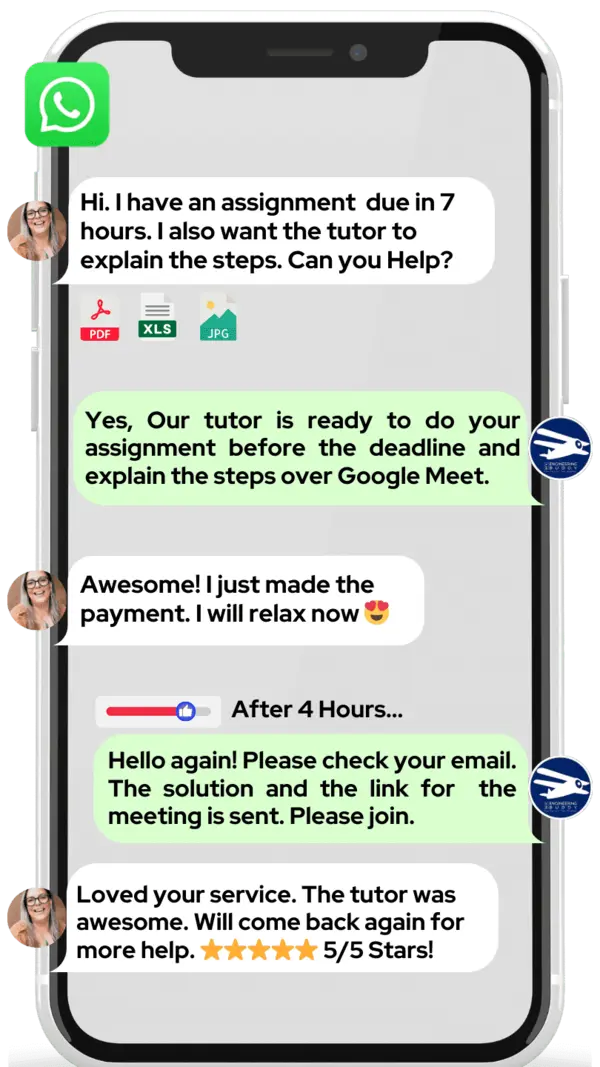
WhatsApp MEB for a quick quote — average response time under 1 minute.
Who This ESP 32 Tutoring Is For
This isn’t a course for people who want a broad introduction to microcontrollers. It’s for students who are already in the weeds — a specific task won’t compile, a peripheral won’t respond, or an RTOS task is starving another thread.
- Undergraduate and graduate students in embedded systems, electrical engineering, or computer engineering courses that use the ESP32
- Students building IoT capstone or final-year projects who need someone to think through architecture with them
- Students who submitted a project draft and got it sent back — now on a hard deadline to fix it
- Students transitioning from Arduino Uno to the ESP32 and hitting the complexity wall with dual-core scheduling and Wi-Fi libraries
- Students with a course submission deadline approaching and significant gaps in their understanding of GPIO, interrupts, or wireless protocols
- Engineers and developers upskilling on ESP32 for professional IoT work who want structured guidance rather than ad-hoc forum answers
Students at institutions including MIT, Georgia Tech, TU Delft, University of Waterloo, Imperial College London, UNSW Sydney, and ETH Zurich have used MEB for embedded systems support at this level.
1:1 Tutoring vs Self-Study vs AI vs YouTube vs Online Courses
Self-study works if you have time and a clear path — most ESP32 students don’t have either. AI tools like ChatGPT give plausible-sounding code that can compile and still be architecturally wrong. YouTube explains the basics well but stops short the moment you’re debugging a specific FreeRTOS deadlock or a Wi-Fi reconnection bug unique to your hardware setup. Online courses give structure but run at a fixed pace with no one to catch your misconceptions. A 1:1 ESP 32 tutor online through MEB looks at your actual code, identifies where the logic breaks, and explains the fix in the context of your specific project — not a generic demo sketch.
Outcomes: What You’ll Be Able To Do in ESP 32
After focused 1:1 work with an MEB tutor, you’ll be able to configure and debug GPIO pins, PWM outputs, and ADC channels without referencing the datasheet every five minutes. You’ll be able to write and manage FreeRTOS tasks — including task prioritisation, queue communication, and semaphore use — without introducing race conditions. You’ll be able to set up Wi-Fi in both station and access point modes, handle reconnection logic, and send data over HTTP or MQTT. You’ll be able to implement BLE advertising and GATT server profiles for simple connected device applications. And you’ll be able to explain your design decisions clearly — which matters in vivas, lab reports, and project defences.
Based on feedback from 40,000+ sessions collected by MEB from 2022 to 2025, 58% of students improved by one full grade after approximately 20 hours of 1:1 tutoring in subjects like ESP32. A further 23% achieved at least a half-grade improvement.
Source: MEB session feedback data, 2022–2025.
Try your first session for $1 — 30 minutes of live 1:1 tutoring or one homework question explained in full. No registration. No commitment. WhatsApp MEB now and get matched within the hour.
What We Cover in ESP 32 (Syllabus / Topics)

Core Hardware and Peripherals
- GPIO configuration — input, output, pull-up/pull-down, interrupt modes
- PWM with LEDC peripheral — frequency, duty cycle, fade control
- ADC and DAC — channel selection, attenuation, noise reduction
- I2C and SPI communication — master/slave setup, timing, bus contention
- UART — serial communication, baud rate configuration, flow control
- Timers and watchdog — hardware timers, alarm callbacks, WDT configuration
Recommended references: ESP32 Technical Reference Manual (Espressif Systems), Programming ESP32 by Dogan Ibrahim.
Wi-Fi, BLE, and Wireless Protocols
- Wi-Fi modes — station (STA), access point (AP), and AP+STA simultaneous
- HTTP client and server — RESTful requests, JSON parsing, OTA updates
- MQTT — broker setup, publish/subscribe, QoS levels, reconnection handling
- Bluetooth Low Energy — advertising packets, GATT server and client, pairing
- Provisioning — SmartConfig, BLE provisioning, Wi-Fi credentials management
- mDNS and DNS-SD — local network service discovery
Recommended references: Internet of Things with ESP32 by Agus Kurniawan, ACM publications on IoT protocol design.
FreeRTOS and Real-Time Programming
- Task creation, deletion, and priority assignment on dual cores
- Queues — inter-task data transfer, blocking send and receive
- Semaphores and mutexes — binary, counting, recursive mutex for shared resources
- Event groups — synchronising multiple tasks on compound conditions
- Memory management — heap allocation, stack sizing, heap monitoring
- Power management — light sleep, deep sleep, wake stubs, ULP coprocessor basics
Recommended references: Using the FreeRTOS Real Time Kernel by Richard Barry, Mastering the FreeRTOS Real Time Kernel (FreeRTOS.org).
Platforms, Tools & Textbooks We Support
ESP32 development spans several toolchains and IDEs. MEB tutors are comfortable across all of them — sessions adapt to whatever environment your course or project uses.
- Arduino IDE (ESP32 Arduino Core) — most common for coursework
- ESP-IDF (Espressif IoT Development Framework) — required for advanced RTOS and BLE work
- PlatformIO — popular for professional and capstone projects
- VS Code with ESP-IDF plugin
- JTAG debugging via OpenOCD
- Wokwi — online ESP32 simulator used in many university labs
- Logic analyser tools (Saleae, PulseView) for I2C/SPI debugging
What a Typical ESP 32 Session Looks Like
The tutor opens by checking where the previous session left off — usually a specific peripheral or a task that wasn’t behaving as expected. If it’s a first session, they ask you to share your project brief and walk through your current code. You and the tutor work through the problem on screen: they annotate directly using a digital pen-pad, pointing to the exact lines where the logic breaks. Common focal points include ISR design for GPIO interrupts, Wi-Fi event loop handling, and FreeRTOS task stack sizing. You replicate the corrected approach yourself — not just watch. The session closes with a specific debugging task or implementation step for you to attempt before the next session, and the next topic is noted so you’re not starting cold.
How MEB Tutors Help You with ESP 32 (The Learning Loop)
Diagnose: In the first session, the tutor identifies precisely where your understanding breaks down — not just what’s wrong with the output, but why the approach is flawed. For ESP32 this often means pinpointing whether a student is confusing task priorities with core affinity, or misreading the Wi-Fi event callbacks.
Explain: The tutor works through a live example on screen using a digital pen-pad — stepping through a working FreeRTOS task setup or a BLE GATT service registration, annotating each decision as they go.
Practice: You attempt the same type of problem with the tutor present. If you get stuck, the tutor prompts rather than corrects immediately — you need to build the instinct, not just copy the answer.
Feedback: The tutor reviews your attempt step by step — explaining not just what went wrong but why it went wrong and what it would cost you in a marked lab or project assessment.
Plan: Before the session ends, the tutor outlines what you’ll work on next and sets a concrete task. Progress is tracked across sessions so nothing is left unaddressed before your deadline.
Sessions run on Google Meet with a digital pen-pad or iPad and Apple Pencil. Share your project brief, course outline, or current code before the first session — the tutor reviews it in advance so the first session covers real ground immediately. Start with the $1 trial — 30 minutes of live tutoring that also serves as your first diagnostic. Whether you need a quick catch-up before a project deadline, structured revision over four to eight weeks, or ongoing weekly support through the semester, the tutor maps the session plan after that first diagnostic.
At MEB, we’ve found that the most common ESP32 struggle isn’t understanding Wi-Fi or BLE in isolation — it’s managing them alongside FreeRTOS without creating resource conflicts. That’s exactly the kind of multi-layer problem a tutor catches in the first session.
Tutor Match Criteria (How We Pick Your Tutor)
Not every embedded systems engineer knows the ESP32 well. MEB matches on specifics.
Subject depth: tutors are vetted on ESP-IDF, FreeRTOS, and wireless protocol implementation — not just general C/C++ competence. Tools: Google Meet plus digital pen-pad or iPad and Apple Pencil — every session is annotated, not just talked through. Time zone: matched to your region across the US, UK, Gulf, Canada, and Australia. Goals: whether you need to pass a lab assessment, complete a final-year project, or build production-ready firmware, the tutor match reflects that.
Unlike platforms where you fill out a form and wait, MEB responds in under a minute, 24/7. Tutor match takes under an hour. The $1 trial means you test before you commit. Everything runs over WhatsApp — no logins, no intake forms.
Pricing Guide
Standard ESP32 tutoring runs $20–$40/hr for most undergraduate and project-level work. Graduate-level support — custom RTOS configuration, advanced wireless stack debugging, power profiling for battery-operated devices — is available up to $100/hr.
Rate factors: topic complexity, level of hardware involved, how close you are to a deadline, and tutor availability. Availability tightens significantly during end-of-semester project submission windows.
For students targeting roles at companies like Espressif, Nordic Semiconductor, or any embedded IoT firm, tutors with professional firmware development backgrounds are available at higher rates — share your specific goal and MEB will match the tier to your ambition.
Start with the $1 trial — 30 minutes, no registration, no commitment. WhatsApp MEB for a quick quote.
Students consistently tell us that the biggest relief in the first MEB session isn’t the answer — it’s finally understanding why their approach was wrong. That moment of clarity is what makes the next task something they can attempt independently.
FAQ
Is ESP32 hard to learn?
It’s harder than Arduino Uno and easier than building from bare-metal registers. The difficulty spikes when students hit dual-core scheduling, FreeRTOS task management, and Wi-Fi event handling simultaneously. A tutor who knows the chip cuts through that spike quickly.
How many sessions will I need?
Most students close a specific project gap in two to four sessions. For a full semester of ESP32 coursework, six to ten sessions spread over eight weeks is typical. The first diagnostic session gives you a clearer picture of what’s actually needed.
Can you help with projects and portfolio work?
Yes — MEB tutoring is guided learning. The tutor explains the logic, architecture, and debugging approach. You write and submit the code yourself. See our Academic Integrity policy and Why MEB page for full details on what we help with and what we don’t.
Will the tutor match my exact syllabus or exam board?
Yes. Before matching, MEB confirms your course outline, IDE, and specific assessment requirements. Tutors are assigned based on that — not assigned generically and then asked to adapt.
What happens in the first session?
The tutor reviews your project brief or course outline, identifies the highest-priority gaps, and works through at least one concrete problem with you. You leave with a clear next step, not just a better understanding of theory.
Are online sessions as effective as in-person?
For ESP32 specifically, yes — often more so. Code review and annotation on a shared screen with a digital pen-pad is more precise than a whiteboard. The tutor can inspect your actual code, not a diagram of it.
Can I get ESP32 help at midnight?
Yes. MEB operates across time zones with tutors available late into the night for US, UK, and Gulf students. WhatsApp MEB at any hour — the average response time is under a minute, and tutor matching typically happens within an hour of contact.
What’s the difference between ESP-IDF and Arduino Core for ESP32 — and which should I use?
Arduino Core is faster to start with and suits most coursework. ESP-IDF gives full access to FreeRTOS, Bluetooth stack configuration, and power management APIs — required for serious IoT projects. MEB tutors work in both; the first session confirms which is right for your goal.
What if I don’t like my assigned tutor?
Request a change via WhatsApp. MEB reassigns without dispute. The $1 trial exists precisely so you can evaluate fit before committing to a longer session block.
Do you offer group ESP32 sessions?
No. All MEB sessions are 1:1. Group learning slows down to the average, not your specific gap. For ESP32 debugging, one-to-one is the only format that actually works on your exact code.
How does deep sleep and power management on the ESP32 actually work, and why does my device keep crashing after wake?
Wake crashes are almost always caused by incorrect RTC memory handling, a missing wake stub, or GPIO hold configuration being lost. A tutor who has debugged this pattern before identifies the cause in under 20 minutes — far faster than forum-hunting.
How do I get started?
WhatsApp MEB, share your course or project details, and get matched with a verified ESP32 tutor — usually within an hour. The first session is the $1 trial: 30 minutes of live tutoring or one project question explained in full, from scratch.
Trust & Quality at My Engineering Buddy
Every MEB tutor goes through subject-specific vetting — not a general screening. For ESP32, that means demonstrating hands-on competence in FreeRTOS, wireless stack implementation, and hardware peripheral debugging. Tutors complete a live demo session before being listed. Ongoing session feedback is reviewed and underperforming tutors are removed. Rated 4.8/5 across 40,000+ verified reviews on Google.
MEB tutoring is guided learning — you understand the work, then submit it yourself. For full details on what we help with and what we don’t, read our Academic Integrity policy and Why MEB.
MEB has served 52,000+ students across the US, UK, Canada, Australia, the Gulf, and Europe since 2008, across 2,800+ subjects. Within Mechatronics, that includes students working on Real-Time Systems (RTOS) tutoring, STM32 tutoring, and PLC tutoring — subjects that often sit alongside ESP32 in embedded systems programmes. Learn more about how sessions are structured at MEB’s tutoring methodology.
Our experience across thousands of sessions shows that ESP32 students who arrive with their actual project code — not just a question about theory — make the fastest progress. Bring the code. The tutor will find the problem.
Explore Related Subjects
Students studying ESP32 often also need support in:
- ESP8266
- PIC Microcontroller
- Raspberry Pi
- MPLAB
- Robotics Engineering
- Autonomous Systems
- Electromechanical Systems
- Proteus Simulation
Next Steps
Before your first session, have ready: your course outline or project brief, a specific section of code or a problem you’re stuck on, and your submission or exam deadline. The tutor handles the rest.
- Share your exam board or project requirements and your current timeline
- Share your time zone and availability
- MEB matches you with a verified ESP32 tutor — usually within an hour
The first session starts with a diagnostic so every minute is used on what actually needs fixing.
Visit www.myengineeringbuddy.com for more on how MEB works.
WhatsApp to get started or email meb@myengineeringbuddy.com.
Reviewed by Subject Expert
This page has been carefully reviewed and validated by our subject expert to ensure accuracy and relevance.