~1 min
Average Reply Time
~1 hour
To Be Matched With A Tutor
1 Trial
75% Find Their Tutor On The 1st Trial
$1
Your First 30 Minutes
Hire The Best Apache Web Server Tutor
Top Tutors, Top Grades. Without The Stress!


Related Subjects
Your Apache config is broken, your site is down, and Stack Overflow has three contradictory answers. That’s exactly when MEB’s 1:1 help cuts through.
Apache Web Server Tutor Online
Apache HTTP Server is an open-source web server software that handles HTTP and HTTPS requests, serves static and dynamic content, and supports modules for authentication, proxying, and URL rewriting across Linux, Windows, and macOS environments.
MEB offers 1:1 online tutoring and project help in 2800+ advanced subjects — including a dedicated software engineering tutor track that covers Apache Web Server from installation and virtual host configuration through to SSL/TLS setup, load balancing, and performance hardening. If you’ve searched for an Apache Web Server tutor near me, MEB’s tutors operate across every major time zone — US, UK, Canada, Australia, and the Gulf — with no commute required. One diagnostic session is all it takes to identify exactly where you’re stuck and build a plan that fits your deadline.
- 1:1 online sessions tailored to your course, project, or deployment environment
- Expert-verified tutors with hands-on Apache HTTP Server and Linux server experience
- Flexible time zones — US, UK, Canada, Australia, Gulf
- Structured learning plan built after a diagnostic session
- Guided project support — we explain the config and the why; you build and deploy
52,000+ students across the US, UK, Canada, Australia, and the Gulf have used MEB since 2008 — including students working on Software Engineering topics like Apache Web Server, Apache Tomcat, and Linux server administration.
Source: My Engineering Buddy, 2008–2025.
How Much Does an Apache Web Server Tutor Cost?
Most Apache Web Server tutoring sessions run $20–$40/hr. Advanced topics — SSL certificate chains, mod_security WAF rules, high-availability cluster configuration — may reach $50–$70/hr depending on tutor depth and urgency. The $1 trial gets you 30 minutes of live 1:1 tutoring or a full explanation of one specific problem — no registration, no commitment.
| Level / Need | Typical Rate | What’s Included |
|---|---|---|
| Standard (most setups) | $20–$35/hr | 1:1 sessions, config walkthroughs, project guidance |
| Advanced / Specialist | $35–$70/hr | Expert tutor, security hardening, performance tuning, clustering |
| $1 Trial | $1 flat | 30 min live session or one problem explained in full |
Tutor availability tightens around university project submission windows and semester deadlines. Book early if your deadline is within two weeks.
WhatsApp MEB for a quick quote — average response time under 1 minute.
Who This Apache Web Server Tutoring Is For
Apache HTTP Server trips up students and developers at every level — not because it’s poorly documented, but because the documentation assumes you already know what you don’t know yet. Whether your httpd.conf is throwing cryptic errors or your mod_rewrite rules work in one environment and fail in another, MEB’s tutors have seen it before.
- Undergraduate and postgraduate students running Apache as part of a web technologies, systems administration, or DevOps course at universities like MIT, Georgia Tech, University of Toronto, University of Manchester, University of Melbourne, TU Delft, or the American University of Sharjah
- Students completing a LAMP stack project and stuck on virtual host configuration or .htaccess rules
- Students retaking a systems or networking module after a failed first attempt
- Developers new to back-end development who need Apache running cleanly before their deadline
- Students with a course submission deadline approaching and gaps in SSL setup, logging, or reverse proxy configuration
- Anyone who wants to move beyond tutorials and understand why their configuration does or doesn’t work
Students consistently tell us that the moment they stop copying config snippets from forums and start understanding what each directive actually does, Apache stops feeling like a black box. That shift usually happens inside a single session.
1:1 Tutoring vs Self-Study vs AI vs YouTube vs Online Courses
Self-study works if you’re disciplined and your environment matches the tutorial. AI tools explain directives quickly but can’t watch you paste a broken config and catch the one misplaced closing tag. YouTube gets you to “Hello World” on port 80 and then stops. Online courses are structured but move at a fixed pace regardless of where you’re stuck. 1:1 tutoring with MEB is live, calibrated to your exact course and server environment, and corrects your specific errors in real time — not a generalised answer built for an average user’s setup.
Outcomes: What You’ll Be Able To Do in Apache Web Server
After working with an MEB tutor, you’ll be able to configure and manage a production-ready Apache HTTP Server from scratch. You’ll apply virtual host configuration to serve multiple domains from a single server. You’ll solve mod_rewrite and mod_alias conflicts that currently produce 404s or redirect loops. You’ll implement SSL/TLS certificates correctly — including intermediate chain ordering — and verify them without relying on trial and error. You’ll analyse access and error logs to diagnose slow responses and blocked requests, and you’ll explain every directive in your httpd.conf with confidence.
Based on feedback from 40,000+ sessions collected by MEB from 2022 to 2025, students working 1:1 on Apache Web Server consistently report noticeably faster problem-solving when reading unfamiliar configs, greater confidence managing server environments independently, and faster progress than self-directed troubleshooting alone. Progress varies by starting level and project complexity.
Source: MEB session feedback data, 2022–2025.
Not sure if you need basic setup help or something deeper? Start with the $1 trial — 30 minutes is enough for the tutor to assess where you are and map what comes next.
What We Cover in Apache Web Server (Syllabus / Topics)

Installation, Core Configuration & Virtual Hosts
- Installing Apache on Ubuntu, CentOS, and Red Hat Linux from package managers and source
- Directory structure: httpd.conf, apache2.conf, sites-available, sites-enabled, conf.d
- Name-based and IP-based virtual host configuration for multiple domains
- DocumentRoot, Directory blocks, Options, AllowOverride, and Require directives
- Port-based listening, NameVirtualHost, and ServerAlias management
- .htaccess scope, inheritance rules, and performance implications of AllowOverride All
- Enabling and disabling modules with a2enmod / a2dismod and LoadModule directives
Key references: Apache HTTP Server Documentation (httpd.apache.org), The Apache Cookbook by Rich Bowen, Linux Administration: A Beginner’s Guide by Wale Soyinka.
URL Rewriting, Proxying & Load Balancing
- mod_rewrite: RewriteEngine, RewriteCond, RewriteRule syntax and flag reference
- mod_alias: Redirect, RedirectMatch, Alias, and AliasMatch directives
- Common rewrite patterns: HTTPS enforcement, trailing slash normalisation, canonical redirects
- Reverse proxy setup with mod_proxy and mod_proxy_http
- ProxyPass, ProxyPassReverse, and balancer cluster configuration
- Load balancing methods: byrequests, bytraffic, bybusyness, heartbeat
- Debugging rewrite rules with RewriteLog and mod_rewrite trace levels
Key references: Apache HTTP Server Documentation — mod_rewrite, Pro Apache by Peter Wainwright, Web Operations by John Allspaw and Jesse Robbins.
SSL/TLS, Security Hardening & Performance Tuning
- SSL/TLS certificate installation: self-signed, Let’s Encrypt, commercial CA chain ordering
- mod_ssl directives: SSLEngine, SSLCertificateFile, SSLCertificateKeyFile, SSLCACertificateFile
- HSTS headers, OCSP stapling, and disabling weak ciphers and protocols
- mod_security: basic WAF rule sets, OWASP CRS integration, and false-positive tuning
- MPM selection: prefork vs worker vs event — when each applies and how to configure
- KeepAlive, MaxRequestWorkers, ServerLimit, and Timeout tuning for traffic loads
- Access and error log analysis: LogFormat, CustomLog, ErrorLog, and log rotation with logrotate
Key references: Apache Security by Ivan Ristic, High Performance Browser Networking by Ilya Grigorik, IEEE technical publications on web server security architectures.
Platforms, Tools & Textbooks We Support
Apache Web Server tutoring at MEB covers the full environment — not just the server binary. Tutors work with you inside your actual stack, sharing screens over Google Meet with a digital pen-pad for annotating configs and diagrams in real time.
- Operating systems: Ubuntu, Debian, CentOS, Red Hat Enterprise Linux, Fedora, Windows Server
- Control panels: cPanel/WHM, Plesk, Webmin
- Container environments: Docker + Apache, Kubernetes ingress with Apache
- Stack contexts: LAMP stack, WAMP, XAMPP
- Monitoring: Prometheus + Apache exporter, Nagios, mod_status
- SSL tooling: OpenSSL CLI, Certbot, Let’s Encrypt, Qualys SSL Labs tester
- CI/CD integration: Ansible playbooks for Apache deployment, Terraform provisioning
What a Typical Apache Web Server Session Looks Like
The tutor opens by checking what you worked on last time — usually a specific directive or module that wasn’t behaving. In this session, you share your screen and pull up the config file directly. The tutor uses a digital pen-pad to annotate which blocks are conflicting and why — say, an .htaccess AllowOverride rule that’s silently overriding your VirtualHost settings. You edit the directive, reload the server, and confirm the fix in the browser. Then the tutor walks you through a related scenario — configuring a second virtual host with its own SSL certificate — and watches you write it. Before the session ends, you get one specific task: set up mod_status on a local test instance and interpret the output. Next session starts there.
How MEB Tutors Help You with Apache Web Server (The Learning Loop)
Diagnose: In the first session, the tutor asks you to share your current config and describe the error. Most students arrive with a symptom — “my site returns 403” or “HTTPS isn’t working” — without knowing which layer is causing it. The tutor identifies the root cause within minutes.
Explain: The tutor doesn’t just fix it. They annotate your config on screen with a digital pen-pad, showing exactly which directive is responsible and what Apache’s processing order means for your setup. You see the logic, not just the answer.
Practice: You then recreate the configuration from scratch — or attempt a variation — while the tutor watches. This is where most learning actually happens. Getting it right once with guidance is different from being able to do it alone.
Feedback: Every mistake gets explained at the directive level. If you wrote RewriteRule with a missing flag, the tutor explains what the default behaviour is and when that breaks requests. You leave knowing why, not just what.
Plan: The tutor notes which modules or topics need more work — mod_proxy, MPM tuning, log analysis — and sequences the next session accordingly. Progress is tracked session to session, not left to chance.
Sessions run over Google Meet with a digital pen-pad or iPad and Apple Pencil for annotation. Before your first session, have your current httpd.conf or apache2.conf open, a note of the exact error message or behaviour you’re seeing, and your OS and Apache version. The first session covers diagnosis and your single most urgent configuration issue. Start with the $1 trial — 30 minutes of live help that also doubles as your first diagnostic.
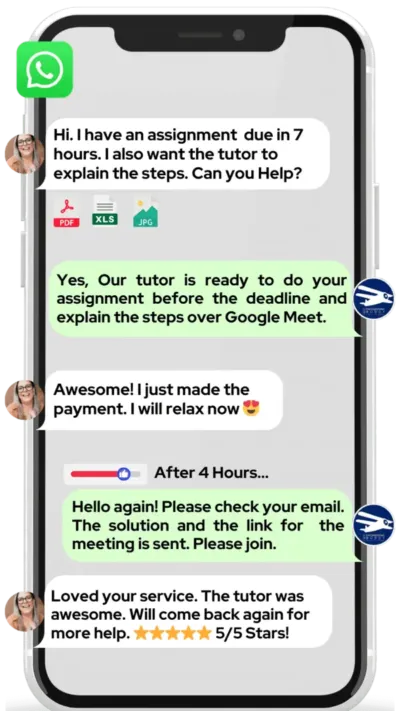
Try your first session for $1 — 30 minutes of live 1:1 tutoring or one homework question explained in full. No registration. No commitment. WhatsApp MEB now and get matched within the hour.
Tutor Match Criteria (How We Pick Your Tutor)
Not every Linux admin knows Apache internals, and not every web developer has touched mod_security. MEB matches on specifics, not generics.
Subject depth: Tutors are matched on the specific Apache modules and use case you need — virtual hosting, reverse proxy, SSL hardening, or performance tuning. A student configuring Apache for a university DevOps assignment gets a different match than one troubleshooting a production load balancer.
Tools: Every tutor uses Google Meet with a digital pen-pad or iPad and Apple Pencil. Config files, terminal output, and diagrams are annotated live — no static slide decks.
Time zone: Matched to your region — US, UK, Gulf, Canada, or Australia. You don’t get a tutor whose only available slot is 3am your time.
Goals: Whether you need a working server for a project submission, conceptual understanding of Apache’s request processing pipeline, or research-level depth into MPM internals, the tutor is briefed on your goal before the first session.
Unlike platforms where you fill out a form and wait, MEB responds in under a minute, 24/7. Tutor match takes under an hour. The $1 trial means you test before you commit. Everything runs over WhatsApp — no logins, no intake forms.
Study Plans (Pick One That Matches Your Goal)
After the first diagnostic session, the tutor builds your specific sequence. Three common patterns: a crash course (1–3 weeks) for students who need Apache running correctly before a project submission; a structured build (4–8 weeks) covering installation through SSL hardening and performance tuning in a logical progression; and ongoing weekly support aligned to your semester, covering new modules as your coursework introduces them. The tutor adjusts the plan as your project scope or deadlines shift.
MEB tutors working on infrastructure and server subjects consistently build session plans around the student’s actual deployment environment — not a textbook abstraction. Your httpd.conf is the starting point, not a practice exercise.
Source: My Engineering Buddy, 2008–2025.
Pricing Guide
Apache Web Server tutoring runs $20–$40/hr for most undergraduate and project-level work. Graduate-level systems coursework, enterprise configuration consulting, or highly specialised topics like mod_security OWASP CRS tuning or Apache Kafka integration can reach $70–$100/hr.
Rate factors include: topic complexity, tutor seniority, your timeline, and time zone. A student who needs help at 11pm on a Sunday before a Monday deadline will still get a response — but availability is tighter around peak semester submission windows, so booking ahead matters.
For students targeting roles at companies like Google, Amazon, or Meta where server infrastructure knowledge is tested in system design interviews, tutors with production Apache and DevOps backgrounds are available at higher rates — share your specific goal and MEB will match the tier to your ambition.
Start with the $1 trial — 30 minutes, no registration, no commitment. WhatsApp MEB for a quick quote.
At MEB, we’ve found that students who arrive with a specific error message or a config file they don’t understand make faster progress than those who arrive with a vague goal. The more concrete your problem, the more a single session can move the needle.
FAQ
Is Apache Web Server hard to learn?
Apache itself isn’t conceptually complex — it’s a request-handling pipeline with a directive-based config system. The difficulty is that small syntax errors or directive ordering issues produce cryptic errors, and the interaction between .htaccess files and VirtualHost blocks trips up even experienced developers.
How many sessions do I need?
Most students resolve a specific urgent problem in one to two sessions. A complete foundation — from installation through SSL and mod_rewrite — typically takes six to ten hours of 1:1 work, depending on your starting point and how complex your project environment is.
Can you help with projects and portfolio work?
Yes. MEB provides guided project support — the tutor explains what each directive or module does and why your current approach isn’t working. You make the changes and submit your own work. See our Policies page for full details on what we help with and what we don’t.
Will the tutor match my exact course syllabus or environment?
Yes. Before matching, MEB asks for your course outline, OS, Apache version, and the specific module or topic you’re working on. You won’t get a generic Apache tutor — you’ll get someone who knows your exact stack and assignment context.
What happens in the first session?
The tutor reviews your current config or error output, identifies the root cause, and resolves your most urgent issue live. By the end of the first session you’ll have a working fix and a clear picture of what to tackle next.
Are online Apache sessions as effective as in-person?
For config-based work, online is often better. You share your actual server screen, the tutor annotates your real files with a digital pen-pad, and you see changes happen in your own environment immediately — no lab machine swaps or generic demo setups.
What’s the difference between Apache HTTP Server and Apache Tomcat?
Apache HTTP Server serves static content and handles HTTP/HTTPS requests directly. Apache Tomcat is a Java servlet container — it runs Java web applications. They’re often deployed together, with Apache proxying requests to Tomcat using mod_proxy_ajp or mod_proxy_http.
Can I get Apache Web Server help at midnight?
Yes. MEB operates 24/7 across time zones. WhatsApp response time averages under a minute at any hour. Tutor availability varies by time zone, but an urgent late-night session can usually be arranged — especially for students with same-day deadlines.
What if my Apache config works locally but fails on the live server?
This is one of the most common Apache problems MEB tutors handle. Environment mismatches — different module versions, missing packages, SELinux or AppArmor policies, or file permission differences — require systematic diagnosis. The tutor walks through each layer until the discrepancy is found.
Do you help with Apache running inside Docker or Kubernetes?
Yes. MEB tutors are comfortable with containerised Apache setups — Dockerfile configuration, volume mounts for config files, Kubernetes ingress using Apache, and environment variable injection for dynamic configs. Mention your container environment when you first WhatsApp MEB.
How do I get started?
WhatsApp MEB, share your Apache version, OS, and the specific problem you’re hitting. You’ll be matched with a tutor within the hour. The $1 trial covers 30 minutes of live 1:1 help or one complete problem explained — three steps: WhatsApp → matched → start trial.
What if I don’t like my assigned tutor?
Say so. MEB re-matches you with a different tutor at no extra cost. There’s no form to fill out and no waiting period — just message MEB over WhatsApp and a new match is arranged, typically within the same day.
Trust & Quality at My Engineering Buddy
Every MEB tutor goes through subject-specific screening before their first session — live demo evaluation, verification of technical depth in the modules they claim to cover, and ongoing review based on student feedback. Tutors covering Apache HTTP Server are assessed on their ability to diagnose real configuration problems, not just recite documentation. Rated 4.8/5 across 40,000+ verified reviews on Google. MEB has been running since 2008 — that’s 18 years of session feedback shaping how tutors are matched and evaluated.
MEB provides guided learning support. All project work is produced and submitted by the student. See our Policies page for details.
MEB serves students across the US, UK, Canada, Australia, the Gulf, and Europe in 2,800+ subjects. Within Apache ecosystem subjects and broader server infrastructure topics — including cloud architecture tutoring and system design help — MEB tutors bring professional deployment experience, not just academic familiarity. Find out more about how tutors are evaluated at MEB’s tutoring methodology page.
MEB has served 52,000+ students since 2008 across server infrastructure, DevOps tutoring, and web technologies — with tutors who have configured Apache in production environments, not just on local VMs.
Source: My Engineering Buddy, 2008–2025.
A common pattern our tutors observe is that students arrive having followed a tutorial exactly — and it still doesn’t work. The tutorial assumed Ubuntu 20.04, the student is on 22.04 with different default module paths. Ten minutes of systematic diagnosis fixes what two hours of Googling didn’t.
Explore Related Subjects
Students studying Apache Web Server often also need support in:
Next Steps
Getting started takes under five minutes.
- Share your Apache version, OS, and the specific error or config problem you’re stuck on
- Share your availability and time zone
- MEB matches you with a verified tutor — usually within an hour
- First session starts with a quick diagnostic so every minute counts
Before your first session, have ready: your httpd.conf or apache2.conf file (or the relevant section), the exact error message or unexpected behaviour you’re seeing, and your project deadline or course submission date. The tutor handles the rest.
Visit www.myengineeringbuddy.com for more on how MEB works.
WhatsApp to get started or email [email protected].
52,000+ Happy Students From Various Universities



Reviewed by Subject Expert
This page has been carefully reviewed and validated by our subject expert to ensure accuracy and relevance.