

Hire Verified & Experienced
Surface chemistry Tutors
Email: [email protected]
4.8/5 40K+ session ratings collected on the MEB platform
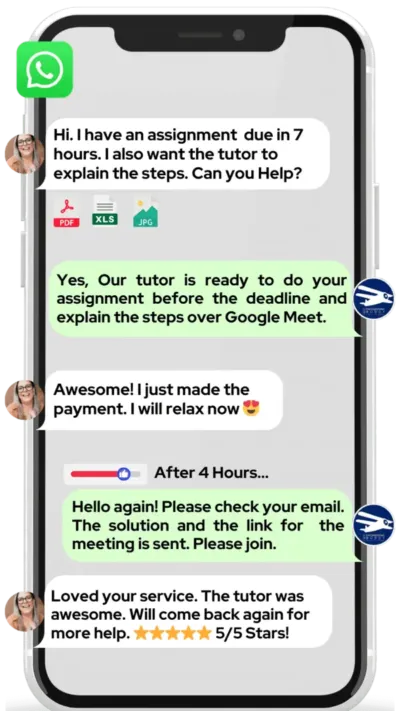



Hire The Best Surface chemistry Tutor
Top Tutors, Top Grades. Without The Stress!
Most students hit a wall at adsorption isotherms or catalytic mechanisms — surface chemistry is where physical and chemical reasoning collide, and a single conceptual gap can cost you the whole section.
Surface Chemistry Tutor Online
Surface chemistry is the branch of chemistry that studies physical and chemical phenomena occurring at the interface of two phases — solid-liquid, solid-gas, or liquid-gas — covering adsorption, catalysis, colloids, and emulsions.
If you’ve searched for a surface chemistry tutor near me, MEB offers 1:1 online tutoring and homework help in surface chemistry and 2,800+ other advanced subjects — part of our wider chemistry tutoring programme. Tutors are matched to your exact syllabus, your exam board, and your timeline. One targeted session can close a gap that weeks of re-reading hasn’t.
- 1:1 online sessions aligned to your course, exam board, or university module
- Expert-verified tutors with subject-specific knowledge in surface and physical chemistry
- Flexible time zones — US, UK, Canada, Australia, and the Gulf covered
- Structured learning plan built after a diagnostic session
- Ethical homework and assignment guidance — you understand the work, then submit it yourself
52,000+ students across the US, UK, Canada, Australia, and the Gulf have used MEB since 2008 — including students in Chemistry subjects like surface chemistry, physical chemistry, and chemical kinetics.
Source: My Engineering Buddy, 2008–2025.
How Much Does a Surface Chemistry Tutor Cost?
Most surface chemistry sessions run $20–$40/hr depending on level and topic complexity. Advanced university modules or graduate-level colloid science can reach higher rates. New students can start with a $1 trial — 30 minutes of live tutoring or one homework question explained in full.
| Level / Need | Typical Rate | What’s Included |
|---|---|---|
| Standard (A Level, first-year undergrad) | $20–$35/hr | 1:1 sessions, homework guidance |
| Advanced / Specialist (graduate, research) | $35–$100/hr | Expert tutor, niche depth, lab report guidance |
| $1 Trial | $1 flat | 30 min live session or 1 homework question explained |
Tutor availability tightens around end-of-semester submission deadlines and A Level / IB exam windows — book early if your timeline is tight.
WhatsApp MEB for a quick quote — average response time under 1 minute.
Who This Surface Chemistry Tutoring Is For
Surface chemistry sits at the intersection of physical chemistry and materials science. It rewards conceptual clarity more than rote memorisation — which is exactly where most students get into difficulty.
- Undergraduate chemistry students stuck on adsorption isotherms, Freundlich vs Langmuir, or colloid stability
- A Level and IB students who need to nail the catalysis and colloids sections before their final papers
- Students retaking after a failed first attempt who need to identify exactly where marks were lost
- Students with a university conditional offer depending on their chemistry grade
- Graduate students working on surface-active systems, thin films, or heterogeneous catalysis who need a research-aligned tutor
- Students who need homework and assignment guidance — explained step by step so they understand before they submit
Students have gone on to programmes in materials science, chemical engineering, and pharmaceutical sciences at universities including MIT, Imperial College London, University of Toronto, ETH Zürich, University of Melbourne, McGill, and the University of Edinburgh.
1:1 Tutoring vs Self-Study vs AI vs YouTube vs Online Courses
Self-study works if you have strong foundations — but surface chemistry has enough conceptual nuance that most students need feedback, not just more reading. AI tools explain adsorption equations quickly but can’t see where your reasoning breaks down mid-problem. YouTube covers the Langmuir isotherm in overview but won’t catch the sign error in your derivation. Online courses move at a fixed pace with no room for your specific gaps. 1:1 tutoring with MEB is calibrated to your exact module — whether that’s IUPAC-standard colloid chemistry or heterogeneous catalysis at graduate level — and corrects errors the moment they appear.
Outcomes: What You’ll Be Able To Do in Surface Chemistry
After working with an online surface chemistry tutor through MEB, you’ll be able to solve adsorption isotherm problems using both Langmuir and Freundlich models, explain the mechanism of heterogeneous catalysis with reference to adsorption and desorption steps, analyze the stability of colloidal dispersions using zeta potential and the DLVO framework, apply the Gibbs adsorption equation to real liquid-gas interfaces, and write structured exam answers that correctly distinguish between physisorption and chemisorption in context. These aren’t abstract skills — they’re the specific competencies that separate a B from an A in surface chemistry examinations at A Level, IB, and first-year university level.
Based on feedback from 40,000+ sessions collected by MEB from 2022 to 2025, 58% of students improved by one full grade after approximately 20 hours of 1:1 tutoring in subjects like surface chemistry. A further 23% achieved at least a half-grade improvement.
Source: MEB session feedback data, 2022–2025.
Supporting a student through surface chemistry? MEB works directly with parents to set up sessions, track progress, and keep coursework on schedule. WhatsApp MEB — average response time is under a minute, 24/7.
What We Cover in Surface Chemistry (Syllabus / Topics)

Track 1: Adsorption and Interfaces
- Physisorption vs chemisorption — definitions, energy differences, reversibility
- Langmuir adsorption isotherm — derivation, assumptions, linearisation
- Freundlich isotherm — empirical basis, log-log plotting, limitations
- BET theory — multilayer adsorption, surface area measurement
- Gibbs adsorption equation — derivation and application to liquid-gas interfaces
- Factors affecting adsorption: temperature, pressure, surface area, adsorbate nature
- Applications: gas masks, water purification, chromatography
Core texts: Atkins’ Physical Chemistry (Atkins & de Paula), Surface Chemistry of Solid and Liquid Interfaces (Birdi), and Elements of Physical Chemistry (Atkins & de Paula, condensed edition).
Track 2: Colloids and Emulsions
- Types of colloids: sols, gels, aerosols, emulsions, foams
- Preparation and purification methods: peptisation, dialysis, ultrafiltration
- Colloidal stability — zeta potential, DLVO theory, Schulze-Hardy rule
- Tyndall effect and Brownian motion — physical basis and diagnostic value
- Coagulation and flocculation: electrolyte concentration effects
- Emulsions — oil-in-water vs water-in-oil, role of emulsifiers
- Industrial applications: paints, food science, pharmaceuticals
Core texts: Introduction to Colloid and Surface Chemistry (Shaw), Colloid Science (Evans & Wennerström), and Physical Chemistry of Surfaces (Adamson & Gast).
Track 3: Catalysis and Surface Reactions
- Homogeneous vs heterogeneous catalysis — mechanistic distinctions
- Steps in heterogeneous catalysis: adsorption, surface reaction, desorption
- Enzyme catalysis as biological surface chemistry — active site analogy
- Promoters and catalyst poisoning — industrial significance
- Haber process and Contact process as surface chemistry case studies
- Nanocatalysis — role of surface area and particle size
- Zeolites and shape-selective catalysis
Core texts: Principles of Adsorption and Reaction on Solid Surfaces (Masel), Catalysis: An Integrated Approach (van Santen et al.), and Atkins’ Physical Chemistry (Atkins & de Paula).
At MEB, we’ve found that surface chemistry problems trip students up most often not because the maths is hard, but because the conceptual model underneath it is shaky. Fix the model first — the equations follow naturally.
What a Typical Surface Chemistry Session Looks Like
The tutor opens by checking the previous topic — usually the Langmuir isotherm derivation or a colloidal stability calculation the student attempted independently. From there, the session moves into the current problem set: both tutor and student work on screen, with the tutor using a digital pen-pad to annotate adsorption curves, sketch zeta potential diagrams, or step through a BET surface area calculation live. The student then replicates the method or explains the reasoning back in their own words — the tutor listens for where the logic breaks. The session closes with a specific practice task (typically two unseen isotherm questions or one colloid stability problem) and a clear note on what gets covered next — often the Gibbs adsorption equation or the electrokinetic properties of colloids.
How MEB Tutors Help You with Surface Chemistry (The Learning Loop)
Diagnose: In the first session, the tutor identifies exactly which concepts are missing — not just “adsorption” as a whole, but whether the student can correctly apply Langmuir assumptions or is confusing the role of temperature in physisorption vs chemisorption.
Explain: The tutor works through live problems using a digital pen-pad — annotating equations, drawing interface diagrams, and building the conceptual picture before any numbers appear. This is where students who’ve been re-reading textbooks for weeks finally see why the equation behaves the way it does.
Practice: The student attempts problems with the tutor present. Not watching — present. The tutor sees the approach as it develops and can redirect before a bad habit gets reinforced.
Feedback: Every error gets a step-by-step explanation of what went wrong and why marks would have been lost in an exam context. This is where analytical chemistry students in particular notice the biggest jump — the feedback is mark-scheme aware, not just conceptually correct.
Plan: After each session, the tutor maps what comes next — next topic, practice tasks, anything to review before the following session. The sequence is built around the student’s actual exam date or coursework deadline.
Sessions run over Google Meet. The tutor uses a digital pen-pad or iPad with Apple Pencil. Before your first session, share your exam board and syllabus (or course outline), a recent past paper attempt or problem set you struggled with, and your exam or deadline date. The first session starts with a short diagnostic, then moves directly into content.
Start with the $1 trial — 30 minutes of live tutoring that also serves as your first diagnostic session.
Try your first session for $1 — 30 minutes of live 1:1 tutoring or one homework question explained in full. No registration. No commitment. WhatsApp MEB now and get matched within the hour.
Tutor Match Criteria (How We Pick Your Tutor)
Tutor matching isn’t random. Every placement is made against specific criteria.
Subject depth: The tutor must have demonstrable knowledge of the student’s specific level — A Level colloidal chemistry is different from graduate-level DLVO theory, and the tutor is matched accordingly. For students working on chemical equilibrium or solid-state chemistry alongside surface chemistry, cross-topic tutors are available.
Tools: Every tutor uses Google Meet and a digital pen-pad or iPad with Apple Pencil — the session is visual and interactive, not a screen-share lecture.
Time zone: Matched to the student’s region — US, UK, Gulf, Canada, or Australia. No scheduling across 12-hour gaps.
Goals: Exam score improvement, conceptual depth for a specific module, assignment guidance, or research support at graduate level — the match reflects the actual goal.
Unlike platforms where you fill out a form and wait, MEB responds in under a minute, 24/7. Tutor match takes under an hour. The $1 trial means you test before you commit. Everything runs over WhatsApp — no logins, no intake forms.
Study Plans (Pick One That Matches Your Goal)
The tutor builds the session sequence after the diagnostic, but most surface chemistry students fall into one of three plans: a catch-up sprint (1–3 weeks, closing specific topic gaps before an exam), structured exam prep (4–8 weeks, working through adsorption, colloids, and catalysis systematically with past paper practice built in), or ongoing weekly support aligned to the semester and coursework deadlines. The plan is not fixed — it adapts as progress becomes visible.
Pricing Guide
Surface chemistry tutoring starts at $20/hr for standard A Level and first-year undergraduate modules. Graduate-level topics — thin film thermodynamics, surface spectroscopy, heterogeneous catalysis mechanisms — run higher, up to $100/hr depending on tutor specialisation and session frequency.
Rate factors include topic complexity, the student’s level, how quickly sessions need to be scheduled, and tutor availability. Peak exam windows — May/June for A Level and IB, December for US university finals — see reduced availability.
For students targeting materials science research programmes, chemical engineering graduate schools, or pharmaceutical R&D roles, tutors with active research or industry backgrounds in surface science are available at higher rates — share your specific goal and MEB will match the tier to your ambition.
Start with the $1 trial — 30 minutes, no registration, no commitment. WhatsApp MEB for a quick quote.
Students consistently tell us that the first session feels different from anything they’ve tried before — not because of what the tutor says, but because of what the tutor hears. The diagnostic catches things a student didn’t know they were getting wrong.
FAQ
Is surface chemistry hard?
It’s conceptually demanding rather than computationally complex. Most students struggle with the Langmuir assumptions, the physical meaning of the Gibbs adsorption equation, and distinguishing colloidal stability mechanisms — not the maths itself. One or two targeted sessions usually clear the core bottlenecks.
How many sessions are needed?
For a specific topic gap before an exam, two to four sessions often make a measurable difference. For full module coverage — adsorption, colloids, and catalysis — most students need eight to twelve hours spread over four to six weeks. The diagnostic session clarifies the exact number.
Can you help with homework and assignments?
Yes. MEB tutoring is guided learning — the tutor explains the method, works through a similar problem, and the student completes and submits their own work. See our Academic Integrity policy and Why MEB page for full details on what we help with and what we don’t.
Will the tutor match my exact syllabus or exam board?
Yes. Surface chemistry content varies between A Level boards (AQA, OCR, Edexcel), IB Chemistry, and university modules. Share your exam board and course outline before the first session. The tutor is matched to your specific syllabus — not a generic version of the subject.
What happens in the first session?
The first session starts with a short diagnostic — the tutor asks targeted questions or reviews a past paper attempt to map what’s solid and what needs work. The rest of the session goes directly into content based on what the diagnostic reveals. No time is wasted on topics already understood.
Is online tutoring as effective as in-person?
For surface chemistry specifically, online works well — the subject is diagram and equation-heavy, and a digital pen-pad on Google Meet replicates whiteboard working clearly. Many students find it easier to concentrate without the social pressure of a face-to-face setting.
Can I get surface chemistry help late at night?
Yes. MEB operates across multiple time zones and tutors are available evenings and weekends. Students in the Gulf and Australia regularly book late-night sessions. WhatsApp MEB with your time zone and preferred hours — matching happens around your schedule, not a fixed timetable.
What if I don’t get along with my assigned tutor?
Request a replacement through WhatsApp — no explanation required. MEB will match a different tutor within the hour. The $1 trial exists precisely so you can assess fit before committing to a longer block of sessions.
How do I find a surface chemistry tutor in my city?
MEB tutors are fully online, so city doesn’t limit your options — a tutor specialising in colloidal chemistry at graduate level is available whether you’re in Dubai, Toronto, or Glasgow. Online delivery means access to a deeper pool of subject-specific expertise than local in-person options typically offer.
What’s the difference between the Langmuir and Freundlich isotherms, and which does my exam expect?
Langmuir assumes monolayer adsorption on uniform sites; Freundlich is empirical and applies to heterogeneous surfaces. Most A Level and IB syllabuses require Langmuir in detail and Freundlich in outline. Your tutor will confirm exactly what your exam board demands and which form of linearisation to use.
Do surface chemistry tutors help with lab reports and coursework?
Yes — tutors can work through data analysis, help you understand what BET or zeta potential results mean, and guide the discussion and conclusion sections of a lab report. The student writes and submits the report independently; the tutor explains the science behind the results.
How do I get started?
Start with the $1 trial — 30 minutes of live tutoring or one homework question explained in full. Three steps: WhatsApp MEB, get matched to a verified surface chemistry tutor within the hour, then start your trial session. No registration, no intake form, no commitment beyond $1.
Trust & Quality at My Engineering Buddy
Every MEB tutor goes through subject-specific vetting — a live demo session, degree and credential review, and ongoing student feedback monitoring. Tutors covering surface chemistry hold degrees in chemistry, chemical engineering, or materials science, and many have postgraduate or research backgrounds in surface science, catalysis, or colloid chemistry. Rated 4.8/5 across 40,000+ verified reviews on Google. That rating is maintained through a feedback loop after every session — tutors who don’t meet the standard don’t stay on the platform.
MEB tutoring is guided learning — you understand the work, then submit it yourself. For full details on what we help with and what we don’t, read our Academic Integrity policy and Why MEB.
MEB has been running since 2008 and serves students across the US, UK, Canada, Australia, the Gulf, and Europe in 2,800+ subjects. Chemistry is one of MEB’s strongest subject areas — including inorganic chemistry tutoring and organic chemistry help alongside surface chemistry. See how MEB structures its sessions in the tutoring methodology guide.
A common pattern our tutors observe is that surface chemistry students who struggled all semester can often close a two-topic gap in three sessions — once someone shows them the conceptual thread connecting adsorption, catalysis, and colloid behaviour.
Explore Related Subjects
Students studying surface chemistry often also need support in:
- Thermochemistry
- Chemical bonding
- Stoichiometry
- Quantum chemistry
- Environmental chemistry
- Polymer chemistry
- Supramolecular chemistry
Next Steps
Before your first session, have ready: your exam board and syllabus (or course outline), a recent past paper attempt or homework question you struggled with, and your exam or deadline date. The tutor handles the rest.
- Share your exam board, the topics giving you most trouble, and your current timeline
- Share your availability and time zone
- MEB matches you with a verified surface chemistry tutor — usually within the hour
- First session begins with a diagnostic so every minute is used on what actually needs work
Visit www.myengineeringbuddy.com for more on how MEB works.
WhatsApp to get started or email [email protected].
52,000+ Happy Students From Various Universities



How Much For Private 1:1 Tutoring & Hw Help?
Private 1:1 Tutoring and HW help Cost $20 – 35 per hour* on average.
Reviewed by Subject Expert
This page has been carefully reviewed and validated by our subject expert to ensure accuracy and relevance.

