

Hire Verified & Experienced
Chemical Bonding Tutors
Email: [email protected]
4.8/5 40K+ session ratings collected on the MEB platform
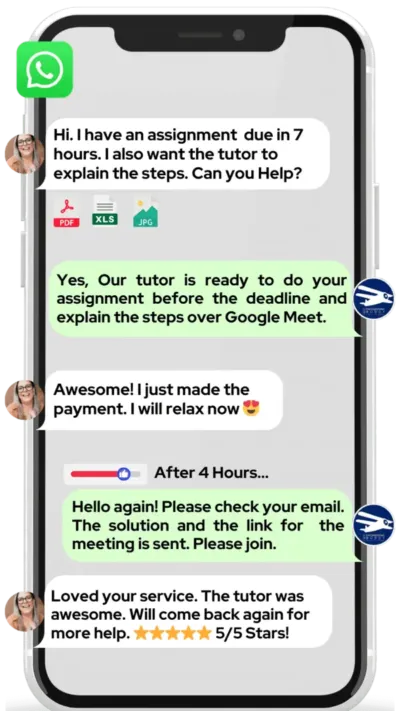



Hire The Best Chemical Bonding Tutor
Top Tutors, Top Grades. Without The Stress!
Most students don’t fail Chemical Bonding because they’re bad at chemistry — they fail because ionic, covalent, and metallic bonding look similar until the exam, and then the differences cost marks.
Chemical Bonding Tutor Online
Chemical bonding is the study of the forces holding atoms together in molecules and compounds — covering ionic, covalent, metallic, and intermolecular bonds — equipping students to predict structure, reactivity, and physical properties across chemistry courses.
If you’re searching for a Chemical Bonding tutor near me, MEB offers 1:1 online tutoring and homework help across 2,800+ advanced subjects. Our chemistry tutoring covers everything from A Level and IB through AP and university-level general chemistry. A verified tutor works through your exact syllabus — not a generic script — and you’ll leave each session understanding more than when you arrived.
- 1:1 online sessions tailored to your course or exam board syllabus
- Expert-verified tutors with subject-specific knowledge in bonding theory
- Flexible time zones — US, UK, Canada, Australia, Gulf
- Structured learning plan built after a diagnostic session
- Ethical homework and assignment guidance — you understand before you submit
52,000+ students across the US, UK, Canada, Australia, and the Gulf have used MEB since 2008 — including students in Chemistry subjects like Chemical Bonding, Atomic Structure, and General Chemistry.
Source: My Engineering Buddy, 2008–2025.
How Much Does a Chemical Bonding Tutor Cost?
Rates start at $20–$40/hr for most levels — A Level, IB, AP, and first-year university. Graduate and specialist bonding theory (molecular orbital theory, coordination chemistry, quantum mechanical models) runs up to $100/hr. The $1 trial gives you 30 minutes of live tutoring or one homework question explained in full before you commit to anything.
| Level / Need | Typical Rate | What’s Included |
|---|---|---|
| Standard (A Level, IB, AP, first year) | $20–$35/hr | 1:1 sessions, homework guidance |
| Advanced / Specialist (graduate, MO theory) | $35–$100/hr | Expert tutor, niche depth |
| $1 Trial | $1 flat | 30 min live session or 1 homework question |
Tutor availability in Chemical Bonding tightens fast in the weeks before AP May exams and A Level summer sittings. Book early.
WhatsApp MEB for a quick quote — average response time under 1 minute.
Who This Chemical Bonding Tutoring Is For
Chemical Bonding trips up students at every level — not because the concepts are impossible, but because each new topic (VSEPR, hybridisation, molecular orbital diagrams) builds directly on the last. One missed session can create a gap that compounds fast.
- A Level and IB students struggling with electron pair geometry or lattice energy calculations
- AP Chemistry students working through bonding and intermolecular forces before the May exam
- First and second year undergraduates at universities like MIT, UCL, University of Toronto, ETH Zürich, ANU, or NYU who need to close gaps in molecular orbital theory or VSEPR
- Graduate students whose research requires stronger foundations in coordination or covalent bonding
- Students retaking after a failed first attempt — especially those who lost marks on Lewis structures, bond polarity, or hybridisation questions
- Parents watching a child’s confidence drop alongside their chemistry grades
Start with the $1 trial and the tutor runs a diagnostic in the first 10 minutes — finding exactly where the gaps are, not guessing.
1:1 Tutoring vs Self-Study vs AI vs YouTube vs Online Courses
Self-study works if you’re disciplined, but Chemical Bonding has too many interconnected models to self-correct reliably. AI tools give fast explanations of Lewis structures but can’t watch you draw the wrong bond angle and fix it live. YouTube covers VSEPR geometry well up to a point — then stops when your specific exam question needs a specific answer. Online courses move at a fixed pace regardless of whether you’ve actually understood hybridisation before moving on. A 1:1 Chemical Bonding tutor online from MEB sees your actual work, corrects the actual error, and only moves forward when you’re ready.
Outcomes: What You’ll Be Able To Do in Chemical Bonding
After working with an MEB tutor, students can solve Lewis structure problems including expanded octets and formal charge assignment, analyze VSEPR geometry and predict bond angles for complex molecules, model molecular orbital diagrams for homodiatomic and small heterodiatomic species, explain lattice energy trends using Born-Haber cycles, and apply polarity and intermolecular force reasoning to predict boiling points and solubility in unfamiliar compounds. These aren’t abstract skills — they’re the exact question types that appear on AP Chemistry free-response sections and A Level Paper 2.
Supporting a student through Chemical Bonding? MEB works directly with parents to set up sessions, track progress, and keep coursework on schedule. WhatsApp MEB — average response time is under a minute, 24/7.
Based on feedback from 40,000+ sessions collected by MEB from 2022 to 2025, 58% of students improved by one full grade after approximately 20 hours of 1:1 tutoring in subjects like Chemical Bonding. A further 23% achieved at least a half-grade improvement.
Source: MEB session feedback data, 2022–2025.
What We Cover in Chemical Bonding (Syllabus / Topics)

Track 1: Foundations of Chemical Bonding (A Level, IB, AP, First Year University)
- Ionic bonding: lattice formation, charge balance, and Born-Haber cycle calculations
- Covalent bonding: Lewis structures, formal charge, resonance structures
- VSEPR theory: predicting molecular geometry and bond angles for 2–6 electron pair arrangements
- Electronegativity, bond polarity, and dipole moments
- Intermolecular forces: hydrogen bonding, van der Waals forces, dipole-dipole interactions
- Metallic bonding and the sea-of-electrons model
- Physical property prediction from bonding type — melting point, conductivity, solubility
Core texts: Atkins’ Physical Chemistry (Atkins & de Paula), Zumdahl’s Chemical Principles, and the College Board AP Chemistry course materials.
Track 2: Advanced Bonding Theory (Second Year University and Graduate Level)
- Valence bond theory: hybridisation (sp, sp², sp³, sp³d, sp³d²), sigma and pi bond formation
- Molecular orbital (MO) theory: bonding and antibonding orbitals, MO diagrams for diatomic molecules
- Bond order calculation and its link to bond length and bond energy
- Crystal field theory: splitting patterns in octahedral and tetrahedral complexes
- VSEPR extended to transition metal geometries
- Covalent bonding in polar and nonpolar contexts — charge distribution and spectroscopic prediction
Core texts: Miessler, Fischer & Tarr’s Inorganic Chemistry, Housecroft & Sharpe’s Inorganic Chemistry, Atkins’ Physical Chemistry.
Track 3: Applied and Specialist Bonding Contexts
- Bonding in coordination compounds and organometallic systems
- Supramolecular interactions — host-guest chemistry and self-assembly
- Bonding considerations in drug design and medicinal chemistry
- Solid-state bonding: band theory, semiconductors, and conduction
- Bonding in polymers — chain architecture and cross-linking
- Computational approaches to bonding: DFT basics and MO calculation outputs
Core texts: Shriver & Atkins’ Inorganic Chemistry, Leach’s Molecular Modelling, relevant literature in computational chemistry.
At MEB, we’ve found that students who struggle with hybridisation almost always have the same underlying issue — they were never shown how to count electron domains correctly before being asked to name the orbital. Fix the counting step and the hybridisation clicks within one session.
What a Typical Chemical Bonding Session Looks Like
The tutor opens by checking the previous topic — for example, whether you can correctly assign formal charges across a resonance structure without prompting. Then the session moves into the day’s work: often a specific problem type like drawing MO diagrams for O₂ and F₂, or working through a Born-Haber cycle step by step on a shared digital whiteboard. The tutor uses a digital pen-pad to annotate directly on your attempted solution — not just showing the right answer but walking through where your reasoning diverged. You replicate the problem with a new molecule. The session closes with a concrete practice task — two or three VSEPR geometry questions on compounds with lone pairs — and the next topic is noted: typically bond polarity and its link to molecular dipole moment. You leave knowing exactly what to review before the next session, and the tutor follows up with a short summary. Get Chemical Equations help alongside bonding sessions if your stoichiometry foundations need reinforcing at the same time.
How MEB Tutors Help You with Chemical Bonding (The Learning Loop)
Diagnose: In the first session, the tutor asks you to attempt a Lewis structure or a VSEPR prediction unprompted. The errors — wrong electron count, skipped formal charge check, incorrect geometry assignment — reveal exactly where the gap sits. Not where you think it is. Where it actually is.
Explain: The tutor works through a live example on the digital pen-pad, narrating every decision. For bonding, this means showing how electron domain counting drives the geometry choice — every time, not just for the textbook case.
Practice: You attempt the next problem with the tutor present. No waiting. No moving on until the method is solid.
Feedback: Errors are corrected step by step. The tutor names specifically why a mark would be lost — “that bond angle is 109.5° only when there are no lone pairs; you have one, so it’s 107°” — not just marking it wrong.
Plan: After each session the tutor sets the next topic in sequence and notes which problem types need more repetition. Chemical Bonding builds cumulatively — the plan reflects that.
Sessions run over Google Meet with a digital pen-pad or iPad and Apple Pencil. Before the first session, have your exam board and syllabus ready, plus any past paper questions or homework you’ve already attempted. Whether you need a quick catch-up before an AP exam, structured revision over four to eight weeks, or ongoing weekly support through the semester, the tutor maps the session plan after the first diagnostic.
Start with the $1 trial — 30 minutes of live tutoring that also serves as your first diagnostic.
Students consistently tell us that the moment Chemical Bonding starts making sense is when they stop memorising shapes and start predicting them. That shift — from recall to reasoning — usually happens in the second or third session, not the first.
Tutor Match Criteria (How We Pick Your Tutor)
Every tutor assigned to a Chemical Bonding student is matched on four criteria.
Subject depth: The tutor holds a degree or higher in chemistry or a closely related field, with demonstrable knowledge of your specific level — A Level, IB, AP, or university — and your exam board’s bonding content.
Tools: Every tutor uses Google Meet and a digital pen-pad or iPad with Apple Pencil — essential for live structural drawing in Chemical Bonding.
Time zone: Matched to your region — US, UK, Gulf, Canada, or Australia — so sessions run at times that actually work.
Goals: Whether you need exam score improvement, conceptual depth in MO theory, or help with physical chemistry coursework that overlaps with bonding, the tutor is matched to that specific outcome.
Unlike platforms where you fill out a form and wait, MEB responds in under a minute, 24/7. Tutor match takes under an hour. The $1 trial means you test before you commit. Everything runs over WhatsApp — no logins, no intake forms.
Study Plans (Pick One That Matches Your Goal)
After the diagnostic session, your tutor builds one of three plans: a catch-up plan (one to three weeks) for students with an exam approaching and specific gaps in VSEPR, hybridisation, or lattice energy; an exam prep plan (four to eight weeks) for structured revision through all bonding topics with past paper practice built in; or weekly support aligned to your university semester, covering each new bonding concept as your course introduces it. Get inorganic chemistry tutoring added to your plan if coordination chemistry and transition metal bonding also need attention.
Pricing Guide
Rates are $20–$40/hr for the majority of Chemical Bonding students — A Level through early undergraduate. Specialist graduate-level work, including molecular orbital calculations, crystal field theory, and computational bonding assignments, runs up to $100/hr. Rate factors include level, topic complexity, timeline, and tutor availability.
For students targeting competitive undergraduate programmes or graduate research positions where bonding theory is assessed at depth, tutors with active research backgrounds in quantum chemistry or inorganic chemistry are available at higher rates — share your specific goal and MEB will match the tier to your ambition.
Availability in Chemical Bonding tightens significantly in April and May around AP exam sittings and in May–June ahead of A Level and IB exams. Don’t wait until week five of six.
Start with the $1 trial — 30 minutes, no registration, no commitment. WhatsApp MEB for a quick quote.
Try your first session for $1 — 30 minutes of live 1:1 tutoring or one homework question explained in full. No registration. No commitment.
WhatsApp MEB now
and get matched within the hour.
FAQ
Is Chemical Bonding hard?
It’s one of the most concept-dense topics in chemistry because each model — ionic, covalent, MO theory — requires you to think differently about electrons. Most students find it hard not because the maths is difficult, but because the conceptual frameworks stack on top of each other and one shaky foundation affects everything above it.
How many sessions are needed?
Most students cover the core bonding topics — Lewis structures, VSEPR, hybridisation, intermolecular forces — in four to six sessions. Graduate-level MO theory or crystal field theory typically takes eight to twelve sessions to reach examination fluency. The tutor assesses this after the first diagnostic.
Can you help with homework and assignments?
MEB tutoring is guided learning — you understand the work, then submit it yourself. The tutor explains the method behind each bonding problem; you apply it and produce your own answers. See our Academic Integrity policy and Why MEB page for full details on what we help with and what we don’t.
Will the tutor match my exact syllabus or exam board?
Yes. When you contact MEB, share your exam board — OCR, AQA, Edexcel, IB, AP, or your university course code. The tutor is matched to that specific syllabus. Bonding coverage varies significantly between boards, and the tutor won’t waste your time on content outside your assessment.
What happens in the first session?
The tutor runs a short diagnostic — usually asking you to attempt a Lewis structure or predict a molecular geometry unprompted. This identifies exactly where your understanding is solid and where it breaks down. The rest of the session addresses the most pressing gap immediately. No time wasted on topics you already know.
Is online tutoring as effective as in-person for Chemical Bonding?
For Chemical Bonding specifically, digital pen-pad annotation on a shared screen is often clearer than a physical whiteboard — the tutor can draw directly on your attempted structure, highlight the error, and correct it in one motion. Students consistently report that the live annotation is the most useful part of the session.
Can I get Chemical Bonding help at midnight or on weekends?
MEB tutors operate across multiple time zones, and WhatsApp inquiries are answered around the clock. If your exam is in 48 hours and it’s 11pm, message anyway. Availability varies, but MEB has covered late-night and weekend requests for students in the US, Gulf, and Australia routinely since 2008.
What if I don’t understand molecular orbital theory at all — is that too far behind?
No. MEB tutors work with students who have zero prior exposure to MO theory, as well as those revising it before a graduate-level exam. The tutor calibrates the starting point to wherever you actually are. Starting from scratch in MO theory is more common than you’d think, even at second-year university level.
Do you cover the difference between ionic and covalent character — not just the bonding types themselves?
Yes. The continuum between purely ionic and purely covalent bonding — Fajans’ rules, polarisability, electronegativity differences — is a frequent exam focus that many students miss. Tutors cover this explicitly as part of the advanced bonding track. Need help with chemical equilibrium alongside bonding? That can be folded in.
What’s the difference between VSEPR and hybridisation, and why do students mix them up?
VSEPR predicts geometry from electron domains around a central atom. Hybridisation explains which atomic orbitals combine to form the bonds that create that geometry. Students conflate them because both describe molecular shape — but they answer different questions. Tutors address this distinction directly, usually in the second session.
How do I get started?
Message MEB on WhatsApp — three steps: WhatsApp MEB, get matched with a verified Chemical Bonding tutor (usually within the hour), then start the $1 trial. Thirty minutes of live tutoring or one question explained in full. No registration required.
Trust & Quality at My Engineering Buddy
Every MEB tutor goes through subject-specific screening before working with students. That means a live demo session evaluated by MEB staff, a review of their degree and academic background, and ongoing feedback monitoring through student ratings. Rated 4.8/5 across 40,000+ verified reviews on Google. For Chemical Bonding, tutors are required to demonstrate live problem-solving in Lewis structures, hybridisation, and molecular orbital diagrams — not just declare familiarity with the topic. Get organic chemistry tutoring or thermochemistry help from the same platform if those subjects are also on your course.
MEB tutoring is guided learning — you understand the work, then submit it yourself. For full details on what we help with and what we don’t, read our Academic Integrity policy and Why MEB.
MEB has served 52,000+ students across the US, UK, Canada, Australia, the Gulf, and Europe since 2008 — in 2,800+ subjects. Chemistry is one of the platform’s strongest subject areas, with particular depth in Chemical Bonding, physical chemistry, and analytical chemistry. Tutors are matched to your level, your syllabus, and your timeline — not assigned at random from a general pool. Learn more about how sessions are structured at our tutoring methodology page.
MEB has covered Chemical Bonding students from first-year university through PhD-level research since 2008 — across exam boards including AQA, OCR, Edexcel, IB, and AP Chemistry. The tutor pool spans every major assessment format this subject is taught in.
Source: My Engineering Buddy, 2008–2025.
A common pattern our tutors observe is that Chemical Bonding performance improves fastest when students stop trying to memorise every shape and instead work backwards from the electron count every single time. Consistency in method beats pattern recognition in exams.
Explore Related Subjects
Students studying Chemical Bonding often also need support in:
- Atomic Structure
- Chemical Kinetics
- Stoichiometry
- Stereochemistry
- Solid State Chemistry
- Supramolecular Chemistry
- Transition Metal Coordination Chemistry
Next Steps
Ready to get started? Here’s what to do:
- Share your exam board or course outline, your hardest bonding topic, and your exam or deadline date
- Share your time zone and availability — sessions run across US, UK, Gulf, Canada, and Australia
- MEB matches you with a verified Chemical Bonding tutor — usually within 24 hours
- The first session opens with a diagnostic so every minute is used on what actually needs work
Before your first session, have ready: your exam board and syllabus (or course outline), a recent past paper attempt or homework question you struggled with, and your exam or deadline date. The tutor handles the rest.
Visit www.myengineeringbuddy.com for more on how MEB works.
WhatsApp to get started or email [email protected].
52,000+ Happy Students From Various Universities



How Much For Private 1:1 Tutoring & Hw Help?
Private 1:1 Tutoring and HW help Cost $20 – 35 per hour* on average.
Reviewed by Subject Expert
This page has been carefully reviewed and validated by our subject expert to ensure accuracy and relevance.

