

Hire Verified & Experienced
Chemical Equilibrium Tutors
4.8/5 40K+ session ratings collected on the MEB platform
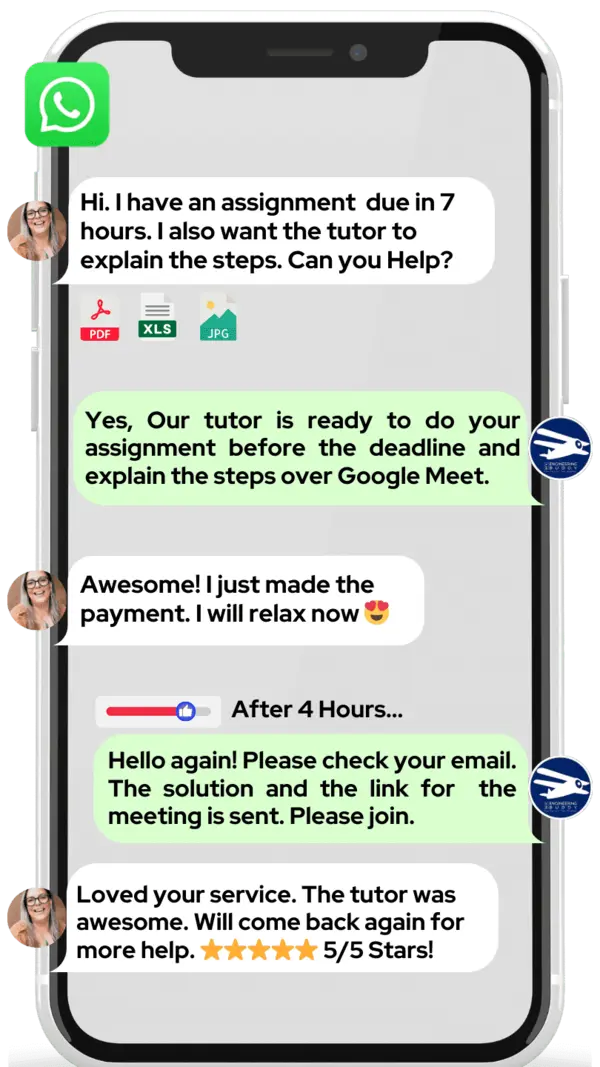



Hire The Best Chemical Equilibrium Tutor
Top Tutors, Top Grades. Without The Stress!
52,000+ Happy Students From Various Universities



How Much For Private 1:1 Tutoring & Hw Help?
Private 1:1 Tutoring and HW help Cost $20 – 35 per hour* on average.
Le Chatelier’s principle made sense in class — then the exam asked about partial pressures and buffer systems and everything fell apart.
Chemical Equilibrium Tutor Online
Chemical equilibrium is the state in a reversible reaction where the forward and reverse reaction rates are equal, producing constant concentrations of reactants and products. It underpins acid-base chemistry, solubility, and industrial synthesis at every level of chemistry study.
If you’re searching for a Chemical Equilibrium tutor near me, MEB’s 1:1 online tutoring and homework help covers every level — AP Chemistry, A Level, IB, first-year undergraduate, and beyond. Our chemistry tutoring connects you with a verified specialist who knows your syllabus, your exam board, and exactly where students drop marks. One session can shift how equilibrium problems feel — from guesswork to method.
- 1:1 online sessions tailored to your course or exam board syllabus
- Expert verified tutors with subject-specific chemistry knowledge
- Flexible time zones — US, UK, Canada, Australia, Gulf
- Structured learning plan built after a diagnostic session
- Ethical homework and assignment guidance — you understand before you submit
52,000+ students across the US, UK, Canada, Australia, and the Gulf have used MEB since 2008 — including students in Chemistry subjects like Chemical Equilibrium, Chemical Kinetics tutoring, and Thermochemistry help.
Source: My Engineering Buddy, 2008–2025.
How Much Does a Chemical Equilibrium Tutor Cost?
Most Chemical Equilibrium tutoring sessions run $20–$40/hr. Graduate-level or highly specialised work can reach $100/hr. The $1 trial gives you 30 minutes of live 1:1 tutoring or a full explanation of one homework question — no registration required.
| Level / Need | Typical Rate | What’s Included |
|---|---|---|
| AP / A Level / IB / First-Year Undergrad | $20–$35/hr | 1:1 sessions, homework guidance |
| Advanced Undergraduate / Graduate | $35–$70/hr | Expert tutor, complex equilibrium systems |
| $1 Trial | $1 flat | 30 min live session or 1 homework question |
Tutor availability tightens sharply in April and May around AP and A Level exam windows. Book early if your exam is within six weeks.
WhatsApp MEB for a quick quote — average response time under 1 minute.
Who This Chemical Equilibrium Tutoring Is For
Chemical Equilibrium trips up students at every level — not because the concept is impossible, but because equilibrium problems stack on each other fast. A gap in ICE tables at week three means buffer calculations at week eight make no sense at all.
- AP Chemistry students working through equilibrium constants, Q vs K, and Le Chatelier’s principle
- A Level and IB students who can write the equilibrium expression but lose marks on multi-step calculation questions
- First and second-year undergraduates covering acid-base equilibria, solubility products, and buffer systems
- Students retaking after a failed first attempt — particularly those who passed other chemistry units but hit a wall on equilibrium
- Students with a conditional university offer that depends on their final chemistry grade
- Parents watching a child’s confidence fall as equilibrium topics pile up in the weeks before exams
Students come to MEB from MIT, Caltech, UC Berkeley, Imperial College London, the University of Toronto, ETH Zürich, the University of Sydney, and universities across the Gulf. Whether you’re at a large research university or a smaller college, the equilibrium problems are the same — and so is the fix.
1:1 Tutoring vs Self-Study vs AI vs YouTube vs Online Courses
Self-study works if you’re disciplined — but equilibrium demands feedback, and a textbook can’t tell you where your ICE table went wrong. AI tools explain concepts quickly but can’t watch you work through a Ka problem in real time and catch the step where you dropped a negative sign. YouTube is solid for overview videos on Le Chatelier’s principle — it stops being useful when you’re stuck on a specific buffer calculation. Online courses are structured but fixed-pace, with no one to flag that your Kp-to-Kc conversions are consistently off. With MEB’s 1:1 Chemical Equilibrium tutoring, a tutor watches your working live, corrects the exact error, and adjusts the session to what you actually need in that moment.
Outcomes: What You’ll Be Able To Do in Chemical Equilibrium
After focused 1:1 sessions, students consistently move from confusion to reliable method. You’ll solve ICE table problems for weak acid and weak base equilibria without second-guessing the setup. You’ll analyze how changes in concentration, pressure, and temperature shift equilibrium position — and explain why, not just predict what. You’ll apply the reaction quotient Q to determine which direction a reaction will proceed before equilibrium is reached. You’ll model buffer behaviour using the Henderson-Hasselbalch equation and calculate pH changes after additions of strong acid or base. You’ll write and interpret equilibrium expressions for heterogeneous systems, solubility equilibria, and complex ion formation.
Supporting a student through Chemical Equilibrium? MEB works directly with parents to set up sessions, track progress, and keep coursework on schedule. WhatsApp MEB — average response time is under a minute, 24/7.
Based on feedback from 40,000+ sessions collected by MEB from 2022 to 2025, 58% of students improved by one full grade after approximately 20 hours of 1:1 tutoring in subjects like Chemical Equilibrium. A further 23% achieved at least a half-grade improvement.
Source: MEB session feedback data, 2022–2025.
What We Cover in Chemical Equilibrium (Syllabus / Topics)

Core Equilibrium Concepts
- Dynamic equilibrium — what it means and what it doesn’t
- Equilibrium constant expressions: Kc and Kp
- Relationship between Kp and Kc (using Δn and RT)
- Reaction quotient Q — direction of reaction prediction
- ICE table construction for weak acids, weak bases, and salts
- Le Chatelier’s principle — concentration, pressure, temperature, catalysts
- Kc values and their meaning: large K, small K, K near 1
Core references: Atkins’ Physical Chemistry (Atkins & de Paula), Zumdahl’s Chemistry, OpenStax Chemistry: Atoms First. For additional worked problems on equilibrium expressions and ICE tables, Khan Academy provides free step-by-step walkthroughs relevant to introductory equilibrium topics.
Acid-Base Equilibria and Buffers
- Strong and weak acid/base dissociation — Ka, Kb, pKa, pKb
- Water autoionisation and Kw
- pH calculations for weak acid and weak base solutions
- Common ion effect and its impact on equilibrium position
- Buffer systems — preparation, capacity, and Henderson-Hasselbalch
- Acid-base titrations — equivalence point, half-equivalence point
- Polyprotic acids — step-wise dissociation and approximations
Core references: Silberberg’s Chemistry: The Molecular Nature of Matter and Change, Brown et al.’s Chemistry: The Central Science, Clayden’s Organic Chemistry (for broader context).
Solubility and Complex Ion Equilibria
- Solubility product constant Ksp — expression and calculation
- Predicting precipitation using the ion product Q vs Ksp
- Effect of pH on solubility of salts with basic anions
- Complex ion formation and its effect on solubility
- Selective precipitation and qualitative analysis applications
- Thermodynamic connection: ΔG° and equilibrium constant relationship
Core references: Housecroft & Sharpe’s Inorganic Chemistry, Mortimer’s Physical Chemistry, Engel & Reid’s Physical Chemistry. Students covering Analytical Chemistry tutoring alongside equilibrium will find solubility and precipitation topics appear in both courses.
At MEB, we’ve found that students who struggle with equilibrium problems almost always have one thing in common: they’re trying to memorise procedures rather than understand what equilibrium actually means physically. Once a tutor rebuilds that conceptual foundation — usually in a single session — the calculations start falling into place on their own.
What a Typical Chemical Equilibrium Session Looks Like
The tutor opens by checking the previous topic — usually ICE tables or Le Chatelier’s principle — to see what stuck and what didn’t. From there, the session moves into the current problem area: maybe it’s pH calculations for a buffer system, or Ksp and precipitation prediction, or the relationship between ΔG° and the equilibrium constant. The tutor works through a problem live on a digital pen-pad while you watch the reasoning, not just the answer. Then you attempt a similar problem while the tutor watches, stepping in at the exact moment the logic breaks down — not after you’ve submitted a wrong answer. The session closes with a specific practice task and a note of what the next session will pick up, so no time is wasted at the start of the following hour. MEB tutors for Physical Chemistry help and equilibrium-adjacent topics follow the same structured approach.
How MEB Tutors Help You with Chemical Equilibrium (The Learning Loop)
Diagnose: In the first session, the tutor identifies exactly where your understanding breaks down — whether it’s setting up the equilibrium expression, handling the approximation for small Ka values, or confusing Q with K. This shapes every session that follows.
Explain: The tutor works through live problems using a digital pen-pad — showing the full working, naming each step, and explaining why each move is made. Not a lecture. A worked example you watch build in real time.
Practice: You attempt problems while the tutor watches. This is where the real learning happens. Errors surface immediately — not two days later when you get a marked paper back.
Feedback: The tutor goes through every error step by step, showing where marks would be lost in an exam and why. For AP Chemistry FRQ questions and A Level long-answer questions, this kind of targeted feedback is the difference between a 4 and a 5, or a B and an A.
Plan: At the end of each session, the tutor sets a specific practice task — three Ka problems, two buffer calculations — and notes the next topic. You always know what to do before the next session.
Sessions run on Google Meet. The tutor uses a digital pen-pad or iPad with Apple Pencil to write working in real time. Before your first session, have your syllabus or course outline ready, plus a recent past paper attempt or homework question you struggled with. The first session starts with a diagnostic so every minute is used well. Start with the $1 trial — 30 minutes of live tutoring that also serves as your first diagnostic.
Students consistently tell us that the biggest shift in their equilibrium understanding comes from watching a tutor work through problems out loud — not reading solutions in a textbook. When you see the thinking made visible, you can replicate it. That’s what the digital pen-pad makes possible in every session.
Tutor Match Criteria (How We Pick Your Tutor)
Not every chemistry tutor is right for every student. Here’s how MEB matches you.
Subject depth: The tutor must have covered Chemical Equilibrium at or above your level — whether that’s AP Chemistry, A Level, IB HL, or undergraduate physical chemistry. Exam board knowledge matters: OCR, AQA, Edexcel, and College Board syllabuses handle equilibrium differently.
Tools: Every MEB tutor works on Google Meet with a digital pen-pad or iPad and Apple Pencil — no static slides, no typing in chat boxes.
Time zone: Matched to your region — US, UK, Gulf, Canada, Australia — so sessions happen at times that work, not times that are merely available.
Goals: Exam score targets, conceptual depth for further study, homework completion, or research support at graduate level. The tutor is matched to what you actually need.
Unlike platforms where you fill out a form and wait, MEB responds in under a minute, 24/7. Tutor match takes under an hour. The $1 trial means you test before you commit. Everything runs over WhatsApp — no logins, no intake forms.
Study Plans (Pick One That Matches Your Goal)
After the diagnostic session, the tutor builds the exact sequence — but here are the three starting points. Catch-up (1–3 weeks): for students who have fallen behind on equilibrium topics and need to close specific gaps before an upcoming exam. Exam prep (4–8 weeks): structured revision tied to your exam date, working through past papers, FRQs, or A Level long-answer questions with full mark-scheme analysis. Weekly support: ongoing sessions aligned to your semester timetable, covering topics as they appear in your course. Students taking General Chemistry tutoring or moving into Physical Chemistry help often use the weekly support plan across a full semester.
Pricing Guide
Chemical Equilibrium tutoring starts at $20/hr for AP, A Level, IB, and first-year undergraduate levels. Advanced undergraduate and graduate sessions — covering thermodynamic derivations of equilibrium, activity-based equilibrium constants, or equilibrium in non-ideal systems — run $35–$70/hr. Rate factors include topic complexity, your timeline, and tutor availability.
For students targeting top universities or graduate chemistry programmes, tutors with research backgrounds in physical chemistry or Inorganic Chemistry help are available at higher rates — share your specific goal and MEB matches the tier to your ambition.
Availability tightens in April and May around AP and A Level exam periods. If you’re within six weeks of an exam, book now.
Start with the $1 trial — 30 minutes, no registration, no commitment. WhatsApp MEB for a quick quote.
MEB has served 52,000+ students since 2008, with a 4.8/5 rating across verified reviews. Tutors are available 24/7 across all major time zones — sessions can start within the hour of your first WhatsApp message.
Source: My Engineering Buddy, 2008–2025.
FAQ
Is Chemical Equilibrium hard?
It’s one of the more conceptually demanding chemistry topics — not because the maths is complex, but because the logic is different from most problems students encounter before it. Once the underlying concept is clear, the calculations become manageable. Most students need 3–5 sessions to reach that point.
How many sessions are needed?
Students with one or two specific gaps — ICE tables or Le Chatelier’s applications — typically need 3–5 sessions. Students building from a weak foundation across all equilibrium topics usually need 8–12 sessions over 4–6 weeks. The tutor assesses this after the first diagnostic.
Can you help with homework and assignments?
Yes. MEB tutoring is guided learning — you understand the work, then submit it yourself. See our Academic Integrity policy and Why MEB page for full details on what we help with and what we don’t.
Will the tutor match my exact syllabus or exam board?
Yes. AP Chemistry, AQA, OCR, Edexcel, Cambridge International, IB Chemistry HL/SL, and university-level physical chemistry courses each handle equilibrium topics differently. Tell MEB your board and course on first contact — the tutor match reflects that exactly.
What happens in the first session?
The tutor runs a short diagnostic — asking you to attempt a representative equilibrium problem while they observe — then identifies the exact gaps. From that point, the session and all future sessions are planned around what you actually need, not a generic curriculum sequence.
Is online tutoring as effective as in-person?
For equilibrium specifically, it’s often more effective. The digital pen-pad gives you a clearer view of worked problems than a whiteboard across a table. Google Meet screen sharing means the tutor can annotate your own working directly. Most MEB students who have tried both prefer the online format.
Can I get Chemical Equilibrium help at midnight or on weekends?
Yes. MEB operates 24/7 across all time zones. Students in the US, UK, Gulf, and Australia regularly book late-evening and weekend sessions. WhatsApp MEB any time — the average first response is under a minute regardless of when you message.
What if I don’t like my assigned tutor?
Tell MEB via WhatsApp and you’ll be rematched — usually within the same day. The $1 trial exists precisely so you can assess fit before committing to a full session package. No awkward conversations, no forms to fill in.
Do you offer group Chemical Equilibrium sessions?
MEB’s model is exclusively 1:1. Group sessions dilute the diagnostic element — the tutor can’t watch one student’s working while another attempts a problem. Every session is calibrated to the individual student’s gaps, which is not possible in a group format.
How do I find a Chemical Equilibrium tutor in my city?
You don’t need to. MEB’s tutoring is fully online — Google Meet, digital pen-pad, no travel. Students in New York, London, Dubai, Toronto, and Sydney all access the same tutor pool. Location is never a limiting factor.
What is the difference between Kc and Kp, and why do students keep confusing them?
Kc uses molar concentrations; Kp uses partial pressures of gases. Students confuse them because both describe the same equilibrium state — they’re related by the equation Kp = Kc(RT)^Δn. A tutor can show exactly when each applies and how to convert between them without errors.
How do I get started?
Message MEB on WhatsApp — you’ll be matched with a verified Chemical Equilibrium tutor within the hour. First step is the $1 trial: 30 minutes of live 1:1 tutoring or one homework question explained in full. Three steps: WhatsApp → matched → start trial.
Trust & Quality at My Engineering Buddy
Every MEB tutor goes through subject-specific screening — not a general chemistry test, but a review of their equilibrium knowledge at the level they’ll be teaching. Tutors submit to a live demo evaluation before being assigned to students, and ongoing session feedback is reviewed regularly. All tutors hold degrees in chemistry or closely related disciplines; many have research or teaching experience at university level. Rated 4.8/5 across 40,000+ verified reviews on Google.
MEB tutoring is guided learning — you understand the work, then submit it yourself. For full details on what we help with and what we don’t, read our Academic Integrity policy and Why MEB.
MEB has been running since 2008, serving 52,000+ students across the US, UK, Canada, Australia, the Gulf, and Europe in 2,800+ subjects. Chemistry is one of MEB’s strongest subject families — tutors cover everything from General Chemistry tutoring at introductory level through to Quantum Chemistry help at graduate level. The MEB tutoring methodology — diagnose, explain, practice, feedback, plan — applies consistently across every Chemical Equilibrium session.
A common pattern our tutors observe is that students come to equilibrium sessions believing they have a calculation problem. In most cases, they have a conceptual problem — they don’t have a clear picture of what equilibrium physically means. Fixing that first makes everything else faster.
Explore Related Subjects
Students studying Chemical Equilibrium often also need support in:
- Stoichiometry
- Atomic Structure
- Chemical Bonding
- Chemical Equations
- Ideal Gas Law
- Catalysis
- Organic Chemistry
Next Steps
When you message MEB, have these ready:
- Your exam board and syllabus (or course outline and current topic)
- A recent past paper attempt or homework question you struggled with
- Your exam or deadline date and your available time zones
MEB matches you with a verified Chemical Equilibrium tutor — usually within 24 hours, often within the hour. The first session starts with a diagnostic so every minute is used well. Visit www.myengineeringbuddy.com for more on how MEB works.
WhatsApp to get started or email meb@myengineeringbuddy.com.
Try your first session for $1 — 30 minutes of live 1:1 tutoring or one homework question explained in full. No registration. No commitment. WhatsApp MEB now and get matched within the hour.
Reviewed by Subject Expert
This page has been carefully reviewed and validated by our subject expert to ensure accuracy and relevance.

