~1 min
Average Reply Time
~1 hour
To Be Matched With A Tutor
30 Min Trial
75% Find Their Tutor On The 1st Trial
$20-35+/hr
Premium Yet Affordable Learning
Hire The Best MPLAB Tutor

Stuck on MPLAB X IDE configuration or PIC peripheral registers? Most students lose 3–4 weeks before they find the right help.
MPLAB Tutor Online
MPLAB is Microchip Technology’s integrated development environment for PIC and dsPIC microcontrollers, used to write, compile, debug, and simulate embedded C or assembly programs targeting hardware peripherals and real-time control systems.
Finding a reliable MPLAB tutor near me is harder than it sounds — most general programming tutors don’t know PIC architecture, and most EE tutors haven’t touched MPLAB X IDE in years. MEB connects you with tutors who work in mechatronics and embedded systems daily. One structured diagnostic session is usually enough to identify exactly where your understanding breaks down — and from there, progress is fast.
- 1:1 online sessions matched to your course syllabus and microcontroller family
- Tutors with hands-on PIC, dsPIC, and MPLAB X IDE experience
- Flexible scheduling across US, UK, Canada, Australia, and Gulf time zones
- Structured learning plan built after a first-session diagnostic
- Ethical homework and assignment guidance — you understand the work, then submit it yourself
52,000+ students across the US, UK, Canada, Australia, and the Gulf have used MEB since 2008 — including students in mechatronics subjects like MPLAB, PIC Microcontroller programming, and Real-Time Systems (RTOS).
Source: My Engineering Buddy, 2008–2025.
How Much Does a MPLAB Tutor Cost?
Most MPLAB tutoring sessions run $20–$40/hr depending on the level and complexity of the embedded systems work involved. Graduate-level or project-intensive sessions can reach $60–$100/hr. The $1 trial gets you 30 minutes of live tutoring or one homework question explained in full — no registration, no commitment.
| Level / Need | Typical Rate | What’s Included |
|---|---|---|
| Undergraduate (standard modules) | $20–$35/hr | 1:1 sessions, homework guidance, IDE walkthroughs |
| Advanced / Graduate / Project-Heavy | $35–$100/hr | Expert tutor, peripheral configuration, embedded C depth |
| $1 Trial | $1 flat | 30 min live session or one homework question explained in full |
Tutor availability tightens significantly during end-of-semester project submission windows. Book early if your deadline is within four weeks.
WhatsApp MEB for a quick quote — average response time under 1 minute.
Who This MPLAB Tutoring Is For
If you’re dealing with MPLAB X IDE errors you can’t decode, peripheral registers that won’t behave, or embedded C logic that compiles but does nothing useful — this is the right page. MPLAB tutoring at MEB works for a wide range of students and situations.
- Undergraduate electrical, computer, and mechatronics engineering students taking embedded systems modules
- Graduate students working on microcontroller-based research or capstone projects
- Students retaking a failed embedded systems unit who need to close specific gaps fast
- Students with a conditional university offer that depends on passing this module
- Engineers in industry learning MPLAB X and XC8/XC16 compilers for the first time
- Students at universities including MIT, Georgia Tech, University of Michigan, University of Toronto, Imperial College London, and TU Delft who work with PIC-based lab kits
At MEB, we’ve found that the majority of MPLAB students who struggle aren’t weak at coding — they’ve never been shown how MPLAB X IDE, the XC8 compiler, and the PIC hardware actually talk to each other. Once that connection is made, everything else clicks within a few sessions.
1:1 Tutoring vs Self-Study vs AI vs YouTube vs Online Courses
Self-study works if your datasheet reading is strong — but most students hit a wall with PIC peripheral configuration and have no one to ask. AI tools explain concepts but can’t see your MPLAB X project, can’t spot your fuse bit error, and can’t run your code. YouTube has solid overviews of PIC architecture, but the video stops when your specific interrupt flag won’t clear. Online courses cover MPLAB basics at a fixed pace with no personalisation. With a 1:1 MPLAB tutor online from MEB, the tutor sees your exact project, reads your exact error, and corrects your reasoning in the moment — not after you’ve spent two hours on a forum.
Outcomes: What You’ll Be Able To Do in MPLAB
After structured 1:1 sessions, students consistently report concrete capability gains — not just “I understand it better.” Solve GPIO, UART, SPI, and I2C peripheral configuration problems without consulting forums for every register bit. Analyze interrupt-driven code and explain exactly why timing issues occur and how to fix them. Write clean embedded C in MPLAB X IDE using XC8 or XC16 compilers with correct project and linker settings. Apply PICkit debugging techniques to step through code and identify where program flow breaks. Present a working microcontroller project — from schematic to flashed hardware — in a viva or lab submission.
Based on feedback from 40,000+ sessions collected by MEB from 2022 to 2025, 58% of students improved by one full grade after approximately 20 hours of 1:1 tutoring in subjects like MPLAB. A further 23% achieved at least a half-grade improvement.
Source: MEB session feedback data, 2022–2025.
Supporting a student through MPLAB? MEB works directly with parents to set up sessions, track progress, and keep coursework on schedule. WhatsApp MEB — average response time is under a minute, 24/7.
Try your first session for $1 — 30 minutes of live 1:1 tutoring or one homework question explained in full. No registration. No commitment. WhatsApp MEB now and get matched within the hour.
What We Cover in MPLAB (Syllabus / Topics)

Track 1: MPLAB X IDE and Compiler Fundamentals
- Setting up MPLAB X IDE projects — device selection, compiler toolchain (XC8, XC16, XC32)
- Configuration bits and fuse settings — oscillator, watchdog timer, brownout reset
- Memory architecture: program memory, data memory, special function registers (SFRs)
- Building, compiling, and resolving linker errors in MPLAB X
- Using the MPLAB Code Configurator (MCC) to generate peripheral driver code
- Debugging with PICkit 3/4 — breakpoints, watch windows, register inspection
Core texts: Embedded C Programming and the Microchip PIC by Richard Barnett; PIC Microcontroller and Embedded Systems by Muhammad Ali Mazidi.
Track 2: PIC Peripheral Configuration and Embedded C
- GPIO configuration — TRIS, LAT, PORT registers; digital I/O and open-drain modes
- Timer modules — Timer0, Timer1, Timer2; prescaler calculation, period register setup
- Interrupt handling — global interrupt enable, peripheral interrupt flags, ISR structure
- ADC module — channel selection, acquisition time, conversion result registers
- UART serial communication — baud rate calculation, transmit/receive interrupt handling
- SPI and I2C protocols — master/slave configuration, clock polarity, address handling
- PWM generation — CCP module, duty cycle calculation, motor and LED control
Core texts: Programming 16-Bit PIC Microcontrollers in C by Lucio Di Jasio; Microchip PIC18F datasheet series (device-specific, freely available from NIST Engineering Laboratory adjacent standards are referenced; primary source is Microchip Technology documentation).
Track 3: System Integration and Project Work
- Interfacing PIC with sensors — temperature (DS18B20, LM35), ultrasonic (HC-SR04), accelerometers
- LCD and OLED display interfacing — HD44780 protocol, I2C display drivers
- Wireless communication — integrating MPLAB projects with ESP8266 via UART
- State machine design and implementation in embedded C
- Real-time task scheduling — cooperative multitasking, delay loops, timer-based scheduling
- PCB integration and hardware debugging — oscilloscope use, logic analyser basics
Core texts: Real-Time Embedded Systems by Xiaocong Fan; course lab manuals from your institution (bring yours to the first session).
Platforms, Tools & Textbooks We Support
MPLAB tutoring at MEB is built around the actual tools students use in lab and on assignments. Tutors work directly within your environment — no time wasted translating between platforms.
- MPLAB X IDE (v5.x and v6.x)
- XC8, XC16, and XC32 compilers
- MPLAB Code Configurator (MCC) and MCC Melody
- PICkit 3 and PICkit 4 debuggers/programmers
- Proteus Design Suite (for simulation — see also Proteus simulation tutoring)
- Google Meet with digital pen-pad for live circuit and code annotation
What a Typical MPLAB Session Looks Like
The tutor opens by checking where the previous session ended — usually a specific peripheral like the ADC module or a UART baud rate mismatch that was left half-resolved. You share your MPLAB X project via screen share, and the tutor reads through your configuration bits, your SFR assignments, and your interrupt service routine. You work through the problem together on screen — the tutor uses a digital pen-pad to annotate the datasheet register map and mark exactly which bits you’ve set wrong and why. Then you replicate the fix yourself, with the tutor watching and correcting your reasoning in real time. The session closes with a specific task: configure the Timer1 interrupt for a 100ms period on your own before the next session, using the prescaler table from the datasheet.
How MEB Tutors Help You with MPLAB (The Learning Loop)
Diagnose: In the first session, the tutor identifies the real problem — usually one of three things: wrong mental model of PIC memory organisation, incorrect peripheral initialisation sequence, or compiler settings that don’t match the device. Most students arrive thinking they have a code problem. Often it’s a config bit.
Explain: The tutor works through a live example on your actual project file — not a generic demo. Every register write is explained at the bit level. The digital pen-pad annotates the datasheet in real time so you see exactly what you’re configuring and why.
Practice: You attempt the next peripheral configuration yourself, with the tutor present. This isn’t passive watching — you write the code, you set the registers, and the tutor observes where your reasoning drifts.
Feedback: When an error appears, the tutor traces it back to its source — not just “that line is wrong” but exactly which datasheet section you misread and how to avoid repeating the mistake. This is how exam and lab marks are actually recovered.
Plan: Each session ends with the next topic confirmed and a short independent task set. Progress is tracked across sessions so nothing is revisited unnecessarily.
Sessions run over Google Meet. The tutor uses a digital pen-pad or iPad with Apple Pencil for circuit diagrams and register annotations. Before your first session, have your MPLAB X project file ready, your device datasheet downloaded, and your most recent lab sheet or assignment brief on hand. The first session will cover your exact configuration problem and map out the remaining work.
Start with the $1 trial — 30 minutes of live tutoring that also serves as your first diagnostic.
Students consistently tell us that the moment MPLAB “clicks” is when they stop memorising register names and start reading the datasheet with purpose. That shift usually takes one or two sessions with the right tutor. It rarely happens alone.
MEB has supported embedded systems students since 2008 — across MPLAB, Arduino Uno projects, STM32 development, and beyond. The platform covers 2,800+ subjects at undergraduate and graduate level.
Source: My Engineering Buddy, 2008–2025.
Tutor Match Criteria (How We Pick Your Tutor)
Not every embedded systems tutor is right for MPLAB. MEB matches on four specific criteria.
Subject depth: Tutor must have direct MPLAB X IDE experience with the PIC family relevant to your course — PIC16, PIC18, dsPIC33, or PIC32 — and familiarity with your compiler version (XC8 vs XC16 matters).
Tools: All sessions run over Google Meet with a digital pen-pad or iPad and Apple Pencil — essential for datasheet annotation and live circuit walkthroughs.
Time zone: Matched to your region — US, UK, Canada, Australia, or Gulf — so late-night deadline sessions are actually possible.
Goals: Whether you need to pass a specific lab assessment, debug a final-year project, or build a working understanding of embedded C from scratch, the tutor is briefed on your objective before session one.
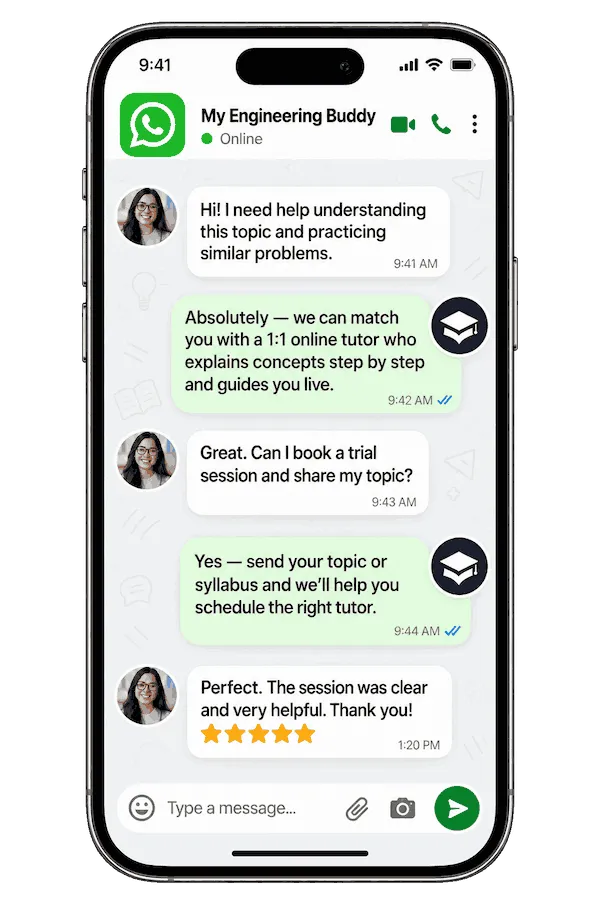
Unlike platforms where you fill out a form and wait, MEB responds in under a minute, 24/7. Tutor match takes under an hour. The $1 trial means you test before you commit. Everything runs over WhatsApp — no logins, no intake forms.
Study Plans (Pick One That Matches Your Goal)
Catch-up (1–3 weeks): for students behind on lab work or with a specific peripheral they can’t get working before submission. Tutor focuses on the immediate gap — one peripheral family, one project component. Exam prep (4–8 weeks): structured revision across GPIO, timers, interrupts, ADC, and serial communication — aligned to past lab papers and viva questions. Weekly support: ongoing sessions timed to coursework deadlines and lab submission dates. The tutor builds your specific sequence after the first diagnostic — nothing is assumed.
Pricing Guide
Standard MPLAB tutoring runs $20–$40/hr for most undergraduate modules. Advanced topics — dsPIC DSP programming, RTOS integration, or custom bootloader development — typically fall in the $60–$100/hr range depending on tutor expertise and timeline.
Rate factors: device family, topic complexity, how close your deadline is, and tutor availability. Availability tightens in April–May and November–December when embedded systems project submissions cluster.
For students targeting positions at aerospace, automotive, or industrial control firms, tutors with professional embedded systems backgrounds are available at higher rates — share your specific goal and MEB will match the tier to your ambition.
Start with the $1 trial — 30 minutes, no registration, no commitment. WhatsApp MEB for a quick quote.
FAQ
Is MPLAB hard to learn?
MPLAB X IDE itself is manageable — the real difficulty is understanding how the IDE, the XC8/XC16 compiler, and PIC hardware registers interact. Students who struggle usually haven’t been shown how to read a datasheet systematically. That gap closes quickly with guided sessions.
How many sessions will I need?
Most students working on a single embedded systems module need 8–15 hours to cover the key peripheral families and confidently debug their own code. Students with a specific lab deadline or one blocked concept often resolve it in 2–4 focused sessions.
Can you help with homework and assignments?
Yes — MEB tutoring is guided learning. The tutor explains the concept and works through a similar example; you apply it and submit your own work. See our Academic Integrity policy and Why MEB page for full details on what we help with and what we don’t.
Will the tutor match my exact syllabus or exam board?
Yes. Tutors are matched to your specific PIC device family, compiler version, and course lab requirements. Before the first session, share your lab sheet or assignment brief — the tutor reviews it and structures the session around your exact deliverable.
What happens in the first session?
The tutor runs a short diagnostic — reviews your current MPLAB X project, your configuration bits, and the specific error or concept you’re stuck on. From there, the session moves directly into working through the problem. No time spent on things you already know.
Is online MPLAB tutoring as effective as in-person?
For MPLAB specifically, online is often better — screen share lets the tutor see your exact IDE environment, project settings, and code in real time. Digital pen-pad annotation on datasheets works as well as a whiteboard, and you keep the annotated files after every session.
Can I get MPLAB help at midnight or on weekends?
Yes. MEB operates 24/7 across time zones. Students in the Gulf, Australia, and the US West Coast regularly book late-night sessions. WhatsApp MEB with your availability and you’ll typically be matched within an hour, regardless of the time.
What if I don’t get on with my assigned tutor?
Request a change via WhatsApp — no forms, no delay. MEB reassigns based on your feedback. Most students are matched correctly the first time, but if it’s not working, a replacement tutor is arranged the same day.
Do you cover both PIC16 and PIC18 devices in MPLAB?
Yes — and dsPIC33 and PIC32 families as well. The tutor is matched to the specific device your course uses. If your lab kit uses PIC18F4550 or PIC18F45K22, tell MEB upfront and the tutor will have worked with that exact device.
What is the difference between MPLAB X IDE and the older MPLAB 8 IDE?
MPLAB X IDE is the current NetBeans-based environment supporting all modern PIC and dsPIC devices. MPLAB 8 (legacy, Windows-only) is no longer developed but still used in some older courses. MEB tutors cover both — specify which version your course uses when you book.
How do I get started with MPLAB tutoring at MEB?
Three steps: WhatsApp MEB with your device family, course level, and the specific problem you’re stuck on. MEB matches you with a verified tutor — usually within an hour. Start with the $1 trial: 30 minutes of live tutoring or one homework question explained in full.
Trust & Quality at My Engineering Buddy
Every MEB tutor goes through subject-specific vetting — not a general teaching check. For MPLAB, that means live demonstration of embedded C problem-solving in MPLAB X IDE, review of their experience with PIC peripheral configuration, and ongoing feedback monitoring across sessions. Rated 4.8/5 across 40,000+ verified reviews on Google. Tutors hold engineering degrees and many carry professional embedded systems experience from industry.
MEB tutoring is guided learning — you understand the work, then submit it yourself. For full details on what we help with and what we don’t, read our Academic Integrity policy and Why MEB.
MEB has served 52,000+ students across the US, UK, Canada, Australia, the Gulf, and Europe since 2008, covering 2,800+ subjects. Mechatronics and embedded systems are among the most active subject areas on the platform — including PLC (Programmable Logic Controller) tutoring, automation engineering help, and MPLAB specifically. Tutors are active practitioners, not generalists.
MEB’s tutoring methodology is built on diagnosis first — no session starts without knowing exactly where the student is and what the target is. For MPLAB, that means identifying whether the problem is the IDE, the compiler, the hardware register model, or the student’s reading of the datasheet.
Source: My Engineering Buddy internal methodology documentation.
A common pattern our tutors observe is that students who’ve watched hours of YouTube tutorials on PIC microcontrollers still can’t configure a basic UART. The gap isn’t information — it’s the absence of someone checking their reasoning in real time as they write the code.
Explore Related Subjects
Students studying MPLAB often also need support in:
- Autonomous Systems
- Avionics
- Electromechanical Systems
- Microelectromechanical Systems (MEMS)
- Raspberry Pi
- Robotics Engineering
- SCADA (Supervisory Control and Data Acquisition)
- System Dynamics
Next Steps
Before your first session, have ready: your device datasheet and MPLAB X project file (or course lab sheet), a recent homework or lab attempt you got stuck on, and your submission or exam date. The tutor handles the rest.
- Share your PIC device family, module name, and the specific peripheral or error you’re blocked on
- Share your availability and time zone — MEB covers US, UK, Canada, Australia, and Gulf
- MEB matches you with a verified MPLAB tutor — usually within 24 hours, often within the hour
Visit www.myengineeringbuddy.com for more on how MEB works.
WhatsApp to get started or email [email protected].
Reviewed by Subject Expert
This page has been carefully reviewed and validated by our subject expert to ensure accuracy and relevance.