~1 min
Average Reply Time
~1 hour
To Be Matched With A Tutor
30 Min Trial
75% Find Their Tutor On The 1st Trial
$20-35+/hr
Premium Yet Affordable Learning
Hire The Best PIC Microcontroller Tutor


PIC timers misfiring. Interrupts not triggering. Your MPLAB project compiling but doing nothing useful. If any of that sounds familiar, you need a PIC Microcontroller tutor — not another forum thread.
PIC Microcontroller Tutor Online
A PIC Microcontroller is a family of 8/16/32-bit embedded processors by Microchip Technology, widely programmed in C or Assembly via MPLAB IDE, used in electronics, robotics, and embedded systems engineering courses.
MEB offers 1:1 online tutoring and homework help in 2800+ advanced subjects — including PIC Microcontroller programming, peripheral configuration, and MPLAB-based project work. If you’ve searched for a PIC Microcontroller tutor near me, working online means you get a better-matched expert without the geography limit. Our mechatronics tutoring network covers the full stack — from circuit theory through to embedded firmware.
- 1:1 online sessions tailored to your course syllabus and microcontroller family (PIC16, PIC18, PIC32)
- Expert-verified tutors with hands-on embedded systems experience
- Flexible time zones — US, UK, Canada, Australia, Gulf
- Structured learning plan built after a diagnostic session
- Ethical homework and assignment guidance — you understand before you submit
52,000+ students across the US, UK, Canada, Australia, and the Gulf have used MEB since 2008 — including students in Mechatronics subjects like PIC Microcontroller, Arduino Uno, and PLC programming.
Source: My Engineering Buddy, 2008–2025.
How Much Does a PIC Microcontroller Tutor Cost?
Most PIC Microcontroller tutoring sessions run $20–$40/hr. Advanced embedded systems work — RTOS integration, PIC32 peripheral libraries, or thesis-level firmware — goes up to $100/hr. Not sure of your level? Start with the $1 trial first.
| Level / Need | Typical Rate | What’s Included |
|---|---|---|
| Standard (PIC16/PIC18 coursework) | $20–$35/hr | 1:1 sessions, homework guidance |
| Advanced / PIC32 / RTOS | $35–$70/hr | Expert tutor, niche depth |
| $1 Trial | $1 flat | 30 min live session or 1 homework question |
Tutor availability tightens around semester project deadlines and final exam blocks. Book early if your submission is within three weeks.
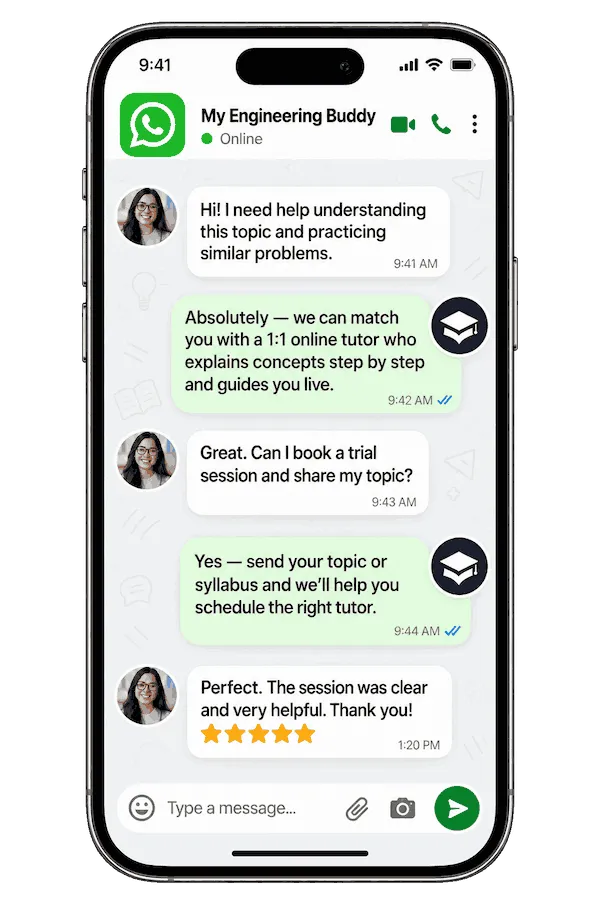
WhatsApp MEB for a quick quote — average response time under 1 minute.
Who This PIC Microcontroller Tutoring Is For
Most students who come to MEB for PIC help aren’t beginners who don’t know what a microcontroller is. They’ve written some code. It just doesn’t work the way it should — and they can’t figure out why.
- Undergraduate electrical or computer engineering students working through PIC16F or PIC18F assignments
- Students retaking after a failed first attempt at an embedded systems module
- Graduate students integrating PIC32 into larger system-level projects
- Students with a university conditional offer depending on passing this module
- Engineers moving from Arduino to PIC who need to unlearn some habits
- Parents supporting a student whose confidence has dropped alongside their lab marks
Universities where embedded systems courses feature PIC Microcontrollers include Georgia Tech, Purdue, the University of Waterloo, Imperial College London, TU Delft, RMIT, and the University of Toronto. If your course uses MPLAB X and XC8 or XC32 compilers, MEB tutors know that environment.
1:1 Tutoring vs Self-Study vs AI vs YouTube vs Online Courses
Self-study works if you’re disciplined — but PIC peripheral configuration errors give almost no useful feedback on their own. AI tools answer quickly but can’t watch you misread a datasheet in real time. YouTube covers timer setup at a surface level, then stops when your specific oscillator configuration fails. Online courses move at a fixed pace and don’t adjust when your I2C bus hangs. A 1:1 PIC Microcontroller tutor from MEB sees exactly where your code logic breaks down and corrects it in the session — not after you’ve lost three hours to it.
Outcomes: What You’ll Be Able To Do in PIC Microcontroller
After working with an online PIC Microcontroller tutor, you’ll be able to write and debug C and Assembly programs for PIC16, PIC18, and PIC32 families with confidence. You’ll apply interrupt-driven programming correctly — no more polling loops where they don’t belong. You’ll configure UART, SPI, and I2C peripherals from the datasheet rather than copying code you don’t understand. Analyze timer overflow and capture/compare/PWM modules to control real hardware outputs. Present a working embedded project with code you can explain line by line.
Students consistently tell us that the moment PIC programming clicks is when they stop guessing at register bit assignments and start reading the datasheet with the tutor walking through it alongside them. That shift — from copy-paste to understood code — usually happens within two sessions.
Based on feedback from 40,000+ sessions collected by MEB from 2022 to 2025, 58% of students improved by one full grade after approximately 20 hours of 1:1 tutoring in subjects like PIC Microcontroller. A further 23% achieved at least a half-grade improvement.
Source: MEB session feedback data, 2022–2025.
What We Cover in PIC Microcontroller (Syllabus / Topics)

Track 1: PIC Architecture and Embedded C Fundamentals
- PIC16F and PIC18F architecture — Harvard architecture, memory maps, register file
- MPLAB X IDE setup, XC8 compiler configuration, and project structure
- GPIO configuration — TRIS, PORT, and LAT registers
- Interrupt system — global enable, peripheral enable, interrupt flags and ISR structure
- Timer modules — Timer0, Timer1, Timer2 — modes, prescalers, overflow handling
- ADC configuration — channel selection, acquisition time, result registers
- Watchdog timer and power management modes
Core texts: Embedded C Programming and the Microchip PIC by Richard Barnett et al.; PIC Microcontroller and Embedded Systems by Muhammad Ali Mazidi.
Track 2: Serial Communication and Peripheral Interfacing
- USART/UART — baud rate calculation, transmit and receive register use, RS-232 interfacing
- SPI protocol — master/slave configuration, clock polarity and phase, data framing
- I2C protocol — addressing, START/STOP conditions, ACK/NACK handling
- PWM generation using CCP/ECCP modules — duty cycle and frequency control
- LCD and seven-segment display interfacing in 4-bit and 8-bit modes
- Sensor interfacing — temperature sensors, ultrasonic modules, keypad scanning
Core texts: Programming 16-Bit PIC Microcontrollers in C by Lucio Di Jasio; Microchip Technology datasheets (PIC18F4550, PIC16F877A).
Track 3: PIC32 and Advanced Embedded Systems
- PIC32 architecture — MIPS32 core, memory organisation, peripheral bus
- MPLAB Harmony framework — driver model, system services, middleware
- Real-time constraints — task scheduling, interrupt latency, deterministic timing
- DMA transfers — buffer management, peripheral-to-memory without CPU overhead
- USB and Ethernet peripheral integration on PIC32MX/MZ families
- Debugging with MPLAB ICD and PICkit — breakpoints, watch windows, SFR inspection
Core texts: Programming 32-bit Microcontrollers in C by Lucio Di Jasio; Microchip PIC32 Family Reference Manual sections relevant to course peripherals. For broader real-time systems (RTOS) tutoring, MEB covers FreeRTOS and RTOS scheduling theory alongside PIC32 projects.
Platforms, Tools & Textbooks We Support
PIC Microcontroller courses are built around specific toolchains. MEB tutors work inside them with you — not around them. Supported environments include MPLAB X IDE, XC8 and XC32 compilers, Proteus simulation for circuit validation, MPLAB debugging tools (PICkit 3/4, ICD 4), and MCC (MPLAB Code Configurator) for peripheral initialisation code generation.
What a Typical PIC Microcontroller Session Looks Like
The tutor opens by checking where the previous session ended — usually a half-working Timer1 interrupt or a UART receive buffer that wasn’t clearing properly. From there, the student shares their screen and walks through their current code. The tutor uses a digital pen-pad to annotate the relevant register bits directly on the datasheet, showing exactly which bit controls what and why the current setting produces the wrong behaviour. The student then rewrites the relevant section, the tutor watches them reason through it, and corrects mistakes before they become habits. The session closes with a specific task — configure the SPI peripheral for a given sensor, or write a PWM routine to a target duty cycle — to attempt before the next session.
How MEB Tutors Help You with PIC Microcontroller (The Learning Loop)
Diagnose: In the first session, the tutor identifies whether the gap is architectural (not understanding the Harvard model or memory banking), peripheral-specific (misconfigured registers), or code-logic (interrupt flags not cleared, polling loops blocking execution). Most students have more than one gap — the tutor maps all of them.
Explain: Live worked problems using MPLAB X on screen. The tutor uses a digital pen-pad to draw timing diagrams, annotate datasheet pages, and trace signal flow through peripheral blocks. No generic slides — everything references your actual code and your actual hardware or simulation.
Practice: The student attempts the next problem with the tutor present. For PIC work, that usually means writing a peripheral configuration routine from scratch, or debugging a given piece of code by tracing through register states step by step.
Feedback: Step-by-step error correction with the reason behind each fix. The tutor explains not just what was wrong but which part of the datasheet or course note the answer comes from — so the student can find it independently next time.
Plan: Next topic identified, specific practice task set, and session sequence mapped to upcoming assignment or exam date. No drifting. Every session has a clear next step.
Sessions run on Google Meet. The tutor uses a digital pen-pad or iPad with Apple Pencil. Before your first session, have your current code file, your MPLAB project, and your assignment brief or course syllabus ready to share. The first session is also your diagnostic — start with the $1 trial and the tutor will map your gaps from the first 10 minutes.
Try your first session for $1 — 30 minutes of live 1:1 tutoring or one homework question explained in full. No registration. No commitment. WhatsApp MEB now and get matched within the hour.
MEB has covered PIC Microcontroller tutoring alongside related embedded subjects — including Arduino Uno help, ESP32 tutoring, and PLC programming support — since 2008, serving students across six continents.
Source: My Engineering Buddy, 2008–2025.
Tutor Match Criteria (How We Pick Your Tutor)
Not every embedded systems tutor knows PIC. MEB matches on specifics.
Subject depth: Tutor must have worked with the specific PIC family relevant to your course — PIC16, PIC18, or PIC32 — not just microcontrollers in general. Syllabus and toolchain familiarity are confirmed before matching.
Tools: Every tutor uses Google Meet plus a digital pen-pad or iPad with Apple Pencil — so datasheet annotation and register-level explanation are visual, not verbal.
Time zone: Matched to your region. US, UK, Gulf, Canada, and Australia all covered, with tutors available across multiple time bands.
Goals: Whether you need to pass a specific embedded systems module, complete a capstone project, or build genuine firmware competency, the tutor match reflects that — not a one-size assignment. Unlike platforms where you fill out a form and wait, MEB responds in under a minute, 24/7. Tutor match takes under an hour. The $1 trial means you test before you commit. Everything runs over WhatsApp — no logins, no intake forms.
Study Plans (Pick One That Matches Your Goal)
Catch-up (1–3 weeks): focused on the specific peripheral or concept blocking your current assignment — interrupts, UART, ADC — with practice problems and code review. Exam prep (4–8 weeks): full syllabus coverage, past paper or lab-sheet walkthroughs, timed code exercises. Weekly support: ongoing, aligned to your semester schedule and assignment deadlines. The tutor maps the exact session sequence after the first diagnostic — nothing is fixed until they’ve seen where you are.
Pricing Guide
PIC Microcontroller tutoring starts at $20/hr for standard undergraduate coursework. PIC32, RTOS integration, or Harmony framework work runs $35–$70/hr. Graduate-level or thesis-support engagements go up to $100/hr depending on tutor background and project complexity.
Rate factors include: specific PIC family, depth of peripheral work required, timeline urgency, and tutor availability during peak exam and project submission periods.
For students targeting roles in embedded systems at companies with competitive technical screening — or university research programmes with firmware components — tutors with professional embedded engineering backgrounds are available at higher rates. Share your goal and MEB will match the right tier.
Start with the $1 trial — 30 minutes, no registration, no commitment. WhatsApp MEB for a quick quote.
MEB tutors bring real embedded systems experience — not just textbook knowledge. Students working through PIC18 peripheral labs or PIC32 Harmony projects get tutors who have configured those exact peripherals in professional or research settings.
Source: My Engineering Buddy, 2008–2025.
FAQ
Is PIC Microcontroller hard?
PIC programming has a steeper initial curve than Arduino because you configure peripherals at the register level rather than through abstraction libraries. Once you understand the datasheet and MPLAB workflow, progress becomes steady. Most students need 3–5 sessions to get past the initial friction.
How many sessions are needed?
Students with a specific assignment gap — one peripheral or one debugging concept — often need 2–4 sessions. Students covering a full module from the beginning typically need 10–20 hours. The diagnostic session maps this precisely for your situation.
Can you help with homework and assignments?
MEB tutoring is guided learning — you understand the work, then submit it yourself. The tutor explains the peripheral configuration, walks through the logic, and helps you correct errors. See our Academic Integrity policy and Why MEB page for full details on what we help with and what we don’t.
Will the tutor match my exact syllabus or exam board?
Yes. When you contact MEB, share your course outline, the PIC family your course uses, and the compiler or IDE required. The tutor matched to you will have direct experience with that specific toolchain and curriculum structure.
What happens in the first session?
The tutor reviews your current code or assignment, identifies where your understanding breaks down, and works through the gap live. The first session doubles as your diagnostic — so the rest of your sessions are targeted, not general. Bring your MPLAB project and assignment brief.
Is online tutoring as effective as in-person?
For PIC work specifically, online is often better — the tutor can annotate your actual code, share datasheet pages on screen, and use a pen-pad to draw timing diagrams in real time. You’re not crowding around one screen. Students across the US, UK, and Gulf report no meaningful difference from in-person.
What is the difference between PIC16, PIC18, and PIC32?
PIC16 is 8-bit, low power, common in introductory embedded courses. PIC18 adds a more capable instruction set and is standard in intermediate coursework. PIC32 is 32-bit, MIPS-based, used in advanced projects requiring USB, Ethernet, or RTOS. Your tutor is matched to whichever family your course uses.
Do I need to know Assembly, or is C enough?
Most university PIC courses use C with the XC8 or XC32 compiler. Assembly knowledge helps for understanding timing-critical code and reading compiler output, but it is rarely required at coursework level. Your tutor will confirm what your syllabus expects and work within that scope.
Can you help me at midnight or on weekends?
MEB operates 24/7. Tutors cover multiple time zones, so a session at midnight EST or 6 am Gulf time is available. WhatsApp MEB with your preferred window and availability, and the match will account for your schedule.
Do you offer group PIC Microcontroller sessions?
MEB’s model is 1:1 only. Group sessions reduce the tutor’s ability to diagnose individual gaps and correct errors in real time — which is where most PIC progress actually happens. All sessions are private and matched to one student.
How do I get started?
Three steps: WhatsApp MEB with your PIC family, course outline, and exam or deadline date. MEB matches you with a verified tutor — usually within the hour. Your first session is the $1 trial — 30 minutes of live tutoring that also serves as your diagnostic.
Trust & Quality at My Engineering Buddy
MEB tutors for PIC Microcontroller are screened for direct embedded systems experience — not just general electronics knowledge. Every tutor completes a live demo evaluation before joining the platform. Ongoing session feedback is reviewed to maintain quality. Tutors hold degrees in electrical engineering, computer engineering, or embedded systems, and many have professional firmware development backgrounds. Rated 4.8/5 across 40,000+ verified reviews on Google.
MEB tutoring is guided learning — you understand the work, then submit it yourself. For full details on what we help with and what we don’t, read our Academic Integrity policy and Why MEB.
MEB has served 52,000+ students in 2,800+ subjects since 2008 — across the US, UK, Canada, Australia, the Gulf, and Europe. Within Mechatronics and embedded engineering, that includes electromechanical systems tutoring, automation engineering help, and robotics engineering tutoring alongside PIC Microcontroller. See our tutoring methodology for how sessions are structured across all subjects.
Explore Related Subjects
Students studying PIC Microcontroller often also need support in:
Next Steps
Before your first session, have ready: your PIC family (PIC16, PIC18, or PIC32), your MPLAB project or assignment brief, a recent piece of code you’re stuck on, and your exam or deadline date. The tutor handles the rest.
- Share your course outline, hardest topic, and current timeline
- Share your availability and time zone
- MEB matches you with a verified PIC Microcontroller tutor — usually within the hour
The first session starts with a diagnostic so every minute is used on what actually matters for your course.
Visit www.myengineeringbuddy.com for more on how MEB works.
WhatsApp to get started or email [email protected].
Reviewed by Subject Expert
This page has been carefully reviewed and validated by our subject expert to ensure accuracy and relevance.