




~1 min
Average Reply Time
~1 hour
To Be Matched With A Tutor
1 Trial
75% Find Their Tutor On The 1st Trial
$1
Your First 30 Minutes
Hire The Best Git Tutor
Top Tutors, Top Grades. Without The Stress!





Related Subjects
Your pull requests are getting rejected. Your merge conflicts won’t resolve. You’ve watched three YouTube videos and you’re still stuck on the same rebase command.
Git Tutor Online
Git is a distributed version control system used to track changes in source code during software development, enabling teams to collaborate, branch, merge, and maintain full project history across local and remote repositories.
If you’re searching for a Git tutor near me, MEB connects you with verified, subject-specific tutors who work 1:1 with you on your exact repository, your exact errors, and your team’s workflow. Whether you’re a software engineering student hitting a wall on branching strategy or a developer needing to clean up a messy commit history before a code review, MEB has a tutor for that.
- 1:1 online sessions tailored to your course, project, or team workflow
- Expert-verified tutors with hands-on Git and DevOps experience
- Flexible time zones — US, UK, Canada, Australia, Gulf
- Structured learning plan built after a diagnostic session
- Guided project support — we explain the concepts, you implement the solution
“52,000+ students across the US, UK, Canada, Australia, and the Gulf have used MEB since 2008 — including students in Software Engineering subjects like Git, DevOps, and Docker.”
Source: My Engineering Buddy, 2008–2025.
How Much Does a Git Tutor Cost?
Most Git tutoring sessions run $20–$40/hr. Advanced topics — CI/CD pipeline architecture, Git internals, or enterprise branching strategy — can reach $70/hr. Not sure if MEB is right for you? Start with the $1 trial: 30 minutes of live 1:1 tutoring or one project question explained in full.
| Level / Need | Typical Rate | What’s Included |
|---|---|---|
| Standard (undergrad / bootcamp) | $20–$35/hr | 1:1 sessions, project guidance |
| Advanced / Specialist (CI/CD, Git internals) | $35–$70/hr | Expert tutor, niche workflow depth |
| $1 Trial | $1 flat | 30 min live session or 1 project question |
Availability tightens fast at semester end and before internship start dates. WhatsApp MEB for a quick quote — average response time under 1 minute.
Who This Git Tutoring Is For
Git trips up students at every level — from the first git clone to complex rebase workflows in production pipelines. If you can name the problem below, MEB has a tutor who has solved it before.
- Computer science students whose coursework requires collaborative Git workflows and peer code review
- Bootcamp students building a portfolio and hitting merge conflicts on group projects
- Students retaking a software engineering module after failing due to submission errors caused by version control mistakes
- Developers moving from a team that used SVN or no version control at all
- Graduate students managing dissertation code across multiple machines and branches
- Students with a university conditional offer depending on passing a software engineering module that includes Git assessment
Students at institutions including MIT, University of Toronto, Imperial College London, University of Melbourne, ETH Zurich, Georgia Tech, and Carnegie Mellon have used MEB for back-end development and related tooling support.
1:1 Tutoring vs Self-Study vs AI vs YouTube vs Online Courses
Self-study works if you’re disciplined, but Git errors are notoriously context-specific — generic documentation rarely explains why your particular rebase went wrong. AI tools give fast answers but can’t look at your actual repo, see your branch history, or diagnose why your git push --force destroyed a colleague’s work. YouTube covers the basics well; it stops when your situation gets specific. Online courses move at a fixed pace with no room to pause on your actual problem. With a 1:1 Git tutor online from MEB, the tutor shares your screen, reads your actual error messages, and fixes the real issue — not a textbook approximation of it.
Outcomes: What You’ll Be Able To Do in Git
After working with an MEB Git tutor, you’ll be able to resolve merge conflicts in multi-branch feature workflows without losing commits, apply interactive rebase to clean up a messy commit history before a pull request review, configure and troubleshoot remote tracking branches across GitHub, GitLab, or Bitbucket, explain the difference between git merge and git rebase and choose the right one for your team’s conventions, and set up Git hooks or basic CI triggers that run on push. These aren’t abstract skills — they’re the exact capabilities that get pull requests approved and coursework submitted without last-minute disasters.
“Based on feedback from 40,000+ sessions collected by MEB from 2022 to 2025, students working 1:1 on Git consistently report faster resolution of merge conflicts and noticeably greater confidence managing branches and pull requests in team projects. Progress varies by starting level and practice frequency.”
Source: MEB session feedback data, 2022–2025.
What We Cover in Git (Syllabus / Topics)

Track 1: Git Fundamentals
- Repository initialisation, cloning, and basic configuration (
git init,git clone,git config) - Staging, committing, and reading commit history (
git add,git commit,git log) - Undoing changes:
git reset,git revert,git restore— and when to use each - Working with
.gitignore— patterns, global ignores, and common mistakes - Understanding the working tree, staging area, and repository model
- Tagging releases and navigating detached HEAD state
Textbooks: Pro Git by Scott Chacon and Ben Straub (free at git-scm.com); Version Control with Git by Jon Loeliger and Matthew McCullough (O’Reilly).
Track 2: Branching, Merging, and Collaboration
- Branch creation, switching, and deletion — local and remote
- Merge strategies: fast-forward vs three-way merge, and resolving real conflicts
- Interactive rebase (
git rebase -i): squash, fixup, reword, and drop commits - Remote workflows:
git fetch,git pull,git push, tracking branches - Pull request workflows on GitHub and GitLab — forking, code review, and merge approval
- Stashing, cherry-picking, and applying patches across branches
- Git Flow, trunk-based development, and feature branch conventions
Textbooks: Pro Git (chapters 3, 5, 6); Git Pocket Guide by Richard Silverman (O’Reilly).
Track 3: Advanced Git and CI/CD Integration
- Rewriting history:
git filter-branch,git filter-repo, BFG Repo Cleaner - Submodules and subtrees — when to use them and how to avoid common pitfalls
- Git hooks: pre-commit, commit-msg, pre-push — practical automation examples
- Git with Jenkins, GitLab CI/CD, and GitHub Actions — trigger conditions, checkout steps
- Monorepo vs multi-repo strategy and Git tooling for large codebases
- Signing commits with GPG, SSH key authentication, and token-based access
Textbooks: Pro Git (chapters 7–10); relevant documentation from Azure DevOps and CircleCI practitioner guides.
What a Typical Git Session Looks Like
The tutor opens by checking the previous topic — usually whatever merge or rebase task you attempted since the last session. You share your screen on Google Meet, and the tutor reads your actual branch graph or error output, not a hypothetical. The session might move through resolving a three-way merge conflict in a feature branch, then walk through an interactive rebase to clean up six messy commits before a PR review. The tutor writes commands on a digital pen-pad so you can see the reasoning, not just the result. Then you replicate it yourself while the tutor watches — if you skip a step or type the wrong flag, they catch it immediately. Session closes with one specific task: push a clean branch and open a draft pull request, ready to review at the next session.
How MEB Tutors Help You with Git (The Learning Loop)
Diagnose: In the first session, the tutor asks you to run git log --oneline --graph and share the output. That single command usually reveals everything — tangled branches, missing commits, force-push damage, or a workflow that has never been properly set up. The diagnosis takes 10 minutes. It saves hours of guessing.
Explain: The tutor works through the problem live, annotating on a digital pen-pad. You see each command, the flag, and the reasoning — not just a copy-paste answer. Common topics at this stage: why git pull --rebase behaves differently from git pull, or how git reset --hard differs from git revert in a shared branch context.
Practice: You take over. The tutor watches you attempt the same operation on your repo or a sandbox. This is where the real learning happens — not watching someone else type.
Feedback: Every wrong flag or missed step gets corrected with an explanation of what Git actually did and why it matters. Students consistently tell us that understanding the why is what finally makes Git click — not just memorising commands.
Plan: The session ends with a clear next step: a specific branch task, a PR to open, or a hook to configure. The tutor tracks what you’ve covered and what comes next, so no session starts from scratch.
Sessions run on Google Meet with a digital pen-pad or iPad and Apple Pencil. Before your first session, share your repo URL or a screenshot of your current branch state, your error messages if you have them, and your deadline or project context. Start with the $1 trial — 30 minutes of live tutoring that also serves as your first diagnostic. Whether you need a quick fix before a submission deadline or structured sessions across a semester to build solid version control habits, the tutor maps the plan after that first look.
At MEB, we’ve found that most Git confusion isn’t about the commands — it’s about the mental model. Students who understand what Git is actually storing (snapshots, not diffs) stop making the same mistakes in 1–2 sessions. That’s where we start.
Tutor Match Criteria (How We Pick Your Tutor)
Not every developer who knows Git can teach it. MEB matches on four criteria.
Subject depth: The tutor must have practical experience with the specific Git workflows you’re using — coursework repos, open-source contribution, or enterprise CI/CD pipelines are different contexts.
Tools: Every tutor works on Google Meet with a digital pen-pad or iPad and Apple Pencil. No static slides. Commands get written out in real time.
Time zone: Matched to your region — US, UK, Gulf, Canada, or Australia. No 2am sessions unless you want them.
Goals: Whether the goal is passing a university module, cleaning up a portfolio repo, or learning infrastructure as code workflows, the tutor is matched to your specific outcome.
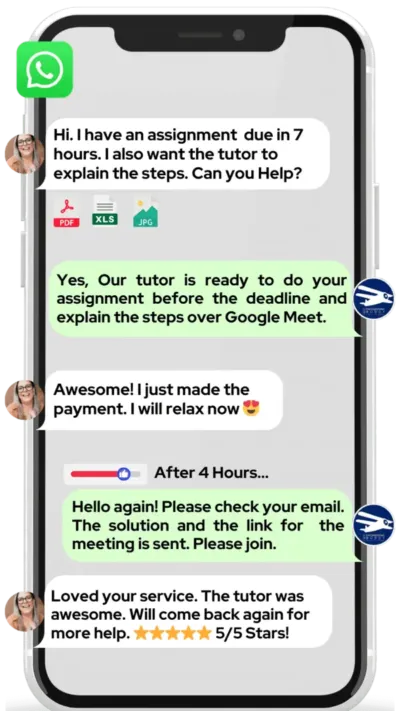
Unlike platforms where you fill out a form and wait, MEB responds in under a minute, 24/7. Tutor match takes under an hour. The $1 trial means you test before you commit. Everything runs over WhatsApp — no logins, no intake forms.
Study Plans (Pick One That Matches Your Goal)
MEB tutors build your session sequence after the first diagnostic, but most Git students fall into one of three plans: a rapid catch-up over 1–3 sessions targeting a specific blocker (merge conflict, rebase confusion, failed push); a structured 4–8 session block covering fundamentals through CI/CD integration for students whose coursework or bootcamp project depends on it; or ongoing weekly sessions for developers building Git habits alongside active project work. The tutor specifies the exact topic sequence after seeing your repo and your deadline.
Pricing Guide
Git tutoring starts at $20/hr for standard undergraduate and bootcamp-level sessions. Graduate-level topics — monorepo management, Git internals, custom hook scripting for production pipelines — run up to $70–$100/hr depending on tutor specialisation. Rate factors include topic complexity, your timeline, and tutor availability in your time zone.
Availability drops sharply at semester end and before internship cohort start dates in January and July. Book early if your deadline is firm.
For students targeting roles at top-tier engineering teams or contributing to major open-source projects, tutors with professional engineering and DevOps backgrounds are available at higher rates — share your specific goal and MEB will match the tier to your ambition.
Start with the $1 trial — 30 minutes, no registration, no commitment. WhatsApp MEB for a quick quote.
Students consistently tell us that the $1 trial session on Git is where it finally makes sense — not because the tutor is explaining something new, but because someone is finally looking at their actual repo. One real example beats ten generic tutorials.
“MEB has covered Git alongside GitHub Actions, Kubernetes, and Terraform for students building full DevOps workflows — all in the same 1:1 session model, matched to your exact stack.”
Source: My Engineering Buddy, 2008–2025.
FAQ
Is Git hard to learn?
The basic commands take an hour. The mental model — how Git stores snapshots, what HEAD means, why detached HEAD is dangerous — takes longer. Most students hit a wall when they move from solo projects to team collaboration with branches, merges, and shared remote history.
How many sessions does it take to get comfortable with Git?
Students with zero Git experience typically reach confident solo use in 4–6 sessions. If you already know the basics but keep breaking things on shared branches, 2–3 targeted sessions on merge and rebase workflows usually resolves the core issues.
Can you help with Git-related project and portfolio work?
MEB provides guided project support — we explain the concepts and workflows, and you implement and push the code yourself. MEB tutoring is guided learning: you understand the work, then submit it yourself. See our Academic Integrity policy and Why MEB page for full details on what we help with and what we don’t.
Will the tutor match my exact course setup or exam board?
Yes. MEB tutors are matched to your specific context — whether that’s a university module using GitHub Classroom, a bootcamp using GitLab, or a team project with a specific branching convention. Share your repo structure and the tutor adapts to it.
What happens in the first session?
The tutor asks you to share your branch graph or error output and uses that as the diagnostic. Within 10 minutes, the real problem is identified. The rest of the session works directly on your repo or a sandbox replicating your exact situation.
Is online Git tutoring as effective as in-person?
For Git specifically, online is often better — screen sharing lets the tutor see your actual terminal, repo state, and error messages in real time. In-person tutoring rarely achieves that level of direct access to your working environment.
Can I get Git help at midnight or on weekends?
Yes. MEB operates 24/7 across all time zones. WhatsApp response averages under a minute. Students in the Gulf, Australia, and the US West Coast regularly book late-night sessions — tutor availability is matched to your time zone.
What’s the difference between Git and GitHub — and do your tutors cover both?
Git is the version control system itself; GitHub is a hosting platform built on top of it. MEB tutors cover both — local Git workflows and remote collaboration on GitHub, GitLab, or Bitbucket. Many students need both in the same session.
Do you offer group Git sessions?
MEB sessions are 1:1 only. Group sessions introduce too many conflicting skill levels and slow down the student who needs the most help. If your team all needs Git training, each member books a separate matched session.
What if I don’t like my assigned tutor?
Request a swap on WhatsApp. MEB matches a replacement, usually within the hour. The $1 trial exists precisely so you can test the fit before committing to a session block.
My team uses a specific branching strategy — can the tutor learn our workflow before the session?
Yes. Share your team’s conventions, a link to your repo, or a diagram of your branch structure over WhatsApp before the session. Tutors review it and arrive prepared to work within your exact setup, not a generic example.
How do I get started?
Three steps: WhatsApp MEB, describe your Git problem or course context, get matched with a verified tutor. Your first session is the $1 trial — 30 minutes live or one question explained. No registration, no commitment.
Trust & Quality at My Engineering Buddy
Every MEB tutor passes a subject-specific screening process that includes a live demo session, review of their technical background, and ongoing student feedback analysis. Tutors covering Git and DevOps tooling hold degrees in computer science, software engineering, or related fields, and most have professional experience with Git in production environments — not just academic familiarity. Rated 4.8/5 across 40,000+ verified reviews on Google.
MEB provides guided learning support. All project work is produced and submitted by the student. For full details on what we help with and what we don’t, read our Academic Integrity policy and Why MEB.
MEB has served 52,000+ students in the US, UK, Canada, Australia, the Gulf, and Europe across 2,800+ subjects since 2008. The platform covers the full Software Engineering stack — from Docker tutoring and DevOps help to software testing support — all in the same 1:1 model. If you’re working in Git alongside any of those tools, your tutor can cover the full context in one session. Our tutoring methodology explains how the diagnostic-first approach works across every subject we cover.
A common pattern our tutors observe is that students come in thinking Git is broken, when really the branching model was never explained to them. Ten minutes on how Git actually tracks history — and the confusion clears. That clarity is what the first session is for.
“From foundational Git commands to advanced CI/CD pipeline integration, MEB tutors bring the same 1:1 depth to every session — the same model that has served students across 2,800+ subjects since 2008.”
Source: My Engineering Buddy, 2008–2025.
Explore Related Subjects
Students studying Git often also need support in:
Next Steps
Before your first session, have ready: your repo URL or a screenshot of your current branch state, the exact error message or workflow problem you’re stuck on, and your submission deadline or project context. The tutor handles the rest.
- Share your exam board, hardest Git component, and current timeline
- Share your availability and time zone
- MEB matches you with a verified Git tutor — usually within the hour
The first session starts with a diagnostic — your actual repo, your actual errors, no time wasted on things you already know.
Visit www.myengineeringbuddy.com for more on how MEB works. To get started now: WhatsApp to get started or email [email protected].
52,000+ Happy Students From Various Universities





Reviewed by Subject Expert
This page has been carefully reviewed and validated by our subject expert to ensure accuracy and relevance.

