




~1 min
Average Reply Time
~1 hour
To Be Matched With A Tutor
30 Min Trial
75% Find Their Tutor On The 1st Trial
$20-35+/hr
Premium Yet Affordable Learning
Your Minikube cluster starts fine locally — then falls apart the moment you try to replicate a real deployment. Six hours of docs later, you’re still stuck on the same kubectl error.
Minikube Tutor Online
Minikube is a local Kubernetes implementation that runs a single-node cluster on a personal machine, enabling developers to test containerised applications, practice kubectl commands, and prototype Kubernetes deployments without cloud infrastructure.
If you’re searching for a Minikube tutor near me, MEB offers 1:1 online Minikube tutoring and project help across every skill level — from students setting up their first cluster to engineers preparing for Kubernetes certification. Our software engineering tutoring network covers Minikube alongside the full DevOps and cloud-native stack. A tutor matched to your exact tools and goals, available inside the hour.
- 1:1 online sessions tailored to your course syllabus or project stack
- Expert-verified tutors with hands-on Kubernetes and DevOps backgrounds
- Flexible time zones — US, UK, Canada, Australia, Gulf
- Structured learning plan built after a diagnostic session
- Guided project support — we explain, you build
52,000+ students across the US, UK, Canada, Australia, and the Gulf have used MEB since 2008 — including students in Software Engineering subjects like Minikube, Kubernetes tutoring, and Docker help.
Source: My Engineering Buddy, 2008–2025.
How Much Does a Minikube Tutor Cost?
Most Minikube tutoring sessions run $20–$40/hr. Graduate-level or specialist DevOps work goes up to $100/hr. Try the $1 trial first — 30 minutes live or one project question explained in full, no registration required.
| Level / Need | Typical Rate | What’s Included |
|---|---|---|
| Standard (most levels) | $20–$35/hr | 1:1 sessions, project guidance |
| Advanced / Specialist | $35–$100/hr | Expert tutor, CKA/CKS depth |
| $1 Trial | $1 flat | 30 min live session or 1 project question |
Tutor availability tightens during university project deadlines and DevOps certification exam windows. Book early if you have a fixed submission date.
WhatsApp MEB for a quick quote — average response time under 1 minute.
Who This Minikube Tutoring Is For
Minikube trips up students and working developers alike. The tool itself is straightforward — but getting it to behave like a production cluster is where things break down. This tutoring is built for people who are stuck somewhere specific.
- Undergraduate and graduate CS students with a DevOps or cloud computing module
- Engineers studying for the Certified Kubernetes Administrator (CKA) or Certified Kubernetes Security Specialist (CKS) exam
- Developers at companies like Red Hat, VMware, or cloud-first startups who need to fill a Kubernetes gap quickly
- Students with a university capstone project or thesis involving containerised microservices
- Students who attempted a Kubernetes project, hit persistent cluster errors, and need to get back on track before a submission deadline
- Parents supporting a computer science student whose coursework grade depends on a working deployment demo
Students come from universities across the US, UK, Canada, Australia, Germany, and the Gulf — programmes at MIT, University of Toronto, University of Edinburgh, TU Munich, UNSW, and NYU all assign Minikube-related coursework. Start for $1 and see whether the tutor match is right before you commit to anything.
1:1 Tutoring vs Self-Study vs AI vs YouTube vs Online Courses
Self-study: works if you can debug your own environment — most can’t, not at first. AI tools: useful for quick kubectl syntax lookups, but they can’t watch your cluster fail in real time and tell you why. YouTube: solid for setup walkthroughs, useless the moment your specific error isn’t in the video. Online courses: cover Minikube as one chapter out of thirty — not enough depth when it’s your whole project. 1:1 tutoring with MEB: a tutor screens your actual cluster config, watches the error appear, and fixes your understanding — not just your terminal output. That’s the difference when Minikube is the deliverable.
Outcomes: What You’ll Be Able To Do in Minikube
After structured 1:1 sessions, you’ll be able to spin up a Minikube cluster with the correct driver for your OS, deploy multi-container applications using kubectl and YAML manifests, apply and manage Helm charts without breaking the release state, configure Ingress controllers for local service exposure, and explain your cluster architecture in a project viva or technical interview. You’ll also be able to connect Minikube to a CI/CD pipeline using Jenkins tutoring workflows or GitLab CI/CD help — which is where most students get stuck in capstone projects.
Try your first session for $1 — 30 minutes of live 1:1 tutoring or one project question explained in full. No registration. No commitment. WhatsApp MEB now and get matched within the hour.
Based on feedback from 40,000+ sessions collected by MEB from 2022 to 2025, students working 1:1 on Minikube consistently report faster cluster setup, fewer unresolved errors in final project submissions, and greater confidence explaining their architecture to assessors.
Source: MEB session feedback data, 2022–2025.
What We Cover in Minikube (Topics)

Cluster Setup and Configuration
- Installing Minikube on macOS, Windows, and Linux with the correct hypervisor or Docker driver
- Starting, stopping, and deleting clusters; managing profiles for multi-cluster setups
- Configuring resource limits — CPU, memory, and disk allocation per profile
- Enabling and managing Minikube addons: dashboard, metrics-server, ingress
- Connecting kubectl to the correct cluster context
- Troubleshooting driver conflicts and VM boot failures
Recommended references: Kubernetes in Action by Marko Luksa; The Kubernetes Book by Nigel Poulton; official Kubernetes documentation at kubernetes.io.
Deployments, Services, and Networking
- Writing and applying Deployment, ReplicaSet, and Pod YAML manifests
- Exposing services with NodePort, ClusterIP, and LoadBalancer types in a local context
- Configuring Ingress with the Minikube Nginx Ingress addon
- Using port-forwarding and minikube tunnel for local service access
- ConfigMaps and Secrets management within the cluster
- Rolling updates, rollbacks, and health checks via readiness and liveness probes
- Debugging failing pods with kubectl describe, logs, and exec
Recommended references: Kubernetes: Up and Running by Burns, Grant, and Beda; Cloud Native DevOps with Kubernetes by Arundel and Domingus.
Helm, CI/CD Integration, and Advanced Workflows
- Installing and managing Helm charts within a Minikube cluster
- Writing custom Helm values files and overriding chart defaults
- Integrating Minikube with CircleCI project help and GitHub Actions pipelines
- Using Skaffold for automated build-deploy cycles in local development
- Persistent Volume and Persistent Volume Claim setup for stateful workloads
- Namespace management and RBAC basics for multi-team environments
Recommended references: Helm — The Kubernetes Package Manager (Helm documentation); GitOps and Kubernetes by Yuen, Castellanos, and Abraham.
At MEB, we’ve found that most Minikube problems students bring to a first session aren’t really Minikube problems — they’re kubectl context errors or driver mismatches that happened silently during installation. Ten minutes of diagnostic work clears what three days of forum searching couldn’t.
Platforms, Tools and Textbooks We Support
Minikube is tightly coupled to a specific toolchain. MEB tutors work directly inside the student’s environment — not in a generic demo setup. Sessions cover the tools you’re actually using, not a curated version of them.
- Minikube (all current stable versions)
- kubectl CLI and kubeconfig management
- Helm 3
- Docker Desktop and Docker Engine (as Minikube driver)
- VirtualBox, HyperKit, Hyper-V, and KVM2 hypervisor drivers
- Skaffold and Tilt for local dev loops
- VS Code with Kubernetes and YAML extensions
- Terraform tutoring workflows that interact with local cluster state
- The IEEE Computer Society publishes practitioner-level guidance on cloud infrastructure standards relevant to Kubernetes-based projects
What a Typical Minikube Session Looks Like
The tutor opens by asking what happened in the last session — specifically whether the Deployment you applied last time is still running or whether the cluster was reset. From there, you share your screen and walk through your current kubectl get pods output together. If there’s a CrashLoopBackOff or ImagePullBackErr, the tutor traces it step by step: checking the YAML for port mismatches, verifying the image tag, reviewing the Events block. You’re not watching — you’re the one running the commands, with the tutor narrating why each one matters. By the end, you’ve fixed the immediate error and written the correction into your own notes. The tutor sets a concrete task: redeploy with a corrected ConfigMap and verify the service is reachable via minikube tunnel before the next session.
How MEB Tutors Help You with Minikube (The Learning Loop)
Diagnose: In the first session, the tutor checks your cluster driver, kubectl version, current error state, and what your project actually requires. Most students arrive with a working install and a broken deployment — the tutor identifies exactly which layer broke and why.
Explain: The tutor walks through the fix on a shared screen using a digital pen-pad to annotate your YAML or terminal output. You see the reasoning, not just the result.
Practice: You reproduce the fix yourself — same cluster, same manifest, tutor watching. If you get it wrong, the tutor catches the error before it compounds.
Feedback: Every mistake gets a “here’s why that failed” — not just a correction. Students who understand why a liveness probe misconfiguration causes a restart loop don’t repeat it in the next project.
Plan: At the end of each session, the tutor notes what’s solid, what needs one more pass, and what the next session starts with. No session ends without a clear next step.
Sessions run over Google Meet. Tutors use a digital pen-pad or iPad with Apple Pencil to annotate live. Before your first session, share your course brief or project spec, your current Minikube version and driver, and a screenshot or paste of the error you’re stuck on. The first session covers a quick diagnostic and then goes straight into the problem. Start with the $1 trial — 30 minutes of live tutoring that also serves as your first diagnostic.
Students consistently tell us that the moment things click in Minikube isn’t when the cluster starts — it’s when they can read a kubectl describe output and know exactly what it’s telling them without guessing. That’s the skill the tutor is building, not just fixing the immediate error.
Tutor Match Criteria (How We Pick Your Tutor)
Not every Kubernetes engineer can teach Minikube well in a student context. Here’s what MEB screens for.
Subject depth: Tutors must have hands-on Kubernetes experience at the deployment level — not just conceptual familiarity. CKA holders and practising DevOps engineers are prioritised for advanced sessions.
Tools: Every tutor works on Google Meet with a digital pen-pad or iPad plus Apple Pencil. No whiteboard screenshots — live annotation only.
Time zone: Matched to your region — US Eastern through Pacific, UK/Europe, Gulf, Canada, Australia. No 3am sessions unless you want them.
Goals: Whether you need to pass a university module, clear the CKA lab, or get a capstone project working, the tutor is matched to that specific outcome — not assigned by availability alone.
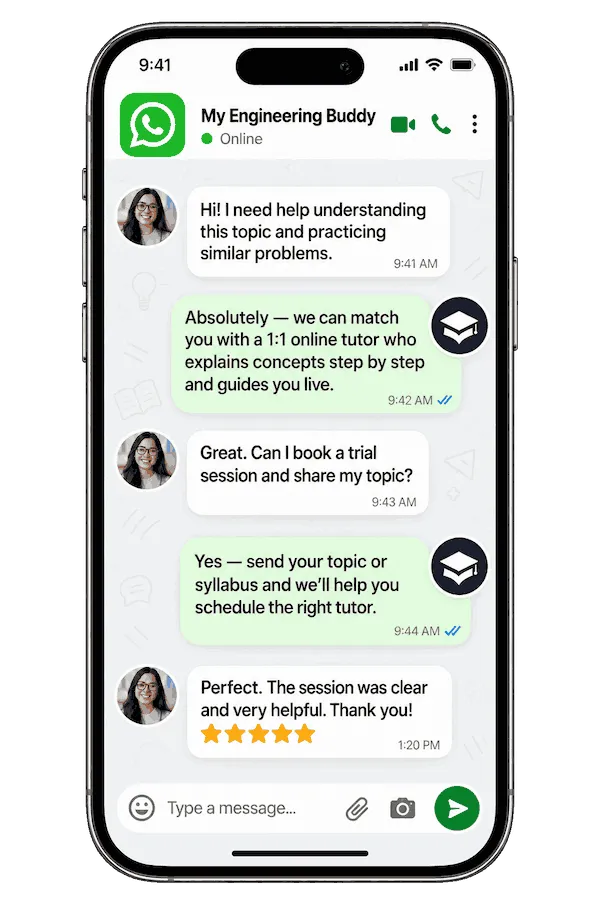
Unlike platforms where you fill out a form and wait, MEB responds in under a minute, 24/7. Tutor match takes under an hour. The $1 trial means you test before you commit. Everything runs over WhatsApp — no logins, no intake forms.
Pricing Guide
Minikube tutoring starts at $20/hr for standard undergraduate and developer-level sessions. Graduate coursework and CKA/CKS exam prep typically runs $35–$60/hr. Specialist DevOps engineers with production Kubernetes backgrounds are available up to $100/hr.
Rate factors include your level, the complexity of the project stack, how close your deadline is, and tutor availability. Rates firm up once MEB understands your goal — share your brief on WhatsApp and you’ll get a quote in under a minute.
Availability tightens in April–May and November–December when university project submissions and certification exam windows overlap.
For students targeting roles at companies like Google, Amazon, or Microsoft where Kubernetes is a core hiring criterion, tutors with production SRE and platform engineering backgrounds are available at higher rates — share your specific goal and MEB will match the tier to your ambition.
Start with the $1 trial — 30 minutes, no registration, no commitment. WhatsApp MEB for a quick quote.
MEB has been running since 2008. 18 years. 52,000+ students. The Minikube and Kubernetes cohort has grown every year since 2019 — that’s when container orchestration stopped being optional in CS curricula.
Source: My Engineering Buddy, 2008–2025.
FAQ
Is Minikube hard to learn?
The install is straightforward. The difficulty is understanding why things break — driver conflicts, YAML errors, and networking mismatches are common and not obvious. With a tutor walking through your specific errors, most students get functional within two or three sessions.
How many sessions will I need?
Students fixing a specific project error typically need 2–4 sessions. Those building from scratch for a module or CKA prep usually need 8–15 sessions spread over 4–6 weeks. The tutor maps a plan after the first diagnostic session.
Can you help with my Minikube project and coursework?
Yes — MEB provides guided project support. The tutor explains the concepts, walks through the configuration, and helps you understand what you’re building. MEB tutoring is guided learning — you understand the work, then submit it yourself. See our Academic Integrity policy and Why MEB page for full details on what we help with and what we don’t.
Will the tutor match my exact syllabus or exam board?
Yes. Share your course brief, module spec, or certification target before the first session. Tutors are matched to your specific Kubernetes version, tool stack, and assessment format — not assigned generically.
What happens in the first session?
The tutor runs a quick diagnostic — checks your cluster state, tool versions, and the specific task or error you’re facing. From there, the session goes directly into the problem. No time spent on introductory slides or generic overviews.
Is online Minikube tutoring as effective as in-person?
For terminal-based tools like Minikube, online is often better. Screen sharing lets the tutor see your exact environment — OS, driver, kubectl output — in real time. That’s more information than sitting next to someone at a desk.
Can I get Minikube help at midnight or on weekends?
Yes. MEB operates 24/7 across all time zones. Students in the Gulf, Australia, and the US West Coast regularly book late-night or weekend sessions. WhatsApp MEB and you’ll get a response in under a minute regardless of the hour.
What’s the difference between Minikube and a full Kubernetes cluster — and does it matter for my coursework?
Minikube is single-node and local; production Kubernetes is multi-node and cloud-hosted. For most university coursework and CKA lab environments, Minikube replicates enough of the real behaviour to matter. Your tutor will flag where the differences could affect your project outcomes.
Do you cover Minikube with specific drivers like Docker Desktop or VirtualBox?
Yes. Tutors work with whichever driver your environment uses — Docker Desktop, VirtualBox, HyperKit, Hyper-V, or KVM2. Driver-specific conflicts are one of the most common first-session topics. Share your OS and driver upfront and the tutor comes prepared.
What if I don’t get along with my assigned tutor?
Request a different tutor — no explanation needed, no fee. MEB will rematch you within the hour. The $1 trial exists specifically so you can test the fit before committing to a package of sessions.
How do I get started?
WhatsApp MEB, share your cluster issue or project brief, and you’re matched with a verified tutor — usually within the hour. The first session is the $1 trial: 30 minutes live, or one project question explained in full. Three steps: WhatsApp, match, start.
Can you help with Minikube as part of a broader DevOps or CI/CD pipeline project?
Yes. Many students need Minikube within a larger stack — integrated with Ansible project help, Azure DevOps tutoring, or monitoring via Prometheus tutoring. MEB tutors cover the full pipeline context, not just the Minikube layer in isolation.
Trust & Quality at My Engineering Buddy
Every MEB tutor is screened through a multi-stage process: application review, subject knowledge assessment, a live demo session with a senior MEB reviewer, and ongoing evaluation based on student feedback. Tutors covering Minikube hold verified Kubernetes credentials or have demonstrable production DevOps experience — not just academic knowledge of the tool. Rated 4.8/5 across 40,000+ verified reviews on Google.
MEB tutoring is guided learning — you understand the work, then submit it yourself. For full details on what we help with and what we don’t, read our Academic Integrity policy and Why MEB.
MEB has served 52,000+ students across the US, UK, Canada, Australia, the Gulf, and Europe since 2008 — covering 2,800+ subjects. The Software Engineering and DevOps category is one of our largest, with strong demand for DevOps tutoring, infrastructure as code help, and cloud architecture tutoring alongside Minikube. Read more about our session structure at our tutoring methodology page.
A common pattern our tutors observe is that students who arrive with “it just won’t start” have usually set Minikube to a driver their OS doesn’t support cleanly. It’s a five-minute fix — but only if you know where to look. That’s what a first session is for.
Explore Related Subjects
Students studying Minikube often also need support in:
Next Steps
Getting started takes less than five minutes.
- Share your Minikube version, driver, and the specific error or project task you’re stuck on
- Share your availability and time zone
- MEB matches you with a verified tutor — usually within the hour
- First session starts with a diagnostic so every minute is used on the actual problem
Before your first session, have ready: your course brief or project spec (or a description of what you’re building), your current Minikube version and driver, and a screenshot or paste of the error you’re facing. The tutor handles the rest.
Visit www.myengineeringbuddy.com for more on how MEB works.
WhatsApp to get started or email [email protected].
Reviewed by Subject Expert
This page has been carefully reviewed and validated by our subject expert to ensure accuracy and relevance.




